How to Make a Sad Song: A Complete Guide for Emotional Songwriting in 2026
Learn how to make a sad song with emotional lyrics, melodies & production. Step-by-step guide for 2026 musicians.
How to Make a Sad Song
Sad songs have an extraordinary ability to connect deeply with listeners. They can make us reflect, heal, or simply feel less alone. Whether you’re a beginner songwriter or an intermediate music producer in 2026, learning how to make a sad song means understanding emotion beyond melody or words. This guide breaks down the essential stages—lyrics, composition, and production—for crafting emotionally resonant music, followed by how you can use the Soundverse AI Song Generator to create one instantly.
Why Do Sad Songs Resonate So Deeply?
Sad music works because it mirrors human vulnerability. When we hear slow chords, somber lyrics, or nostalgic melodies, our brains release oxytocin—a hormone associated with empathy. Studies in early 2025 showed that AI-assisted music tools helped composers express complex emotions faster, and by 2026, emotional music remains a driving force in the music industry. You can read about current sonic trends in the music industry trends article for context.

What Makes a Song Sound Sad?
Before you dive into technical creation, you must identify components that make a song feel melancholic:
- Tempo and Rhythm: Slower tempos (between 60–90 BPM) often evoke sadness. Sparse percussion can emphasize emotional weight.
- Minor Scales: Most sad songs use minor scales because they create tension and unresolved harmony.
- Chord Progressions: Common progressions include Am–F–C–G or Em–C–G–D. These evoke nostalgic and bittersweet feelings.
- Instrumentation: Piano, acoustic guitar, cello, and soft synths give a sense of fragility. You can also apply spatial effects like reverb and delay to widen emotion.
- Vocals: Softer, breathier performances translate pain and longing more effectively. By balancing these features, you can produce music that resonates emotionally without explicitly forcing sadness.

How Can You Write Melancholy Lyrics That Feel Authentic?
Writing lyrics for emotional music isn’t about inserting sad words. It’s about vulnerability and imagery. Here’s how to write them effectively.
- Focus on Imagery: Instead of saying “I am sad,” use descriptive moments: “Rain falls through the window where you once stood.”
- Use Emotional Storytelling: Frame your lyrics around a subtle narrative—loss, memory, or time.
- Maintain Simplicity: The most powerful sad songs often rely on minimal but emotionally compact phrasing.
- Employ Repetition: Repeating a line mirrors the persistence of grief.
- Balance Darkness and Hope: Adding a glimmer of resilience usually heightens contrast. If you struggle with phrasing or tone, try the built-in AI Lyrics Writer from Soundverse—it provides structured melancholic lyrics based on genre and emotion. Learn more about lyric development in how to make good rap lyrics, which also applies to emotional storytelling.
How to Compose and Arrange for Emotional Impact
Creating sad melodies and instrumentals requires understanding balance between sound texture and silence.
Core Techniques for Creating Sad Melodies
- Stepwise movement: Instead of large leaps between notes, subtle shifts create smoother tension.
- Descending phrases: Falling melodies often symbolize loss.
- Harmony color: Experiment with suspended or diminished chords.
Effective Arrangement Ideas
- Start with a minimalist intro—just piano or acoustic guitar.
- Gradually add ambient textures, strings, or pads.
- Drop elements mid-song to mimic emotional collapse.
- End unresolved, leaving the listener reflective. For deeper production ideas, our detailed guide on how to create healing meditation music with Soundverse AI explains how sound spaces influence emotions. Watch a related walkthrough in our Soundverse Tutorial Series - How to Make Music.
How to Produce Sad Songs Professionally
Production quality affects emotional delivery as much as lyrics or melody. Follow these emotional songwriting tips:
- Use warm tones, not harsh frequencies. Avoid high-end distortion; instead, craft smooth low-mids.
- Reverb and atmosphere drive emotional depth—large room reverbs replicate solitude.
- Dynamic range control: Keep volume soft overall; compress only marginally.
- Layer ambient or foley sounds (like rain or wind) subtly to build context.
- Mixing and mastering: Balance your mix so vocals feel upfront yet integrated. As of 2026, many AI tools assist in mixing and mastering workflow. You can explore Soundverse AI Magic Tools that automate arrangement and tonal balance for faster results.
Common Mistakes When Making Sad Songs
- Overly dramatic instrumentation that loses sincerity.
- Cliché metaphors (tears, broken hearts) without creative framing.
- Flat melodies that lack movement.
- Ignoring production nuance. Emotional songs need careful texture layering.
- Skipping lyrical depth. Every word matters. By avoiding these, you preserve authenticity—a crucial factor for effective emotional songwriting.
How to Make a Sad Song with Soundverse AI Song Generator
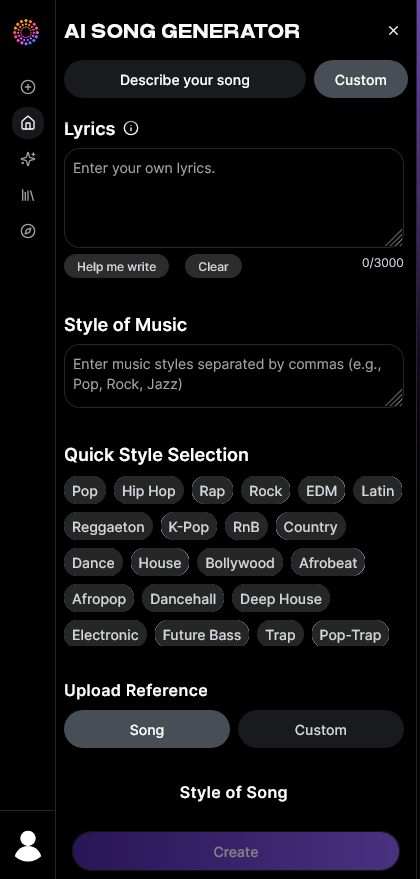
Now that you understand how to make a sad song conceptually, here’s how to create it instantly using Soundverse.
The AI Song Generator allows musicians to turn lyrics or text descriptions into complete songs with AI vocals and instrumentals. It operates through a multi-stage pipeline, covering lyrics, melody, arrangement, and mixing—all asynchronous so users upload or describe their idea, and Soundverse processes the track.
Follow these steps to create your own melancholic masterpiece:
Step 1: Feature Overview
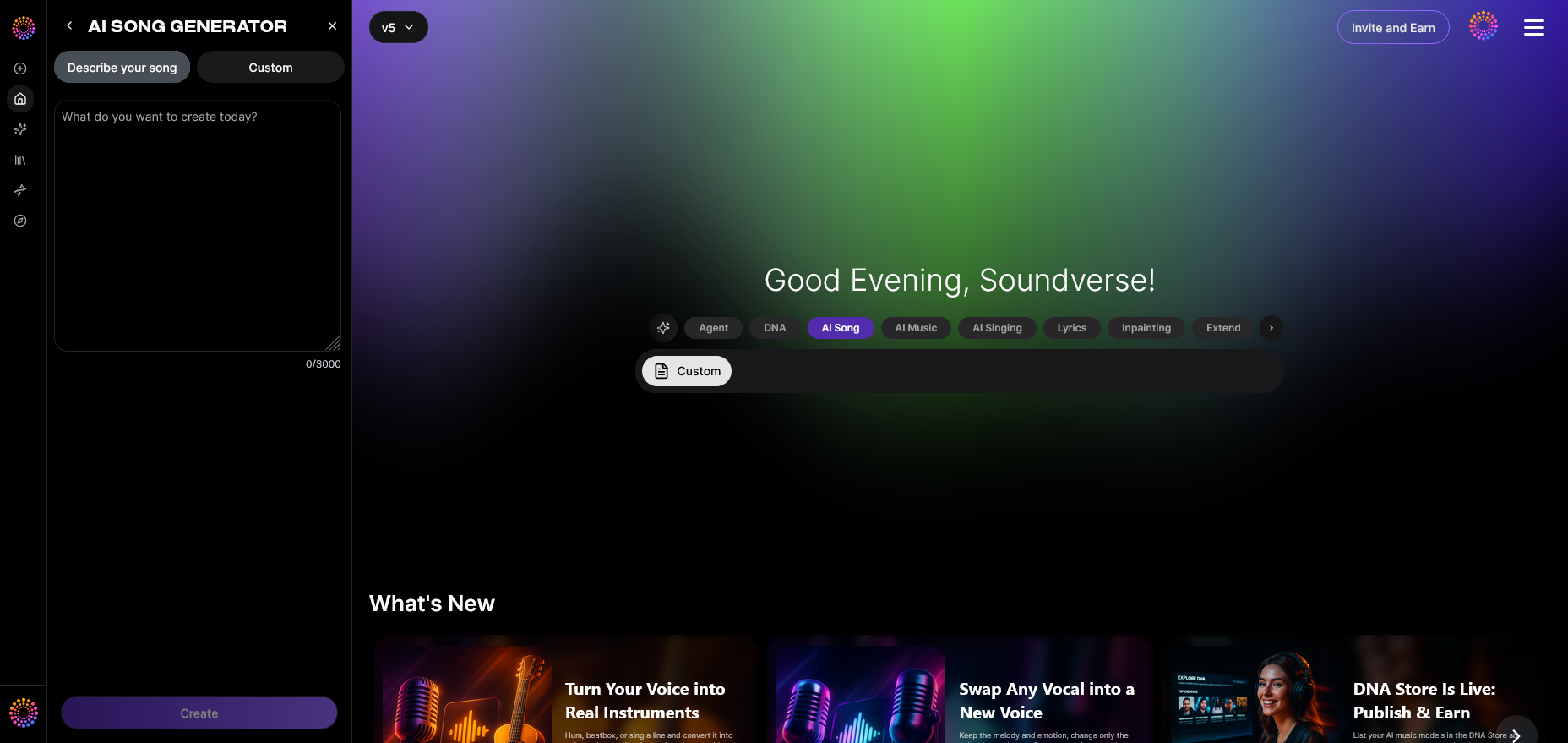
Access the AI Song Generator from the main menu inside Soundverse. This module includes Describe Your Song mode, Custom mode, and Reference Audio support.
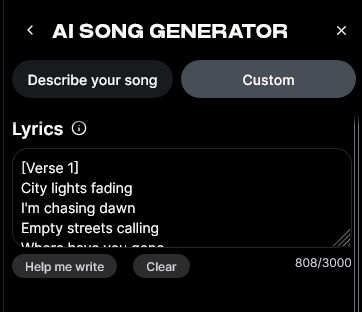
Step 2: Lyrics Input
Paste your written lyrics or use the integrated AI Lyrics Writer to help craft something emotionally strong. You can provide phrases like “heartbreak,” “loneliness,” or “nostalgia” to guide the tone.
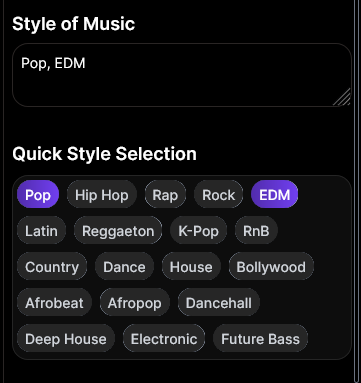
Step 3: Style Selection
Select musical style and genre—options include Pop, Indie, Acoustic, or orchestral sad ballads. Each template optimizes arrangement and vocal styling for emotional depth.
Step 4: Configuration
Set generation parameters such as language (Soundverse supports over 10), vocal style (soft or expressive), and arrangement density.
Step 5: Generation
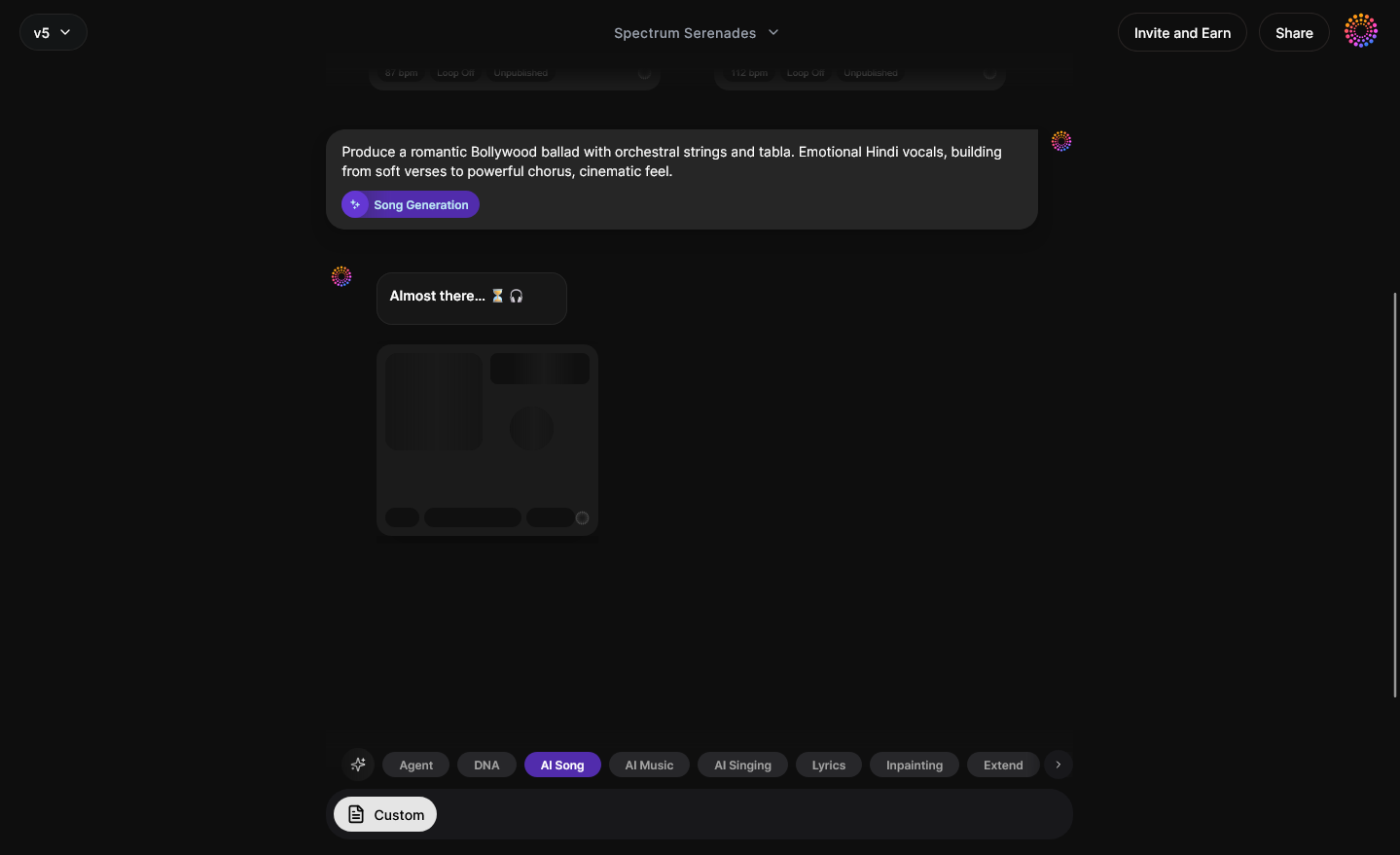
Click Generate. The AI combines mood analysis, genre cues, and harmony to create a complete song—vocals and instruments included.
Step 6: Generation Complete
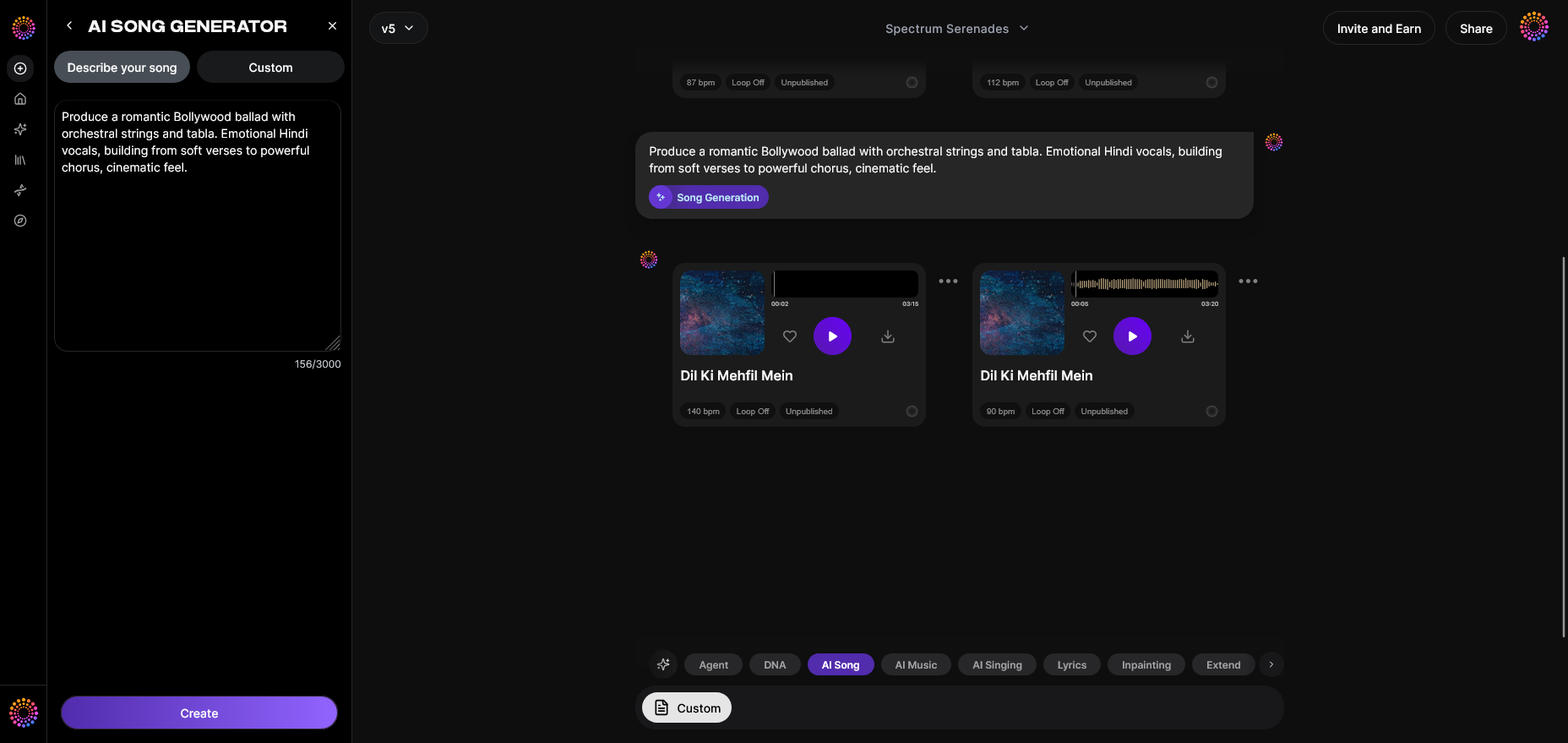
Once processed, your sad song preview appears with the lyrics and sound layers ready for listening.
Step 7: Export Results
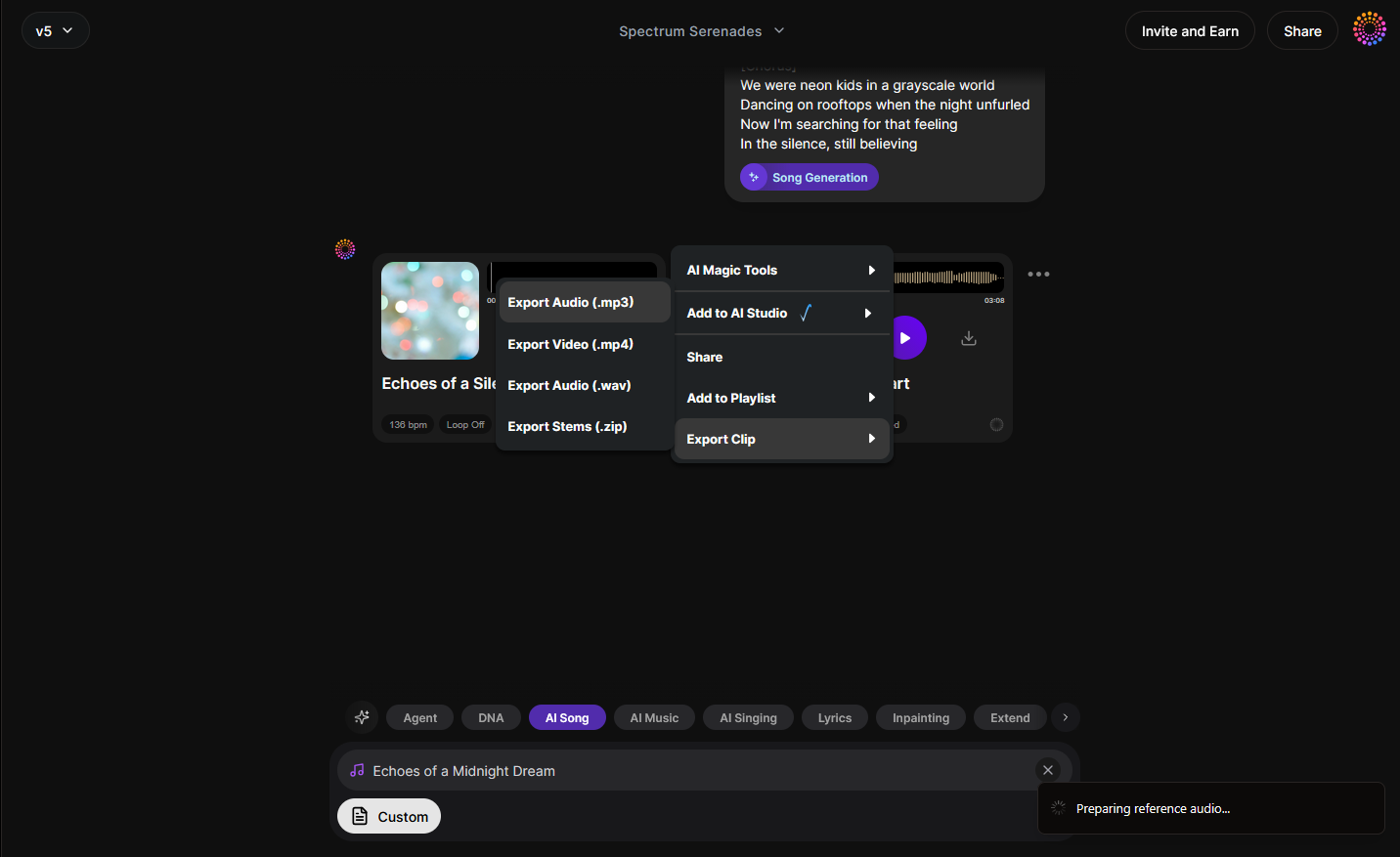
Download the generated music in multiple formats (MP3, WAV, etc.) for social media, YouTube content, or personal demos.
Soundverse doesn’t use live previewing—it processes your song asynchronously and returns the result once finished for full quality.
Why Use Soundverse for Emotional Songwriting?
Soundverse integrates emotional awareness in AI composition. With reference audio matching, multilingual output, and fast generation capability, it’s ideal for authentic sad song demos or even full releases. Beginners appreciate its guided workflow, while intermediates use it for creative prototyping.
If you’d like to expand beyond melancholic music, check out related tutorials such as how to create country music with Soundverse AI, how to create jazz music with Soundverse AI, and generate AI music with Soundverse Text-to-Music.
Start Creating Your Own Sad Songs with AI
Use Soundverse’s intuitive tools to compose heartfelt melodies, haunting harmonies, and deeply emotional music in minutes. Bring your creative vision to life and let AI elevate your sound.
Related Articles
- How to Make AI-Generated Music: Learn the essentials of crafting original music using AI technology for any mood or genre.
- How to Create Healing Meditation Music with Soundverse AI: Discover how to compose soothing and emotional music that brings peace and relaxation with AI.
- The Role of AI Music in Film and Television: Explore how AI-generated music is transforming emotional storytelling in movies and TV shows.
- What AI Can Generate Songs: Find out how different AI systems can create songs that capture deep emotions and unique styles.
Here's how to make AI Music with Soundverse
Video Guide

Here’s another long walkthrough of how to use Soundverse AI.
Text Guide
- To know more about AI Magic Tools, check here.
- To know more about Soundverse Assistant, check here.
- To know more about Arrangement Studio, check here.
Soundverse is an AI Assistant that allows content creators and music makers to create original content in a flash using Generative AI.
With the help of Soundverse Assistant and AI Magic Tools, our users get an unfair advantage over other creators to create audio and music content quickly, easily and cheaply.
Soundverse Assistant is your ultimate music companion. You simply speak to the assistant to get your stuff done. The more you speak to it, the more it starts understanding you and your goals.
AI Magic Tools help convert your creative dreams into tangible music and audio. Use AI Magic Tools such as text to music, stem separation, or lyrics generation to realise your content dreams faster.
Soundverse is here to take music production to the next level. We're not just a digital audio workstation (DAW) competing with Ableton or Logic, we're building a completely new paradigm of easy and conversational content creation.
TikTok: https://www.tiktok.com/@soundverse.ai
Twitter: https://twitter.com/soundverse_ai
Instagram: https://www.instagram.com/soundverse.ai
LinkedIn: https://www.linkedin.com/company/soundverseai
Youtube: https://www.youtube.com/@SoundverseAI
Facebook: https://www.facebook.com/profile.php?id=100095674445607
Join Soundverse for Free and make Viral AI Music

We are constantly building more product experiences. Keep checking our Blog to stay updated about them!