How to Create Music With Scent-Triggering Integration in 2026
Learn how to create scent-triggered music using Soundverse AI Music Generator in 2026.
How to Create Music With Scent-Triggering Integration
In 2026, musicians and sensory technologists are exploring deeper levels of multisensory creativity. The convergence of scent and sound marks one of the most intriguing frontiers in audio art — a space where aromas influence harmonies and melodies evoke fragrances. This is the world of scent-triggered music creation, and it’s reshaping how we think about emotional engagement through sound.
What is scent-triggered music creation?
Scent-triggered music creation refers to the process of composing or generating music that is linked with olfactory stimuli. In this advanced creative format, specific scents act as triggers, guiding musical elements such as tempo, texture, and mood. For instance, peppermint may inspire bright electronic tones, while sandalwood could align with ambient or meditative soundscapes.
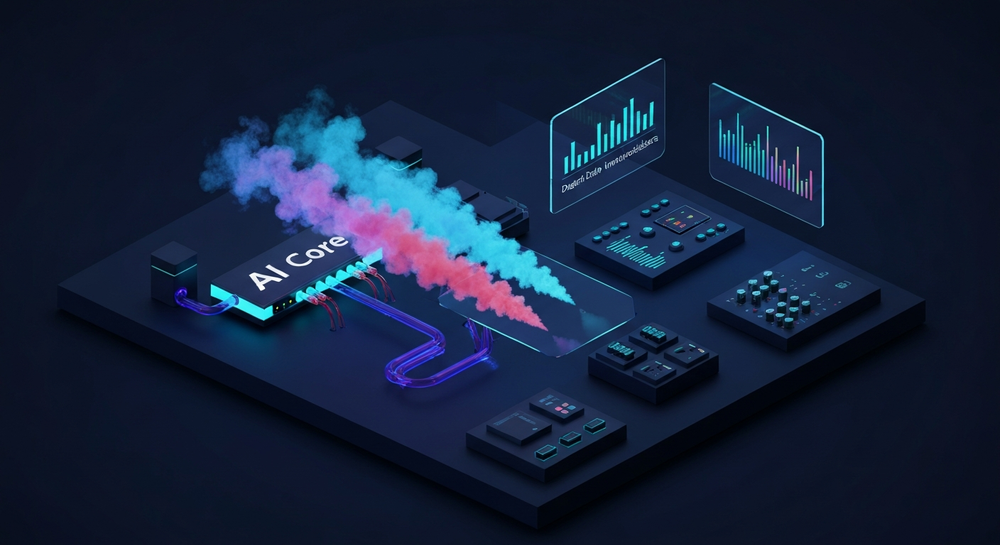
This concept stems from both synesthesia music research and multi sensory audio development, where the boundaries between perception channels blur. In scent-triggered systems, olfactory sensors or data-driven scent patterns feed directly into a musical generation pipeline powered by AI. As the scent intensity or type changes, so does the sound produced.
Scientific studies such as 'Play the fragrance': Designing musical soundscapes to match scents demonstrate that these cross-sensory experiences can elevate emotional resonance. By 2026, immersive performance spaces — from art installations to VR environments — increasingly incorporate smell integration alongside sound. The fusion of fragrance-based stimuli with real-time music generation has moved beyond conceptual art and into practical creative workflows for producers and designers.
Why is scent-triggered music creation gaining popularity in 2026?
The rise of scent-triggered experiences coincides with several converging trends:
- Expanding AI creativity tools: Systems like Soundverse’s AI Music Generator have made it simpler for non-musicians and professional composers alike to translate ideas into music through natural language prompts.
- Growing interest in bio-sensory art: The creative technology industry has embraced multi-sensory design, connecting sound, taste, and smell as emotional amplifiers in entertainment and wellness.
- Immersive environments becoming mainstream: In 2026, VR concerts, AR-driven retail soundscapes, and scent-augmented meditation apps are common. Music makers now produce emotional atmospheres rather than merely audible tracks.
- The evolution of synesthesia research: Studies on cross-sensory perception show that scent and sound correlation can evoke stronger emotional responses than visual cues alone.

For example, marketing analysis from Music, Scent, and Multi-Sensory Marketing - DLMDD illustrates how sound can influence perceived scent characteristics — making them feel warmer, fresher, or even more luxurious. The result is a new creative paradigm: music that you don’t just hear — you feel and smell.
How does scent data influence musical composition?
When scent-triggering technology interacts with composition, data about smell type, intensity, and frequency informs the AI about possible sound mappings. For example:
- Fresh scents (like mint or citrus) might be linked to higher tempo and sharp tonal frequencies.
- Warm scents (like vanilla or amber) correlate with slower rhythms and deeper bass patterns.
- Earthy scents might generate organic instrumental textures, such as acoustic guitar or ambient percussion.
For designers building multisensory installations, this mapping is essential. It ensures that every olfactory experience corresponds emotionally and sonically. Tools like scent diffusion controllers and data interfaces provide the input while AI models handle musical synthesis.
How to make scent-triggered music with Soundverse AI Music Generator
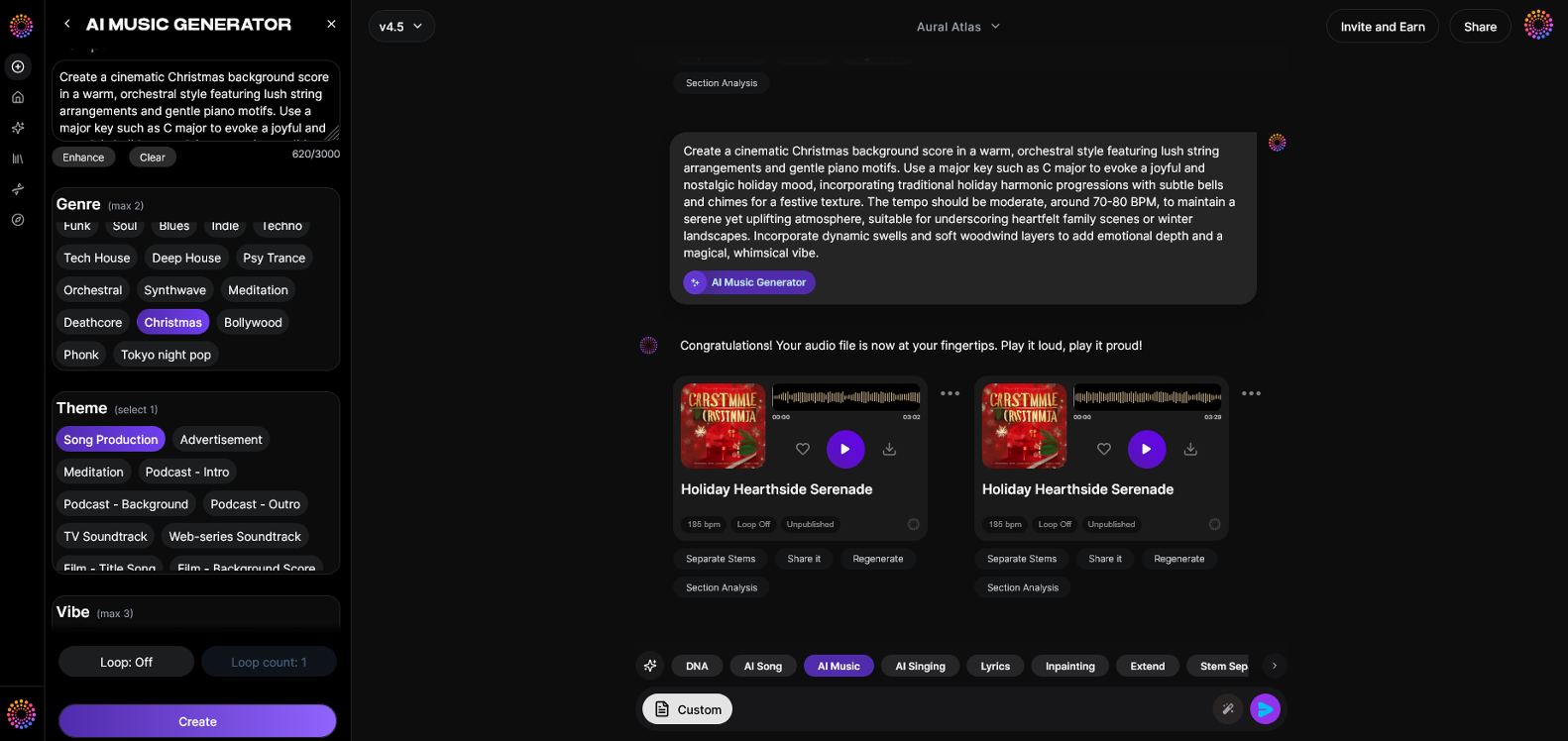
Soundverse’s AI Music Generator provides the creative backbone for producing instrumental music from descriptive prompts — the perfect interface for scent-based conceptual design.
Feature Overview
The AI Music Generator from Soundverse can create fully produced instrumental compositions directly from text prompts. It specializes in background scores, loops, beats, and ambient soundscapes without vocals. This makes it ideal for pairing with scent-emitting devices or olfactory experiences.
With Loop Mode, creators can design seamless repeating sequences, critical for installations where scent patterns repeat over time. The system also allows detailed control over genre, mood, and instrumentation — aspects essential for mapping particular fragrance-triggered emotional tones.
The latest V4 and V5 model options enable precise adjustments in sonic fidelity, giving artists flexibility whether they aim for cinematic depth or meditative simplicity. For a deeper dive, watch our Soundverse Tutorial Series - 9. How to Make Music and Soundverse Tutorial Series - 10. Make Deep House Music.
Step 1: Feature Overview
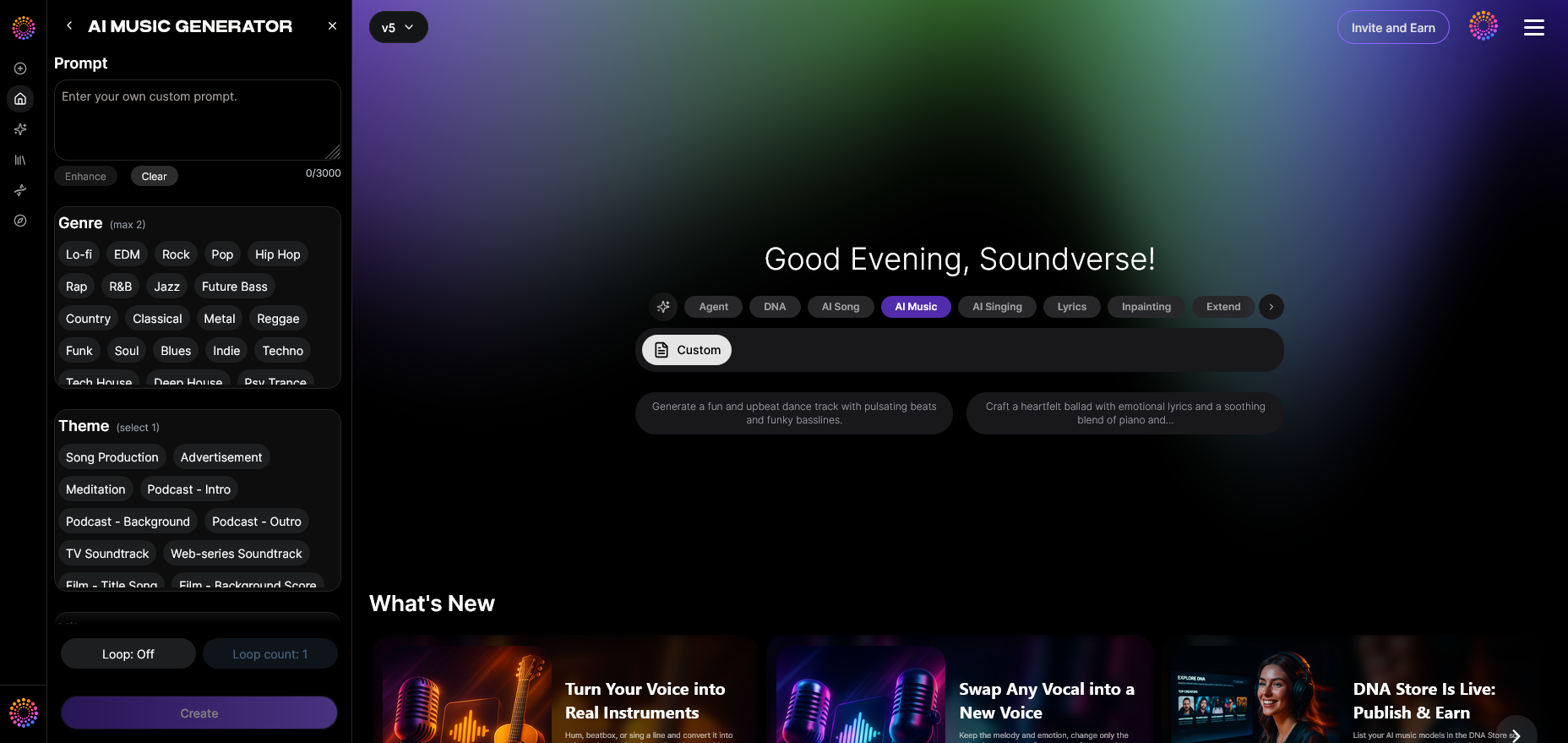
Access the AI Music Generator from the Soundverse main menu. It’s located under “Music Creation Tools.” This is where you begin designing your scent-linked musical experience.
Step 2: Description Input
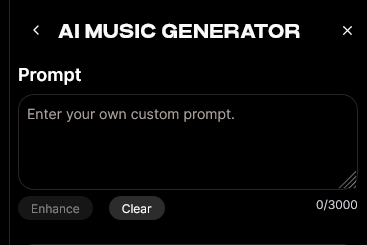
Enter a text description reflecting both musical and olfactory themes. For example, you might type: “Generate ambient music inspired by lavender scent with warm pads and slow tempo.” The AI interprets semantic cues from such descriptions to develop the equivalent sonic mood.
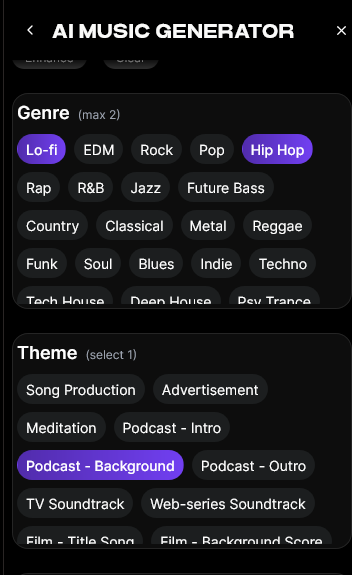
Step 3: Style & Duration
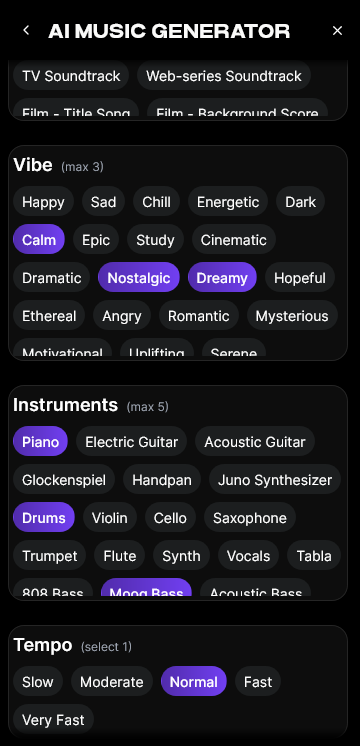
Select your preferred style, such as ambient, electronic, classical, or ethereal. Define the duration — perhaps a one-minute loop for a fragrant sample experience or a five-minute track for immersive installation use.
Step 4: Generation
Click Generate. The AI processes your request asynchronously, translating words into fully produced instrumental audio. Depending on prompt detail, the result can range from gentle meditation atmospheres to dynamic sensory soundscapes.
Step 5: Export Options

Download the generated instrumental music. You can export it as WAV or MP3 files, seamlessly integrating it with scent diffusion systems or VR audio frameworks.
Through this workflow, scent-triggered music creation becomes both accessible and infinitely customizable.
What are best practices for creating multisensory soundscapes?
To make the most of scent-triggered composition, follow these creative principles:
- Prioritize emotional coherence: The connection between scent and sound should enhance mood, not distract from it. Focus on emotional equivalence — serenity for lavender, energy for citrus.
- Keep scent intensity moderate: Overpowering fragrances can overshadow auditory sensations. Balance is key.
- Design looping patterns carefully: Use Soundverse’s Loop Mode for smooth transitions ensuring continuous scent and sound harmony.
- Experiment with synesthetic pairings: Try contrasting fragrances with unexpected music types — such juxtaposition can produce memorable experiences.
- Document mappings for reproducibility: Maintain notes on scent type, music genre, and emotional objectives to recreate complex sensory experiences.
For a deeper look at AI-driven composition trends, explore Soundverse’s recent insights in AI-generated music transforming the industry and the benefits of composing with AI.
Exploring complementary tools for scent-linked music
Beyond the AI Music Generator, Soundverse offers tools perfect for multisensory experimentation:
- Voice to Instrument: Ideal for turning vocal utterances inspired by a fragrance into instrumentals. For example, humming lightly while smelling rosemary could be transformed into a guitar phrasing.
- Similar Music Generator: Use this when developing scent experiences inspired by existing tracks. It allows the creation of original music with similar emotional color or tempo, maintaining thematic consistency.
You can learn more about advanced audio design approaches in Soundverse’s AI Magic Tools overview and generate music with filters by vibe or instrument. For additional exploration, watch Soundverse Tutorial Series - 8. "Explore" Tab.
Pro Tips for scent-triggered music creators
Seasoned multisensory artists recommend integrating scent-responsive lighting and environmental feedback mechanisms. For example, a scented mist that changes hue depending on music tempo encourages full sensory immersion.
Another strategy involves using AI-trigger cues — the system can generate complementary sound variations based on scent sensors. When the fragrance profile shifts from floral to woody, the music morphs accordingly.
At the technical level, pairing scent diffusion systems with audio in looped environments demands careful synchronization. Soundverse’s ability to create seamless looping arrangements ensures that scent cycles and musical timing remain perfectly aligned.
Start Creating With Scent-Triggered AI Music Today
Experience the future of sensory sound design with Soundverse. Transform your creative process by connecting scent cues to music for immersive storytelling and emotional resonance.
Related Articles
- How to Create Healing Meditation Music with Soundverse AI – Discover how to use Soundverse AI to craft soothing meditation tracks that deepen emotional and sensory experiences.
- How AI-Generated Music Is Transforming the Music Industry – Explore how artificial intelligence is revolutionizing how we compose, produce, and experience sound.
- How an AI Music Generator Inspires Creative Fusion – Learn how AI tools help artists blend art forms and experiment with new creative dimensions.
- The Role of AI Music in Film and Television – See how AI-composed music enhances emotional depth and narrative in film and television production.
Here's how to make AI Music with Soundverse
Video Guide

Here’s another long walkthrough of how to use Soundverse AI.
Text Guide
- To know more about AI Magic Tools, check here.
- To know more about Soundverse Assistant, check here.
- To know more about Arrangement Studio, check here.
Soundverse is an AI Assistant that allows content creators and music makers to create original content in a flash using Generative AI. With the help of Soundverse Assistant and AI Magic Tools, our users get an unfair advantage over other creators to create audio and music content quickly, easily and cheaply. Soundverse Assistant is your ultimate music companion. You simply speak to the assistant to get your stuff done. The more you speak to it, the more it starts understanding you and your goals. AI Magic Tools help convert your creative dreams into tangible music and audio. Use AI Magic Tools such as text to music, stem separation, or lyrics generation to realise your content dreams faster. Soundverse is here to take music production to the next level. We're not just a digital audio workstation (DAW) competing with Ableton or Logic, we're building a completely new paradigm of easy and conversational content creation.
TikTok: https://www.tiktok.com/@soundverse.ai
Twitter: https://twitter.com/soundverse_ai
Instagram: https://www.instagram.com/soundverse.ai
LinkedIn: https://www.linkedin.com/company/soundverseai
Youtube: https://www.youtube.com/@SoundverseAI
Facebook: https://www.facebook.com/profile.php?id=100095674445607
Join Soundverse for Free and make Viral AI Music

We are constantly building more product experiences. Keep checking our Blog to stay updated about them!