How Spatial Audio Works in Open Earbuds: The 2026 Guide for Audiophiles
Discover how spatial audio in open earbuds creates immersive sound experiences.
How Spatial Audio Works in Open Earbuds
Spatial audio in open earbuds has become one of the defining innovations of 2026, transforming how listeners perceive sound in everyday life. For audiophiles and tech-savvy consumers, this revolution goes beyond louder or clearer audio—it’s about presence. Spatial audio simulates a 3D sound environment, allowing listeners to perceive directionality and depth as if sound is coming from specific points around them rather than inside their ears.
What is Spatial Audio in Open Earbuds?
Spatial audio refers to the technology that makes sound feel three-dimensional. In standard stereo headphones, sound typically comes from two sources—left and right channels. With spatial audio in open earbuds, advanced signal processing and head-tracking technologies enable sound to appear as though it's emanating from all directions. This immersive sound experience feels natural and realistic, whether you’re listening to a concert recording or watching a movie.

Open ear technology adds another layer of innovation. Unlike traditional in-ear models, open earbuds rest just outside the ear canal, allowing ambient sounds to blend with digitally produced audio. This makes them ideal for environments where situational awareness is important—like running outdoors or working in a busy office—while still offering rich, full-bodied sound.
To understand more about fixed and head-tracked audio experiences, check out Fixed vs Head Tracked Spatial Audio: A Comparative Guide - Shokz.
How Does Open Ear Technology Enhance Spatial Audio?
Open ear technology ensures listeners experience both the natural world and digital sound simultaneously. The open design prevents complete isolation, which helps spatial cues feel more authentic. Because these earbuds use directional drivers and waveguides, sound can be positioned around the head in precise ways.

This integration of real-world acoustics and virtual positioning builds a believable 3D audio field. For instance, when listening to a live concert, you can almost identify where each instrument is located on stage. The bass might feel like it’s behind you, while vocals appear directly in front. This is where spatial sound thrives—it matches the way we perceive sound in the real world. Read about how adaptive sound works from How Adaptive Audio Is Shaping The Future Of Open-ear Technology.
What are the Core Technologies Behind Spatial Sound?
Several engineering components make spatial audio possible in open earbuds:
- Head-Tracking Sensors: These sensors monitor your head movement and adjust sound position accordingly. When you turn your head, the perceived source of the sound stays consistent with its original position, just as it would in reality.
- Multi-Driver Arrays: Some earbuds use multiple speakers per side to project sound at different angles, helping replicate a broader soundstage.
- Digital Signal Processing (DSP): DSP algorithms simulate room reflections and sound diffusion, creating a lifelike listening environment.
- Phase and Amplitude Shaping: By carefully adjusting timing and loudness between the left and right channels, engineers can manipulate how sound waves reach the ears.
Combined, these elements give open earbuds the capability to produce 3D audio that feels immersive without isolating users from their environment. Learn more about open-ear principles from What Are Open-Ear Headphones & How Do They Work? - Bose.
Why Spatial Audio is a Game-Changer for 3D Audio Earbuds in 2026
The market for 3D audio earbuds has exploded since 2024 and matured through 2025. In 2026, spatial audio isn’t limited to premium headphones—it’s entering open earbuds for casual listening. With improvements in low-latency Bluetooth transmission and high-efficiency codecs, even wireless models can handle the computation required for dynamic sound positioning.
For gamers, spatial audio enhances reaction time and direction awareness. For movie watchers, it delivers theater-like realism. For music producers, it opens new dimensions for mixing and mastering. Whether commuting or creating, spatial sound now defines modern audio engagement. See innovations introduced with JBL’s OpenSound design in JBL Introduces New OpenSound Earbuds Designed for Environmental Awareness and Maximum Comfort.
How Wireless Audio Innovation Drives Immersive Sound Experience
Wireless audio innovation plays a central role in enabling spatial audio performance. Today’s earbuds integrate adaptive Bluetooth chips that optimize data transmission between devices while reducing latency. Advanced wireless chips synchronize left and right earbuds perfectly, preventing phase mismatches and allowing DSP algorithms to operate consistently.
Battery design has also evolved. New power management systems optimize performance during active spatial rendering. Combined with smart software updates, users can enjoy extended sessions without compromising clarity or immersion. Explore new breakthroughs from The Future of Audio Technology: 3 Defining Trends from CES 2026.
The Role of AI and Audio Personalization in Spatial Sound
AI contributes heavily to modern spatial audio systems. Machine learning models analyze personal hearing profiles, ear shapes, and listening habits to individualize sound maps. In 2026, customization extends beyond equalization. AI determines the most effective sound placement strategy, ensuring listeners experience natural depth without fatigue.
This combination of open ear technology, sensor calibration, and AI-driven sound shaping makes spatial audio increasingly adaptive to real-world movement and preferences. Learn how edge AI supports new auditory experiences in Powering the future of open-ear audio with Edge AI and a decade of Mimi research.
How to Make Spatial Audio for Open Earbuds with Soundverse AI Music Generator
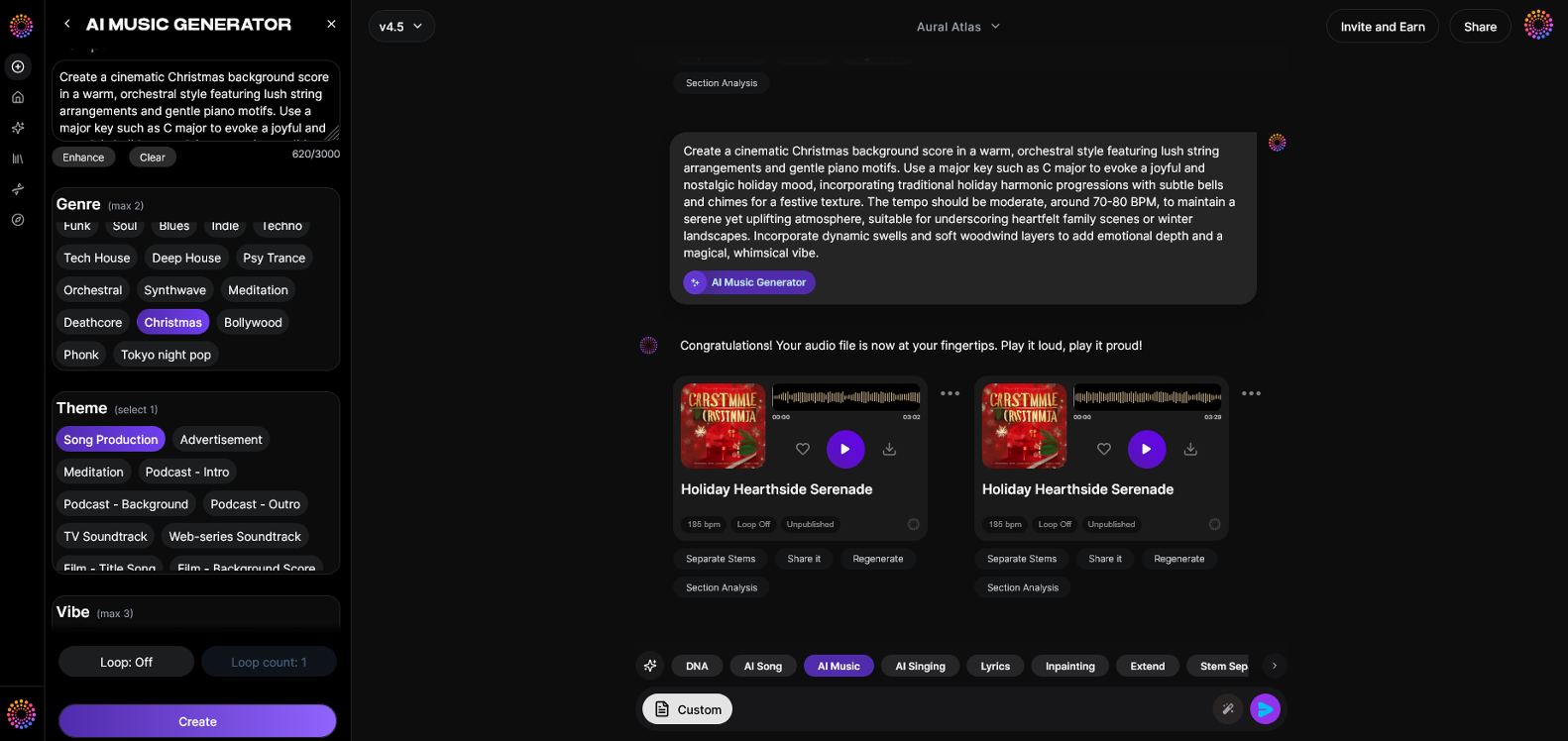
While spatial audio defines playback, the creation of spatially dynamic sound requires carefully designed music and effects. This is where the Soundverse AI Music Generator becomes a critical tool for content creators.
Soundverse’s AI Music Generator lets users create instrumental tracks tailored to spatial playback environments. Through text-to-music generation, creators can design background scores, beats, and immersive soundscapes suited for 3D audio earbuds. Its Loop Mode enables seamless repetition—perfect for meditation and game environments—while genre and mood controls let users shape the sonic palette.
For a deeper dive, watch our guide on creating Deep House music and the How to Make Music tutorial from the Soundverse YouTube channel.
Why Soundverse Fits Perfectly into the Spatial Audio Landscape
- Text-to-Music Empowerment: Instead of relying on complex software, you can describe the sound atmosphere you want, like “a warm ambient soundscape that feels like a sunrise,” and Soundverse will produce an instrumental composition ready for use.
- Precision Control: Choose specific instruments, tempo, and intensity to match 3D spatial playback needs.
- Loop and Duration Options: For continuous listening with open earbuds, looped tracks generate endless immersion.
- Multi-Version Flexibility: Switch between V4 and V5 model options to achieve different texture depths suited for various open-ear devices.
For creators interested in sound production for immersive experiences, Soundverse bridges the gap between advanced hardware and creative composition. The result? Spatially rich instrumentals that sound stunning when played through open earbuds.
To explore how AI music tools continue to change audio creation, read more at Soundverse AI Magic Tools Create Content Quickly with AI and How AI-Generated Music Is Transforming the Music Industry. You can also learn how Soundverse compares to competitors like Mubert Alternatives Soundverse and Soundraw Alternative, revealing how Soundverse empowers creators to generate background music perfect for spatial playback.
What’s Next for Spatial Audio and Open Ear Design in 2026
Looking ahead, open-ear designs are expected to integrate even smarter head tracking and adaptive environmental calibration. Manufacturers are also experimenting with bioacoustic sensors that fine-tune frequency responses based on ear geometry and movement. These refinements will elevate spatial sound realism further.
As AI sound generation becomes a standard part of music production pipelines, tools like Soundverse are shaping the next frontier in auditory storytelling—where sound design and technology co-evolve.
Experience the Future of Sound with Soundverse
Dive into cutting-edge AI music tools and explore spatial audio innovations that redefine how you create and listen. Soundverse empowers artists and creators to produce immersive audio effortlessly.
Related Articles
- Soundverse Introduces Stem Separation AI Magic Tool — Discover how Soundverse’s AI magic tool separates song elements, giving creators new levels of control over their music.
- The Role of AI Music in Film and Television — Learn how AI music generation is transforming sound design and scoring for cinematic productions.
- How AI-Generated Music Is Transforming the Music Industry — Explore how cutting-edge AI music platforms like Soundverse are reshaping music creation and production across genres.
- AI Ranks Soundverse’s AI Singer #1: The Ultimate AI Singing Platform Dominating 2025 — Find out why Soundverse’s AI Singer leads the next generation of vocal synthesis technology.
Here's how to make AI Music with Soundverse
Video Guide
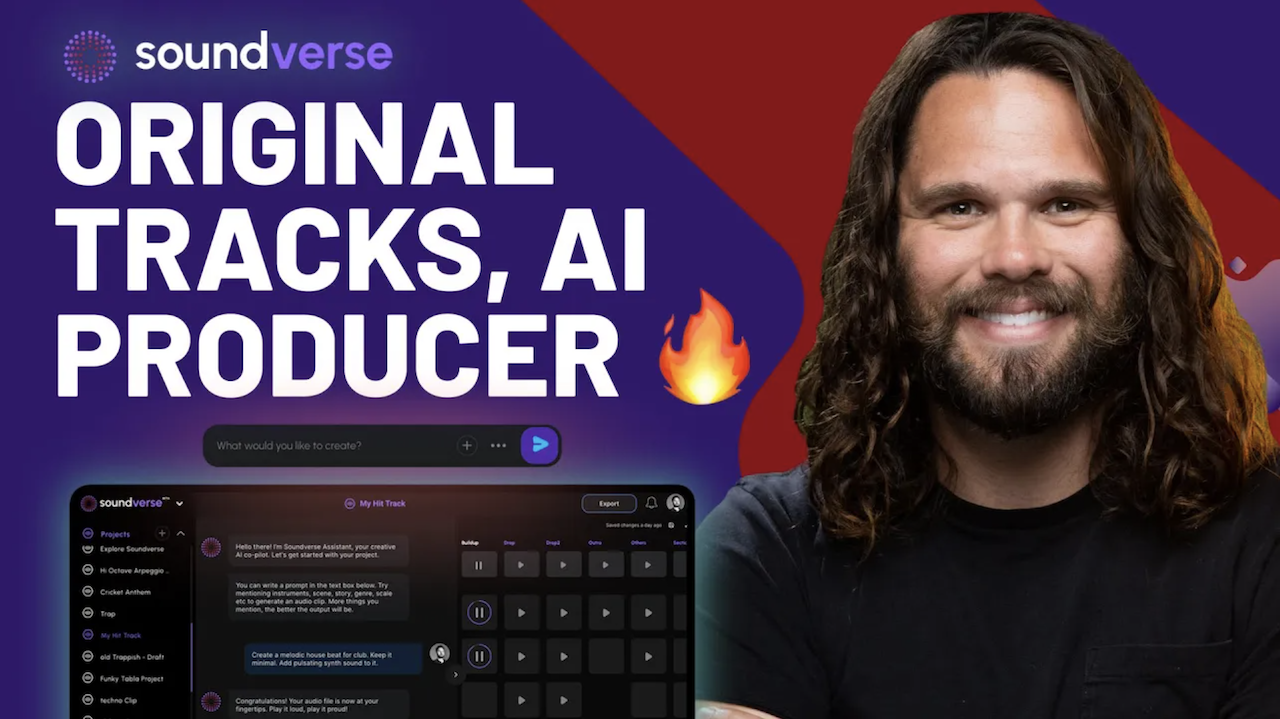
Here’s another long walkthrough of how to use Soundverse AI.
Text Guide
- To know more about AI Magic Tools, check here.
- To know more about Soundverse Assistant, check here.
- To know more about Arrangement Studio, check here.
Soundverse is an AI Assistant that allows content creators and music makers to create original content in a flash using Generative AI. With the help of Soundverse Assistant and AI Magic Tools, our users get an unfair advantage over other creators to create audio and music content quickly, easily and cheaply. Soundverse Assistant is your ultimate music companion. You simply speak to the assistant to get your stuff done. The more you speak to it, the more it starts understanding you and your goals. AI Magic Tools help convert your creative dreams into tangible music and audio. Use AI Magic Tools such as text to music, stem separation, or lyrics generation to realise your content dreams faster. Soundverse is here to take music production to the next level. We're not just a digital audio workstation (DAW) competing with Ableton or Logic, we're building a completely new paradigm of easy and conversational content creation.
TikTok: https://www.tiktok.com/@soundverse.ai
Twitter: https://twitter.com/soundverse_ai
Instagram: https://www.instagram.com/soundverse.ai
LinkedIn: https://www.linkedin.com/company/soundverseai
Youtube: https://www.youtube.com/@SoundverseAI
Facebook: https://www.facebook.com/profile.php?id=100095674445607
Join Soundverse for Free and make Viral AI Music

We are constantly building more product experiences. Keep checking our Blog to stay updated about them!