How Soundverse AI Music Works: Inside the Future of Intelligent Music Creation
Explore Soundverse AI music technology and how the Soundverse Agent enables next-gen music production automation in 2026.
How Soundverse AI Music Works
Artificial intelligence has redefined creativity in every domain—from image generation to voice synthesis—and music is leading that transformation. As of 2026, AI music technology has evolved far beyond simple beat-making apps. Modern systems now mimic artist styles ethically, automate full production workflows, and even understand conversational prompts. One of the most advanced examples of this shift is Soundverse, a platform engineered around a central AI assistant known as the Soundverse Agent. But what exactly makes Soundverse stand out among generative music platforms, and how does its technology actually work?
What is AI Music Technology and How Does It Work?
AI music technology refers to the use of machine learning and deep generative models to create, manipulate, and arrange music. Most platforms take text inputs or reference audio samples and produce an original track in response. The underlying models analyze large libraries of music to learn patterns such as chord progressions, timbral combinations, rhythmic complexity, and production balance.
In 2026, these models have become sophisticated enough to generate full-length, copyright-safe compositions that resemble real artists’ work without infringing on their rights. Systems like those used by Soundverse rely on multiple neural network layers—typically transformer architectures and diffusion-based audio processors—to predict musical events, textures, and mixing decisions.
Rather than merely producing random melodies, AI music creation now understands context and intention. When you tell an AI system to “create a mellow ambient piece with acoustic guitar and soft percussion,” it analyzes genre characteristics, instrument roles, and production style before generating coherent music that fits the description. This capability aligns with the growing demand among music producers and digital artists for creative efficiency and automation.
What Are Generative Music Platforms?
Generative music platforms are digital environments that allow users to create music programmatically or through AI assistance. Popular examples include tools that turn text prompts into instrumental tracks or remix existing audio. By 2026, these platforms have become an integral part of creative workflows—used for background scores, advertising soundtracks, game ambience, and online content creation.
Unlike traditional digital audio workstations (DAWs), generative platforms provide high-level creative control without manual composition. They remove technical barriers by allowing users to focus on conceptual sound design rather than note-by-note arrangement. This democratization of music creation has expanded opportunities for non-musicians, experimental artists, and even educators exploring music theory through interactive AI systems.
For those comparing various options, Soundverse has frequently appeared among leading Mubert alternatives and Soundraw alternatives, mainly due to its ethical training data and multi-tool orchestration approach. For a deeper dive, watch our guide on how to make music from the Soundverse tutorial series.
How Is Artificial Intelligence Changing Music Production in 2026?
Over the past few years, AI integration into music production has shifted from novelty to necessity. Producers now use AI not only for idea generation but also for workflow optimization. Here are the most common ways artificial intelligence influences the industry in 2026:
- Automated Composition: AI can create melodies, harmonies, and chord progressions by analyzing genre-specific structures.
- Production Automation: Tasks like stem separation, mixing balance, and instrumental layering are handled by automated algorithms, saving hours of manual editing.
- Personalized Sound Creation: AI systems like Soundverse DNA enable customized tracks based on an artist’s sonic fingerprint.
- Interactive Learning: AI assistants help users grasp complex music theory through real-time examples.
- Ethical Generation: New trust layers embedded in AI music ensure attribution and licensing transparency.
You can read more about these transformations in our detailed article on how AI-generated music is transforming the music industry, which explains the economic and creative effects across genres.
How Soundverse’s AI Music Ecosystem Operates
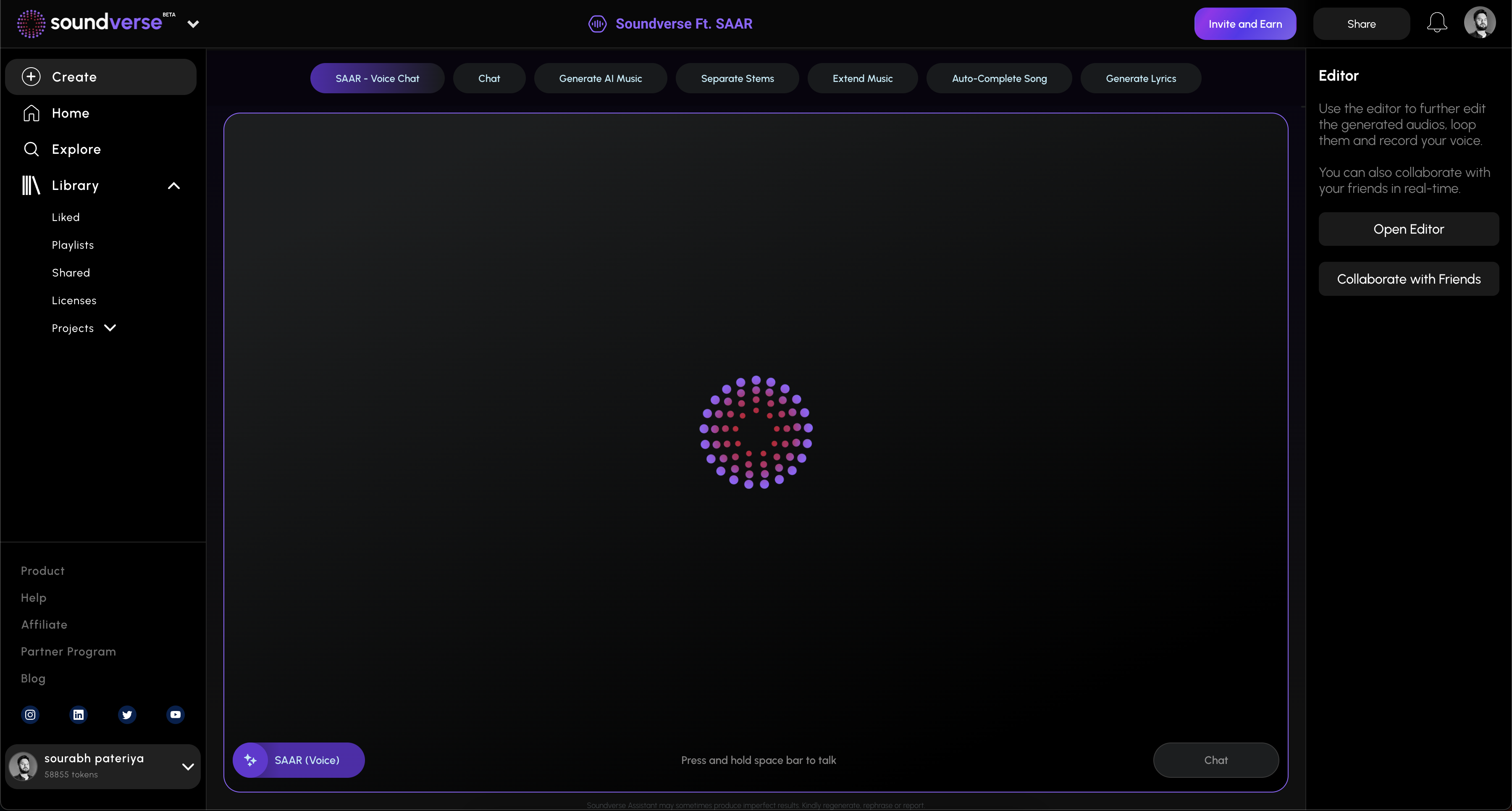
Soundverse’s approach revolves around modular integration. Rather than creating independent AI tools, the platform merges multiple specialized models under one unified controller: the Soundverse Agent. This conversational AI assistant acts as the brain of the entire music creation process. It uses multi-step reasoning, contextual memory, and voice input capabilities to interpret natural language instructions. For example, you can say:
“Create an upbeat pop track, then remove the drums, and extend the melody.”
The Agent understands this sequence as multiple operations, orchestrating internal Soundverse tools to execute them in the correct order automatically. It blends creative request interpretation with tool orchestration, forming what Soundverse calls music production automation. Soundverse’s enterprise update highlights this orchestration in its latest Audio-to-Audio features.
Core Components That Power the Soundverse Framework
Beyond the Agent, Soundverse incorporates three major subsystems that make AI music creation consistent and ethical:
1. Soundverse DNA
Soundverse DNA is an artist-trained generation engine that produces original music based on unique sonic identities. It was built on licensed catalogs, ensuring that each generated output is fully copyright-safe. Artists can upload their styles and monetize their sonic signature, while users receive consistent results rooted in authentic sound patterns. This innovation resolved major ethical concerns around AI appropriation that dominated discussions between 2024 and 2025.
2. AI Music Generator
The AI Music Generator within Soundverse converts text prompts into full instrumental compositions. It specializes in backing tracks, loops, and beat structures—ideal for content creators and producers exploring rapid prototyping. This component also powers creative projects like how to create rap music with AI or how to create country music with Soundverse AI, providing simple entry points for creators in diverse genres. You can also watch the Deep House music tutorial on the Soundverse YouTube channel for hands-on examples.
3. Soundverse Trace
Trace is Soundverse’s trust layer—a digital infrastructure for rights management, attribution, and transparency. It embeds metadata across the entire music lifecycle, from dataset creation to audio export. This ensures full traceability of sources and creators involved, safeguarding both artists and users.
How to Make AI Music Instantly with Soundverse Agent
Now that you understand how AI music technology functions, here’s how to create music instantly using Soundverse’s conversational assistant.
Step 1: Overview
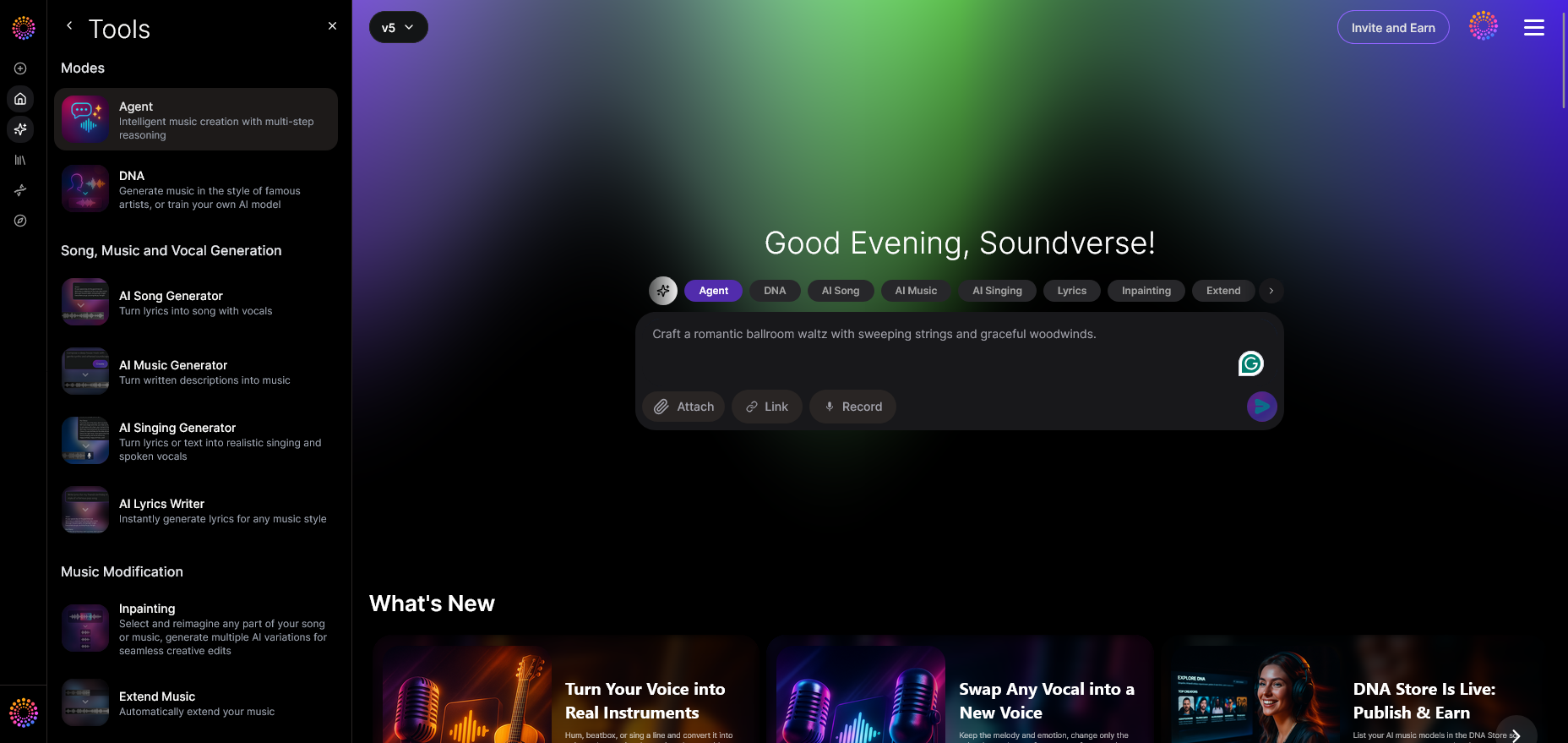
After logging into the Soundverse platform, users land on the Agent interface—a clean workspace designed for natural conversation. There’s no need to navigate complex menus; simply type or speak your musical request.
Step 2: Reference Audio
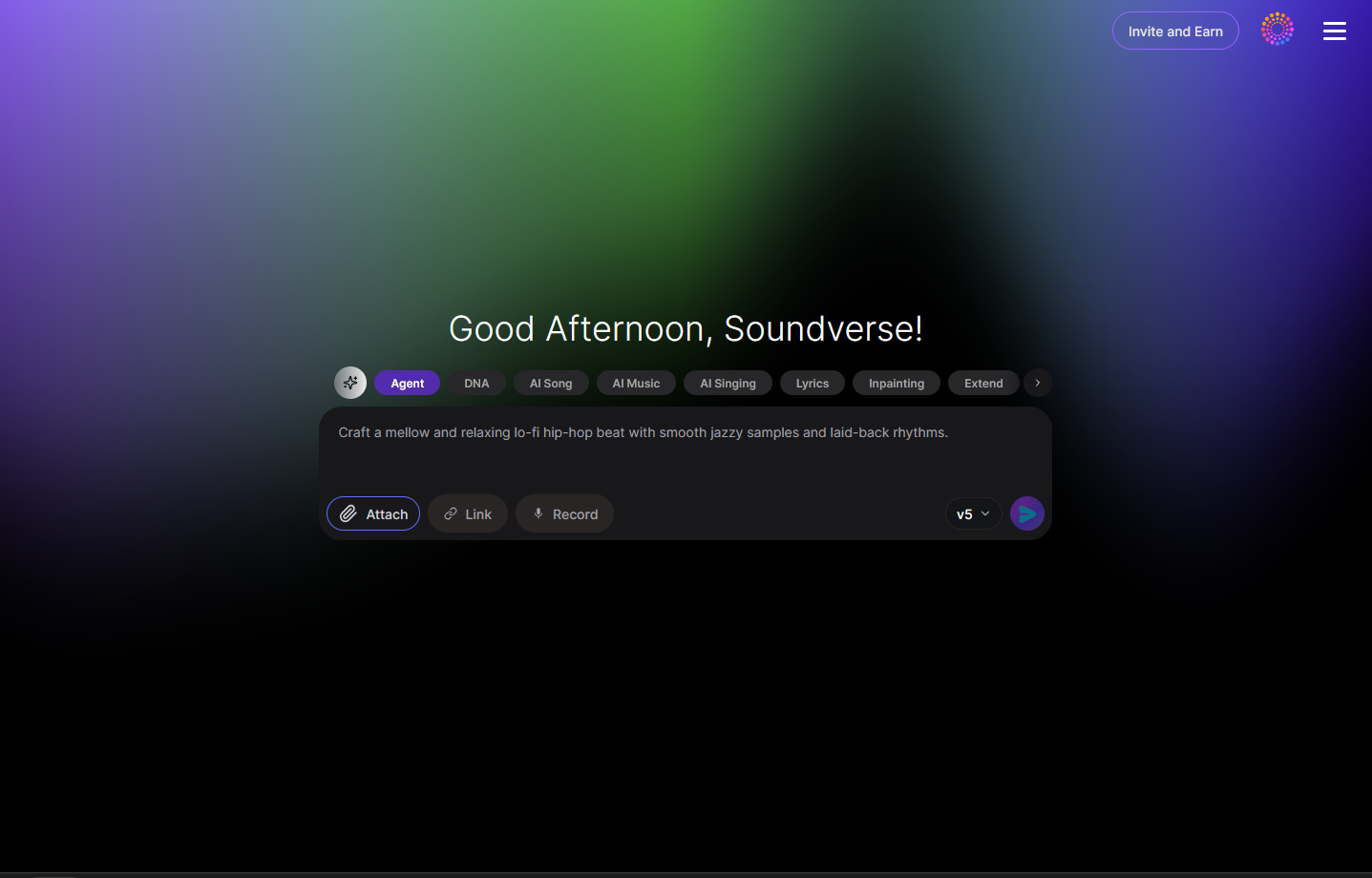
To guide the AI, you can attach a reference clip that defines mood, rhythm, or style. The Agent uses this sample to contextualize your prompt, ensuring output consistency with desired tone or genre.
Step 3: Attach Button
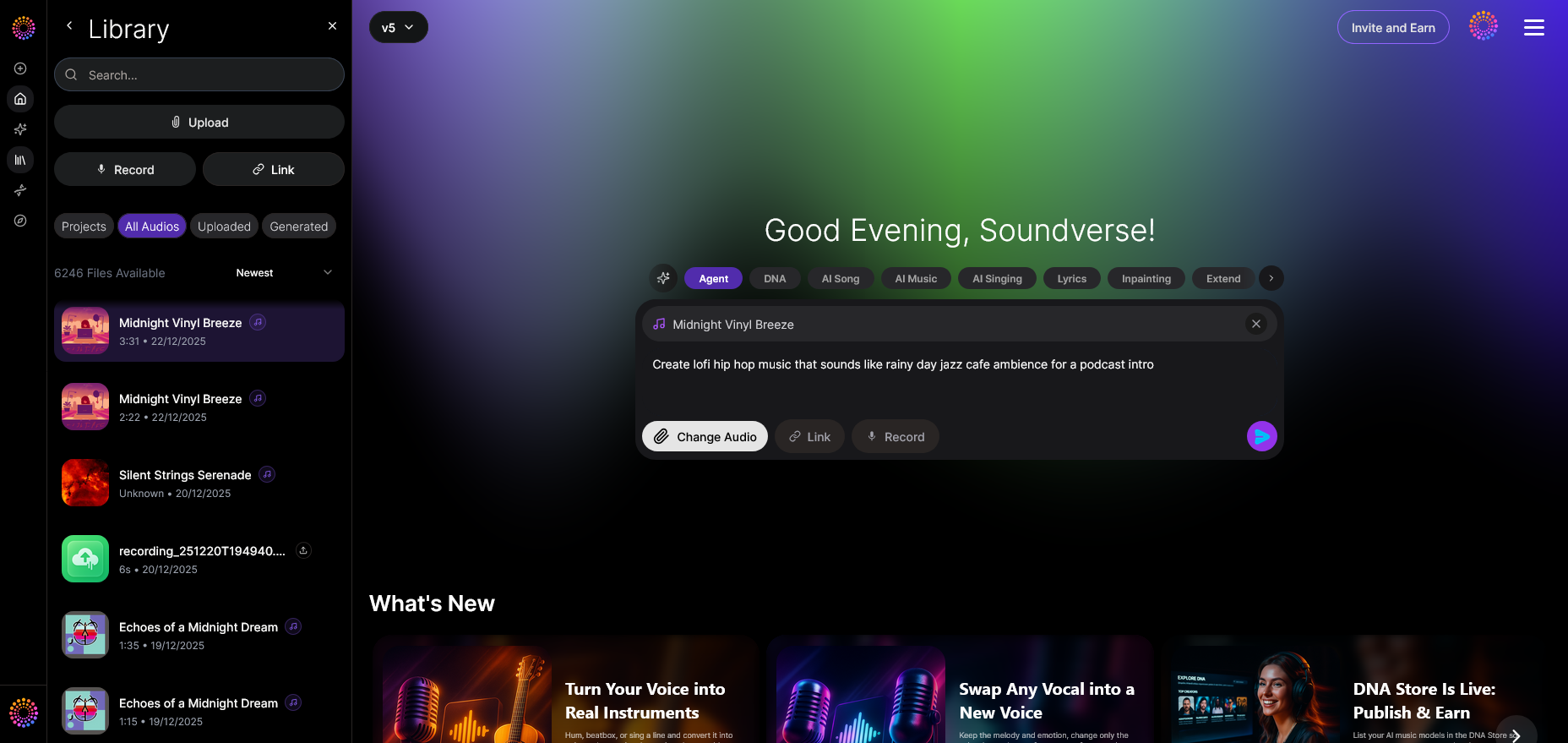
All file uploads (e.g., stems or short previews) occur through the Attach dialog. This lets the Agent access contextual sound data before starting the generation process.
Step 4: Submit Request
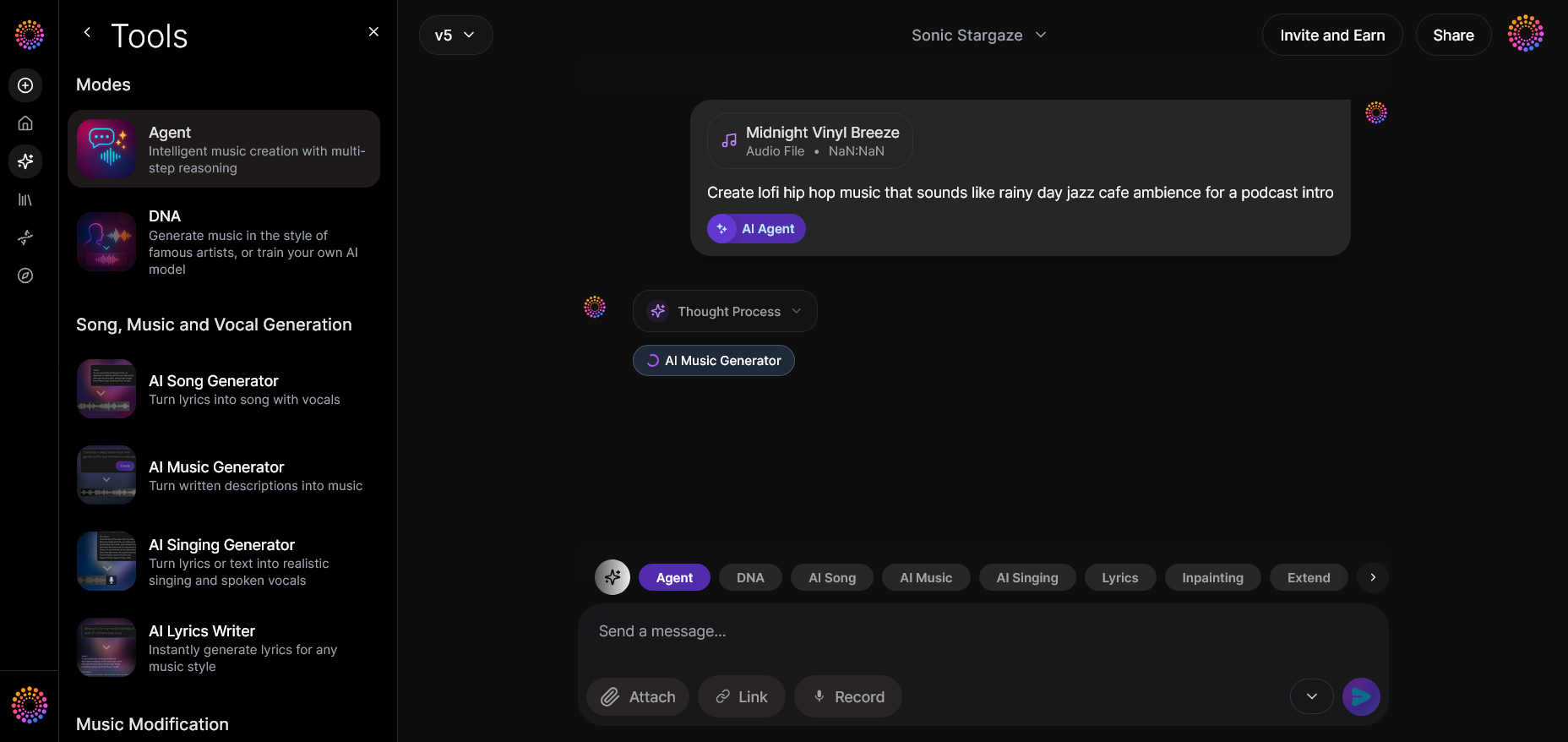
Once your text or voice input and attachments are ready, you press “Submit.” The Agent then orchestrates multiple internal tools to produce the requested audio asynchronously.
Step 5: Review Output
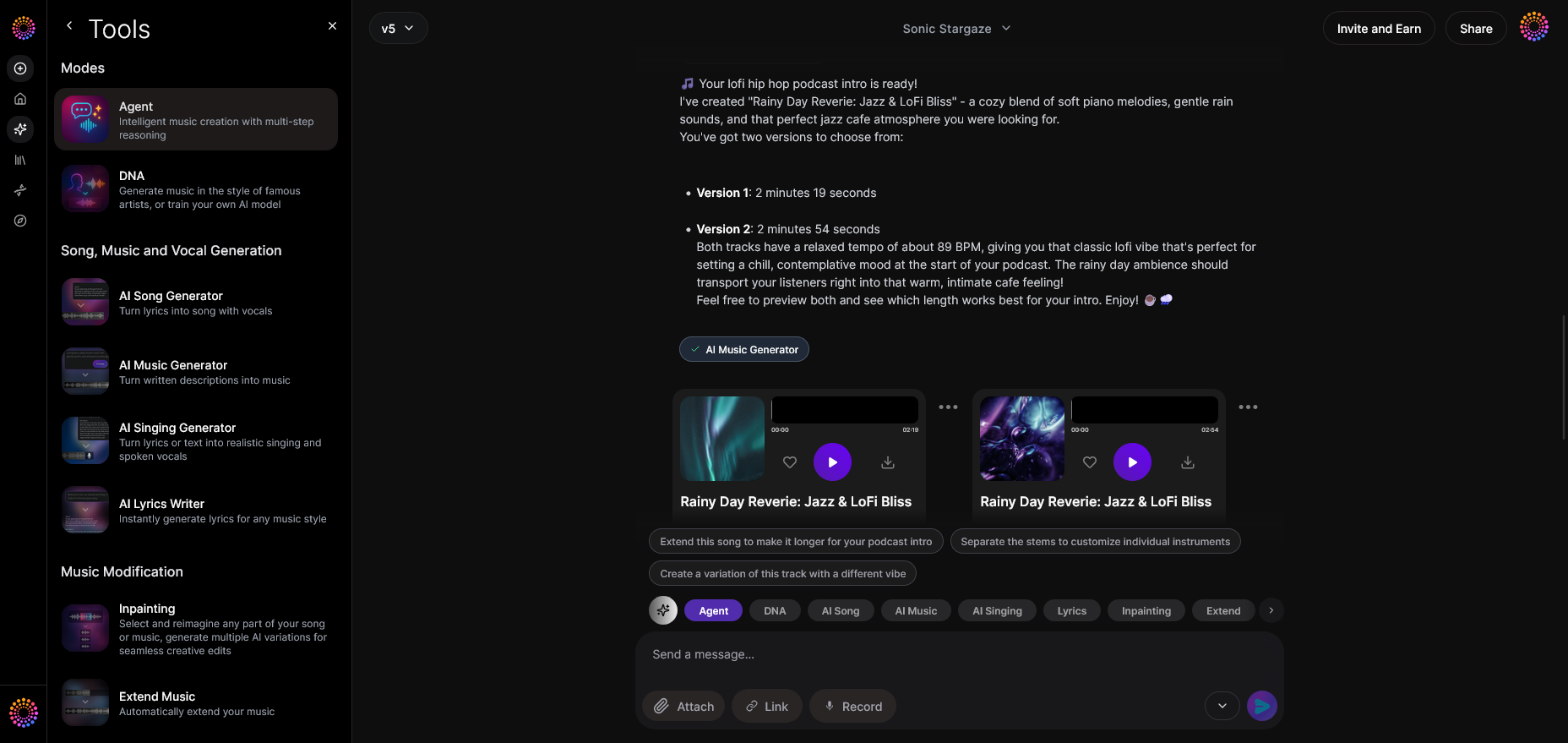
After processing, your generated track appears in the output display area. You can play it back, analyze instrument balance, and decide whether to refine it further.
Step 6: Refine Conversation
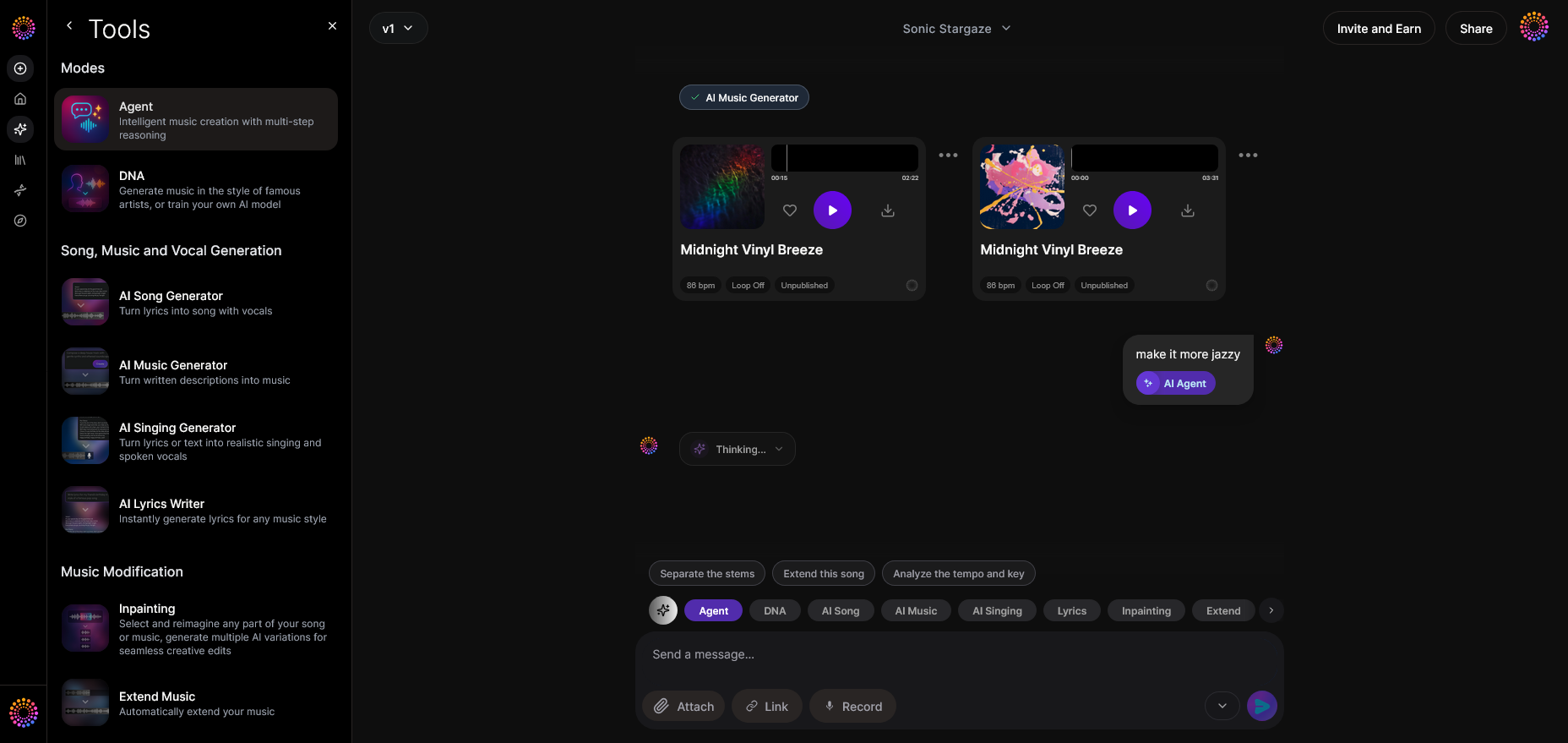
If adjustments are needed—such as “add piano” or “extend outro”—the Agent retains memory of your previous prompts. Conversational iterations allow natural refinement without starting from scratch.
Step 7: Advanced Controls
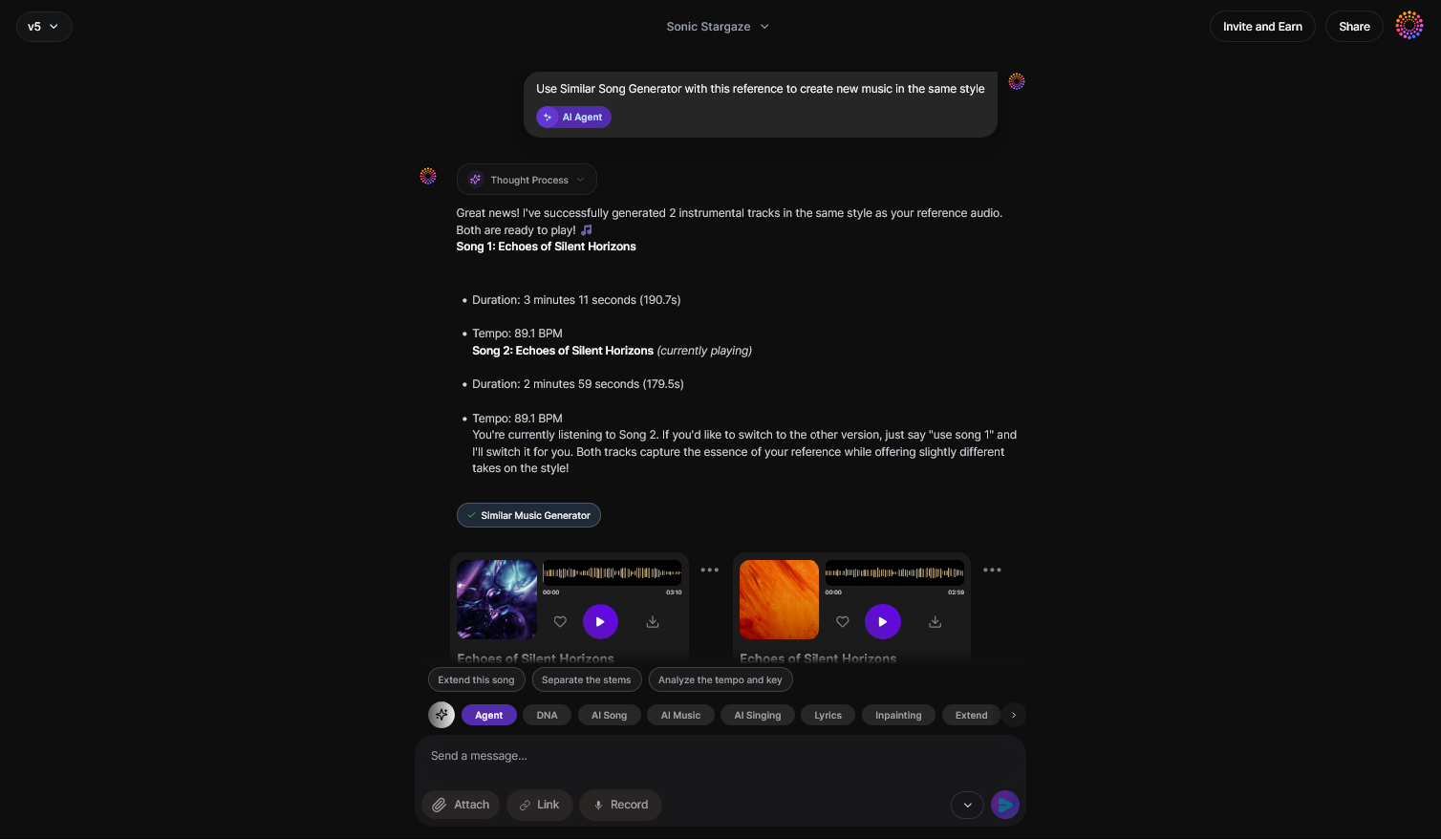
For professionals seeking granular editing, the advanced control panel offers access to genre filters, instrument toggles, and mixing parameters. These features expand production control while maintaining workflow speed.
Step 8: Export Options
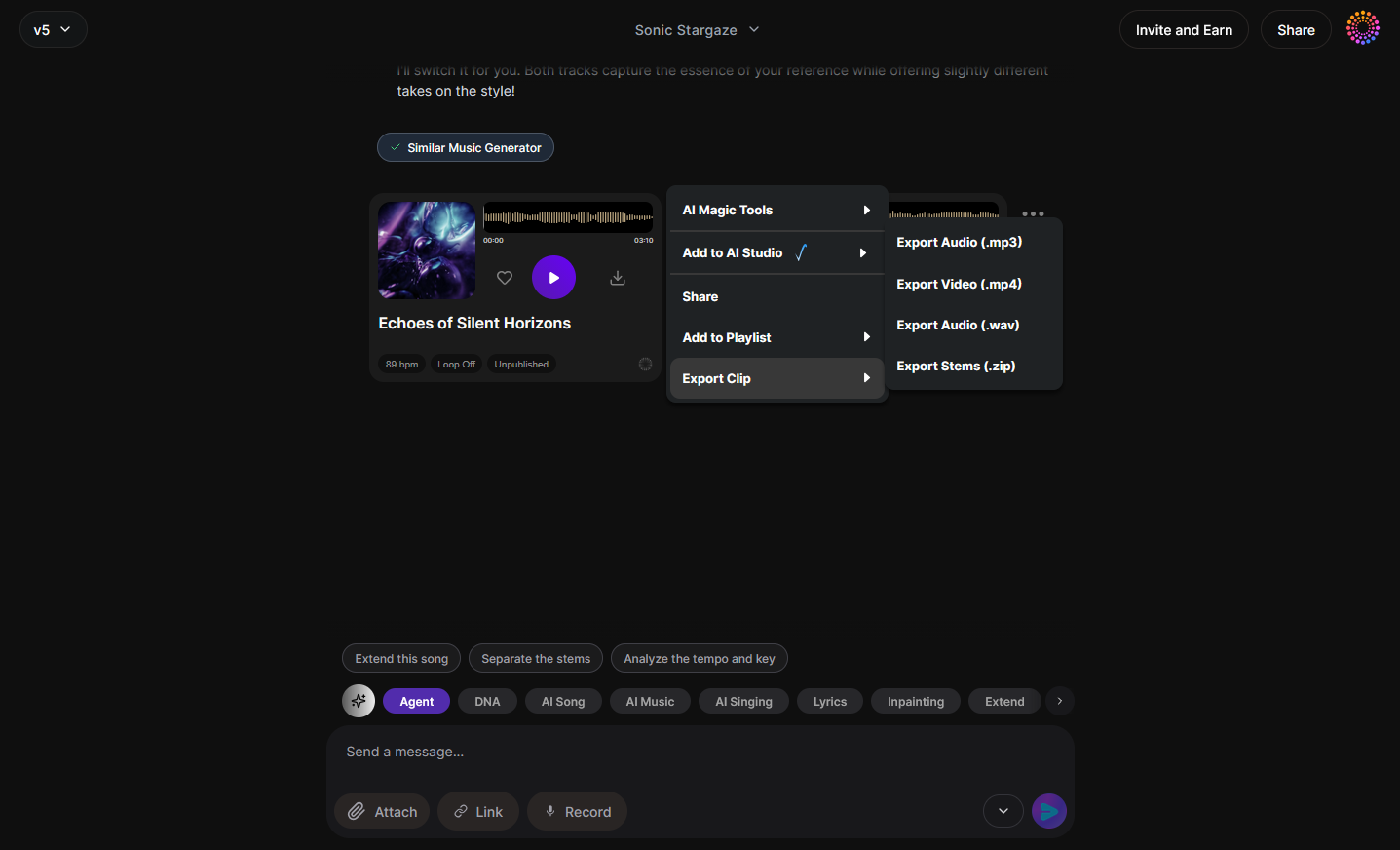
Once satisfied with your track, choose from multiple export formats suitable for mixing or distribution. The trace metadata ensures attribution remains intact upon export.
Step 9: New Conversation
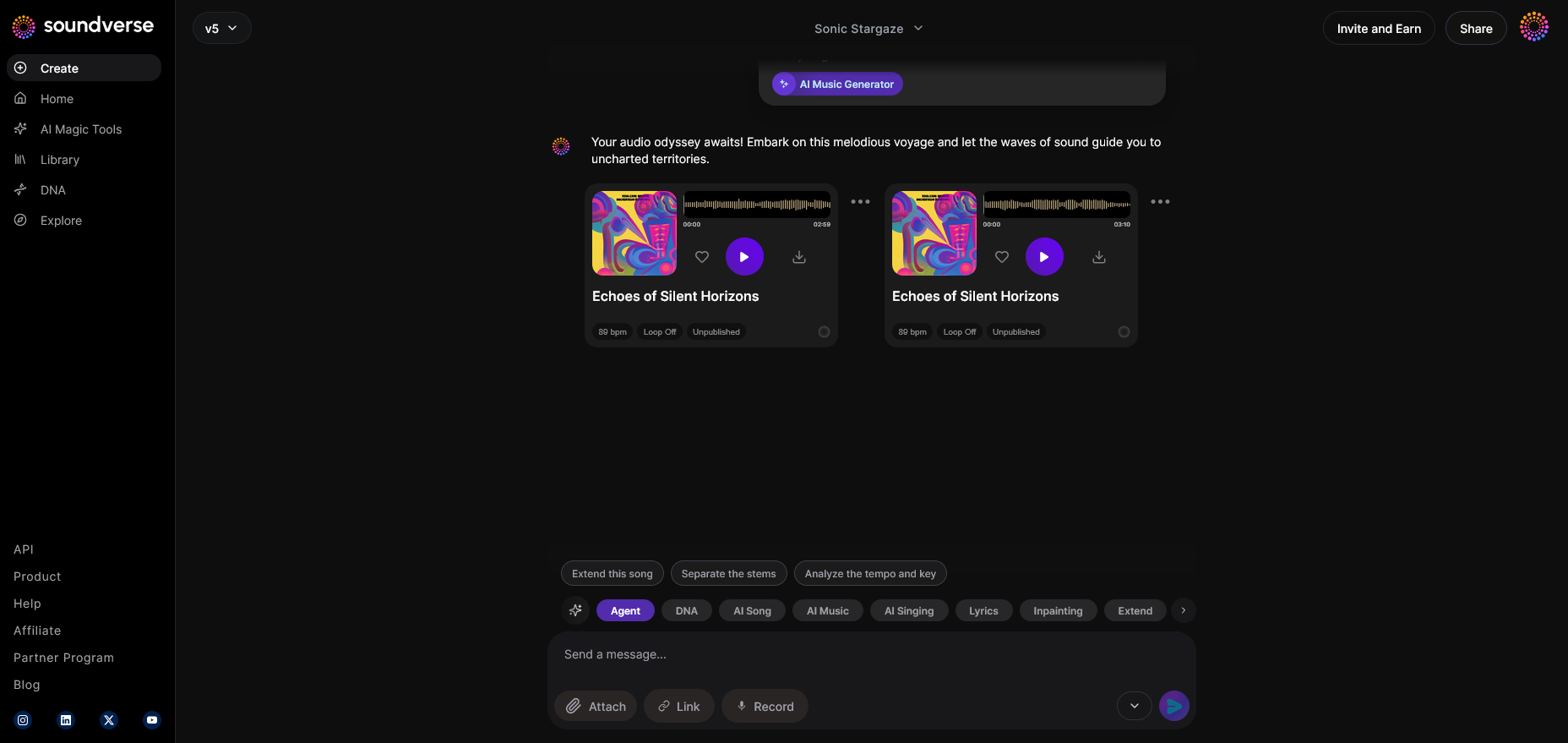
When you’re ready to start another project, click “New Conversation.” The Agent resets its context and awaits fresh requests.
Why Soundverse Represents the Next Era of AI Music Creation
In the broader AI music landscape, Soundverse stands out for its balance between automation and authenticity. Its conversational Agent reduces manual complexity while preserving creative integrity. This design philosophy aligns with the biggest demand of 2026—enabling scalable creativity without sacrificing originality.
Soundverse’s multi-step reasoning engine, contextual memory, and cross-tool orchestration offer significant efficiency for professional producers and hobbyists alike. Whether you’re developing cinematic soundscapes, genre experiments, or daily content pieces, the Agent acts like a virtual co-producer. From Idea to Finished Track Using Soundverse demonstrates this full creative journey.
As a result, Soundverse has become a top choice for creators exploring AI music creation and production automation. Combined with ethical frameworks like Soundverse DNA and attribution systems like Trace, the platform exemplifies how artificial intelligence in music can evolve responsibly.
Start Creating Music with AI Today
Unleash your creativity using Soundverse’s next-generation AI music technology. Generate songs, instrumentals, and soundscapes effortlessly — no musical training required.
Related Articles:
- How AI-Generated Music Is Transforming the Music Industry — Discover how AI is redefining production, inspiration, and artistry across today’s music landscape.
- Soundverse AI Magic Tools: Create Content Quickly with AI — Learn how Soundverse’s suite of AI music tools accelerates your creative workflow from idea to full track.
- Generate AI Music with Soundverse Text-to-Music — Explore how Soundverse turns simple text prompts into complete songs powered by cutting-edge AI models.
- The Benefits of Composing with an AI Music Generator — Find out how AI composition tools enhance creativity and productivity for every kind of music creator.
Here's how to make AI Music with Soundverse
Video Guide
Here’s another long walkthrough of how to use Soundverse AI.
Text Guide
- To know more about AI Magic Tools, check here.
- To know more about Soundverse Assistant, check here.
- To know more about Arrangement Studio, check here.
Soundverse is an AI Assistant that allows content creators and music makers to create original content in a flash using Generative AI.
With the help of Soundverse Assistant and AI Magic Tools, our users get an unfair advantage over other creators to create audio and music content quickly, easily and cheaply.
Soundverse Assistant is your ultimate music companion. You simply speak to the assistant to get your stuff done. The more you speak to it, the more it starts understanding you and your goals.
AI Magic Tools help convert your creative dreams into tangible music and audio. Use AI Magic Tools such as text to music, stem separation, or lyrics generation to realise your content dreams faster.
Soundverse is here to take music production to the next level. We're not just a digital audio workstation (DAW) competing with Ableton or Logic, we're building a completely new paradigm of easy and conversational content creation.
TikTok: https://www.tiktok.com/@soundverse.ai
Twitter: https://twitter.com/soundverse_ai
Instagram: https://www.instagram.com/soundverse.ai
LinkedIn: https://www.linkedin.com/company/soundverseai
Youtube: https://www.youtube.com/@SoundverseAI
Facebook: https://www.facebook.com/profile.php?id=100095674445607
Join Soundverse for Free and make Viral AI Music
We are constantly building more product experiences. Keep checking our Blog to stay updated about them!