How Music Is Used in Advertising in 2026: The Power of Sound Branding and Emotional Connection
Explore how music in advertising shapes brand identity and emotional impact in 2026.
How Music Is Used in Advertising
Music has always held a central role in advertising, functioning not merely as background noise but as a strategic emotional and psychological tool. In 2026, as advertising evolves into multisensory and AI-driven experiences, the function of music in advertising has gained new importance. For marketing professionals, agencies, and brand strategists, mastering how sound shapes perception is critical to maintaining competitive edge and audience connection.
Why is music in advertising so influential?
Advertising psychology shows that music impacts consumers’ mood and memory. It activates emotional regions in the brain, making an ad more memorable and persuasive. Whether it’s a short jingle or a cinematic soundtrack, carefully chosen music guides how viewers perceive a product’s personality. Studies since 2025 have confirmed that music aligned with brand identity increases recall and purchase intent by up to 40%.
Music embeds emotion into storytelling. In a world saturated with visual stimuli, auditory cues cut through the clutter. A joyful rhythm implies youthful energy, ambient tones evoke luxury, and nostalgic melodies stimulate trust. This psychological conditioning, often called emotional advertising, leverages music to link emotions with brands. Think of how the tone of a track can reframe a brand from ordinary to extraordinary—the emotional undercurrent is where conversion happens.
What role does sound branding play in shaping brand identity?
Sound branding goes beyond a jingle. It’s a holistic approach to integrating sound consistently across touchpoints—commercials, apps, social media, and in-store environments. Successful brands treat music as a component of visual identity, voice tone, and advertising psychology. When consumers hear a distinctive musical logo, they immediately associate it with a company’s essence.
In 2026, brands use sound branding strategies such as:
- Logo sonification – crafting short motifs that represent company values.
- Background soundscapes – integrating textures that match visual aesthetics.
- Interactive audio cues – using musical prompts in mobile apps and VR ads.
Research trends (see analysis in Music Industry Trends) show that audio logos are now customized per demographic. For example, Gen Z-focused brands may apply upbeat electronic pulses, whereas luxury brands use orchestral or minimal ambient tones. This personalization deepens the emotional connection between consumer and message.
How does music marketing drive consumer decisions in 2026?
Music marketing is the strategic use of sound to promote both brands and artists. It operates on the principle that emotional resonance guides attention and product preference. In 2026, AI personalization tools analyze audience data, selecting specific genres or moods that fit segmented advertising campaigns.
Marketers recognize that well-designed music enhances ad engagement rates, improves dwell time, and boosts recall of slogans. Fast-tempo tracks trigger feelings of excitement and energy; slow ones induce calm and trust. Advertisers now collaborate closely with composers and AI music generators to craft original soundtracks tailored to campaign objectives.
The synergy between music marketing and advertising psychology empowers creative teams to orchestrate nuanced experiences. A tourism spot might use tropical percussion to stimulate wanderlust, while a tech ad could employ futuristic electronic rhythms to evoke innovation.
For deeper insight into how sound design is evolving within digital ads, read Soundverse AI Revolutionizing Music Creation for New-Age Content Creators. It explains how AI-driven composition is transforming branded content across mediums. Also, check the Ultimate Guide to Music Marketing in 2026 to learn how to set practical goals and plan campaigns. For a deep technical overview, watch our tutorial on how to make music and explore how AI composition integrates seamlessly into ad workflows.
Why are brands increasingly using AI-powered music in advertising?
Since 2024, AI-generated music has become essential for ad production. Traditional licensing processes are slow and costly. In contrast, AI allows agencies to produce unique, copyright-free music tailored to brief requirements—style, tempo, and emotion—within minutes.
By 2026, advertisers demand scalability: campaigns require hundreds of short-form videos optimized for social platforms. With AI tools, sound branding can adapt dynamically across versions. This means consistent identity across regions and languages without worrying about copyright conflicts.
AI enables creative experimentation in ways unavailable through stock audio. Ad teams can fine-tune genre and instrument combinations for specific stimuli—matching emotional tonality precisely to message intent. The result is efficiency and authenticity.
How to make advertising music with Soundverse AI Music Generator
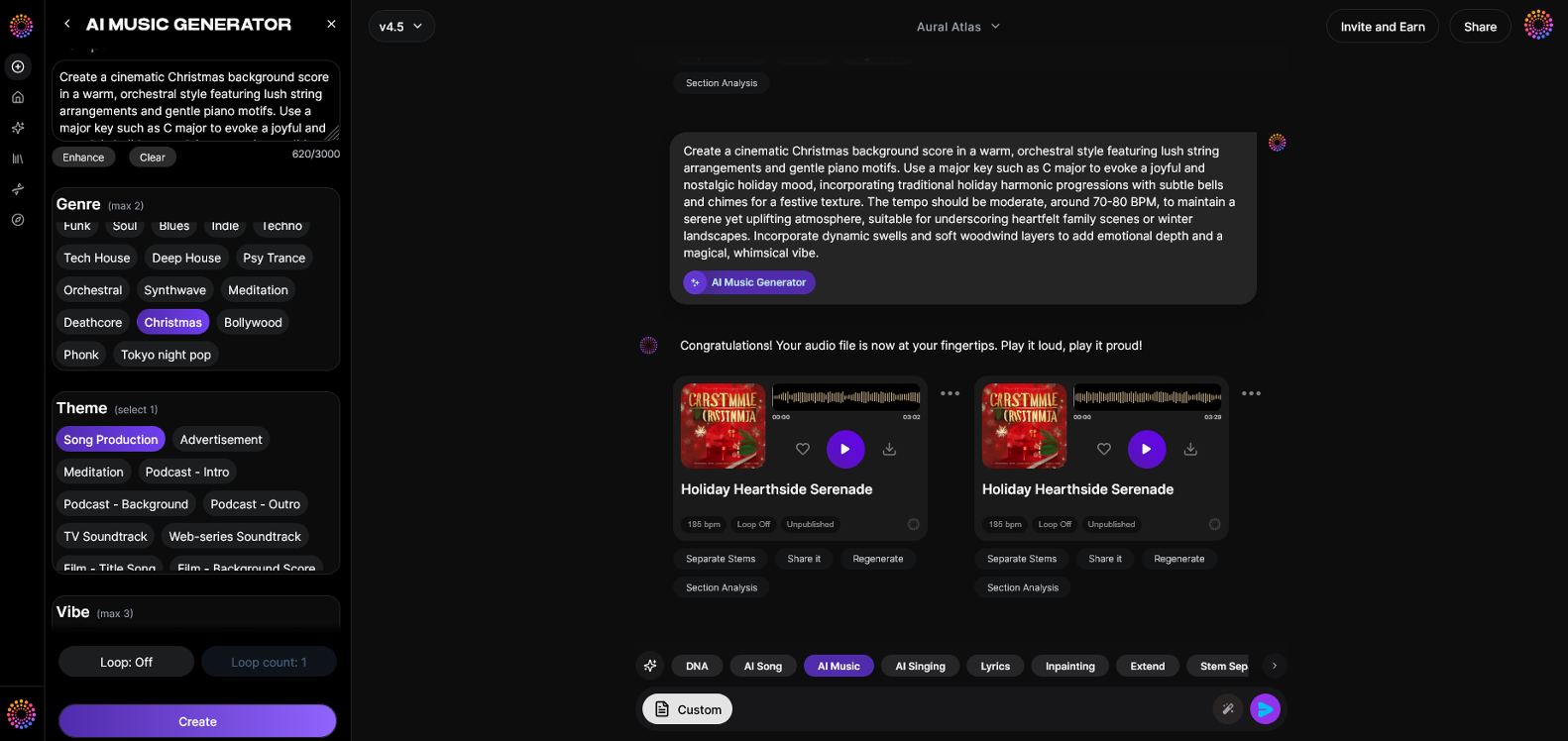
Soundverse’s AI Music Generator is designed specifically for marketers and agencies who need completely original instrumental compositions fast. It creates fully produced background tracks from text prompts. Whether you’re looking for cinematic soundscapes for luxury promotions or energetic beats for social reels, Soundverse delivers customized music ready for looping and export.
This tool specializes in AI-powered text-to-music generation, allowing fine control over genre, rhythm, instruments, and emotional tone. Using Loop Mode, advertisers can craft seamless repeating tracks that fit the duration of ads and social clips perfectly. Users can select between V4 and V5 model options, each offering enhanced production detail and mood precision.
Primary use cases include:
- Video backgrounds for ad campaigns
- Product launch soundtracks
- Ambient loops for interactive experiences
- Meditation or wellness-themed commercials
Unlike real-time preview systems, Soundverse works asynchronously—after text input and generation, users receive a downloadable, finished instrumental track. It ensures professional-grade quality while eliminating copyright complexity.
For producers seeking specific vibe replication, complementary tools like the Similar Music Generator and Similar Song Generator analyze reference tracks to generate new compositions in comparable style—ideal for maintaining brand tone consistency across campaigns.
Discover more tools in related reads such as Generate AI Music with Soundverse Text-to-Music and Soundverse AI Magic Tools Create Content Quickly With AI. For additional insights, watch our Explore tab tutorial and understand how creators navigate different sound presets effectively.
How marketing professionals can integrate AI music into ad workflows
- Concept alignment: Define the emotional goal—excitement, trust, nostalgia, or elegance—and select the appropriate genre in Soundverse.
- Audience targeting: Use demographic insights to choose musical elements aligning with cultural and age preferences.
- Consistency in identity: Maintain similar motifs across campaigns ensuring cohesive sound branding.
- Adaptive looping: Activate Loop Mode for seamless repetition in digital video formats.
- Rapid turnaround: AI generation optimizes creative timelines, allowing multi-version testing in social ads.
For professionals exploring the extended applications of AI, read How AI Generated Music Is Transforming the Music Industry, highlighting its widespread adoption across advertising and entertainment sectors.
What is the future of emotional advertising and sound branding?
By 2026, as AI continues refining musical nuance, emotional advertising will evolve toward interactive sonic experiences—ads that respond to user behavior in real time. Sound branding will extend to virtual environments, where customers hear branded tones while browsing VR stores. The role of music will shift from passive accompaniment to active conversation.
Sound-based identity is proving as vital as visual design. The brands that succeed in 2026 will be those that define sophisticated musical signatures representing their values. As video content multiplies, AI-powered music creation with tools like Soundverse ensures consistent, high-quality sound delivery.
Create Custom Music for Your Next Ad Campaign Harness the power of AI to design music that perfectly matches your brand message and emotional tone. Transform how audiences connect with your ads through unique soundscapes built in seconds. Generate Music Now
Related Articles
- The Role of AI Music in Film and Television: Discover how AI-generated compositions are reshaping soundtracks across visual storytelling mediums.
- Navigating the World of Royalty-Free and Copyright-Free Music Using Soundverse AI: Learn how to find and use the right kind of music for commercial projects without legal hassles.
- Enhancing YouTube Content with Royalty-Free and Copyright-Free Music Using Soundverse AI: Explore how creators elevate engagement and professionalism by integrating AI-generated music.
- How AI-Generated Music Is Transforming the Music Industry: Understand the broader impact of AI music technology on marketing, production, and audience experiences.
Here's how to make AI Music with Soundverse
Video Guide
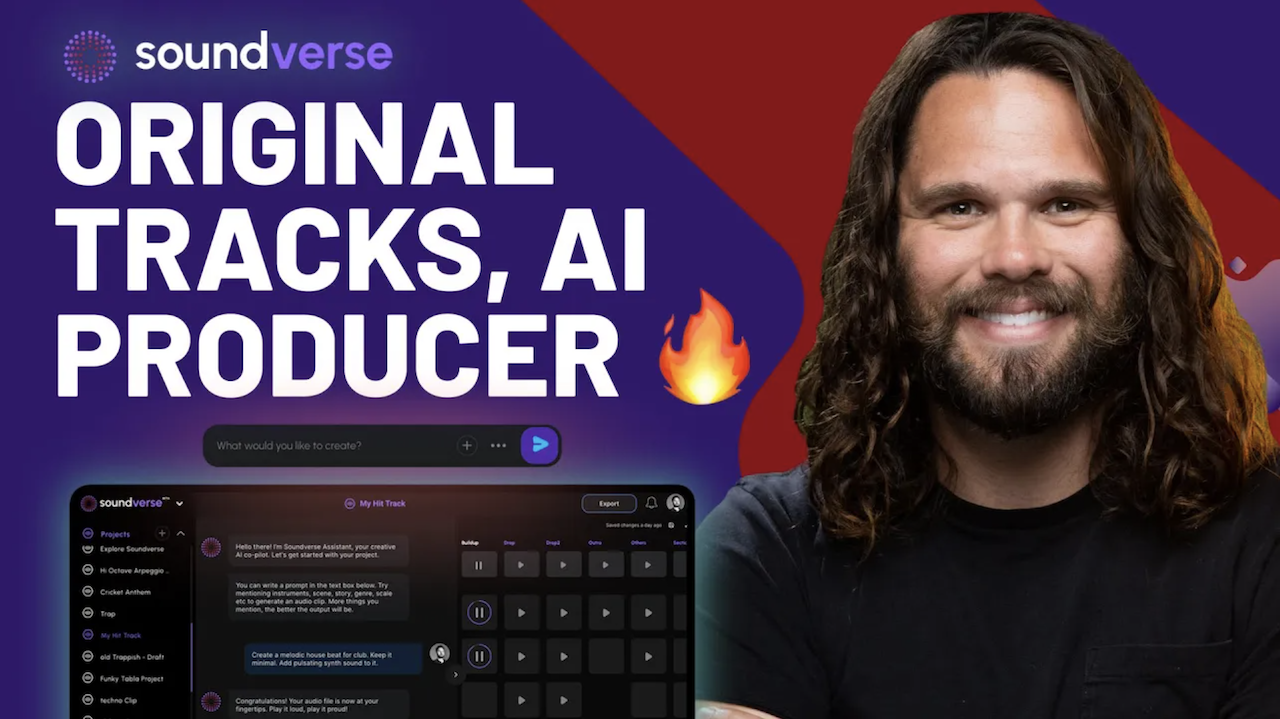
Here’s another long walkthrough of how to use Soundverse AI.
Text Guide
- To know more about AI Magic Tools, check here.
- To know more about Soundverse Assistant, check here.
- To know more about Arrangement Studio, check here.
Soundverse is an AI Assistant that allows content creators and music makers to create original content in a flash using Generative AI.
With the help of Soundverse Assistant and AI Magic Tools, our users get an unfair advantage over other creators to create audio and music content quickly, easily and cheaply.
Soundverse Assistant is your ultimate music companion. You simply speak to the assistant to get your stuff done. The more you speak to it, the more it starts understanding you and your goals.
AI Magic Tools help convert your creative dreams into tangible music and audio. Use AI Magic Tools such as text to music, stem separation, or lyrics generation to realise your content dreams faster.
Soundverse is here to take music production to the next level. We're not just a digital audio workstation (DAW) competing with Ableton or Logic, we're building a completely new paradigm of easy and conversational content creation. TikTok: https://www.tiktok.com/@soundverse.ai Twitter: https://twitter.com/soundverse_ai Instagram: https://www.instagram.com/soundverse.ai LinkedIn: https://www.linkedin.com/company/soundverseai Youtube: https://www.youtube.com/@SoundverseAI Facebook: https://www.facebook.com/profile.php?id=100095674445607
Join Soundverse for Free and make Viral AI Music
We are constantly building more product experiences. Keep checking our Blog to stay updated about them!