How Does Music Affect the Brain: Exploring the Science Behind Sound and Emotion
Discover how music affects the brain, mood, and mental health through neuroscience and music therapy insights in 2026.
How Does Music Affect the Brain
Music has captivated human minds for centuries, not only as an art form but also as a powerful influence on emotions, memory, and overall brain function. In 2026, the intersection of neuroscience, psychology, and AI-driven music generation continues to expand our understanding of how rhythms and melodies affect the mind. This article explores how music affects the brain, its impact on mood, cognition, and mental health, and how Soundverse’s AI Music Generator helps experiment with these effects creatively.
What happens in the brain when we listen to music?
Listening to music triggers an intricate network of neural processes. When sound waves enter the ear, they activate the auditory cortex, located in the temporal lobes, which decodes pitch, tone, and rhythm. Simultaneously, other regions—the amygdala, hippocampus, and prefrontal cortex—respond emotionally and cognitively. These areas together shape our understanding of how music affects the brain on both conscious and subconscious levels.
Neuroscientific research in recent years (2024–2025) uncovered that dopamine, often referred to as the “feel-good” neurotransmitter, is released during peak emotional experiences with music. This explains the goosebumps or chills people feel during powerful musical moments. By 2026, imaging tools and AI-based pattern detection in neuroscience studies have refined our ability to track these responses in real time, revealing distinct neural pathways for different types of music—classical, electronic, ambient, and more. Studies such as Music training can help the brain focus also highlight how musical ability reinforces conscious attention.
How does music influence mood and emotion?
The effects of music on mood are immediate and measurable. A lively pop tune can energize, while a soft piano piece can soothe anxiety. Studies demonstrate that tempo, key, and rhythm patterns guide emotional interpretation. The brain response to music involves both physiological and psychological dimensions—heart rate, cortisol levels, and even breathing patterns fluctuate with musical stimuli.
Therapists frequently use the calming effects of slow rhythms and harmonious melodies in anxiety management or stress reduction programs. Music therapy benefits are now integrated with mental health platforms globally, emphasizing how the neuroscience of music supports well-being. For students, concentrating on rhythmic yet non-lyrical music can enhance focus, while for researchers, sound can form the background environment that boosts productivity.
How does music affect memory and learning?
Beyond mood, memory is one of the most profound cognitive functions influenced by music. The hippocampus—central to memory formation—activates during both musical composition and listening. This explains why melodies often help recall forgotten moments or why songs linked to specific experiences feel nostalgic. In aging populations, therapeutic use of familiar music improves recall and mental clarity.
Educational systems in 2026 increasingly incorporate music-based learning techniques to support memorization. The rhythmic repetition structure aids neural encoding, and pairing factual information with melodies improves retention. Students studying complex content can use instrumental music—like background soundscapes generated via AI tools—to maintain concentration and prevent cognitive fatigue.
What is the neuroscience of music?
The neuroscience of music in 2026 offers deeper insights into auditory processing, emotional resonance, and predictive coding in the brain. When the brain encounters patterns, it forms expectations based on previous auditory experiences. Pleasant surprises, like unexpected chord progressions, stimulate reward pathways and generate heightened emotional reactions. This mechanism aligns with findings from This Is Your Brain On Music explaining "neural resonance theory" behind musical perception.
Functional MRI and EEG research has shown how professional musicians develop thicker corpus callosum regions, enhancing connectivity between the left and right hemispheres. This increased integration translates into superior multitasking and creativity. Even non-musicians experience brain plasticity changes after consistent exposure to music.
Neuroscientists now explore how digital music tools—like AI music generators—can extend this research. Such platforms allow precise manipulation of rhythm, harmonics, and tempo, enabling controlled experimentation on brain responses to tailored soundscapes.
For a deeper dive into music creation, watch our guide on creating Deep House music and our tutorial on how to make music available on Soundverse’s YouTube channel.
What are the health benefits of music therapy?
Music therapy benefits extend far beyond relaxation. Studies between 2024 and 2025 confirmed the role of musical engagement in reducing symptoms of depression, PTSD, and chronic pain. By 2026, its application has evolved to include personalized music therapy sessions guided by AI algorithms that adapt playlists according to neural feedback.
For example:
- Emotional regulation: Structured listening sessions help stabilize mood fluctuations.
- Pain management: Music acts as a distraction technique, reducing perceived pain.
- Cognitive rehabilitation: Stroke patients regain speech and motor skills through rhythmic stimulation.
- Sleep improvement: Gentle instrumental loops entrain brainwaves conducive to deep relaxation.
These benefits highlight how music and brain health are interlinked and how different genres offer targeted healing potential. Research like How Music Resonates in the Brain illustrates how nearly all brain regions—from hippocampus to amygdala—activate in emotional musical responses.
How does cultural and personal context shape musical response?
Every brain responds uniquely to music. Cultural familiarity and personal experience influence how the mind interprets melodies. A traditional Indian raga might evoke tranquility in one listener but curiosity in another unfamiliar with it. Similarly, nostalgic tracks stimulate emotional memories depending on life history.
With AI systems in 2026, scientists can compare cross-cultural neural reactions, identifying universal musical elements that generate consistent emotional states—useful in global music therapy or entertainment design.
What role do modern technologies play in studying music and the brain?
Advancements in computational neuroscience and artificial intelligence have transformed how researchers analyze auditory perception. AI can now decode EEG patterns linked to rhythm processing, assisting researchers examining how music affects the brain at the micro-neural level.
Tools such as Soundverse have popularized this integration between creativity and science. Using text-based music generation, creators can simulate different musical stimuli and observe behavioral or emotional outcomes—making experimental music accessible for academic and mental health exploration.
For deeper context on AI’s expanding role in sound design and neuroscience, check out related insights from Soundverse’s articles: AI music transforming the industry, Music industry trends, and AI magic tools for creators.
How to make music that influences brain states with Soundverse AI Music Generator
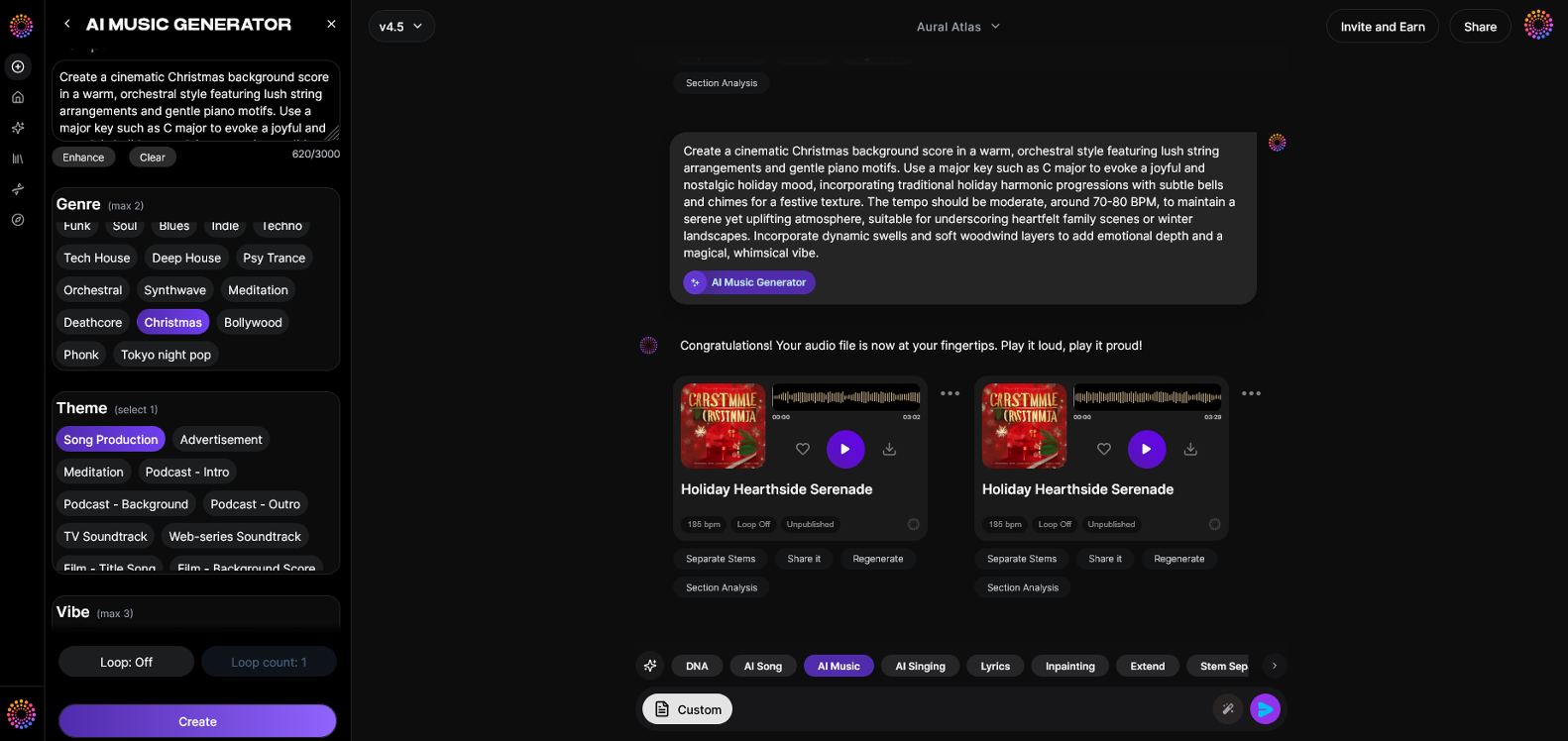
Now that you understand how music affects the brain, you can begin creating tailored instrumental tracks that evoke specific neurological and emotional reactions using Soundverse.
The AI Music Generator allows users to create fully produced instrumental music from simple text prompts. It specializes in generating background tracks, beats, and immersive soundscapes without vocals. Features like Loop Mode enable seamless repetition—ideal for meditation and concentration music—while genre, mood, and instrument control ensure precision over sound design. Users can choose between the V4 or V5 Models for refined generation quality.
Key Use Cases:
- Background scores for neuroscience experiments and cognitive studies.
- Meditation and wellness music aiding focus or relaxation.
- Educational environments enhancing retention through consistent auditory patterns.
- Video, game, and commercial sound production exploring emotional engagement.
To learn more about generating instrumental music instantly via text, explore Soundverse text-to-music generation or read how creators use AI tools for specialized sounds like meditation music or genre-based experimentation.
Soundverse’s ecosystem also includes related tools:
- AI Singing Generator for creating acapella vocal sounds from text, enabling emotion-rich pieces aligned with mood research.
- Agent, an advanced conversational AI, coordinates complex multi-step music generation commands like ‘create ambient music and loop it for 10 minutes.’
- Section Analysis, which provides structural mapping for precise editing and timing when analyzing effects of music on mood variation.
The integration of these features bridges creative sound exploration with neuroscience, reinforcing the role of technology in understanding human emotion and cognition through music.
Experience the Power of AI-Generated Music Today
Unlock your creative potential with Soundverse’s cutting-edge AI tools that let you generate music tailored to your mood, purpose, and audience—all in seconds. Start composing smarter and faster.
Create Music with AI
Related Articles
- How AI-Generated Music Is Transforming the Music Industry — Discover how artificial intelligence is reshaping sound creation and revolutionizing the way musicians and creators produce new tracks.
- The Role of AI Music in Film and Television — Learn how AI-generated music is finding its place in cinematic and TV soundtracks, elevating storytelling through innovative sound design.
- The Benefits of Composing with AI Music Generator — Explore how AI tools like Soundverse make music composition more efficient, creative, and accessible for artists of all kinds.
- How to Create Healing Meditation Music with Soundverse AI — Uncover how to produce calming, healing tracks using AI and learn how music can positively influence the mind and body.
Here's how to make AI Music with Soundverse
Video Guide
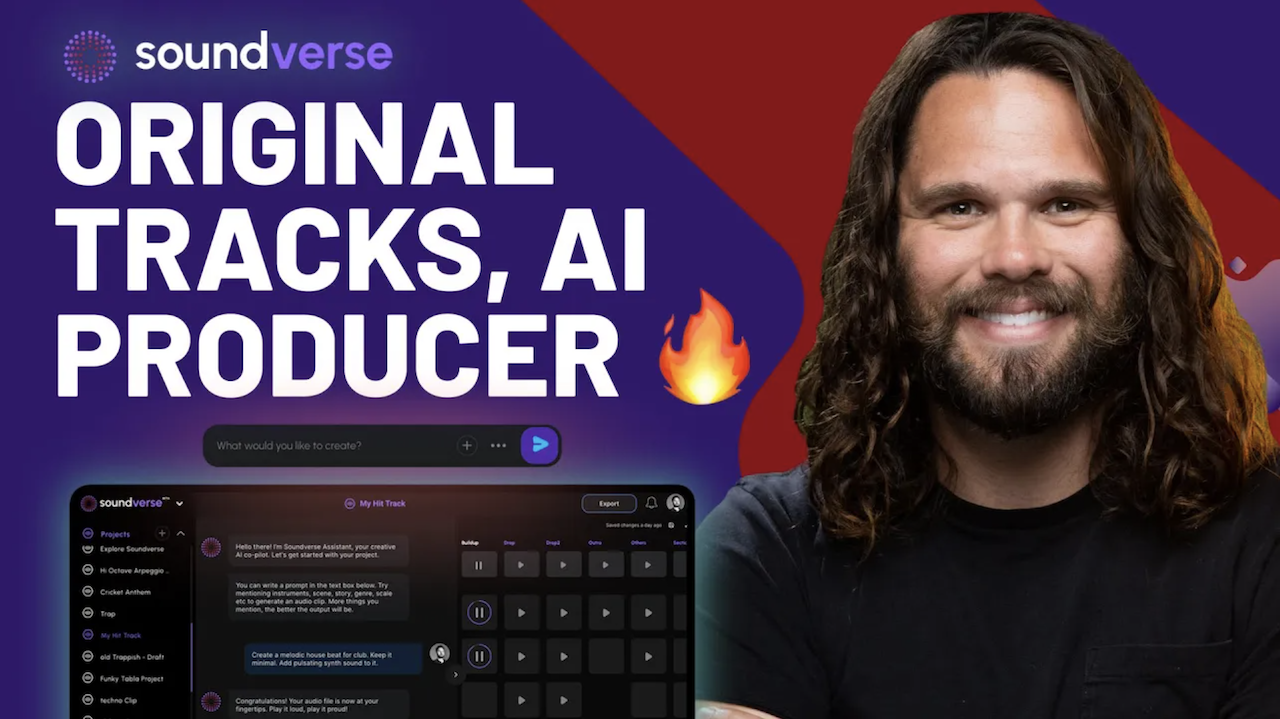
Here’s another long walkthrough of how to use Soundverse AI.
Text Guide
- To know more about AI Magic Tools, check here.
- To know more about Soundverse Assistant, check here.
- To know more about Arrangement Studio, check here.
Soundverse is an AI Assistant that allows content creators and music makers to create original content in a flash using Generative AI. With the help of Soundverse Assistant and AI Magic Tools, our users get an unfair advantage over other creators to create audio and music content quickly, easily and cheaply. Soundverse Assistant is your ultimate music companion. You simply speak to the assistant to get your stuff done. The more you speak to it, the more it starts understanding you and your goals. AI Magic Tools help convert your creative dreams into tangible music and audio. Use AI Magic Tools such as text to music, stem separation, or lyrics generation to realise your content dreams faster. Soundverse is here to take music production to the next level. We're not just a digital audio workstation (DAW) competing with Ableton or Logic, we're building a completely new paradigm of easy and conversational content creation.
TikTok: https://www.tiktok.com/@soundverse.ai
Twitter: https://twitter.com/soundverse_ai
Instagram: https://www.instagram.com/soundverse.ai
LinkedIn: https://www.linkedin.com/company/soundverseai
Youtube: https://www.youtube.com/@SoundverseAI
Facebook: https://www.facebook.com/profile.php?id=100095674445607
Join Soundverse for Free and make Viral AI Music

We are constantly building more product experiences. Keep checking our Blog to stay updated about them!