How Deserts Influence Music and Sound Creation
Explore how desert landscapes inspire ambient desert music and cultural rhythms in 2026.
How Deserts Influence Music and Sound Creation
In 2026, as global interest in environmental art and musical ethnography continues to rise, one of the most fascinating intersections between nature and sound can be found in desert music. These compositions, drawn from the vast silence and subtle resonance of arid regions, reveal how natural landscapes influence creativity, rhythm, and sonic design.
Why Do Deserts Inspire Music?
Deserts have always held a mysterious allure for composers, sound artists, and field recordists. Their vast openness, contrasting extremes of temperature, and minimal human interference make them ideal laboratories for sonic exploration. Unlike forest or coastal environments where sounds overlap densely, deserts often feature clarity and isolation—conditions that encourage minimalism and introspection in music.
Musicians describe the desert soundscape as a place of contrast. The wind offers dynamic textures, sand movement creates delicate percussive elements, and distant animal calls bring subtle natural motifs. From a creative standpoint, deserts inspire compositions rooted in reflection, endurance, and solitude.

How Do Desert Soundscapes Shape Musical Composition?
A desert soundscape is defined by its acoustic qualities: extended reverberations, absence of dense frequencies, and occasional bursts of natural sound. Artists often translate these cues into their compositions. Ambient desert music tends to feature long, sustained tones, slowly evolving pads, and a restrained rhythmic presence—mimicking the endless horizon and timeless stillness.
Sound recordists traveling through deserts capture field samples such as sandstorms, shifting dunes, or echoes within rock canyons. These can later be processed into ambient textures or integrated into film scores. In 2026, immersive technologies have made it easier to reconstruct desert environments digitally, allowing listeners to experience natural acoustics even within studio conditions. For a deeper dive, watch our guide on creating Deep House music or explore the Soundverse tutorial on music creation.
What Are Cultural Desert Rhythms?
Beyond ambient interpretations, deserts have also shaped cultural music traditions. The Middle Eastern, North African, and Southwestern U.S. regions all exhibit rhythmic styles derived from the realities of desert life. Instruments like the darbuka, oud, and handclap patterns mirror the pulse of walking across sand, while nomadic songs preserve heritage forged by migration and survival.
Cultural desert rhythms are not just musical structures—they are emotional stories about adaptation and identity. For instance, Berber drumming conveys stamina and unity, Bedouin chants communicate travel and faith, and Native American desert songs often honor the land through ceremonial performance. Festival au Desert in Mali is an example of desert-based music that fosters peace and cultural exchange. Likewise, events such as MDLBEAST & Soundstorm or Framework In The Desert celebrate how global festivals transform arid spaces into vibrant sound oases.
How Does Modern Technology Recreate Desert-Inspired Music?
In 2026, digital tools have transformed the way we reproduce nature’s soundscapes. Musicians no longer need to physically record desert sounds; they can synthesize authentic ambient desert music using advanced AI platforms. These systems can simulate natural acoustics, emulate ethnic instruments, and even generate looping textures ideal for meditation or cinematic ambiance.
Many creators combine field recordings with electronic sound design, creating hybrids of real and synthetic desert environments. This merging of technology and ecology has produced some of the most compelling conceptual albums of recent years—embedding awareness of climate, solitude, and natural balance within new age and experimental genres. Artists like Cafe De Anatolia have led the way, bridging heritage and innovation through desert-influenced house music.
What Philosophical Themes Arise from Desert Music?
The desert evokes silence and contemplation. Musicians inspired by deserts often refer to concepts of emptiness, timelessness, or spiritual renewal. These are translated sonically through sparse arrangements, occasional drone elements, and patient evolution within the piece.
Environmental artists see desert music as a metaphor for sustainability and balance. The scarcity of sound invites mindfulness; every echo becomes meaningful. As global warming continues to reshape landscapes, desert-inspired compositions remind listeners of resilience and fragility in nature. Projects such as Desert X AlUla 2026 capture these philosophies, bringing art installations and sound together under vast desert skies.
Historical and Contemporary Influences
Historically, desert music traces back to ancient nomadic traditions. In modern times, artists from the ambient, electronic, and world music scenes have embraced the aesthetic. Albums and multimedia projects from the early 2020s set the foundation, but the trend matured by 2026 as sound designers increasingly turned to natural minimalism and ecological themes. The Desert Music 2026 playlist by Cafe De Anatolia showcases contemporary interpretations of these sounds.
Composers today use AI-powered generators to craft complex soundscapes from simple prompts, a process far more efficient than manual sound layering. This has enabled musicians to experiment freely—bridging cultural authenticity with digital precision. Music researchers between France and Arizona are also investigating how environmental acoustics influence creative well-being.
If you want to explore related innovations, visit Soundverse’s insights on AI music and cultural fusion or read about how AI-generated music is transforming the industry. Each example reflects the gradual blending of technology and natural inspiration.
What Are the Core Components of Desert-Inspired Sound Design?
- Texture and Silence – Desert compositions rely on tension between sound and silence. The absence of constant frequency bodies gives room for deep emotional resonance.
- Spatiality – Echoes, delays, and reverb simulate vast open spaces and heat mirages.
- Cultural Identity – Regional instruments carrying centuries of desert tradition create connection between heritage and innovation.
- Sustainability Awareness – Many desert musicians emphasize environmental respect and minimal resource consumption.
- Temporal Expansion – Slow progression reflects the timeless essence of arid landscapes.
These attributes define what ambient desert music means in 2026—an auditory interpretation of the natural world’s resilience and tranquility.
The Environmental Influence on Music Evolution
Environmental influence on music continues to grow as creators recognize nature not just as scenery but as collaborator. Deserts demonstrate this synergy most visibly. Their rawness offers a compositional template free from distraction. Modern sound installations often use desert recordings to foster meditative environments or museum exhibits exploring environmental sound.
This connection between physical geography and auditory creativity has also inspired cross-disciplinary projects in ethnomusicology. Researchers compare desert acoustics with other biomes, analyzing how topography alters percussion, pitch, and harmonic density.
In summary, the desert influences music not merely through its sounds but through the emotions and philosophies it instills—silence as song, simplicity as depth, and endurance as rhythm.
How to make desert music with Soundverse AI Music Generator
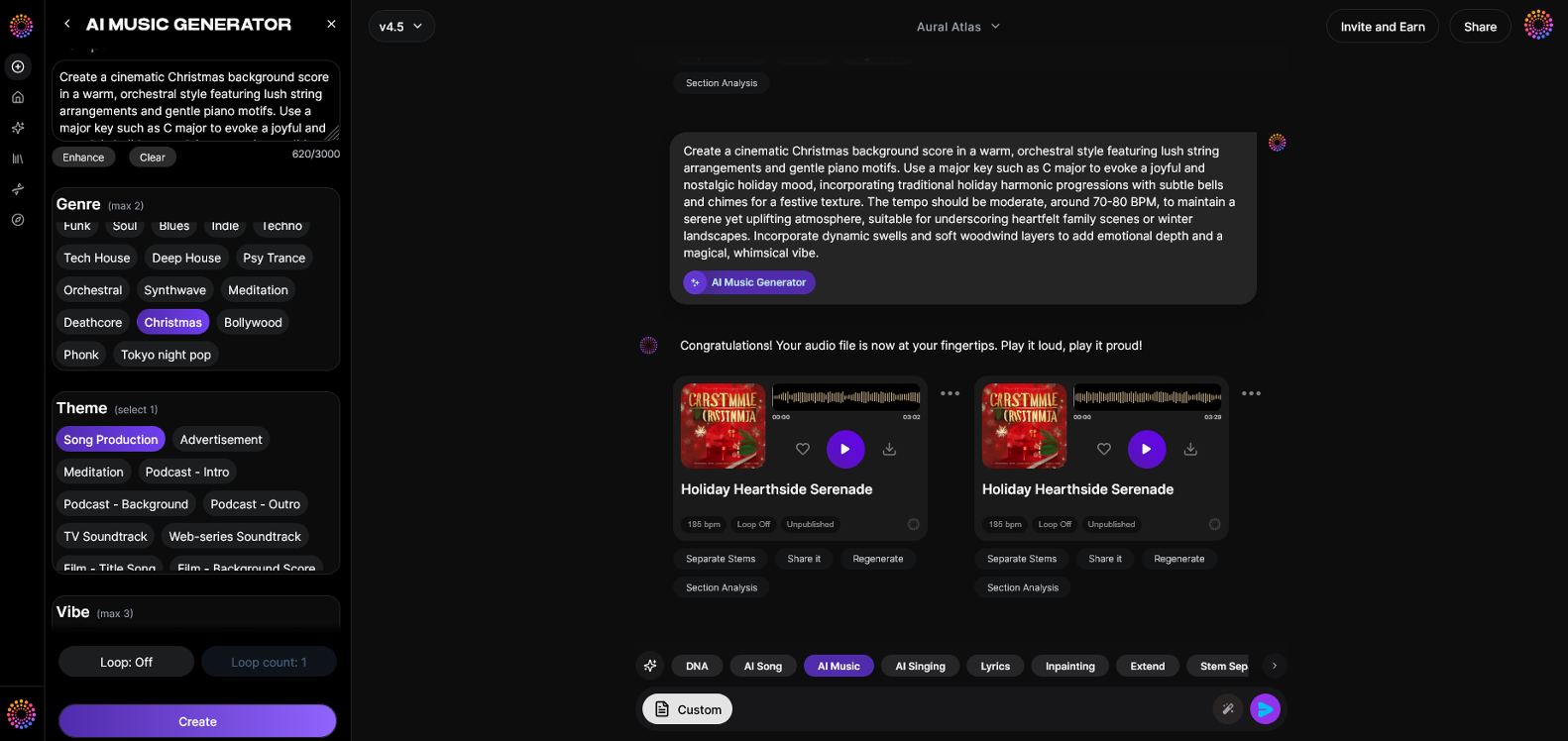
Now that you understand how deserts shape musical composition, here is how you can instantly bring desert-inspired soundscapes to life using Soundverse.
The AI Music Generator by Soundverse enables users to create fully produced instrumental tracks from simple text prompts. Whether you aim to design ambient desert music, simulate cultural desert rhythms, or craft atmospheric sound for video or meditation projects, Soundverse provides precise control.
Core Capabilities:
- Text-to-Music: Create instrumental compositions from descriptive prompts such as “calm desert sunrise ambient” or “ethnic sand dune percussion groove.”
- Loop Mode: Seamlessly repeat sections for immersive sound environments—ideal for game soundtracks or meditation loops.
- Genre/Mood/Instrument Control: Adjust structure and sonic palette—from traditional acoustic to experimental ambient.
- V4 and V5 Model Options: Choose between high-detail production versions for unique sound modeling.
Primary Use Cases:
- Video Backgrounds: Enhance film scenes depicting desert terrain.
- Game Soundtracks: Produce looping tracks for adventurous desert-level environments.
- Wellness and Meditation: Craft peaceful desert soundscapes that promote mindfulness.
- Advertising and Commercial Scoring: Add exotic warmth or serenity through desert-inspired tones.
To learn how Soundverse enables creative speed in music design, explore articles such as Generate AI Music with Text-to-Music or see how AI Magic Tools help creators work efficiently. You can also read How to Create Music Evoking the Desert for inspiration on thematic sound prompts.
Why Soundverse Is Ideal for Desert-Inspired Creation
Soundverse’s text-driven AI makes translating environmental emotion into auditory form intuitive. You simply describe your vision—the silence before dawn in the Sahara or the energetic rhythms of a festival in Rajasthan—and the platform instantly constructs immersive music without vocals. Its seamless loop mode ensures extended playback, suitable for meditative art, VR environments, or academic exhibitions.
For artists, ethnomusicologists, and creative educators exploring environmental influence on music, Soundverse removes barriers of technical production and allows instant conceptual experimentation.
Bring Desert Vibes to Life with Soundverse AI
Transform the essence of the desert into captivating soundscapes using AI. Generate unique, mood-rich compositions inspired by nature’s vastness and silence.
Create Desert Music Now
Related Articles
- How to Create Music Evoking the Desert: Discover techniques and AI tools to capture the mood, rhythm, and mystique of desert-inspired music.
- How to Create Country Music with Soundverse AI: Learn how Soundverse AI helps you craft authentic country sounds infused with character and emotional depth.
- Generate AI Music with Soundverse Text-to-Music: Turn your written ideas into full-length tracks instantly using Soundverse’s advanced text-to-music capabilities.
- The Role of AI Music in Film and Television: Explore how AI-generated soundscapes are reshaping storytelling in film and TV, from ambiance to emotion.
Here's how to make AI Music with Soundverse
Video Guide

Here’s another long walkthrough of how to use Soundverse AI.
Text Guide
- To know more about AI Magic Tools, check here.
- To know more about Soundverse Assistant, check here.
- To know more about Arrangement Studio, check here.
Soundverse is an AI Assistant that allows content creators and music makers to create original content in a flash using Generative AI. With the help of Soundverse Assistant and AI Magic Tools, our users get an unfair advantage over other creators to create audio and music content quickly, easily and cheaply. Soundverse Assistant is your ultimate music companion. You simply speak to the assistant to get your stuff done. The more you speak to it, the more it starts understanding you and your goals. AI Magic Tools help convert your creative dreams into tangible music and audio. Use AI Magic Tools such as text to music, stem separation, or lyrics generation to realise your content dreams faster. Soundverse is here to take music production to the next level. We're not just a digital audio workstation (DAW) competing with Ableton or Logic, we're building a completely new paradigm of easy and conversational content creation.
TikTok: https://www.tiktok.com/@soundverse.ai
Twitter: https://twitter.com/soundverse_ai
Instagram: https://www.instagram.com/soundverse.ai
LinkedIn: https://www.linkedin.com/company/soundverseai
Youtube: https://www.youtube.com/@SoundverseAI
Facebook: https://www.facebook.com/profile.php?id=100095674445607
Join Soundverse for Free and make Viral AI Music

We are constantly building more product experiences. Keep checking our Blog to stay updated about them!