How Artists Are Using AI and Machine Learning to Create New Sounds and Effects
Discover how musicians in 2026 are using AI music creation and machine learning to create new sounds and effects.
How Artists Are Using AI and Machine Learning to Create New Sounds and Effects
Artificial intelligence (AI) and machine learning in music are reshaping creativity faster than any innovation seen in the previous decade. By 2026, AI music creation has moved from experimental niche projects to mainstream production workflows, empowering artists to explore new sonic territories while maintaining authenticity and control over their craft.
What is AI music creation and how does it work in 2026?
AI music creation refers to the use of algorithms and data models that can compose, arrange, and produce music. These systems learn from vast libraries of sound examples, analyzing rhythm, melody, harmony, and texture. Machine learning in music allows the AI to recognize stylistic elements unique to individual artists and genres, enabling users to generate tracks that sound professional yet innovative.
Current AI music platforms leverage deep neural networks to decode sonic DNA — the fundamental components that make a musician’s style recognizable. Unlike early text-to-music tools of 2024 and 2025 that struggled with coherence and originality, the best 2026 AI systems focus on ethical training, high-quality audio generation, and precise user control. Many leading musicians use these systems to create ambient layers, experimental textures, or sound effects that would be impossible to craft manually. Explore how creators are adapting hybrid workflows in AI Music Creation 2026: Hybrid Workflows for Composers.
How are artists using machine learning to design new sounds?
Machine learning in music empowers artists to push technical and emotional boundaries. Instead of replacing creativity, AI tools now serve as collaborators. For example, a producer might feed raw field recordings into an AI model, requesting variations that emulate electronic synths, cinematic pads, or modern trap beats. This workflow facilitates digital music innovation at a pace never seen before.
By clustering sound characteristics, machine learning can reimagine tone palettes across digital instruments. Artists can train models on their previous albums, allowing the system to interpret evolving sonic identities. This means that fans who loved a performer’s 2025 sound can experience its evolution in 2026 through algorithmic co-creation. You can learn about top tools such as Suno and Udio in Best AI Music Generators in 2026.
For a deeper dive into hands-on AI music creation, watch our guide on creating Deep House music and how to make music from the Soundverse Tutorial Series.
How is AI sound design changing modern music production?
AI sound design is expanding the creative audio technology toolkit. Instead of spending hours crafting effects chains manually, producers now rely on generative machines that model acoustic spaces, distortion curves, and spectral balance with near-human sensitivity. Patterns of reverberation, delay, and modulation effects are learned from acoustic real-world data.
Musicians use these tools to:
- Generate hybridity between analog and synthetic textures.
- Create realistic instrument simulations transformed from voice inputs.
- Build dynamic “sound‑alikes” that respect copyright boundaries.
- Customize moods instantly — from cinematic tension to meditative calm.
Platforms featured in 2026, such as Soundverse, have made ethical AI-driven sound design accessible to both beginners and professionals. As reviewed in The AI Tech Wave Coming in 2026 Will Transform Music Creation, AI sound tools are evolving toward embodied creative assistants and licensed models.
Why 2026 is the breakthrough year for digital music innovation
Looking across the industry, AI has become the most significant catalyst in digital music innovation. The integration of artificial intelligence in art has allowed creators to monetize their style and collaborate across continents without losing personal identity. Streaming platforms now support hybrid collaborations where parts of compositions are AI-assisted while others remain performed traditionally.
In previous research shared in music industry trends, many analysts predicted the fusion of AI and human creativity would reach maturity by mid-decade. That prediction has proven true. From pop singles made with AI-synthesized instruments to large-scale game soundtracks, musicians are experimenting confidently thanks to the rise of transparent and licensed training models.
What makes ethical AI training important in music?
One of the biggest controversies before 2025 was whether AI models infringed on intellectual property. Systems trained on copyrighted songs without permission led to ethical debates. The new era focuses on licensed catalogs, ensuring artists benefit from machine usage rather than losing control. Every credible AI platform now treats creators’ rights as central to the process.
This transformation means sound designers can share their sonic fingerprint safely while still earning royalties. Models act like extensions of the artist’s creative identity, supporting new projects from fans and filmmakers alike. Learn more about these practices through How to Make a Song Using AI: A Step-by-Step Guide for 2026.
How artists leverage creative audio technology for expression
Creative audio technology in 2026 extends well beyond generation — it now includes analysis, modulation, and cross-modal transformation. Using techniques inspired by data clustering, artists can reimagine a single sound in hundreds of contexts.
For instance, an ambient producer can input vocal improvisations and use AI to morph them into flute solos or percussive motifs through adaptive timbre mapping. This is closely tied to the workflow of tools like Voice to Instrument, which transforms vocal cues into melodic instrumentals while preserving phrasing nuances.
Similarly, the Similar Song Generator helps producers design new music inspired by reference tracks without plagiarism. It interprets genre, mood, and tempo to yield entirely unique compositions.
More creative applications can be explored through articles such as generate AI music with Soundverse text to music or the role of AI music in film and television, where AI supports storytelling and branding.
What are the biggest use cases of AI music creation today?
Musicians and sound engineers employ AI music creation for:
- Film and Game Scoring: Instant generation of cues matching artistic tone through model-based composition.
- Sonic Branding: Businesses maintain consistent sound identities across global ads.
- Personal Production Acceleration: Solo artists shorten production cycles by auto-generating parts.
- Experimental Research: Composers study acoustic evolution by modeling temporal shifts in musical style.
Ethical systems are key to each use case, ensuring that all generated outputs comply with copyright and licensing rules. See comparisons between available tools like Suno and Udio in The Best AI Music Generators for 2026.
How to make AI music creation efficient with Soundverse DNA
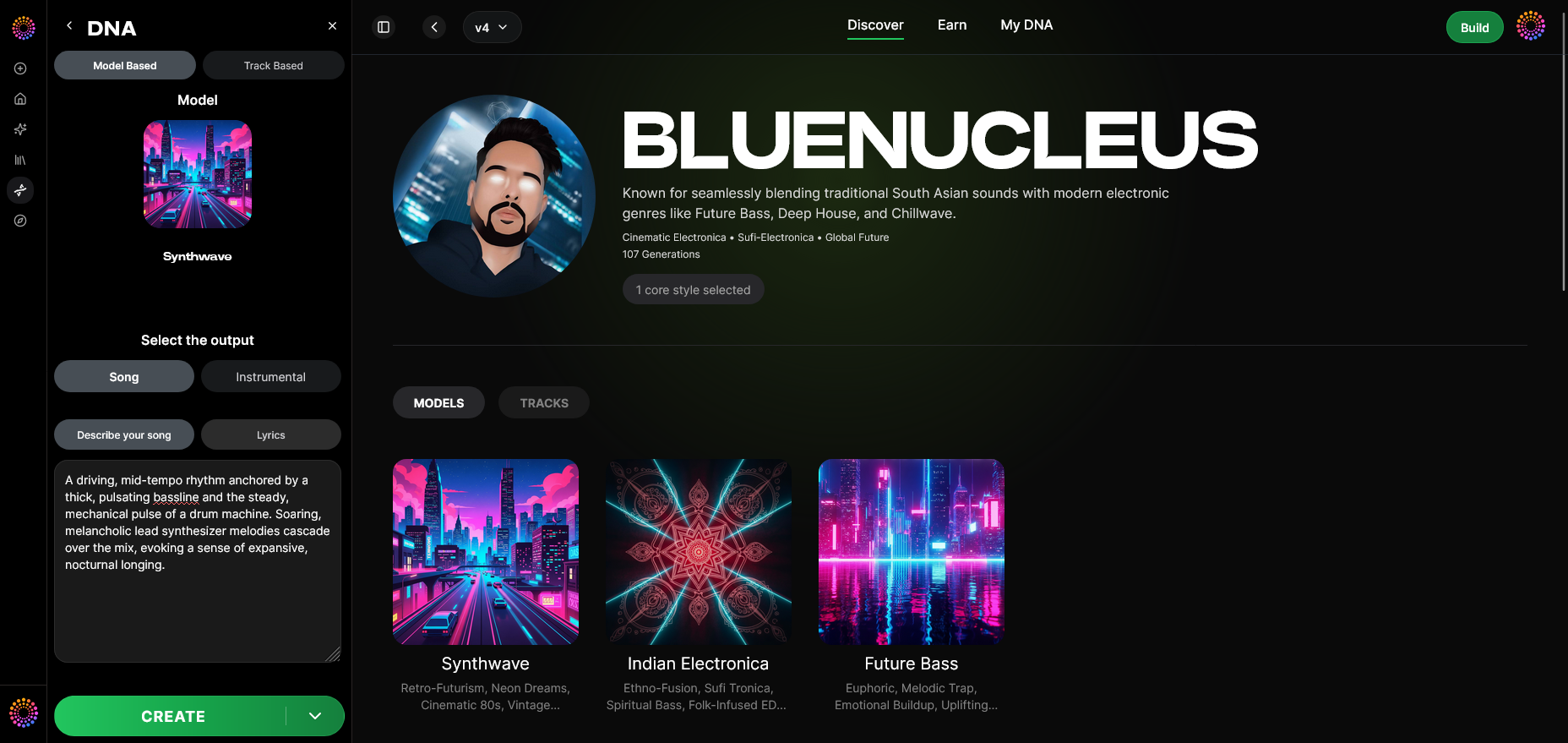
Soundverse DNA stands at the center of 2026’s AI-powered music revolution. It is an artist-trained AI music generation system that learns from licensed catalogs, producing original compositions based on each artist’s sonic identity. This feature allows creators to monetize their art style through licensing in the DNA Marketplace, giving fans the opportunity to generate authentic, copyright‑safe tracks.
Core Capabilities
- Full DNA: Models entire songs and instrumentals derived from artists’ recordings.
- Voice DNA: Captures vocal timbre and stylistic nuances for precise replication.
- Sensitivity Selector: Groups catalog sounds by eras or stylistic clusters for refined outputs.
- Private Mode: Secures co‑creation sessions for confidential projects.
- DNA Marketplace: Enables licensing and monetization for artist-trained AI models.
Primary Use Cases
- Artist Monetization: Earn revenue when others generate music using your sonic DNA.
- Sonic Branding: Ensure a consistent auditory signature across multiple media touchpoints.
- Film/Game Scoring: Legally generate style‑matched audio cues.
- Personal Workflow: Rapidly produce music that remains faithful to your signature sound.
Soundverse DNA provides artists complete control over how their style evolves through machine co‑creativity. By integrating sensitivity and privacy tools, artists can balance exploration with protection. This feature exemplifies digital music innovation at its highest ethical standard. Songwriting innovation using AI has been described in The Rise of AI in Music Creation: A New Era for Songwriting.
How Soundverse connects AI tools for creative production
Soundverse complements DNA generation with cross-functional features such as:
- AI Music Generator: Produces instrumental soundscapes via text prompts.
- Voice to Instrument: Converts vocals into playable instruments for experimental sound design.
- Similar Song Generator: Creates non‑infringing music inspired by reference tracks.
Together, these tools form a collaborative ecosystem described in Soundverse AI Magic Tools Create Content Quickly and in the overview of Soundverse AI Revolutionizing Music Creation. For a visual overview, check out our video tutorial on the “Explore” tab and discover workflow tips.
Start Creating Music with AI Today
Unlock limitless creativity with Soundverse’s AI-powered tools. Generate, remix, and experiment with original tracks in minutes—all with precision and ease.
Related Articles
- How AI-Generated Music Is Transforming the Music Industry: Discover how artificial intelligence is revolutionizing music creation and changing how artists produce and share their work.
- How an AI Music Generator Inspires Creative Fusion: Explore how AI-driven platforms help artists blend genres and invent fresh sonic identities for their compositions.
- AI Music Generator and Human Composers: A Future Together: Learn how AI complements human creativity, creating a collaborative future in music production.
- The Role of AI Music in Film and Television: See how filmmakers and composers are leveraging AI music to efficiently craft stunning soundtracks and emotional scores.
Here's how to make AI Music with Soundverse
Video Guide
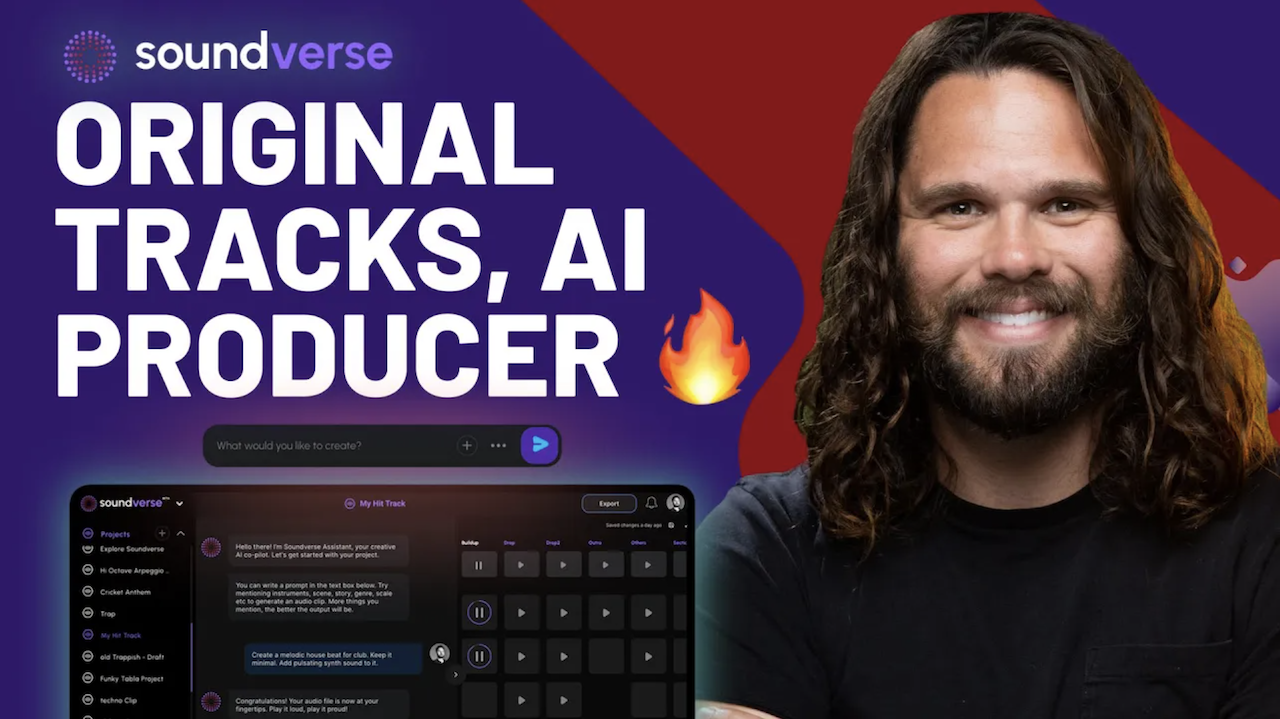
Here’s another long walkthrough of how to use Soundverse AI.
Text Guide
- To know more about AI Magic Tools, check here.
- To know more about Soundverse Assistant, check here.
- To know more about Arrangement Studio, check here.
Soundverse is an AI Assistant that allows content creators and music makers to create original content in a flash using Generative AI. With the help of Soundverse Assistant and AI Magic Tools, our users get an unfair advantage over other creators to create audio and music content quickly, easily and cheaply. Soundverse Assistant is your ultimate music companion. You simply speak to the assistant to get your stuff done. The more you speak to it, the more it starts understanding you and your goals. AI Magic Tools help convert your creative dreams into tangible music and audio. Use AI Magic Tools such as text to music, stem separation, or lyrics generation to realise your content dreams faster. Soundverse is here to take music production to the next level. We're not just a digital audio workstation (DAW) competing with Ableton or Logic, we're building a completely new paradigm of easy and conversational content creation.
TikTok: https://www.tiktok.com/@soundverse.ai
Twitter: https://twitter.com/soundverse_ai
Instagram: https://www.instagram.com/soundverse.ai
LinkedIn: https://www.linkedin.com/company/soundverseai
Youtube: https://www.youtube.com/@SoundverseAI
Facebook: https://www.facebook.com/profile.php?id=100095674445607
Join Soundverse for Free and make Viral AI Music

We are constantly building more product experiences. Keep checking our Blog to stay updated about them!