How AI Music Startups Make Money: Business Models Explained for 2026
Explore how AI music startups monetize creativity in 2026 through licensing, subscriptions, and Soundverse's Content Partner Program.
How AI Music Startups Make Money (Business Models)
In 2026, the generative AI music industry has evolved beyond novelty into a robust sector driving creative monetization, investor interest, and new copyright frameworks. Entrepreneurs and investors alike are asking a critical question: how do AI music startups make money? With the rapid development of platforms like Soundverse and competitors such as Mubert, Suno, and Udio, understanding different AI music startup business models is vital for anyone exploring the future of music technology startups.
Why are AI music startups thriving in 2026?
The surge of accessible generative music tools, alongside ethical AI developments, has created a new economic layer for artists, developers, and rights-holders. Music creators can now generate tracks using AI without infringing copyright due to platforms using licensed data and transparent attribution mechanisms. Startups like Soundverse lead the way, blending technology innovation with fair compensation models as seen in their Ethical AI Music Framework.

What are the primary AI music startup business models?
AI music startup business models in 2026 generally fall into five categories—each reflecting a distinct balance between accessibility, ownership, and profitability.
1. Subscription-Based Access
The most recognizable monetization structure is the subscription model. Users pay monthly or annual fees to access unlimited or tier-limited AI music generation tools. This approach favors content creators, YouTubers, and podcast producers seeking royalty-free outputs. Compared to on-demand licensing, it ensures predictable recurring revenue and user retention. Companies offering creator-focused plans usually include track credits, format exports, and stem separations similar to Soundverse’s AI Magic Tools.
2. Pay-per-generation (Usage-Based Models)
Usage-based monetization aligns payment directly to the number of AI generations, encouraging fair pricing for light and heavy users. This structure fits applications targeting active producers or studios generating high volumes of content. Developers often integrate credit-based systems—charging per song generation, remix, or vocal synthesis request. It’s an approach reinforcing accountability while supporting scalability, and it mirrors Soundverse’s influence-based payout logic within its Content Partner Program.

3. Licensing and Royalty Frameworks
One of the most ethical and sustainable music AI business model designs involves licensing frameworks that compensate rights-holders of training datasets. Instead of opaque AI learning models, platforms implementing licensed data—such as Soundverse—offer transparent royalty tracking through dashboards and tiered licensing agreements. These initiatives have reshaped AI music economics by proving that AI innovation can coexist with fair copyright participation.
4. Freemium and Microtransaction Systems
The freemium model draws user attention through limited free access followed by paid expansions. AI music platforms often provide sample generations or short track previews to attract creators. Once users reach export limits or request advanced features like genre-specific filters, they upgrade. Complementing this, microtransactions (such as instrument packs or voice model unlocks) enhance consumer personalization, a trend referenced in articles like now generating music with filters.
5. Data-as-a-Service (DaaS) and API Licensing
For enterprise-level AI integrations, many startups monetize through APIs allowing large media companies to generate, tag, and distribute adaptive soundscapes. The DaaS model supports cross-industrial collaboration—film, gaming, and advertising sectors use generative systems under B2B contracts. Transparent royalty tracking and dataset-sharing programs drive trust and scalability in this segment, positioning AI music technology as a core infrastructural asset rather than a creative add-on.
How do AI music startups balance ethics and economics?
In the past, the music AI ecosystem (2024–2025) faced criticism for using unlicensed datasets, creating tension with artists. Now, in 2026, ethical AI development has become a differentiator and a revenue opportunity itself. Platforms providing real attribution data and consent-based participation—the basis of Soundverse’s Ethical AI Music Framework—gain investor confidence and public support. Transparency reports, data provenance verification, and tiered rewards promote trust across all stakeholders.
Startups linking profit-sharing structures to actual model influence are more sustainable long-term. They allow back-catalog owners and independent artists to generate passive income via data that contributes to AI models’ sonic capabilities. This concept underlies modern AI music economics trends—where a creator’s historical recordings can continuously earn royalties without new releases.
For a deeper dive, watch our guide on creating Deep House music or familiarize yourself with our tutorial on how to make music in Soundverse.
What investment trends define the generative AI music industry in 2026?
Investor interest has grown sharply as the market stabilizes around ethical licensing and reproducible monetization. Equity funds now evaluate startups based on their intellectual property compliance, user acquisition cost, and dataset provenance. Analysts expect integration between AI audio generation engines and streaming platforms. For example, automated sound adaptation for video, social media, and virtual events represents a trillion-dollar opportunity for music technology startups (AI Predictions for 2026 + my 2025 Recap - AI Pioneers at Work).
Another noted factor is diversification. Companies combining AI composition, stem separation, and voice synthesis—like Soundverse’s stem separation AI Magic Tool—offer broader creative and commercial use cases, making them more appealing for long-term investment (11 AI Power Players Rewiring the Music Business in 2026 - OSpark.ai).
What challenges do AI music startups face?
Despite substantial progress, the sector still faces technical, legal, and economic hurdles:
- Licensing Complexity: Negotiating datapoint rights across different jurisdictions remains time-consuming.
- Attribution Standards: Establishing universal credit norms for AI-generated fragments is ongoing.
- Market Saturation: Competition among similar text-to-music and vocal AI tools requires differentiation via ethical, transparent frameworks.
- Revenue Redistribution: Ensuring fair royalty distribution to contributing rights-holders is vital to maintaining collaborative trust.
Companies solving these problems through structured, transparent pipelines gain an upper hand, establishing influence in the broader AI-driven creative economy (69 Best Ai Music Generation Startups to Watch in 2026 - Seedtable).
How to make your AI music startup profitable in 2026
For entrepreneurs and investors building or funding the next generation of AI-driven platforms, diversification, transparency, and scalability are key.
- Implement hybrid monetization—combine subscriptions and usage-based credits for flexibility.
- Adopt ethical licensing—ensure creators are compensated through frameworks like Soundverse’s Content Partner Program.
- Focus on community engagement—build user loyalty through education and ethical policy transparency.
- Integrate cross-sector partnerships—connect AI music solutions with film, gaming, and advertising ecosystems.
- Maintain measurable attribution—utilize trace layers like Soundverse Trace to safeguard authenticity.
This multi-stream strategy enhances both long-term sustainability and investor appeal, positioning startups to lead the generative AI music evolution.
How to make AI music startup business models work with Soundverse Content Partner Program
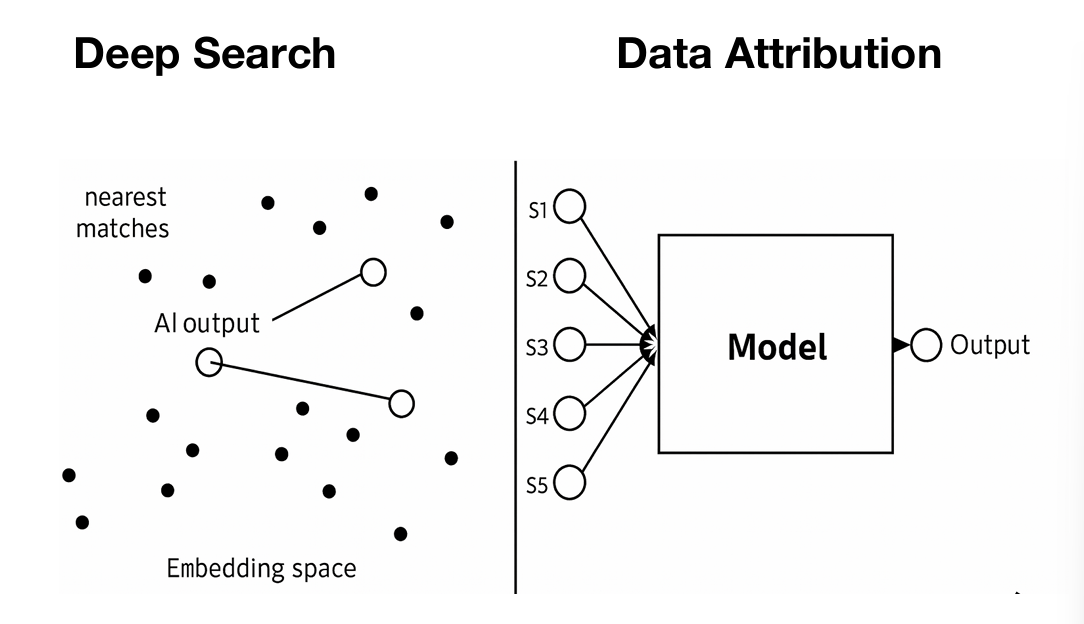
The Soundverse Content Partner Program stands at the heart of ethical and scalable monetization. It provides an opt-in licensing system where rights-holders contribute audio for AI training in exchange for recurring, usage-based royalties. Every generation triggered by a trained dataset earns payouts through influence-based attribution—connecting creative contribution to tangible economic results.
Through Tiered Licensing (Tiers 1–6), contributors can manage how their assets participate in model creation while accessing real-time dashboards for revenue visibility. Soundverse issues transparency reports on data usage, ensuring all revenue streams and rights involvement remain traceable. The core use cases include:
- Generating recurring income from existing back catalogs.
- Joining an ethical AI ecosystem without surrendering copyrights.
- Participating in next-generation model training securely with full attribution control.
When paired with Soundverse DNA, a system trained on licensed catalogs enabling artist-specific music generation, the Content Partner Program turns music data into monetizable digital IP. It benefits musicians, producers, and investors by connecting innovation and reward.
For entrepreneurs seeking adaptive monetization, Soundverse exemplifies how ethical collaboration drives both profitability and sustainability within modern AI music startup business models.
Start Creating AI Music That Earns You Revenue
Explore Soundverse and turn your creative ideas into profitable music projects. Generate, customize, and monetize professional-grade AI tracks in minutes.
- How AI-Generated Music Is Transforming the Music Industry — Discover how AI is reshaping production, distribution, and artistry across the global music landscape.
- Soundverse AI Revolutionizing Music Creation for New Age Content Creators — Learn how Soundverse empowers creators to produce high-quality music effortlessly with intelligent AI tools.
- The Role of AI Music in Film and Television — Explore how AI-generated music is becoming an essential tool for producers and filmmakers in visual storytelling.
- AI Music Generator and Human Composers: A Future Together — Understand how artificial intelligence complements human creativity to redefine the future of music composition.
Here's how to make AI Music with Soundverse
Video Guide
Here’s another long walkthrough of how to use Soundverse AI.
Text Guide
- To know more about AI Magic Tools, check here.
- To know more about Soundverse Assistant, check here.
- To know more about Arrangement Studio, check here.
Soundverse is an AI Assistant that allows content creators and music makers to create original content in a flash using Generative AI. With the help of Soundverse Assistant and AI Magic Tools, our users get an unfair advantage over other creators to create audio and music content quickly, easily and cheaply. Soundverse Assistant is your ultimate music companion. You simply speak to the assistant to get your stuff done. The more you speak to it, the more it starts understanding you and your goals. AI Magic Tools help convert your creative dreams into tangible music and audio. Use AI Magic Tools such as text to music, stem separation, or lyrics generation to realise your content dreams faster. Soundverse is here to take music production to the next level. We're not just a digital audio workstation (DAW) competing with Ableton or Logic, we're building a completely new paradigm of easy and conversational content creation.
TikTok: https://www.tiktok.com/@soundverse.ai
Twitter: https://twitter.com/soundverse_ai
Instagram: https://www.instagram.com/soundverse.ai
LinkedIn: https://www.linkedin.com/company/soundverseai
Youtube: https://www.youtube.com/@SoundverseAI
Facebook: https://www.facebook.com/profile.php?id=100095674445607
Join Soundverse for Free and make Viral AI Music

We are constantly building more product experiences. Keep checking our Blog to stay updated about them!
Image Steps: []