How AI Music Is Trained: A Simple Explanation for 2026
Discover how AI music is trained using Soundverse DNA and ethical datasets.
How AI Music Is Trained (Simple Explanation)
Artificial intelligence has already transformed how music is created, discovered, and enjoyed. By 2026, the conversation around AI-generated music isn’t just about the technology—it’s about ethics, creativity, and collaboration. Many creators and music enthusiasts wonder: how is AI music trained? What makes an AI learn to compose melodies, harmonize chords, and mimic the sonic identities of artists?
This article breaks down the science behind how AI music is trained, step-by-step, in easy language. You'll learn how music training data powers AI composition, what makes AI music models unique, and how tools like Soundverse DNA are shaping the next chapter of generative music technology.
What does it mean to train AI to make music?
When we talk about training AI music models, we’re referring to a process where machine learning systems are exposed to vast amounts of music training data—songs, stems, vocals, and instrumentals—to learn patterns. Think of it like showing a composer thousands of musical pieces across decades so they can understand rhythm, harmony, genre, and structure.
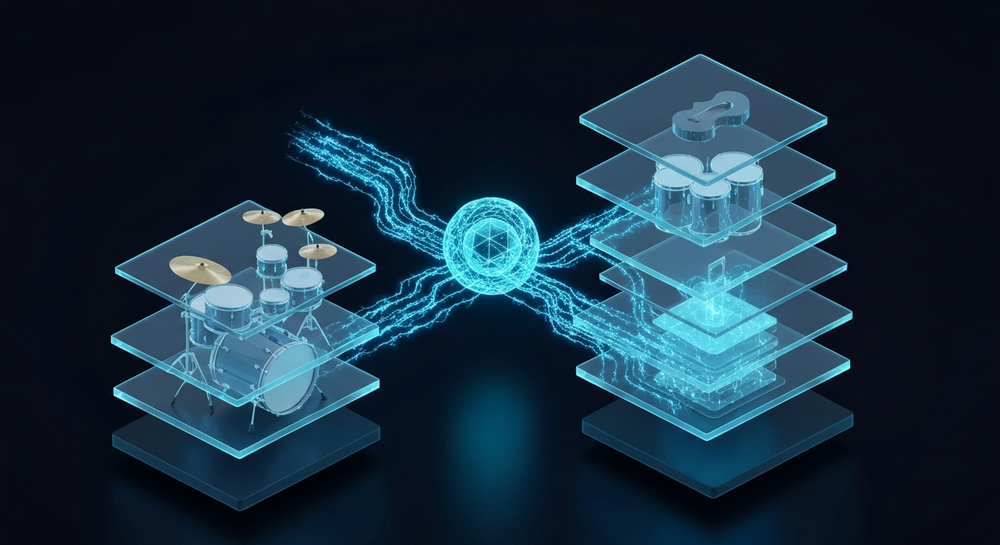
In simple terms, the AI listens, analyzes, and learns. Through machine learning for music, it finds correlations between sounds, lyrics, and moods. Eventually, it creates new compositions that reflect its learned patterns but aren’t direct copies. That’s why AI composition feels familiar yet original. In 2026, leading platforms emphasize that this training must be ethical, transparent, and respectful of artists’ rights. To understand training workflows more technically, read How to Train Your Own AI Music Model: A Complete 2026 Guide.
What kind of data trains AI music models?
Music training data is the heart of AI learning. These datasets include a wide variety of musical examples—classical symphonies, pop hooks, jazz progressions, ambient textures, and even vocal performances. The data can include:
- Audio waveforms – Raw recordings from artists and producers.
- Isolated stems – Individual instruments like drums, bass, and vocals.
- Metadata and tags – Genre, tempo, mood, and cultural context.
- Lyrics and text prompts – Used in generative music technology to connect words with sound.

But not all data is treated equally. In earlier models (around 2024–2025), AI systems often scraped data from the internet without licenses, raising ethical and copyright concerns. By 2026, ethical frameworks like Soundverse’s are becoming the standard, ensuring every AI music model is trained with licensed, consent-based material.
How does machine learning understand music?
Machine learning for music works through mathematical pattern recognition. Neural networks process sounds as numerical information—waveforms are converted into tensors, and models detect recurring elements such as chord progressions or rhythmic motifs. Over time, they learn:
- Which notes typically go together in pop or jazz.
- How vocals express emotion.
- How sound textures evolve across genres.
When you ask an AI to generate music, it uses those learned relationships to create something new. The AI doesn’t memorize entire songs; it constructs new ones based on statistical understanding and creativity encoded through algorithms. A helpful breakdown of this process is provided in A super-brief introduction to Music AI by BMAT Music Innovators.
A great example can be seen in text-to-music systems like those discussed in this Soundverse guide. These systems can interpret a text prompt like “a dreamy electronic beat with soft vocals” and generate an original track aligned with your description. For an applied look, watch our Soundverse Tutorial Series - 10. Make Deep House Music and Soundverse Tutorial Series - 9. How to Make Music.
Why is ethical training important in 2026?
By 2026, the music industry has learned hard lessons from early AI models that used unlicensed data. Artists demanded a more ethical approach, leading to the creation of consent-based systems like Soundverse DNA. This shift protects creators and ensures that AI-generated music remains fair, safe, and monetizable.
Ethical AI music frameworks prevent exploitation by:
- Training only on licensed catalogs.
- Providing recurring royalties to rights-holders.
- Embedding attribution metadata.
Systems such as Soundverse Trace handle this accountability layer, embedding track information throughout an AI song’s lifecycle so ownership can be verified. For creators, that means AI isn’t replacing them—it’s empowering them.
How AI music is trained conceptually: the simplified stages
Even though each company uses different methods, most AI music models follow a common pipeline:
- Data Collection: Gather audio from licensed catalogs or contributed datasets.
- Preprocessing: Convert raw audio into formats suitable for machine learning, such as spectral and temporal representations.
- Feature Extraction: Identify key elements—pitch, rhythm, tone, and mood.
- Model Training: Use deep neural networks to learn patterns and generate responses.
- Evaluation & Tuning: Compare generated music with target outcomes, refining accuracy.
- Deployment: Make the trained model available for music generation, remixing, or co-creation.
For practical insight into note prediction and generative cycles, see discussion on Fast.ai Forums.
How to make AI music with Soundverse DNA
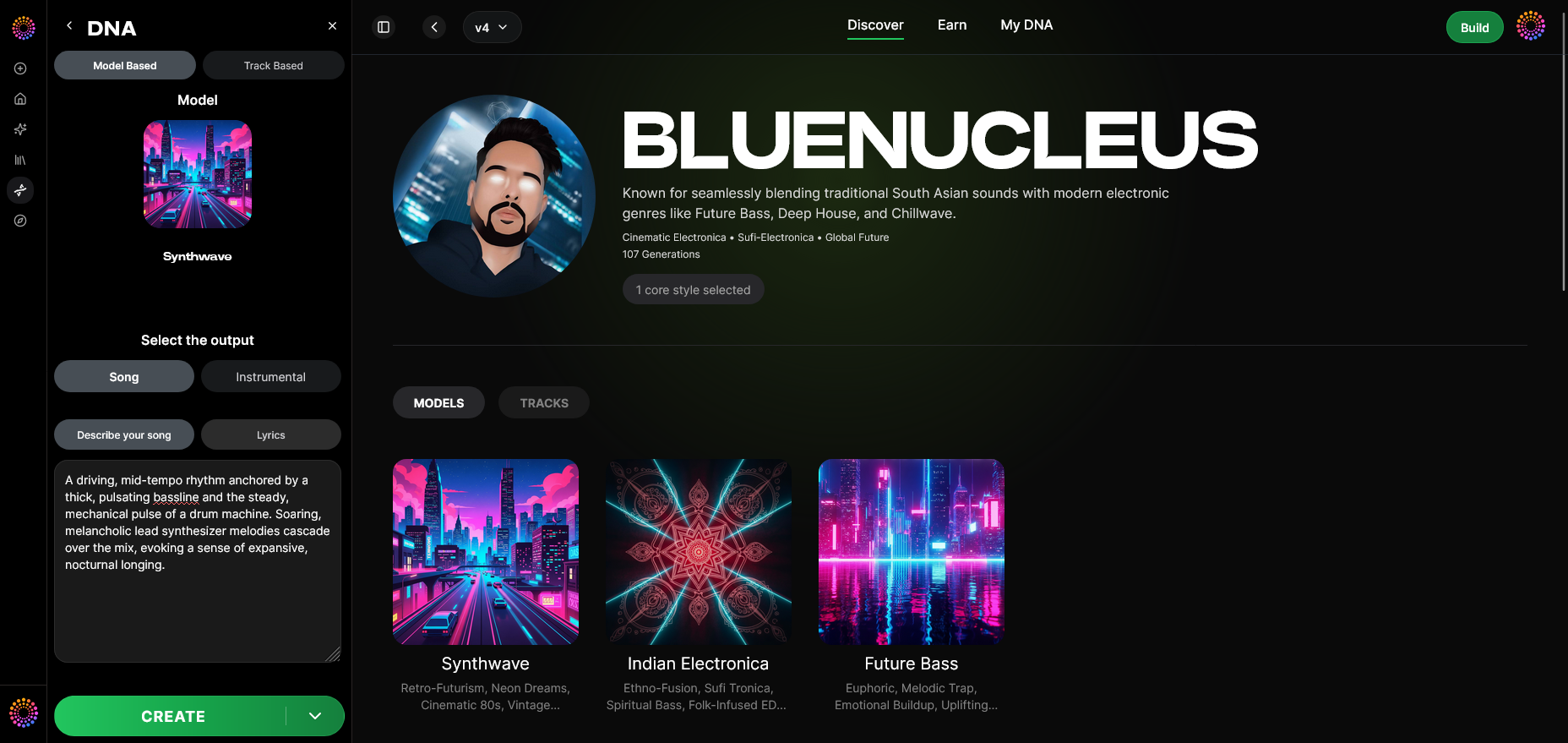
Soundverse DNA elevates music creation with artificial intelligence by focusing on artist integrity and sonic identity. It’s not just about training models—it’s about crafting an artist’s DNA into a generative music engine.
What is Soundverse DNA?
Soundverse DNA is an artist-trained AI music generation system that creates original music based on specific sonic identities. Each DNA represents an artist’s style, timbre, and signature production choices. The platform allows artists to train models on their licensed catalogs so fans and professionals can generate new content consistent with their unique sound.
Key capabilities include:
- Full DNA: Complete modeling of an artist’s songs or instrumentals.
- Voice DNA: Precise replication of vocal timbre and style for licensed projects.
- DNA Marketplace: A system for artists to license their sound directly to fans or collaborators.
- Sensitivity Selector: Advanced control to cluster material from specific eras or stylistic periods.
- Private Mode: Secure space for confidential music co-creation.
This ecosystem connects directly with the broader Ethical AI Music Framework, ensuring consent and compensation tracking. It also interacts with Soundverse Trace for transparent attribution and Content Partner Programs that pay creators when their models are used.
Why Soundverse DNA matters
For artists, Soundverse DNA means monetization without compromise. For creators, it offers sonic consistency, copyright safety, and access to professionally trained sound models—perfect for film, games, podcasts, or personal projects. The asynchronous workflow ensures users can upload material, wait for processing, and receive high-fidelity generative results without manual editing.
Related insights are covered in Soundverse’s Magic Tools overview and comparisons in Soundverse vs. Soundraw or Soundverse vs. Mubert. These explain how ethical datasets set Soundverse apart from traditional generative platforms.
What does the future of AI music training look like?
In 2026, training AI to create music has moved beyond blind data scraping. Models increasingly learn from curated, artist-approved catalogs. The next frontier is dynamic retraining—where models evolve as artists update their catalogs, or as new genres emerge through cross-cultural fusion. Hybrid workflows also combine human creativity and automated pattern generation.
Expect generative music technology to become more collaborative, where AI acts as a co-producer rather than a replacement. Platforms like Soundverse champion this vision by giving creators both creative control and ethical security.
Final Thoughts
Understanding how AI music is trained opens the door to a new kind of creative world. Machine learning for music isn’t replacing musicians—it’s expanding their toolkit. When paired with transparent frameworks and artist-first models such as Soundverse DNA, it becomes a safe, expressive arena for innovation.
Creators in 2026 have more power than ever: they can generate, license, and share original music with guaranteed attribution and revenue. And as ethical AI systems continue to refine their training processes, the line between human artistry and machine collaboration will blur in incredible ways.
For deeper dives, you can explore AI ranks Soundverse’s AI singer #1 or learn how AI-generated music is transforming the music industry. These articles show how AI training principles are shaping both sound design and audience engagement around the globe.
For additional educational views, check Soundverse Tutorial Series - 8. "Explore" Tab.
Start Creating Your Own AI-Composed Tracks Today!
Unlock the power of Soundverse to instantly generate high-quality music tailored to your genre, style, and emotion. Harness AI-driven creativity and bring your musical ideas to life effortlessly.
Related Articles
- How AI-Generated Music Is Transforming the Music Industry: Discover how AI technologies are reshaping music production, distribution, and creativity in today’s digital era.
- AI Music Generator and Human Composers: A Future Together: Explore how AI and human creativity can collaborate to produce innovative and emotionally rich musical compositions.
- The Benefits of Composing with AI Music Generator: Learn how AI music tools streamline composition workflows and empower creators to experiment freely with sound.
- How to Make AI-Generated Music: A beginner-friendly guide to starting your journey in AI music creation and producing unique soundscapes.
Here's how to make AI Music with Soundverse
Video Guide
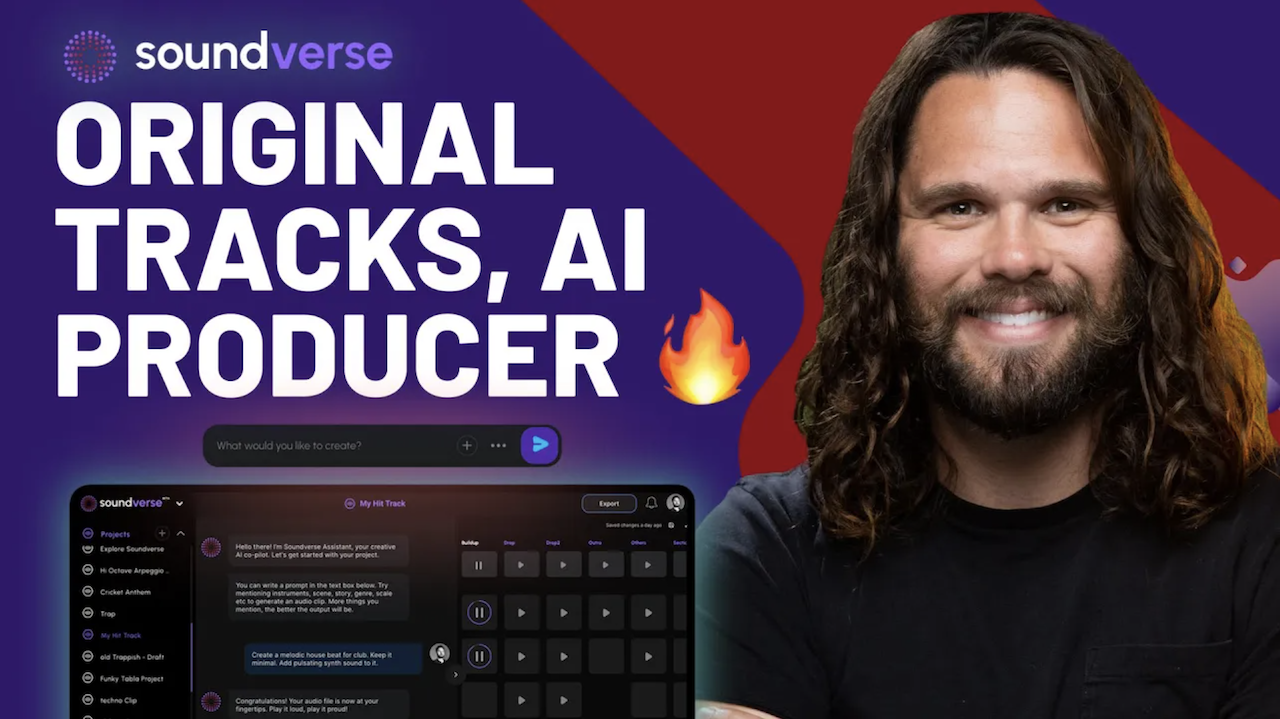
Here’s another long walkthrough of how to use Soundverse AI.
Text Guide
- To know more about AI Magic Tools, check here.
- To know more about Soundverse Assistant, check here.
- To know more about Arrangement Studio, check here.
Soundverse is an AI Assistant that allows content creators and music makers to create original content in a flash using Generative AI. With the help of Soundverse Assistant and AI Magic Tools, our users get an unfair advantage over other creators to create audio and music content quickly, easily and cheaply. Soundverse Assistant is your ultimate music companion. You simply speak to the assistant to get your stuff done. The more you speak to it, the more it starts understanding you and your goals. AI Magic Tools help convert your creative dreams into tangible music and audio. Use AI Magic Tools such as text to music, stem separation, or lyrics generation to realise your content dreams faster. Soundverse is here to take music production to the next level. We're not just a digital audio workstation (DAW) competing with Ableton or Logic, we're building a completely new paradigm of easy and conversational content creation.
TikTok: https://www.tiktok.com/@soundverse.ai
Twitter: https://twitter.com/soundverse_ai
Instagram: https://www.instagram.com/soundverse.ai
LinkedIn: https://www.linkedin.com/company/soundverseai
Youtube: https://www.youtube.com/@SoundverseAI
Facebook: https://www.facebook.com/profile.php?id=100095674445607
Join Soundverse for Free and make Viral AI Music

We are constantly building more product experiences. Keep checking our Blog to stay updated about them!