How AI Music Impacts Traditional Music Licensing in 2026
Explore how AI music licensing is reshaping music copyright, royalties, and digital rights in 2026.
How AI Music Impacts Traditional Music Licensing
Artificial intelligence has moved far beyond experimental novelty—it’s become a central force in how music is created, distributed, and monetized. As AI-generated songs continue to flood streaming platforms and digital content ecosystems, traditional approaches to music licensing are being challenged like never before. In 2026, professionals across the industry are asking one key question: how can we adapt to an era where music can be machine-generated, ethically licensed, and transparently tracked?
What is AI Music Licensing and Why Does It Matter in 2026?
AI music licensing refers to the legal and commercial framework that governs the use of AI-generated music and the datasets that train these systems. Unlike traditional licensing models—which focus on human compositions, master recordings, and mechanical royalties—AI music licensing addresses new types of intellectual property. It must balance the rights of both data contributors (the artists and labels who provided training material) and end users who leverage the models to create derivative works.
By 2026, music industry AI technology has matured considerably. Platforms like Soundverse and others have introduced mechanisms that allow labels and creators to securely license their works for AI training without losing ownership or creative attribution. This evolution is essential in reconciling innovation with artist integrity and ensures that artificial intelligence in music aligns with modern digital rights management expectations.

How Has AI Changed Traditional Music Licensing Models?
Traditional licensing revolved around distinct rights—mechanical, synchronization, public performance, and master usage. AI has blurred these categories. For instance, when a music model is trained on thousands of licensed audio files, is it reproducing, referencing, or creating new work? Moreover, AI-generated songs can be customized endlessly, making old per-track or per-use licensing obsolete.

In practice, AI requires continuous, scalable frameworks—rights-holders must be compensated based on influence rather than static ownership. This shift from transactional to usage-based royalties represents one of the most significant transformations in modern music copyright management. As outlined in What Will 2026 Hold for AI Music Releases?, licensing may continue shifting from permission-based to risk management models, especially as data handling practices evolve.
What are the Main Challenges in AI Music Licensing?
The music industry faces several hurdles as it tries to regulate artificial intelligence in music:
- Attribution Transparency – Identifying which datasets and creators influenced a particular AI output remains complex. Without transparent tracking like that offered by solutions such as Soundverse Trace, rights-holders can’t confirm fair compensation.
- Legal Recognition of AI Creations – Different jurisdictions have conflicting policies regarding whether AI-generated songs can be copyrighted. In 2026, global entertainment law is still catching up.
- Economic Redistribution – Traditional royalties accrue to a handful of publishers or performance rights organizations. AI licensing frameworks must fairly distribute micro-royalties across thousands of contributors.
- Ethics in Data Training – Training models with copyrighted works without consent raises moral and legal disputes. Ethical datasets, created through opt-in frameworks, have become more valuable than ever.
As reported by Music and AI: 2025's developments that will shape 2026's disputes, these challenges continue to fuel both policy debates and technological innovation across the global music industry.
How Do AI-Generated Songs Affect Copyright and Ownership?
When an AI model generates new compositions based on learned styles, it doesn’t copy content directly but mimics the patterns of original data. This leads to hybrid ownership concerns—who owns a track generated by a machine, trained on music from hundreds of human artists?
In 2026, consensus is emerging around collaborative authorship. That means both the AI developer and the dataset contributors share value creation opportunities, especially if their content influenced the outcome. Platforms like Soundverse introduce mechanisms that trace and measure these influences, assigning royalties based on data contribution. As mentioned by Artlist, understanding ownership boundaries in AI compositions helps creators license AI content safely and transparently.
How is the Music Industry Adapting to AI Licensing?
The major streaming and publishing ecosystems are adopting AI transparency principles. Several independent labels are joining AI licensing collectives to ensure fair payouts for historical catalog use. These collectives operate similarly to performance rights organizations but focus on AI model training territories.
Moreover, licensing managers are investing in audit-ready metadata and interoperable licensing identifiers that can plug directly into machine learning pipelines. Tools that embed digital watermarks and attribution identifiers during production are now integral to ensuring legal compliance in the AI music marketplace. By late 2026, emerging models like hybrid licensing—combining human rights protection with algorithmic authorization—are becoming widespread, as projected by How AI Music Impacts Music Licensing in 2026 - Soundverse AI.
For a deeper dive, watch our guide on creating Deep House music or explore how to make music using Soundverse tools to understand these models in real use cases.
How to Make Ethical AI Music Licensing Work with Soundverse Content Partner Program
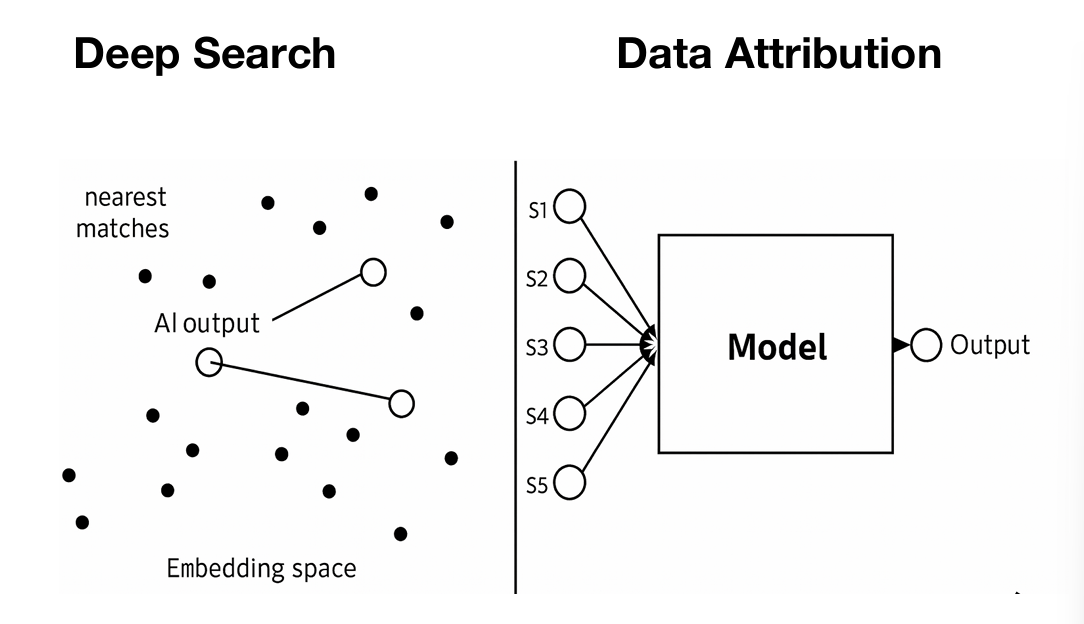
Soundverse bridges the gap between creative innovation and rights protection with its Content Partner Program—an opt-in licensing framework designed specifically for AI music ecosystems.
Overview of the Soundverse Content Partner Program
The Content Partner Program enables rights-holders—whether they are labels, composers, or sound libraries—to contribute their master recordings or stems for AI model training. In exchange, these contributors receive recurring, usage-based royalties. The program ensures:
- Influence-Based Payouts (Pay per Generation): Compensation is calculated according to how often and to what degree specific datasets influence AI-generated outputs.
- Tiered Licensing (Tiers 1–6): Rights-holders can choose levels of engagement—from limited catalog use to full participation in training premium AI models.
- Real-Time Dashboards: Participants can view earnings reports, attribution logs, and usage metrics in an intuitive dashboard environment.
- Transparency Reports: Documented insights show exactly how content was used, reinforcing trust between artists and AI developers.
Use Cases for the Music Industry
- Back-Catalog Monetization: Legacy pieces that no longer generate significant streaming revenue can become active assets in AI training datasets, introducing new income streams.
- Ethical AI Model Training: Instead of scraping unlicensed data, Soundverse provides consent-driven, auditable access to music, ensuring legal and moral compliance.
- Royalty Integrity: The combination of influence tracking and attribution ensures that every stakeholder gets credited and compensated.
This feature fits seamlessly with related tools such as Soundverse Trace, which embeds attribution throughout a track’s lifecycle, and The Ethical AI Music Framework, an infrastructure designed to guarantee artist consent, attribution, and ongoing compensation across the AI ecosystem.
To learn more about how Soundverse’s technology fosters a transparent, data-led future for AI music, visit articles such as How AI-generated music is transforming the music industry or discover creative workflows in How to Create EDM with Soundverse AI.
What Does the Future Hold for AI Music Licensing Beyond 2026?
Looking ahead, industry experts expect AI music licensing to merge more deeply with blockchain-driven digital rights management systems. Expect smart contracts that automate royalty splits every time an AI-generated output is streamed or downloaded.
The global conversation is also expanding to include fine-grained data provenance—mapping which notes, melodies, or timbres originated from which contributors. These micro-attribution systems could redefine the economics of copyright in the next decade.
For professionals, the message is clear: adaptability is key. By embracing transparent frameworks like the Soundverse Content Partner Program, the music business can evolve from reactive licensing enforcement to proactive collaboration.
Start Creating License-Free AI Music Today
Generate high-quality soundtracks without worrying about copyright restrictions. Join Soundverse and explore a new era of AI music creation and licensing simplicity. Get Started Free →
Related Articles
- Navigating the World of Royalty-Free and Copyright-Free Music Using Soundverse AI — Learn how creators can simplify music licensing with Soundverse’s royalty-free solutions.
- Copyright-Free vs Royalty-Free Music: What Creators Should Know — Understand the key differences between copyright-free and royalty-free music and how each impacts your creative workflows.
- The Role of AI Music in Film and Television — Explore how AI-generated music is transforming licensing and composition for entertainment industries.
- How AI-Generated Music Is Transforming the Music Industry — Discover the impact of AI on production, creativity, and how licensing models are evolving.
Here's how to make AI Music with Soundverse
Video Guide
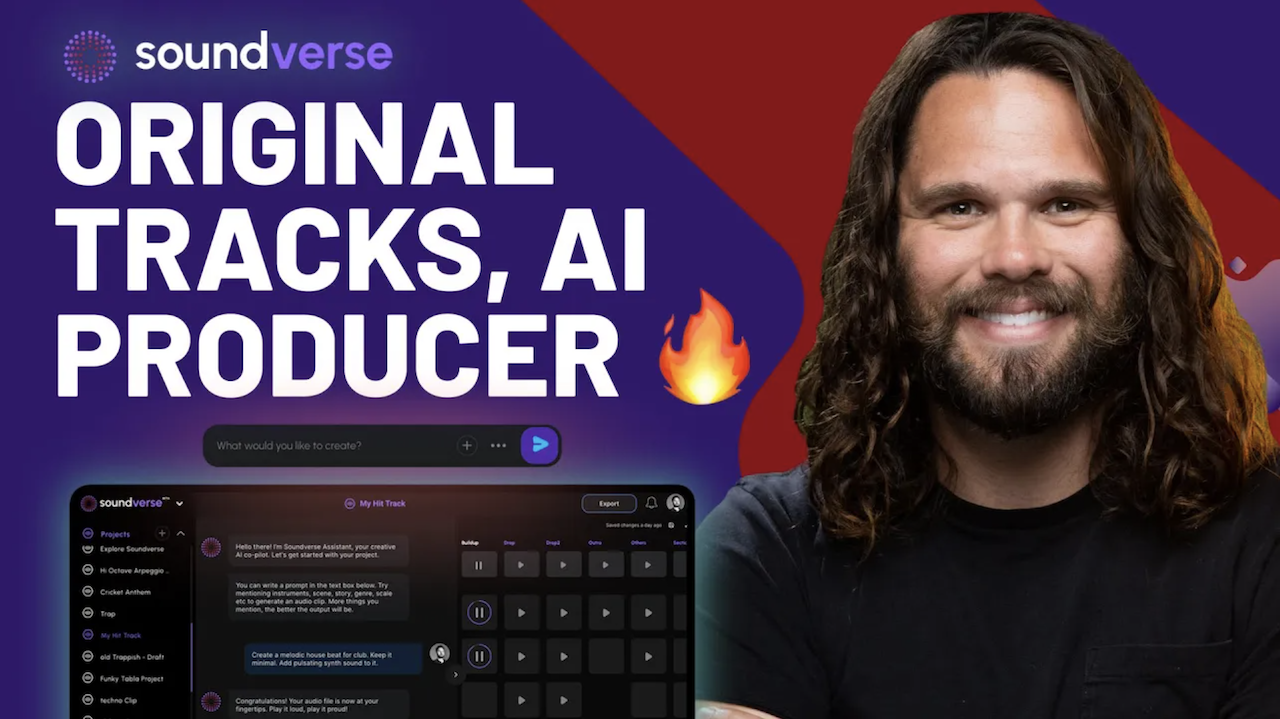
Here’s another long walkthrough of how to use Soundverse AI.
Text Guide
- To know more about AI Magic Tools, check here.
- To know more about Soundverse Assistant, check here.
- To know more about Arrangement Studio, check here.
Soundverse is an AI Assistant that allows content creators and music makers to create original content in a flash using Generative AI. With the help of Soundverse Assistant and AI Magic Tools, our users get an unfair advantage over other creators to create audio and music content quickly, easily and cheaply. Soundverse Assistant is your ultimate music companion. You simply speak to the assistant to get your stuff done. The more you speak to it, the more it starts understanding you and your goals. AI Magic Tools help convert your creative dreams into tangible music and audio. Use AI Magic Tools such as text to music, stem separation, or lyrics generation to realise your content dreams faster. Soundverse is here to take music production to the next level. We're not just a digital audio workstation (DAW) competing with Ableton or Logic, we're building a completely new paradigm of easy and conversational content creation.
TikTok: https://www.tiktok.com/@soundverse.ai
Twitter: https://twitter.com/soundverse_ai
Instagram: https://www.instagram.com/soundverse.ai
LinkedIn: https://www.linkedin.com/company/soundverseai
Youtube: https://www.youtube.com/@SoundverseAI
Facebook: https://www.facebook.com/profile.php?id=100095674445607
Join Soundverse for Free and make Viral AI Music
We are constantly building more product experiences. Keep checking our Blog to stay updated about them!
Image Steps: []