Guaranteed Human vs AI: Listener Preference Study in 2026
Explore listener choice trends and authenticity perception in AI vs human music comparison for 2026.
Guaranteed Human vs AI: Listener Preference Study
In 2026, the conversation surrounding AI vs human music comparison has reached new heights. The lines between algorithmic creativity and human emotion are increasingly blurred, prompting the music industry to ask an essential question: when listeners are unaware of the source, do they prefer AI-generated music or compositions crafted by human artists? This study explores listener choice patterns, the psychology of authenticity perception, and how technology like Soundverse Trace contributes to creating transparent, ethical environments for AI-driven creativity.
Why is the AI vs Human Music Comparison More Relevant Than Ever in 2026?
AI music generation has rapidly evolved from novelty to mainstream artistry. Between 2024 and 2025, listeners were intrigued but skeptical. By 2026, music streaming services report that nearly 40% of new digital catalogues include AI-assisted compositions. However, listener acceptance varies depending on perceived authenticity and emotional resonance. While machine-generated melodies can replicate genre conventions flawlessly, the subtleties of storytelling and dynamic imperfections still draw audiences toward human composers.

Researchers and marketers alike now treat listener choice as a vital metric. Understanding music preference trends helps record labels, streaming platforms, and advertisers tailor experiences that resonate emotionally. But how can we accurately assess listener preference when the division between human and AI artistry is increasingly invisible?
What Do Listener Choice Studies Reveal About Music Preferences?
Recent controlled blind tests conducted by audio labs and music behavior specialists show fascinating results. When listeners evaluate tracks without knowing their source, AI compositions often score higher in production quality, genre consistency, and novelty. However, once participants learn that a track was AI-generated, perceived emotional depth ratings tend to drop. These findings align with Carnegie Mellon’s observation that AI can write songs but still trails behind human creativity.

In other words, listeners still attach emotional legitimacy to human creators. The authenticity perception is crucial here—listeners equate human origin with meaning, even if the sound quality is identical. This dynamic can impact marketing strategies, playlist placements, and licensing decisions across platforms.
Several industry studies in early 2026 suggest that:
- Genre influences preference: For electronic, pop, and ambient genres, AI-generated tracks are often rated equal or superior to human-made compositions.
- Narrative affects emotional engagement: For lyrical ballads or jazz improvisations, listeners still prioritize human artistry.
- Age demographics matter: Younger audiences in their 20s and 30s tend to value innovation and are less concerned about origin; older demographics often express nostalgic attachment to human performance, as highlighted in MusicRadar’s survey data.
Such data help platforms design music recommendations that align with listener psychology. Industry professionals using insights from Soundverse's research can better predict which track origins will perform best within specific audience segments.
How Do Listeners Perceive Authenticity in Music Creation?
Authenticity perception is at the heart of every music preference study. In 2026, consumers express greater curiosity about transparency. They want to know whether a song was generated through neural networks or human composers. Interestingly, this desire for clarity does not always lead to rejection of AI music—it often increases respect when creators disclose their methods honestly.
The Soundverse platform has been pivotal in advancing discussions about transparent AI artistry. Through innovations featured in Soundverse AI Magic Tools and experiments described in How AI Generated Music is Transforming the Music Industry, the ecosystem emphasizes accountability and verified attribution.
Authenticity perception studies conducted in 2026 highlight three core patterns:
- Transparency drives trust: Artists who openly integrate AI tools and disclose origin metadata experience less audience skepticism.
- Emotional context matters: Tracks accompanied by relatable narratives or artist commentary rank higher in authenticity ratings.
- Verifiable provenance influences engagement: Listeners increasingly expect digital traceability confirming original dataset ethics.
These behavioral findings establish the foundation upon which solutions like Soundverse Trace operate to guarantee ethical production pipelines.
What Role Does Data Attribution Play in Modern Listener Studies?
For music industry researchers, attribution data is key to understanding not just whether audiences prefer AI music, but why. Attribution maps—tracking which datasets or styles influenced each AI output—shed light on stylistic convergence between human and machine creativity.
Platforms utilizing attribution transparency bridge scientific analysis and consumer trust. They allow researchers to measure listener choice correlations against specific training data sources, unlocking insights such as whether classical data biases improve harmonic structure appreciation or whether hip-hop datasets correlate with higher rhythmic preference scores.
By 2026, audio technology professionals rely on attribution analytics to refine model ethics and cultural inclusivity. The industry is transitioning from black-box generation toward collaborative systems in which dataset contributors are recognized and compensated through structured programs like Soundverse’s Content Partner Program. Sonarworks Research supports this notion, emphasizing a future interplay between human oversight and machine precision.
Can AI Music Truly Replicate Emotional Authenticity?
Creative AI models are adept at producing music that triggers emotional reactions. Still, authentic emotion differs from induced aesthetic pleasure. Human composers embed personal experiences, sociocultural references, and intentional imperfection—elements that convey genuine feeling. AI systems can mimic structures but often lack experiential context.
However, ethical frameworks such as Soundverse’s Ethical AI Music Framework offer pathways for merging precision algorithms with human-guided emotional layering. These integrations have shifted research perspectives toward coexistence rather than replacement.
For a deeper dive, watch our guide on creating Deep House music and how to make music tutorials from Soundverse’s official channel, demonstrating how blending technology with creativity enables artists to achieve enhanced emotional resonance.
Music preference studies now position authenticity not as a binary (human vs AI) but as a spectrum. Audiences appreciate hybrid compositions where AI aids arrangement efficiency while artists oversee emotional direction.
How Soundverse Trace Guarantees Trust in AI vs Human Comparisons
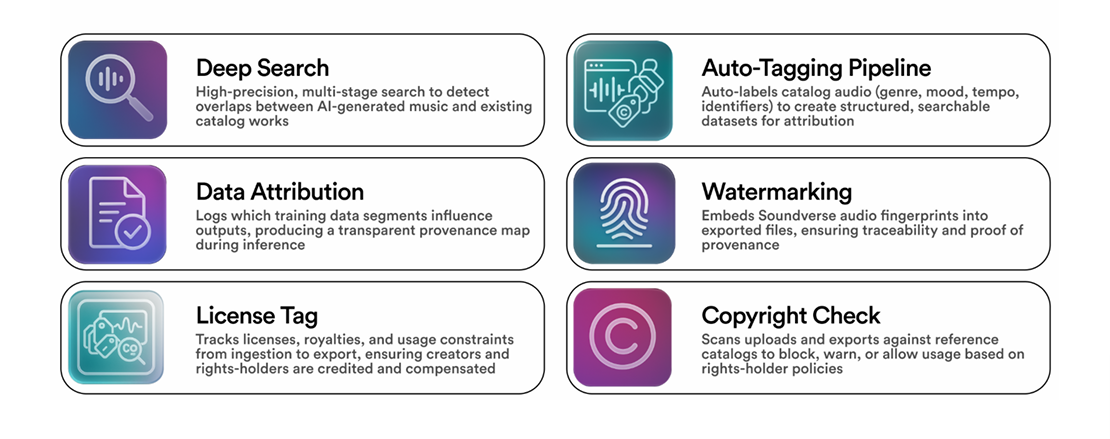
Soundverse Trace functions as a comprehensive trust layer for AI music, ensuring that every composition’s origin can be verified throughout its lifecycle. It embeds data attribution, deep search, rights protection, and watermarking—all critical features for ethical and transparent creative environments.
Deep Search
The system executes high-precision scanning (1:1 and 1:N) across large datasets to detect overlaps between generated outputs and existing recordings. This capability enables music industry researchers to distinguish unique AI creations from derivative content, supporting statistical lenses used in authenticity perception studies.
Data Attribution
Trace logs precisely which training data contributed to a generated piece. For listener preference studies, this ensures that emotional resonance or genre tendencies can be mapped back to specific stylistic influences. It enhances research reliability and offers robust provenance metadata for rights-holders.
Audio Watermarking
By embedding inaudible fingerprints directly into the audio file, Soundverse Trace guarantees that every song—AI or human-assisted—maintains verifiable authorship attribution. These fingerprints play an essential role not just in copyright protection but in experimental conditions where study participants require controlled authenticity declarations.
License Tagging
Soundverse’s license tagging preserves rights metadata from ingestion through export. This automation prevents loss of licensing details when files traverse digital platforms, ensuring transparency and streamlined royalty tracking. For marketers and record labels conducting listener studies, it establishes compliance and fair compensation throughout the value chain.
Soundverse Trace thus transforms the challenge of comparing AI vs human music into an auditable, ethical process backed by tangible technology.
What Are the Implications of Listener Preference Studies for the Music Industry?
The outcomes of 2026’s listener preference experiments will shape marketing, production, and distribution strategies for years ahead. Key implications include:
- Strategic A&R utilization: Labels can decide when to leverage AI production or prioritize human artists based on audience data.
- Enhanced licensing frameworks: Rights holders participating in the Content Partner Program will receive recurring royalties whenever their data influences AI generation.
- Informatics-based marketing: Platforms track emotional resonance metrics alongside data attribution, elevating playlist creation from subjective curation to scientific optimization.
- Ethical storytelling: Artists integrate transparency narratives to connect with fans seeking authenticity assurance.
Readers exploring creative applications may also benefit from learning how to make music with AI through guides such as How to Create Country Music with Soundverse AI or Generate AI Music with Soundverse Text-to-Music, which demonstrate practical workflows aligned with ethical standards introduced by Soundverse Trace.
Generate Your Own AI vs Human Music Experiment
Discover how Soundverse lets you create, compare, and refine music with advanced AI tools built for real creative control and insight. Experience the perfect blend of technology and emotion.
Start Creating Now
Related Articles
- AI Music Generator and Human Composers: A Future Together: Explore how AI systems and human musicians can collaborate to forge the next evolution of musical creativity.
- How AI-Generated Music Is Transforming the Music Industry: Learn how AI composition tools are speeding up innovation and transforming both production workflows and listener expectations.
- The Role of AI Music in Film and Television: Discover how AI soundtracks are influencing cinematic storytelling and production budgets worldwide.
- AI Ranks Soundverse’s AI Singer #1: The Ultimate AI Singing Platform Dominating 2025: See why Soundverse’s AI Singer is redefining vocal generation and rising as the top-performing platform in 2025.
Here's how to make AI Music with Soundverse
Video Guide
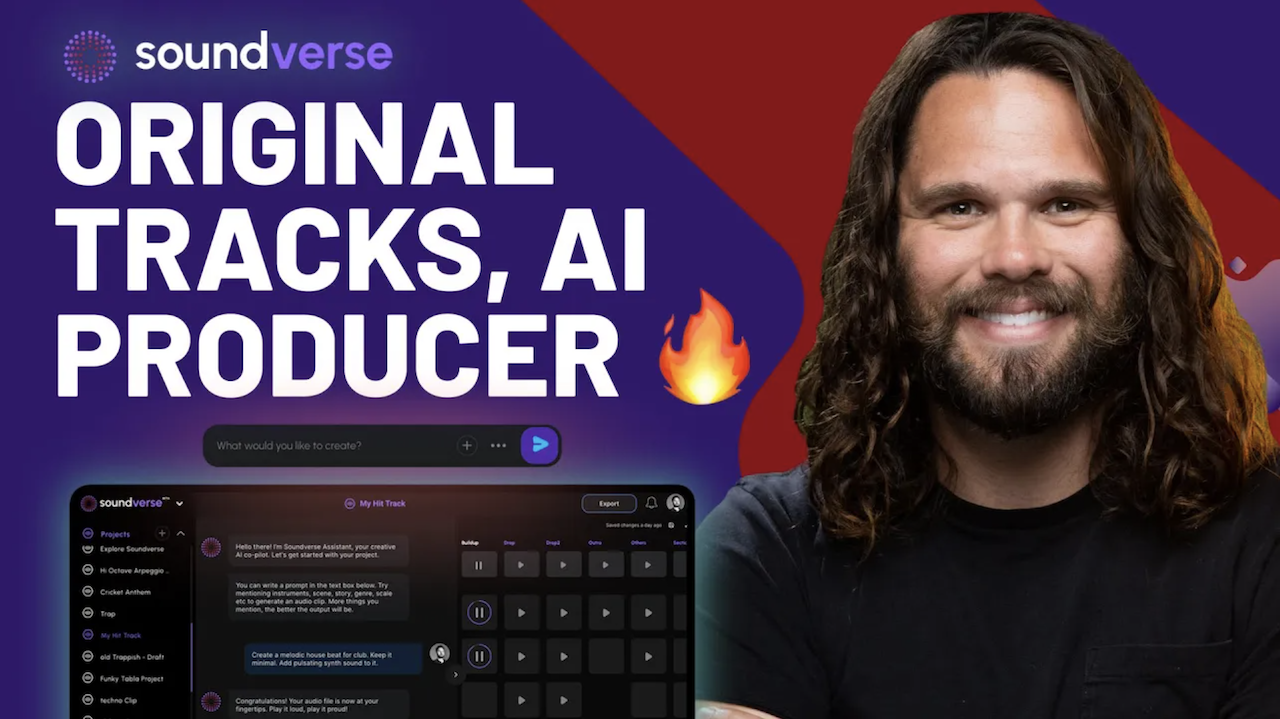
Here’s another long walkthrough of how to use Soundverse AI.
Text Guide
- To know more about AI Magic Tools, check here.
- To know more about Soundverse Assistant, check here.
- To know more about Arrangement Studio, check here.
Soundverse is an AI Assistant that allows content creators and music makers to create original content in a flash using Generative AI.
With the help of Soundverse Assistant and AI Magic Tools, our users get an unfair advantage over other creators to create audio and music content quickly, easily and cheaply.
Soundverse Assistant is your ultimate music companion. You simply speak to the assistant to get your stuff done. The more you speak to it, the more it starts understanding you and your goals.
AI Magic Tools help convert your creative dreams into tangible music and audio. Use AI Magic Tools such as text to music, stem separation, or lyrics generation to realise your content dreams faster.
Soundverse is here to take music production to the next level. We're not just a digital audio workstation (DAW) competing with Ableton or Logic, we're building a completely new paradigm of easy and conversational content creation.
TikTok: https://www.tiktok.com/@soundverse.ai
Twitter: https://twitter.com/soundverse_ai
Instagram: https://www.instagram.com/soundverse.ai
LinkedIn: https://www.linkedin.com/company/soundverseai
Youtube: https://www.youtube.com/@SoundverseAI
Facebook: https://www.facebook.com/profile.php?id=100095674445607
Join Soundverse for Free and make Viral AI Music

We are constantly building more product experiences. Keep checking our Blog to stay updated about them!
Image Steps: []