Do AI Assistants Have the Ability to Sing?
Explore whether AI assistants can sing and how Soundverse Agent enables AI music creation in 2026.
Do AI Assistants Have the Ability to Sing?
Artificial intelligence has rapidly expanded its creative capabilities, moving far beyond simple text responses or voice commands. In 2026, one of the most fascinating developments is the evolution of the AI assistant singing ability — the capacity of machines to produce vocal performances that resemble human singing. This blog explores what enables AI to sing, the technology behind AI voice synthesis, and how tools like the Soundverse Agent turn those concepts into reality for everyday creators.
What does it mean for an AI assistant to have singing ability?
An AI assistant’s singing ability refers to its capacity to generate vocal melodies and render them with expressive tonal variations, pronunciation, and emotional depth. Instead of simply converting text to speech, these systems use AI voice synthesis and machine learning in vocal performance to mimic how human singers modulate rhythm, pitch, and vibrato.

Unlike traditional voice assistants that respond monotonously, AI with advanced audio generation can interpret musical phrases and produce performances aligned with style — pop, jazz, classical, or even experimental genres. These abilities are becoming critical in 2026’s AI music ecosystem, where personalized sound design, virtual concert experiences, and AI-driven musicianship have become mainstream.
How do AI assistants learn to sing using machine learning?
To achieve singing competency, AI assistants rely on deep learning models that analyze thousands of examples of human performances. Through techniques like neural vocoders and text-to-melody translation, models learn patterns of vocal production.

- Data Collection: The model learns from labeled vocal recordings encompassing different styles, languages, and tonal ranges.
- Feature Extraction: It breaks down the waveform into pitch, timbre, formants, and dynamics to capture vocal texture.
- Training on Music Theory Patterns: Machine learning in vocal performance expands when the AI processes chord progressions, scales, and timing relationships.
- Synthesis Stage: The AI voice synthesis algorithm reconstructs these elements to output a realistic and tuneful voice.
This process allows the assistant to generate vocals from scratch or harmonize with pre-composed instrumentals. For developers, this opens an entirely new dimension of interaction where an AI can become a creative collaborator. For a deeper dive, watch our guide on creating Deep House music, or explore the Soundverse Tutorial Series for broader music-making workflows.
What are the main technologies behind AI singing tools?
The technologies driving singing AI tools combine several fields:
- Text-to-Speech (TTS) Evolution: Modern TTS focuses on musical prosody rather than speech accuracy.
- Neural Network-Based Audio Generation: Models like diffusion and transformer architectures can predict the next sound frame with musical coherence.
- Voice Conversion Models: These systems adapt spoken audio to match specific singing voices after recording.
- Artificial Intelligence Sound Generation Modules: These components handle timbral adjustment, echo simulation, and stylistic effects.
As seen in AI and Music Tech in 2026 - Sonarworks Survey, the boundary between sound synthesis and vocal artistry is blurring. The result: AI-generated singers with believable emotion and stylistic interpretation.
Can AI assistants perform in different genres in 2026?
Yes. By 2026, genre-aware generation has become a standard expectation for voice-oriented AI systems. Models are not merely reproducing audio; they are learning how musical identity works.
AI assistants can now switch from epic cinematic vocals to energetic EDM hooks or intimate acoustic harmonies based on textual prompts. A user might type, “Sing a dreamy lo-fi chorus,” and receive a full vocal layer matching that vibe. The rise of multimodal learning—where AI understands both language and music jointly—has accelerated this flexibility.
To explore more on genre-specific AI performance, see the related article AI ranks Soundverse’s AI Singer #1 and What AI Can Generate Songs for comprehensive comparisons.
What are the creative benefits and limitations of a singing AI assistant?
Benefits:
- Accessibility: Even non-musicians can generate professional vocals.
- Customization: Parameters such as tone, gender, and style can be adjusted.
- Cost Efficiency: Reduces dependence on studio recordings for demos.
- Rapid Experimentation: Ideal for generating multiple versions during production.
Limitations:
- Human Emotion Gap: AI still struggles to capture nuanced emotional transitions perfectly.
- Data Bias: The vocal tone depends on training data quality and diversity.
- Legal Ownership: As AI-generated vocals become indistinguishable from human ones, intellectual property concerns may arise.
Nevertheless, as explained in How AI-Generated Music is Transforming the Music Industry, the fusion of human creativity with AI assistance creates new career and artistry dimensions.
How to make AI assistant singing ability accessible to all creators
Mass adoption happens when the workflow becomes intuitive. Many creators prefer an integrated approach — conversational commands, automated tool selection, and simple export formats. This is exactly the gap platforms like Soundverse have addressed.
How to make AI assistant singing with Soundverse Agent
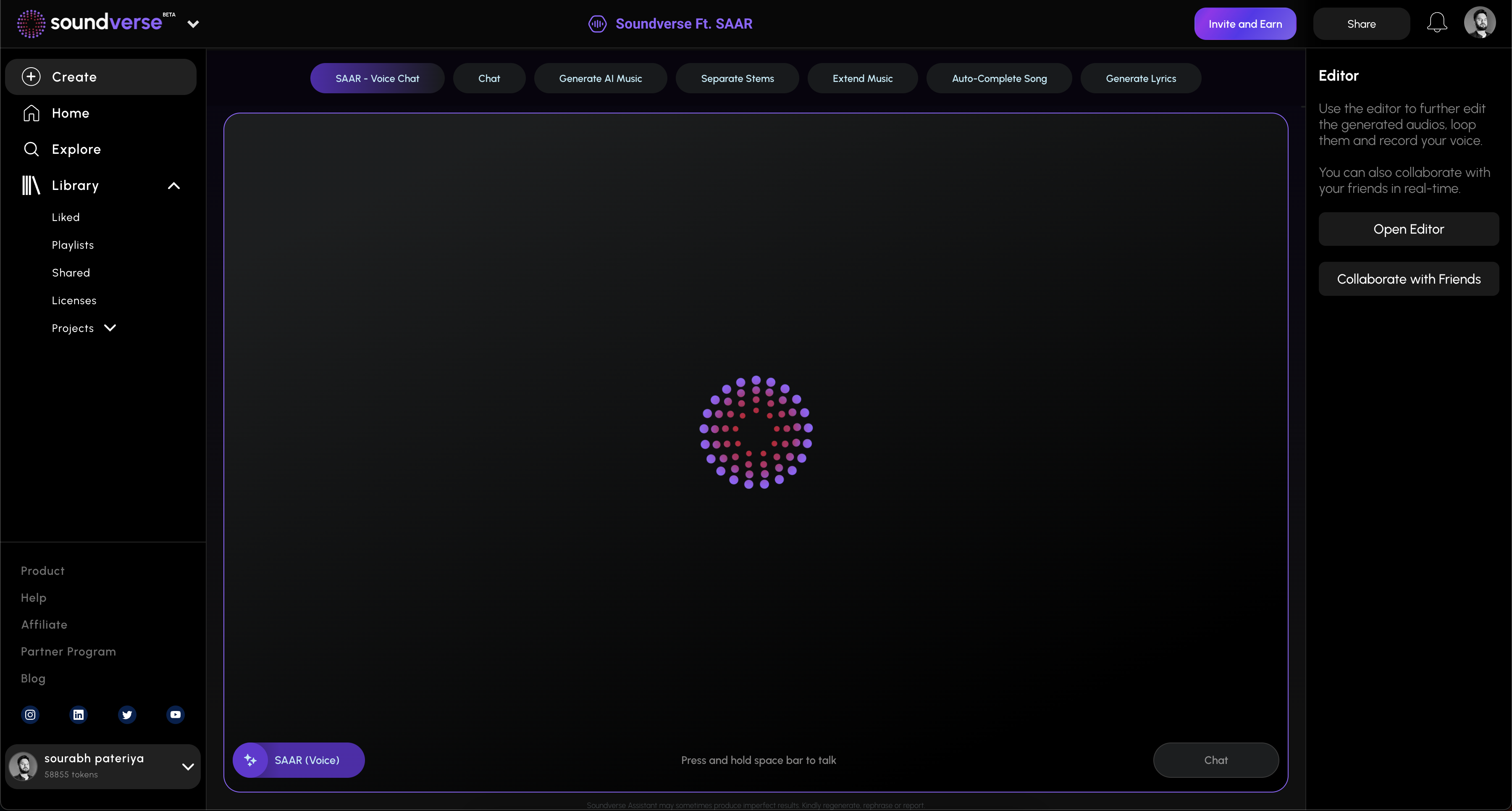
Now that you understand the science behind an AI assistant’s singing capability, here’s how Soundverse delivers it.
Soundverse Agent is a conversational AI music assistant acting as a centralized controller for all creative operations. Instead of dealing with separate modules, users communicate naturally, and Agent performs contextual reasoning to orchestrate tools such as the AI Singing Generator and AI Song Generator.
Core Capabilities
- Multi-step reasoning: It interprets complex requests like “generate a pop song and then remove drums.”
- Contextual memory: Remembers past prompts to maintain continuity in long sessions.
- Voice input support: Creators can speak their musical ideas directly.
- Cross-tool automation: Automatically connects the necessary Soundverse AI Magic Tools in one workflow.
Practical Use Cases
- Beginners: Instantly create songs without needing production expertise.
- Producers: Accelerate complex sequencing like generation → separation → extension.
- Educators: Enhance interactive learning of scales and composition.
- Rapid prototyping: Test multiple vocal arrangements quickly.
How it Works
When a user asks Agent to generate or modify vocals, it routes the text through Soundverse’s AI Singing Generator, which transforms input into singable output. From whispering tones to stylized “Meow Meow” cat sounds, the generator supports both traditional and playful expressions.
To learn how Agent connects to related tools, explore Soundverse AI Magic Tools Create Content Quickly with AI and Soundverse Introduces Stem Separation AI Magic Tool.
Integration with Other Tools
The AI Song Generator can combine lyrics, melody, and arrangement automatically once the Agent processes user intent. Users receive asynchronous results—no live monitoring—but the system ensures mix consistency and style alignment.
Exporting & Sharing
Finished compositions can be exported in multiple formats, ready for integration with video projects or streaming setups. If you’re creating soundtracks or podcasts, the process mirrors what is described in Generate AI Music with Soundverse Text-to-Music.
Try Soundverse and Hear AI Sing Like Never Before!
Experience the next frontier in music creation — where AI assistants don’t just generate sounds, they bring songs to life. Start composing, producing, and experimenting with AI vocals today!
Related Articles
- AI Ranks Soundverse’s AI Singer #1: The Ultimate AI Singing Platform Dominating 2025 — Discover why Soundverse’s AI Singer is setting the new standard for expressive, lifelike AI vocals.
- Soundverse Assistant: Your AI Music Co-Producer — Learn how Soundverse Assistant supports creators in producing smarter, faster, and more intuitively.
- What AI Can Generate Songs — Explore advanced AI models capable of composing music from lyrics and prompts automatically.
- Soundverse Saar: AI Voice Assistant for Music — Meet Saar, the AI voice that turns your commands into harmonies and melodies instantly.
Here's how to make AI Music with Soundverse
Video Guide
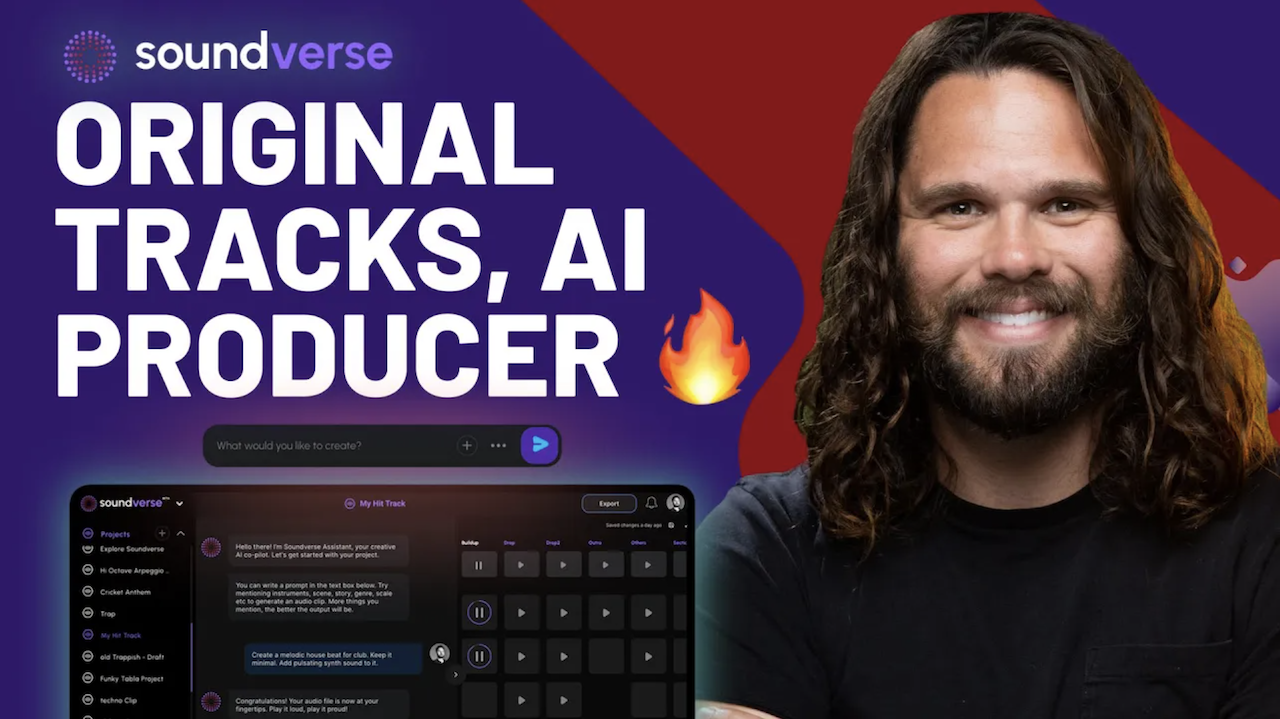
Here’s another long walkthrough of how to use Soundverse AI.
Text Guide
- To know more about AI Magic Tools, check here.
- To know more about Soundverse Assistant, check here.
- To know more about Arrangement Studio, check here.
Soundverse is an AI Assistant that allows content creators and music makers to create original content in a flash using Generative AI. With the help of Soundverse Assistant and AI Magic Tools, our users get an unfair advantage over other creators to create audio and music content quickly, easily and cheaply. Soundverse Assistant is your ultimate music companion. You simply speak to the assistant to get your stuff done. The more you speak to it, the more it starts understanding you and your goals. AI Magic Tools help convert your creative dreams into tangible music and audio. Use AI Magic Tools such as text to music, stem separation, or lyrics generation to realise your content dreams faster. Soundverse is here to take music production to the next level. We're not just a digital audio workstation (DAW) competing with Ableton or Logic, we're building a completely new paradigm of easy and conversational content creation.
TikTok: https://www.tiktok.com/@soundverse.ai
Twitter: https://twitter.com/soundverse_ai
Instagram: https://www.instagram.com/soundverse.ai
LinkedIn: https://www.linkedin.com/company/soundverseai
Youtube: https://www.youtube.com/@SoundverseAI
Facebook: https://www.facebook.com/profile.php?id=100095674445607
Join Soundverse for Free and make Viral AI Music
We are constantly building more product experiences. Keep checking our Blog to stay updated about them!