Convert Voice to Instrument with AI: The Complete 2026 Guide
Learn how AI converts voice into realistic instrument sounds in 2026.
Convert Voice to Instrument with AI
Artificial intelligence is reshaping the way music is created, produced, and experienced. One of the most fascinating applications in 2026 is AI voice to instrument conversion — the ability to turn a simple vocal input into fully realized instrumental sounds. Imagine singing a melody and hearing it played back as a guitar riff, or beatboxing and watching it transform into a drum performance. This revolutionary technology merges vocal synthesis, machine learning in music, and digital audio synthesis into one seamless creative process.
What is AI Voice to Instrument Conversion?
AI voice to instrument conversion is the process where an algorithm analyzes the characteristics of a human voice — such as pitch, tone, timbre, and phrasing — and maps them onto digital models of musical instruments. This means the AI can convert your humming, singing, or beatboxing into realistic simulations of instruments like guitar, sitar, flute, or drums.
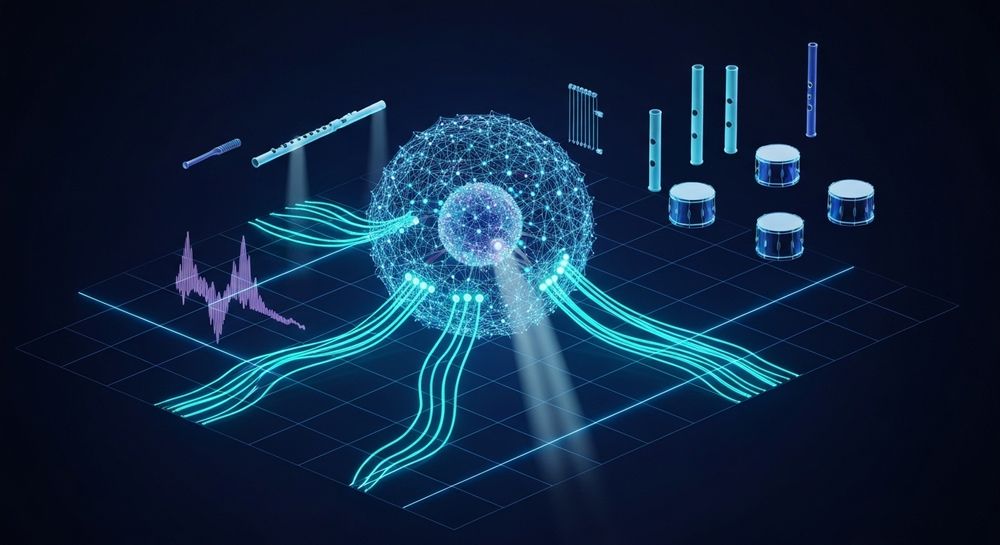
This form of voice transformation technology relies heavily on neural networks trained on large datasets of recorded instruments and vocal gestures. As a result, the AI understands subtle musical nuances, enabling it to replicate realistic articulations without manual MIDI programming.
How Does Voice Transformation Technology Work in 2026?
By 2026, voice transformation technology has evolved to become more natural, faster, and more expressive. AI platforms now use hybrid models combining transformer architectures and diffusion-based synthesis. The vocal input is first analyzed into features like pitch contour, energy, rhythm, and spectral shape. Then, a timbre transfer module maps these features onto the target instrument model.
Machine learning in music continues to expand, enabling automatic interpretation of style and emotion. For example, a soft voice might be mapped to a mellow flute sound, while percussive beatboxing could trigger drum or tabla synthesis. These developments are part of the broader wave of AI music generation and algorithmic creativity tools driving the music industry forward in 2026.
Why is AI Voice to Instrument Conversion Important for Music Creators?
For producers, sound designers, and composers, AI voice to instrument conversion offers several game-changing advantages:
- Instant Idea Capture: You can record a quick vocal idea and turn it into instrument tracks without needing an instrument.
- Inclusive Music Creation: Artists without formal instrumental training can sketch demo ideas more efficiently.
- New Sound Design Possibilities: Transforming vocals into exotic textures expands the creative palette for electronic and world music.
- Faster Workflow: AI replaces hours of manual MIDI programming and sound layering.
- Global Genre Fusion: Vocal gestures can be remapped to ethnic instruments like sitars or bansuris, promoting cross-cultural production.
As AI continues to democratize music creation, more producers are exploring tools that bridge the gap between inspiration and production, like Soundverse’s AI Music Generator and other trendsetting tools in the growing ecosystem.
What Makes AI Voice to Instrument Tools Different from Traditional Audio Plugins?
Traditional plugins usually require manual MIDI input or real-time playing of instruments. In contrast, an AI voice to instrument system understands the expressive nuances of vocal phrases. It doesn’t merely trigger notes; it interprets how you perform them — bends, slides, intensity, and rhythm are all retained.
Additionally, AI-driven systems can model timbre far beyond static sample playback. Using deep learning-based timbre transfer, they generate authentic tonal responses that evolve dynamically with the input signal.
This is a major departure from plugin-based synthesis, defining a new era of expressive, voice-guided instrument generation.
The Role of Machine Learning in AI Music Generation
At the heart of AI voice to instrument conversion lies machine learning in music. Models are trained on vast datasets encompassing thousands of instrument samples and vocal performances. Each model learns:
- Pitch mapping: Recognizing how vocal pitches correspond to instrumental notes.
- Timbre recognition: Understanding spectral qualities unique to instruments.
- Gesture interpretation: Translating rhythm and phrasing.
The integration of vocal synthesis and digital audio synthesis enables the AI not only to replicate sound accurately but also to generate novel textures. Combined with advancements seen in platforms featured in Soundverse AI Magic Tools, users can explore hybrid sounds that transcend traditional boundaries. For more insights, watch our Soundverse tutorial on making music or explore the “Explore” tab walkthrough.
Current Trends in AI Audio Creation in 2026
In 2026, AI music generation has become integral to commercial and independent music production. Major trends include:
- Creator-first platforms – Accessible web tools where users simply upload or record to generate full arrangements.
- Ethnic instrument synthesis – AI that reproduces traditional instruments such as Sitar, Tabla, and Bansuri.
- Emotion-aware generation – Models that adjust musical texture based on vocal emotion.
- Integrated AI co-producers – Systems like Soundverse Assistant guide creators through voice-to-music workflows.
Thanks to these trends, the line between songwriter and producer has blurred. Anyone can articulate musical ideas verbally and hear them materialize as complete compositions.
How to Make Voice to Instrument Conversions with Soundverse Voice to Instrument
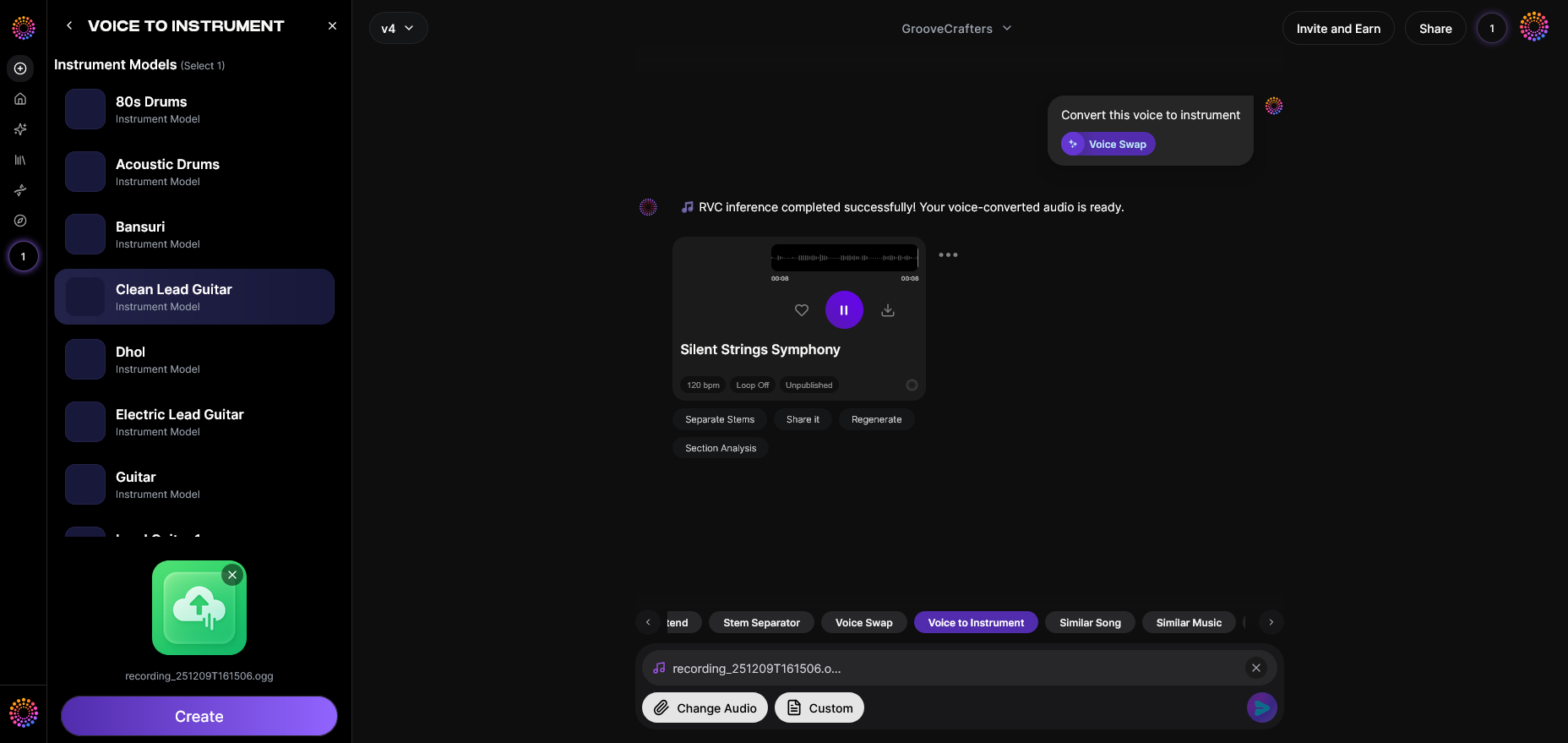
Now that you understand how AI voice to instrument conversion works, here’s how to create instrument sounds from vocal input using Soundverse Voice to Instrument.
Soundverse’s official Voice to Instrument feature transforms vocal input (such as humming, beatboxing, or singing) into realistic instruments. The platform supports melodic and rhythmic input, performs timbre transfer, and offers a wide library including Western and ethnic instruments.
Step 1: Feature Overview
Access the Voice to Instrument tool inside Soundverse. This feature focuses on converting vocal tracks into playable instrumental counterparts, ideal for sound design or demo creation.
Step 2: Instrument Selection
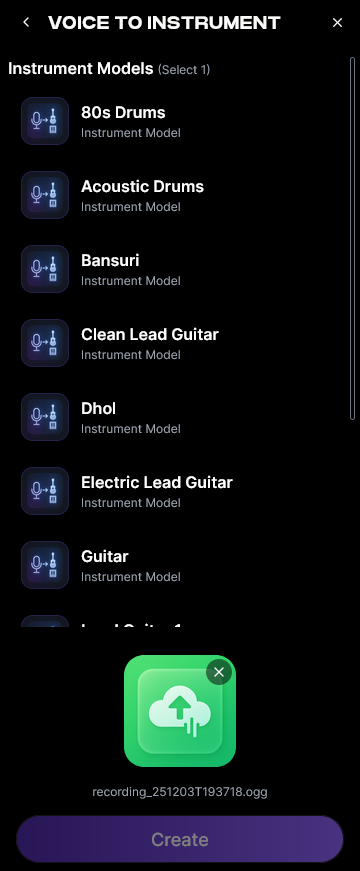
Choose your target instrument from Soundverse’s extensive library. Options range from guitar and flute to sitar and drums. Each model is pre-trained to maintain phrasing and realism.
Step 3: Upload Target Audio
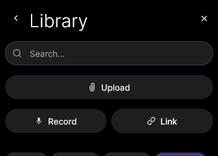
Upload your vocal input — humming a melody, singing, or beatboxing. Remember, Soundverse processes the uploaded file asynchronously; it doesn’t monitor audio live.
Step 4: Generation

Once uploaded, Soundverse’s AI analyzes pitch, timbre, and rhythm, then performs a timbre transfer to render the sound as your chosen instrument.
Step 5: Download Result
After processing, download your instrument version. You can import it into any DAW or combine it with other AI-generated stems using Soundverse tools like its Stem Separation AI Magic Tool. For further practice, watch our Deep House track creation tutorial.
Comparing Soundverse to Similar Tools
Several platforms explore AI music generation, such as Mubert and Soundraw. However, Soundverse distinguishes itself by offering direct voice-to-instrument transformation, rather than only text or mood-based generation.
For creators seeking more flexibility, explore complementary Soundverse features like the Melody to Song Generator that turns raw melodies into complete songs or experiment with genre-based production guides, including How to Create Country Music with AI.
Transform Your Voice Into Any Instrument Today
Experience the power of AI voice to instrument conversion with Soundverse. Instantly turn your vocal ideas into playable instruments and accelerate your music production process.
Related Articles
- Soundverse Introduces Stem Separation AI Magic Tool — Discover how Soundverse’s AI can separate and remix instrument stems to give you full control over your sound.
- Soundverse Assistant: Your AI Music Co-Producer — Learn how the Soundverse Assistant helps creators streamline music production with intelligent AI suggestions.
- Generate AI Music With Soundverse Text-to-Music — Turn written ideas into full musical compositions using Soundverse’s advanced text-to-music generation features.
- How AI-Generated Music Is Transforming the Music Industry — Explore how AI-powered composition tools are redefining creativity and industry workflows for musicians.
Here's how to make AI Music with Soundverse
Video Guide
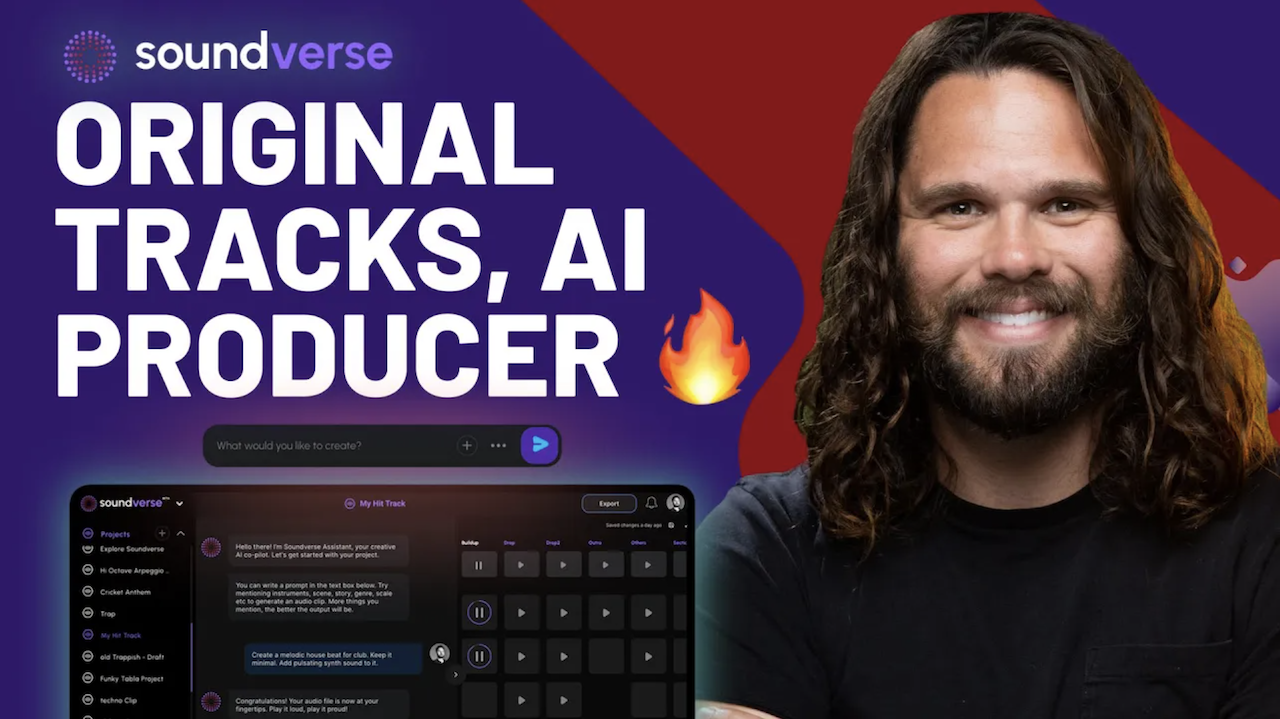
Here’s another long walkthrough of how to use Soundverse AI.
Text Guide
- To know more about AI Magic Tools, check here.
- To know more about Soundverse Assistant, check here.
- To know more about Arrangement Studio, check here.
Soundverse is an AI Assistant that allows content creators and music makers to create original content in a flash using Generative AI.
With the help of Soundverse Assistant and AI Magic Tools, our users get an unfair advantage over other creators to create audio and music content quickly, easily and cheaply.
Soundverse Assistant is your ultimate music companion. You simply speak to the assistant to get your stuff done. The more you speak to it, the more it starts understanding you and your goals.
AI Magic Tools help convert your creative dreams into tangible music and audio. Use AI Magic Tools such as text to music, stem separation, or lyrics generation to realise your content dreams faster.
Soundverse is here to take music production to the next level. We're not just a digital audio workstation (DAW) competing with Ableton or Logic, we're building a completely new paradigm of easy and conversational content creation.
TikTok: https://www.tiktok.com/@soundverse.ai
Twitter: https://twitter.com/soundverse_ai
Instagram: https://www.instagram.com/soundverse.ai
LinkedIn: https://www.linkedin.com/company/soundverseai
Youtube: https://www.youtube.com/@SoundverseAI
Facebook: https://www.facebook.com/profile.php?id=100095674445607
Join Soundverse for Free and make Viral AI Music
We are constantly building more product experiences. Keep checking our Blog to stay updated about them!