Collective Licensing for AI Music Training: The 2026 Perspective
Explore collective licensing and AI music licensing trends shaping ethical AI training in 2026.
Collective Licensing for AI Music Training
The rapid evolution of artificial intelligence in music has transformed how rights, creativity, and technology intersect. By 2026, music industry professionals, rights management organizations, and AI developers have entered a new era—one dominated by structured, collective approaches to licensing music for machine learning models. This shift has given rise to the concept of AI music licensing, where rights-holders collaborate under transparent frameworks to monetize their catalogs while supporting ethical AI development.
What is Collective Licensing for AI Music Training?
Collective licensing for AI music training refers to a system where music rights-holders—such as artists, record labels, and publishers—offer their works under a unified agreement that allows AI models to use those recordings for data training. Instead of handling one license per song or album, entities leverage group licensing, catalog deals, or bulk agreements that cover thousands of tracks at once.
By 2026, the model has matured substantially. Organizations now embrace these agreements to streamline AI dataset creation while guaranteeing royalty payments and usage transparency. The collective structure encourages ethical participation, ensuring that every track used in training carries traceable rights and fair remuneration.

Why Has AI Music Licensing Become Crucial in 2026?
Two years ago, in 2024 and 2025, the AI music world experienced significant conflict over intellectual property misuse. Unlicensed datasets led to lawsuits, disputes, and platform shutdowns. As a result, the industry began implementing stronger frameworks in 2026 designed to protect rights-holders through legitimate licensing structures.
AI developers now require clear legal pathways to train models without risking infringement. Music rights collectives and technology platforms collaborate on bulk agreements, allowing hundreds of label catalogs to join a training pool transparently. These arrangements not only ensure compliance but also create recurring income for artists through predictable payout mechanisms.

How Does Group Licensing Simplify AI Dataset Access?
Group licensing operates like a cooperative. Instead of negotiating individual contracts with each contributor, AI developers sign one comprehensive license that includes all participating rights-holders. The collective system reduces red tape, lowers transaction costs, and provides standardized terms for usage, royalties, and reporting.
Moreover, group licensing helps smaller independence-based labels and publishers access AI deals traditionally reserved for major players. By joining consortiums, they can now license their music for AI training without complex legal setup. For developers, it means faster onboarding of usable, high-quality audio data.
For a deeper dive into music creation workflows, watch our guide on creating Deep House music and learn the basics in How to Make Music from the Soundverse Tutorial Series.
What Are Catalog Deals and Bulk Agreements in AI Music Licensing?
Catalog deals represent pre-negotiated packages of music data—entire libraries curated and cleared for AI training. Unlike traditional sync licenses, these deals involve recurring usage rights rather than one-time fees. Bulk agreements extend this idea across multiple entities, creating large-scale shared datasets.
In practical terms, bulk agreements allow machine learning systems to train across diverse cultural and genre data, reflecting real-world musical variety. For instance, AI models working under ethical pipelines can learn the subtleties of jazz, EDM, or country music datasets while each artist receives royalties according to their track’s utilization. This kind of framework aligns perfectly with today’s emphasis on ethical generative music, as discussed in Soundverse’s AI music transformation article.
How Do Rights Management Organizations Adapt to AI Licensing?
Rights management organizations (RMOs) in 2026 are actively redesigning their systems to accommodate AI licensing flows. Traditional performance and mechanical rights tracking now integrate with usage-based data analytics from AI platforms. RMOs partner directly with collective AI frameworks to automate royalty distribution whenever generated music attributes or references the licensed data.
This adaptation bridges the gap between digital rights enforcement and machine learning innovation. Platforms focusing on transparency, such as Soundverse Trace, enable RMOs to analyze where and how specific samples were used, ensuring every contributor receives their due royalties.
How to Make Ethical AI Music Licensing with Soundverse Content Partner Program
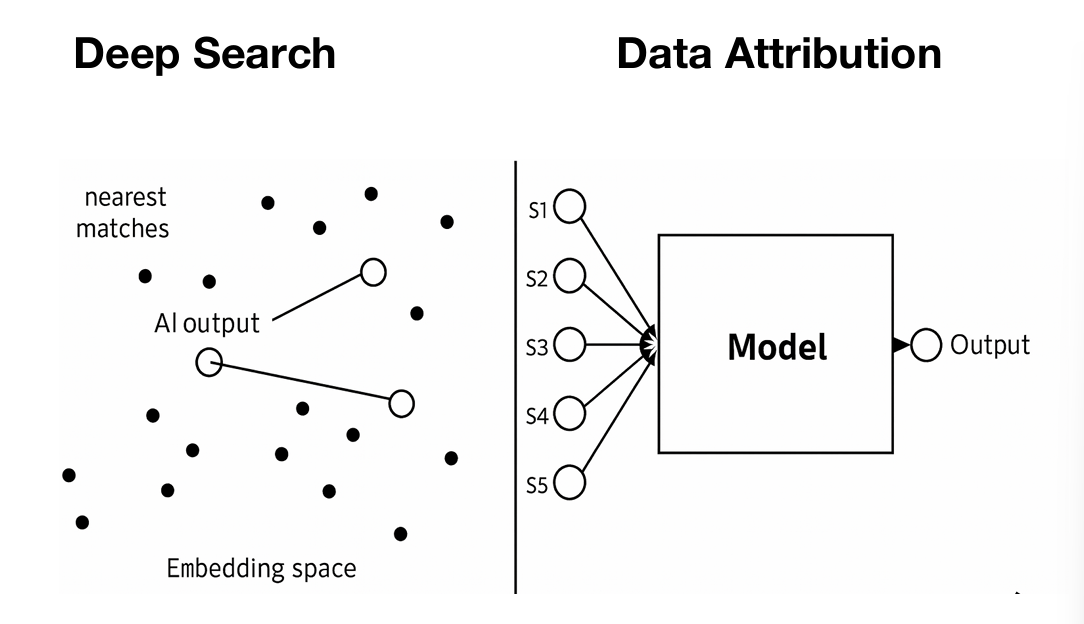
Soundverse’s Content Partner Program is redefining collective licensing for AI music in 2026. Designed as an opt-in framework, it allows rights-holders—artists, publishers, and catalog owners—to license their audio recordings for AI model training and receive recurring, usage-based royalties.
Core Capabilities:
- Influence-Based Payouts: Participants earn royalties based on usage frequency; the more the AI model utilizes their track data, the higher the payout per generation.
- Tiered Licensing (Tiers 1–6): Structured licensing levels that adapt to catalog value and exclusivity.
- Real-Time Dashboards: Rights-holders can access asynchronous earnings reports showing their payout evolution.
- Transparency Reports: Each contributor receives detailed insights into how their content is used in AI training.
This system solves key problems the industry faced before 2026—providing ethical training infrastructures where artists retain control and visibility. By merging consent-driven licensing with revenue generation, Soundverse enables participants to protect their rights while contributing to the advancement of AI-generated music.
The Content Partner Program complements Soundverse’s broader Ethical AI Music Framework, a six-stage pipeline ensuring every data input carries verified consent and traceable attribution. Together, these tools make AI music creation legally sound and morally sustainable.
What Benefits Do Rights-Holders Receive Under Collective Licensing?
- Recurring Income: Instead of static upfront payments, licensing now includes ongoing usage-based royalties, promoting long-term value for catalog owners.
- Transparency & Accountability: Advanced reporting systems built upon frameworks like Soundverse Trace ensure every track’s training activity is logged and accessible.
- Ethical Participation: Rights-holders can license confidently, knowing their work supports legally compliant AI systems.
- Market Expansion: Collective structures open licensing opportunities to smaller publishers who previously lacked resources for individual deals.
For emerging creators exploring the future of AI music tools, learning how ethical licensing affects dataset design is essential. Articles such as Mubert alternatives and Soundraw Alternative explore related comparisons, showing how distinct AI platforms address copyright integrity differently.
How Collective Licensing Protects Innovation and Integrity in 2026
The new collective licensing model in 2026 stands as a safeguard protecting both artistic integrity and innovation. Rather than restricting AI growth, it channels it toward transparency. Rights-holders who previously viewed AI as a threat now see it as a reciprocal ecosystem—where data contributes to creative evolution and compensates those who make that evolution possible.
Legally, these agreements reduce litigation risk. They predefine dataset categories, authorize usage types, and track model outputs linked to original training material. Economically, they build scalable business models around AI training loops that generate royalties infinitely, making licensed music a self-sustaining data economy.
Culturally, group licensing encourages inclusivity. Niche genres—from indigenous folk recordings to underground electronic scenes—become part of AI datasets without losing ownership attribution. The result is richer, more representative machine learning outputs created through ethical collaboration.
Looking Ahead: The Future of AI Music Licensing
By late 2026, industry experts predict broader integration of licensing opt-ins within music distribution platforms. Artists might upload directly into AI-ready sections of streaming services, automatically registering their works with collective frameworks. This trend could merge streaming monetization with AI royalty generation, creating a cohesive revenue model across all digital channels.
Soundverse is at the forefront of this evolution. Through tools like the Soundverse Assistant, explored in this article, and the AI Magic Tools discussed in Soundverse AI creation guide, rights-holders gain complete control over how their data interacts with AI-driven music generation.
Start Creating Licensed AI Music Today
Unlock unlimited potential with Soundverse’s AI-powered music tools. Create, license, and monetize your sound effortlessly while staying compliant with modern music licensing standards.
- How AI-Generated Music Is Transforming the Music Industry: Discover how artificial intelligence is revolutionizing composition, production, and licensing across the entire music landscape.
- Navigating the World of Royalty-Free and Copyright-Free Music Using Soundverse AI: Learn the key differences between royalty-free and copyright-free tracks and how Soundverse helps creators stay legally protected.
- Copyright-Free vs. Royalty-Free Music: What Creators Should Know: Understand the nuances between different licensing types to ensure your music complies with modern digital regulations.
- The Role of AI Music in Film and Television: Explore how AI music is reshaping licensing and soundtrack production for filmmakers and content creators.
Here's how to make AI Music with Soundverse
Video Guide
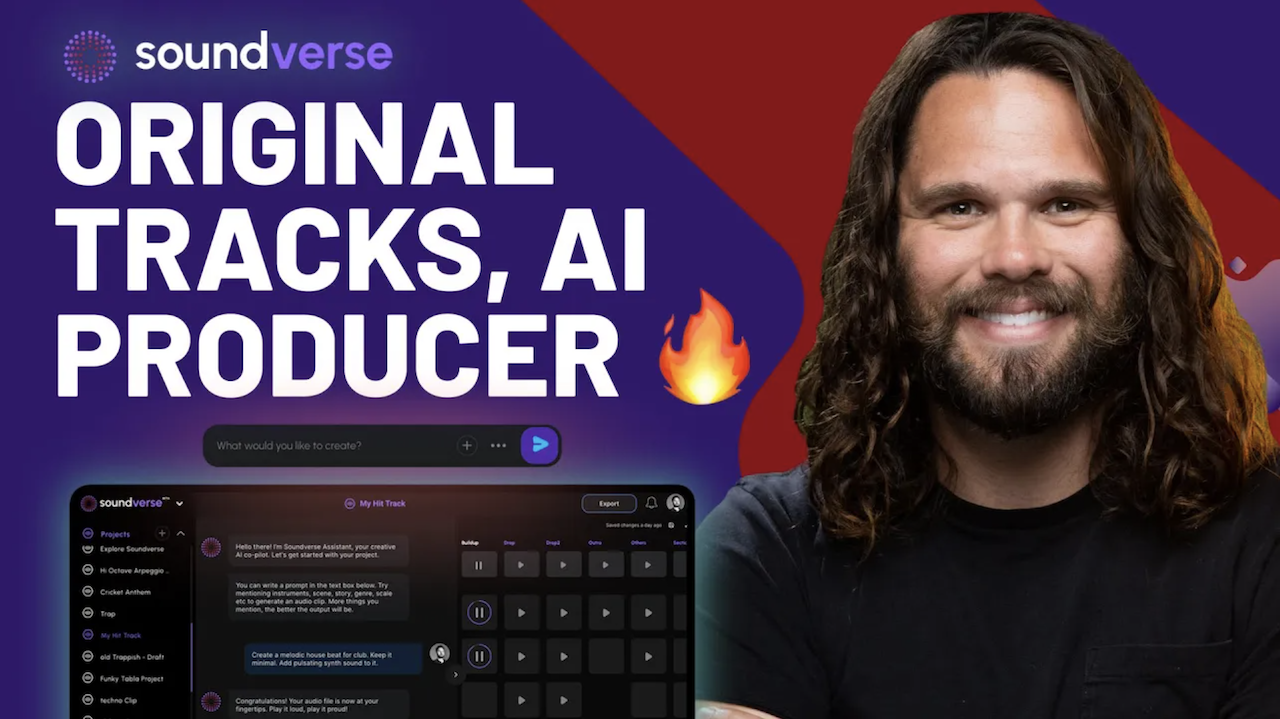
Here’s another long walkthrough of how to use Soundverse AI.
Text Guide
- To know more about AI Magic Tools, check here.
- To know more about Soundverse Assistant, check here.
- To know more about Arrangement Studio, check here.
Soundverse is an AI Assistant that allows content creators and music makers to create original content in a flash using Generative AI. With the help of Soundverse Assistant and AI Magic Tools, our users get an unfair advantage over other creators to create audio and music content quickly, easily and cheaply. Soundverse Assistant is your ultimate music companion. You simply speak to the assistant to get your stuff done. The more you speak to it, the more it starts understanding you and your goals. AI Magic Tools help convert your creative dreams into tangible music and audio. Use AI Magic Tools such as text to music, stem separation, or lyrics generation to realise your content dreams faster. Soundverse is here to take music production to the next level. We're not just a digital audio workstation (DAW) competing with Ableton or Logic, we're building a completely new paradigm of easy and conversational content creation.
TikTok: https://www.tiktok.com/@soundverse.ai Twitter: https://twitter.com/soundverse_ai Instagram: https://www.instagram.com/soundverse.ai LinkedIn: https://www.linkedin.com/company/soundverseai Youtube: https://www.youtube.com/@SoundverseAI Facebook: https://www.facebook.com/profile.php?id=100095674445607
Join Soundverse for Free and make Viral AI Music
We are constantly building more product experiences. Keep checking our Blog to stay updated about them!
Image Steps: []