Can You Mint AI Music as NFTs? Legal Guide for Musicians in 2026
Learn how to mint AI music NFTs legally in 2026. Understand copyright, blockchain music rules, and Soundverse’s Ethical AI Music Framework.
Can You Mint AI Music as NFTs? Legal Guide
The intersection between artificial intelligence and blockchain has generated one of the most intriguing discussions in the music industry: can you mint AI music as NFTs legally? In 2026, digital creators are moving rapidly toward Web3 solutions—an ecosystem where ownership, provenance, and royalties are encoded directly on the blockchain. Yet as AI-generated compositions and nft ai songs proliferate, musicians and producers face new questions about authorship, licensing, and compliance.
What are AI Music NFTs?
AI music NFTs represent digital audio assets created using artificial intelligence and sold or traded on blockchain platforms. Each NFT serves as proof of ownership, recording details like the creator, rights-holder, and usage license. The growing market for blockchain music has enabled musicians to monetize creative works instantly through smart contracts, but when the music itself emerges from a neural network rather than an individual artist, intellectual property concerns begin to surface.

In practical terms, nft ai songs are born when creators use text-to-music generators or AI composition tools to produce original instrumentals. These files can then be tokenized to create NFTs that exist on decentralized networks such as Ethereum or Polygon. However, determining who owns those works—AI developer, prompt writer, or training-data contributor—remains complex. That’s where legal guidance and transparent frameworks become essential.
What Are the Core Legal Considerations When Minting AI Music NFTs?
Legal oversight of AI music NFT creation in 2026 covers several areas:

1. Authorship and Copyright Attribution: Traditional copyright law recognizes human authorship. With AI-generated outputs, the person initiating the creative process (providing prompts, selecting genres, and editing results) often gains copyright protection over final outputs, provided substantial originality exists. However, if an AI model uses copyrighted material for training without consent, derivative rights might be implicated.
2. Dataset Licensing: Using datasets that include copyrighted music without explicit permission can render outputs legally insecure. Ethical AI music tools now focus on licensed data sourcing to prevent infringement and ensure that rights-holders receive compensation.
3. Smart Contract Rights: NFT smart contracts may incorporate metadata defining how royalty splits, resale commissions, and usage rights are distributed. When minting AI music NFTs, creators should ensure these contracts explicitly define ownership layers and attribution obligations.
4. Distribution Limits and Fair Use: While blockchain platforms facilitate global access, creators must comply with jurisdictional copyright laws, especially where AI and data rights vary. As of 2026, most major platforms enforce uploads through rights verification systems to maintain compliance.
For an overview of how artificial intelligence reshaped music copyrights, see How AI-Generated Music Is Transforming the Music Industry. You can also watch the Soundverse Tutorial on creating Deep House Music to explore hands-on creative processes.
Why Mint AI Music NFTs in 2026?
The appeal lies in empowerment and transparency. Musicians increasingly mint AI music NFTs to:
- Demonstrate Provenance: Blockchain ensures every creative asset has an immutable record of origin.
- Enable Royalties through Smart Contracts: Artists receive recurring payments whenever NFTs are resold.
- Enhance Fan Engagement: Collectors can own unique algorithmic compositions associated with their favorite creators.
- Explore Cross-Medium Collaboration: NFT-driven projects are blending interactive soundscapes, virtual performances, and metaverse experiences, merging ai music web3 culture with immersive art.
The convergence of AI models and blockchain protocols makes AI music NFTs not only valuable assets but also ethical tests for digital creation. This mirrors insights from AI Music in Web3 & NFTs: How Blockchain Reshapes Creative ecosystems.
Common Pitfalls of Minting AI Music Without Legal Protection
While the NFT market remains profitable, pitfalls can arise if creators skip compliance checks:
- Unlicensed Data Training: Generating songs using datasets that scrape copyrighted music can violate copyright ownership rules.
- Ambiguous Attribution: Without traceable AI inference, establishing who contributed to generation becomes difficult.
- No Royalty Mapping: Failing to include compensation models in contract metadata can deprive rights-holders of fair value.
- Opaque AI Models: Many tools use black-box algorithms lacking explainability or traceability, leaving artists vulnerable.
Creators can overcome these issues by choosing transparent AI frameworks specifically designed for licensing integrity—such as Soundverse’s Ethical AI Music Framework.
How to Make AI Music NFTs Legally Compliant with Soundverse The Ethical AI Music Framework
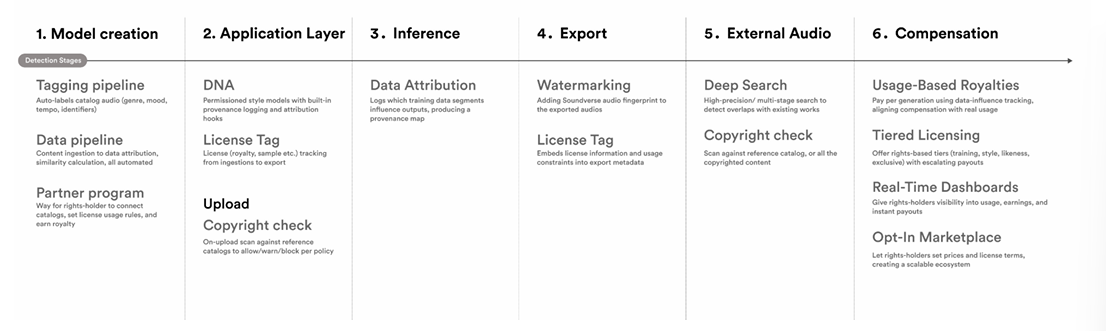
Soundverse provides a structured infrastructure ensuring that musicians, producers, and enterprises mint AI music NFTs responsibly while protecting artist contributions. The Ethical AI Music Framework replaces the opaque model approach with transparency and verified attribution.
Inside the Six-Stage Framework
1. Licensed Data Sourcing (Stage 1): Soundverse begins by sourcing only licensed audio data. There is no scraping or unauthorized data use, ensuring every training sample originates from consented partnerships.
2. Permissioned Models (Stage 2): AI models are permissioned via data “DNA,” meaning they hold accessible rights agreements tied to every dataset.
3. Explainable Inference (Stage 3): When AI music is generated, Soundverse tags attribution back to original contributors using explainable inference techniques. Artists can verify how their data influenced results.
4. Traceable Export (Stage 4): The final audio exports include embedded watermarking for provenance verification. This encourages transparent NFT minting and resale tracking.
5. Deep Search (Stage 5): Soundverse Trace operates as a deep search engine across the web, identifying unauthorized usage and connecting blockchain metadata for audit purposes.
6. Recurring Compensation (Stage 6): The Soundverse Partner Program ensures rights-holders continue earning royalties through recurring compensation based on attribution whenever generated content gets commercialized or tokenized.
Together, these six stages empower creators to mint legally secure AI music NFTs and ensure both ethical transparency and fair value distribution. Learn more through Soundverse Assistant and additional Web3 tools discussed in Soundverse AI Revolutionizing Music Creation for New Age Content Creators.
How Blockchain Music Is Reshaping Rights Management
Blockchain music in 2026 has evolved from novelty to infrastructure. Smart contracts embedded into NFTs automate licensing, making royalty payouts and attribution instant.
For AI music NFTs, authentication layers like Soundverse Trace link watermark signatures to blockchain metadata. This allows industry participants—from record labels to independent musicians—to validate authorship and monitor usage on secondary markets without manual auditing.
Web3 gives artists unprecedented control, aligning with the rise of ai music web3 communities that value decentralization and transparency over traditional intermediaries. Many projects now integrate DAO-based royalty governance, letting token holders help allocate creator payouts fairly. Historical analysis from Music and AI: 2025's developments that will shape 2026's disputes confirms these shifts are redefining ownership norms.
What Are the Ethical and Economic Implications for Artists?
By 2026, creators have recognized both opportunity and responsibility in ai music NFTs:
- Ethical Responsibility: Artists and developers must respect source copyrights. Using frameworks like Soundverse ensures that dataset contributors receive proper attribution and recurring revenue.
- Economic Empowerment: NFT fractional ownership allows fans to invest directly in musical projects and share in resale values.
- Cultural Shifts: AI-driven composition is no longer viewed as replacing human creativity but expanding it into dynamic ecosystems combining human emotion with algorithmic precision.
Visit Music Industry Trends for deeper insights into how blockchain and AI continue transforming global music economics.
What Steps Should You Follow Before Minting Your First AI Music NFT?
Musicians seeking legal clarity can follow this simplified checklist before tokenizing:
- Verify dataset licensing or collaborate exclusively through permissioned AI frameworks such as Soundverse.
- Confirm that generated tracks include traceable watermarking.
- Prepare clear NFT metadata listing authorship details and rights terms.
- Register NFT smart contracts specifying royalty distribution.
- Evaluate local copyright jurisdiction for AI-generated works.
Following these steps prevents infringement while maximizing income potential in your ai music web3 journey.
Start Creating Your Own AI Music NFTs Today
Unlock new possibilities in digital music ownership. Use Soundverse’s AI tools to create, customize, and mint your original tracks as NFTs effortlessly.
Related Articles
- Navigating the World of Royalty-Free and Copyright-Free Music Using Soundverse AI — Learn how to make smart copyright decisions and use AI-generated music safely and legally.
- AI Music Generator and Human Composers: A Future Together — Discover how AI and human creativity can collaborate instead of compete in the evolving music landscape.
- Copyright-Free vs. Royalty-Free Music: What Creators Should Know — Understand the key differences between copyright-free and royalty-free music before minting your tracks as NFTs.
- The Role of AI Music in Film and Television — Explore how AI-generated soundtracks are reshaping licensing, monetization, and creative ownership in visual media.
Here's how to make AI Music with Soundverse
Video Guide
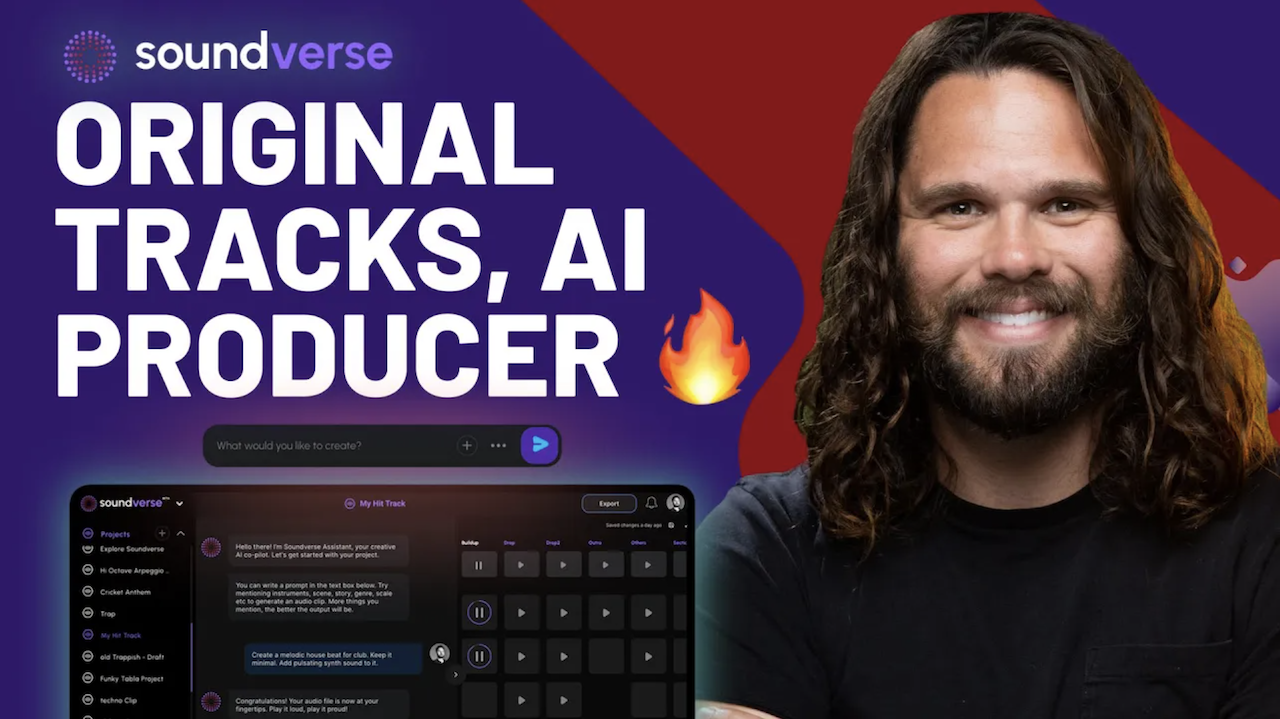
Here’s another long walkthrough of how to use Soundverse AI.
Text Guide
- To know more about AI Magic Tools, check here.
- To know more about Soundverse Assistant, check here.
- To know more about Arrangement Studio, check here.
Soundverse is an AI Assistant that allows content creators and music makers to create original content in a flash using Generative AI.
With the help of Soundverse Assistant and AI Magic Tools, our users get an unfair advantage over other creators to create audio and music content quickly, easily and cheaply.
Soundverse Assistant is your ultimate music companion. You simply speak to the assistant to get your stuff done. The more you speak to it, the more it starts understanding you and your goals.
AI Magic Tools help convert your creative dreams into tangible music and audio. Use AI Magic Tools such as text to music, stem separation, or lyrics generation to realise your content dreams faster.
Soundverse is here to take music production to the next level. We're not just a digital audio workstation (DAW) competing with Ableton or Logic, we're building a completely new paradigm of easy and conversational content creation.
TikTok: https://www.tiktok.com/@soundverse.ai
Twitter: https://twitter.com/soundverse_ai
Instagram: https://www.instagram.com/soundverse.ai
LinkedIn: https://www.linkedin.com/company/soundverseai
Youtube: https://www.youtube.com/@SoundverseAI
Facebook: https://www.facebook.com/profile.php?id=100095674445607
Join Soundverse for Free and make Viral AI Music
We are constantly building more product experiences. Keep checking our Blog to stay updated about them!