Are AI-Generated Books Better Than Human-Created Literature?
Explore the rise of AI-generated books in 2026 and compare AI authors with human creativity.
Are AI-Generated Books Better Than Human-Created Literature?
Artificial intelligence has reshaped every creative industry—from music production to novel writing—and by 2026, the question has become unavoidable: are AI-generated books better than human-created literature? As machine-written novels dominate digital shelves and literary AI assistants help authors draft stories faster than ever before, the debate about creativity, authenticity, and emotional depth continues to evolve.
What are AI-generated books?
AI-generated books are literary works produced partially or entirely by artificial intelligence. These systems use models trained on massive datasets of existing texts to identify patterns in storytelling, grammar, pacing, and emotional rhythm. Unlike human authors who rely on lived experiences and imagination, AI authors rely on data, prediction, and synthetic creativity.
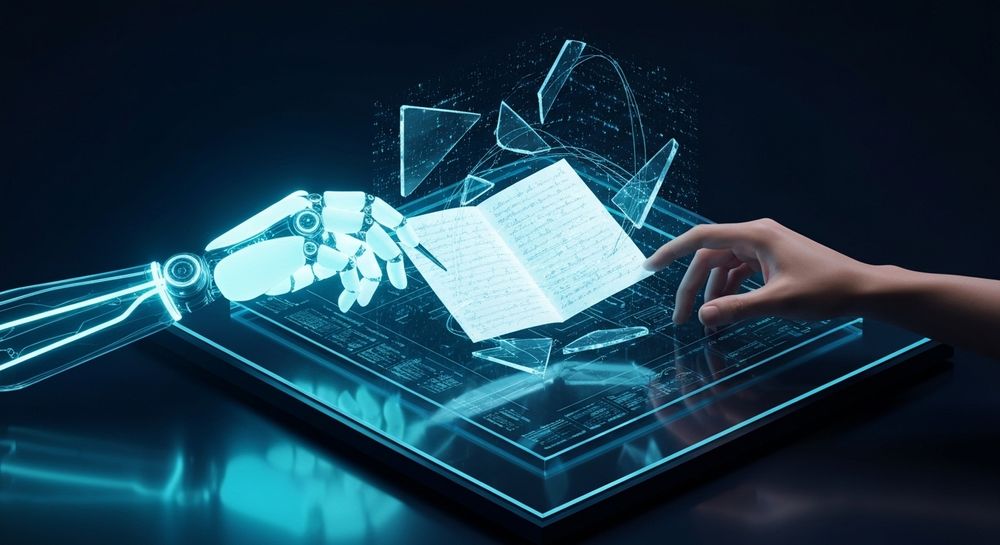
By 2026, several publishing houses have started experimenting with AI-generated novels. Some platforms use machine learning to write genre-specific works—thrillers, romances, or science fiction—tailored for reader preferences. The appeal lies in efficiency and accessibility: AI can produce thousands of pages in minutes, adapt writing style on command, and maintain consistent quality.
How do AI authors compare with human creativity?
The central debate between human writers and artificial intelligence in writing revolves around one concept: creativity versus computation. Human creativity stems from emotion, culture, and personal experience. AI creativity originates from algorithmic inference—it recognizes what works and replicates it.
Human authors, from classical novelists to modern creators, often rely on intuition and empathy to build deeper emotional connections. Their stories are steeped in cultural context and individual life experiences. By contrast, AI-generated books can achieve impressive narrative flow and structure but sometimes lack the nuanced insight found in human writing.
However, the gap has narrowed. In 2026, natural language generation models have advanced significantly since 2024 and 2025. AI systems now use contextual feedback loops and reader data to refine emotional engagement. That means AI authors are increasingly capable of mimicking empathy and moral tension with remarkable precision. As Richard Beard noted, “AI's endless clichés continue to encroach on human art,” making our creativity’s uniqueness ever clearer.
What are the advantages of AI-generated books?
- Speed and Scalability: Machine-written novels can be produced rapidly, a boon for publishers seeking to maintain global output.
- Cost Efficiency: Reduced writing and editing time translates into lower production costs.
- Data-Driven Storytelling: AI can predict popular genres and themes by analyzing reader trends from previous years, ensuring higher engagement.
- Multilingual Capability: AI authors can translate works instantly, expanding accessibility beyond linguistic barriers.
- Customization: Readers can choose to personalize stories—adjusting tone, pacing, or character traits—something human authors can’t accommodate at large scale.
What are the limitations of AI authors?
Despite remarkable progress, artificial intelligence in writing still faces certain challenges:
- Lack of Genuine Emotion: While machines can simulate empathy, they do not truly feel it.
- Predictability: AI-generated books sometimes follow formulaic patterns, reducing the sense of surprise.
- Ethical and Copyright Issues: Determining ownership and originality can be complex when training data includes human-created works.
- Cultural Context: Subtleties in cultural tone or symbolism may be misrepresented without human review.
What is the future of storytelling in 2026 and beyond?
By 2026, most experts see storytelling evolving into a hybrid space. Human writers use AI as co-authors rather than competitors. Instead of replacing creativity, machine-written novels complement the process—helping writers overcome writer's block, generate plot ideas, or streamline editing. Generative AI for Literature Reviews by James Boyko showcases this evolution across academic writing.
Collaborative creativity is now the norm in both music and literature. As seen in platforms like Soundverse for music creators, AI-driven content tools make ideation faster without undermining originality. Literature mirrors this progression—authors maintain the emotional spine, while AI handles technical precision.
Industry analysts predict that by 2030, the majority of commercial literature will involve some degree of AI collaboration, not full automation. Writers and publishers are using these tools to maintain creative intent while optimizing workflow efficiency.
AI vs human creativity: can machines truly imagine?
The concept of imagination is where boundaries emerge. Human imagination can synthesize unrelated experiences into something new; machines generate novelty through recombination. Philosophically, AI cannot dream—it rearranges data. Practically, however, readers may not notice the difference when the story feels coherent and moving.
Machine-written novels increasingly challenge our definition of creativity. Is art defined by its emotional intent or by its ability to move the audience? If a reader connects deeply with an AI-generated story, does that validate the creative process?
Why publishers and readers are embracing AI authors
Publishers recognize AI’s potential for expanding catalogs and optimizing production cycles. Small publishing houses that struggled to compete in past years now use automated writing systems to release niche books affordably. Readers, meanwhile, appreciate the abundant variety, customized genres, and instant delivery.
Artificial intelligence also supports inclusivity—giving global audiences access to literature in multiple languages without reliance on human translators. It has become a democratizing force in the literary economy.
How AI-generated books connect with AI music and storytelling platforms
In 2026, creative ecosystems are merging. Platforms that once focused on audio, such as Soundverse, now inspire creative decisions across storytelling disciplines. The concept behind Soundverse’s Similar Song Generator—creating original works inspired by a reference—parallels how literary AIs generate stories from existing narrative patterns.
Where Soundverse analyzes genre, tempo, and energy to create sound-alike compositions, literary AI performs style transfer on narrative voice and theme. Both reflect the same evolution: translating inspiration without imitation, maintaining originality while echoing aesthetic patterns.
For creators exploring musical-literary integration, reading about AI music industry trends reveals similar innovations that now inform narrative AI design. Likewise, studying how AI-generated music is transforming the industry demonstrates how collaboration—rather than competition—defines the future of art.
How to make AI-generated storytelling with Soundverse Similar Song Generator
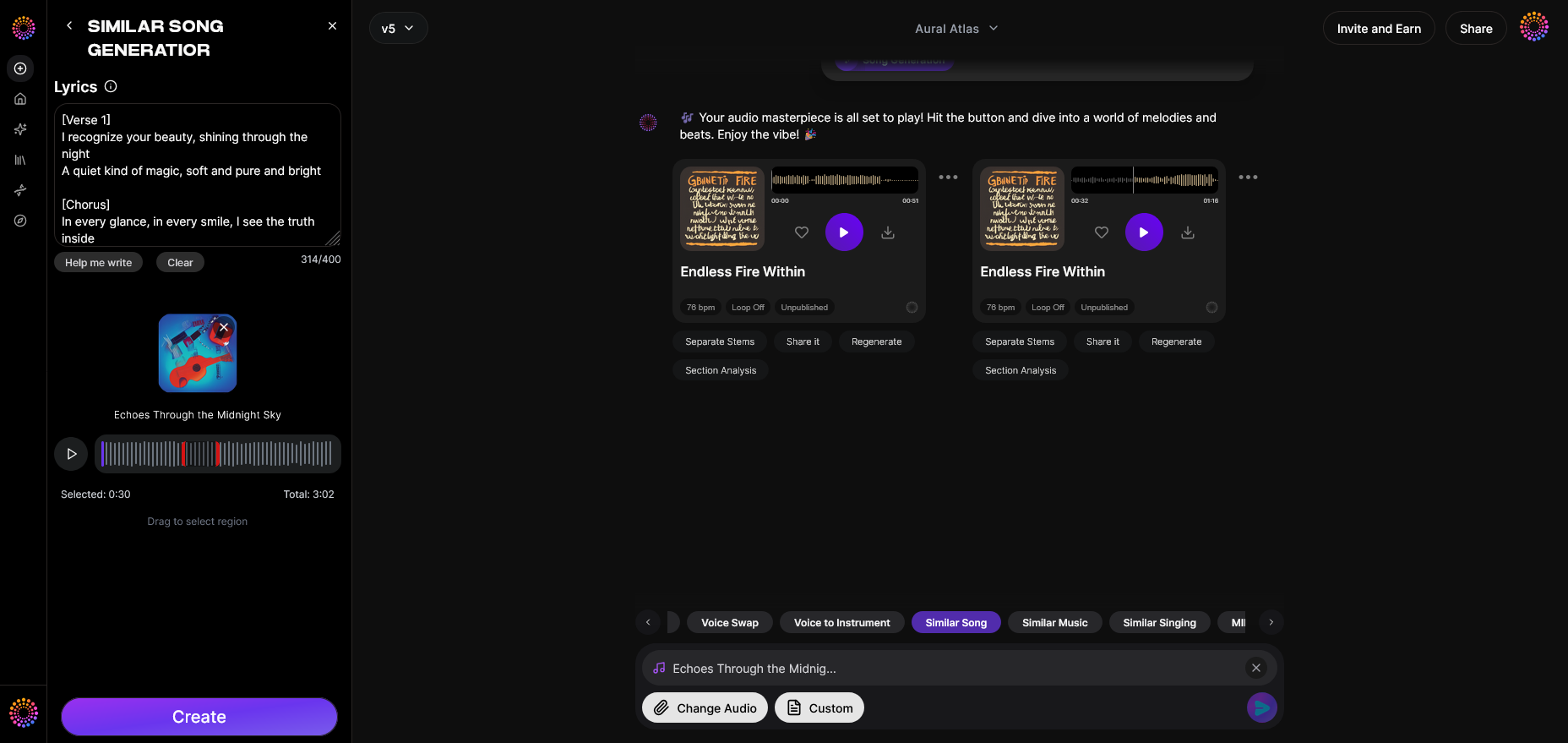
Now that you understand how artificial intelligence reshapes creative outputs, here is how Soundverse helps bring story-inspired soundscapes to life instantly.
Soundverse’s Similar Song Generator allows creators to generate complete original songs inspired by the style, mood, and production aesthetic of a reference track. It analyzes genre, tempo, and energy to craft a unique output that captures the emotional resonance without copying source material. Users can optionally provide lyric input or rely solely on instrumental similarity.
This tool is perfect for writers creating AI-generated books who want complementary music for their stories. Whether producing audio adaptations or immersive audiobook environments, Soundverse creates consistent, royalty-free sound textures aligned with narrative tone.
Core Capabilities:
- Reference audio analysis to detect mood and structure.
- Optional lyric input for thematic integration.
- Style transfer ensuring a ‘sound-alike’ without copyright risks.
Primary Use Cases:
- Creating royalty-free alternatives to temp tracks.
- Generating consistent music for ad campaigns or story soundtracks.
- Rapid ideation based on specific emotional vibes.
For those exploring deeper AI creative workflows, related tools such as the Similar Music Generator (original instrumental creation) and Similar Singing Generator (custom vocal performances) expand your production possibilities. You can learn more about these integrations through resources like Soundverse AI Magic Tools and Musicfy Alternative Review.
For a deeper dive, watch our guide on creating Deep House music or learn how to make music with Soundverse through our tutorial series.
Explore the World of AI Creativity Today
Discover how Soundverse empowers creators with cutting-edge AI tools that transform ideas into music, content, and beyond. Whether you're crafting stories or soundscapes, it’s time to elevate your creative potential with AI.
Get Started for Free
Related Articles
- How AI-Generated Music Is Transforming the Music Industry: Explore how artificial intelligence is revolutionizing music composition and creativity across genres and mediums.
- AI Music Generator and Human Composers: A Future Together: Learn how AI and human creators are merging talents to shape the next evolution of artistic expression.
- The Benefits of Composing with an AI Music Generator: Discover why creators are turning to AI to unlock limitless possibilities in music-making and creative storytelling.
- How an AI Music Generator Inspires Creative Fusion: See how Soundverse’s AI tools drive collaboration and innovation across artistic disciplines.
Here's how to make AI Music with Soundverse
Video Guide
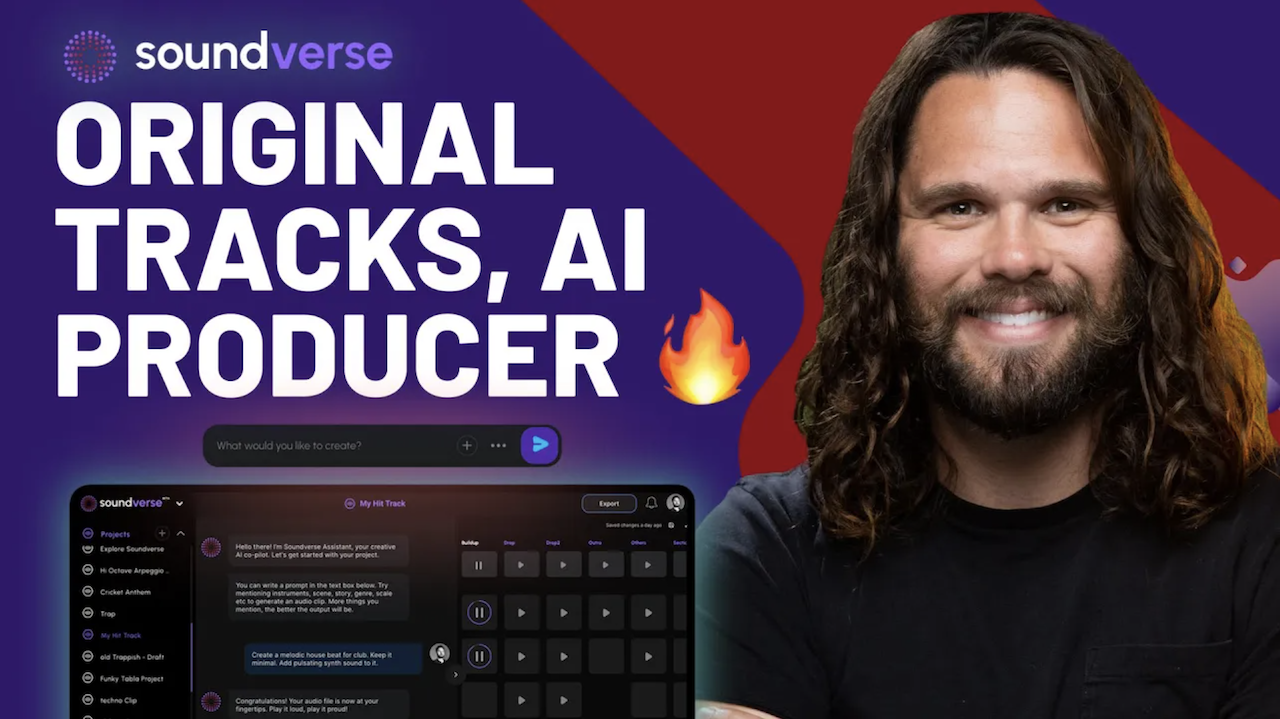
Here’s another long walkthrough of how to use Soundverse AI.
Text Guide
- To know more about AI Magic Tools, check here.
- To know more about Soundverse Assistant, check here.
- To know more about Arrangement Studio, check here.
Soundverse is an AI Assistant that allows content creators and music makers to create original content in a flash using Generative AI. With the help of Soundverse Assistant and AI Magic Tools, our users get an unfair advantage over other creators to create audio and music content quickly, easily and cheaply. Soundverse Assistant is your ultimate music companion. You simply speak to the assistant to get your stuff done. The more you speak to it, the more it starts understanding you and your goals. AI Magic Tools help convert your creative dreams into tangible music and audio. Use AI Magic Tools such as text to music, stem separation, or lyrics generation to realise your content dreams faster. Soundverse is here to take music production to the next level. We're not just a digital audio workstation (DAW) competing with Ableton or Logic, we're building a completely new paradigm of easy and conversational content creation.
TikTok: https://www.tiktok.com/@soundverse.ai
Twitter: https://twitter.com/soundverse_ai
Instagram: https://www.instagram.com/soundverse.ai
LinkedIn: https://www.linkedin.com/company/soundverseai
Youtube: https://www.youtube.com/@SoundverseAI
Facebook: https://www.facebook.com/profile.php?id=100095674445607
Join Soundverse for Free and make Viral AI Music
We are constantly building more product experiences. Keep checking our Blog to stay updated about them!