AI Music Quality by Genre: Comprehensive Analysis in 2026
Explore how AI music quality varies by genre in 2026. Compare genre performance and learn how Soundverse enhances AI music production.
AI Music Quality by Genre: Comprehensive Analysis
In 2026, artificial intelligence continues to reshape music creation, enabling producers, engineers, and digital enthusiasts to explore new boundaries of composition and sound design. Among the key questions being debated in studios and research labs alike is how AI music quality differs by genre. As AI models grow more advanced—with technologies like the Soundverse AI Music Generator leading the way—understanding genre performance and quality comparison has become vital for professionals interested in integrating machine learning into their creative workflows.
What defines AI music quality in 2026?
AI music quality refers to the perceived fidelity, musical authenticity, and emotional coherence of AI-generated compositions. In 2026, this concept includes technical benchmarks such as sound clarity, mixing consistency, and textural depth, as well as subjective measures like genre appropriateness and mood resonance. Evaluating these factors across styles helps determine where machine learning in music excels or still faces complexity.
AI capabilities have expanded significantly since 2024 and 2025, when most systems struggled to reproduce organic genre signatures like jazz syncopation or rock’s analog warmth. Today, advancements in transformer-based architectures and deep generative models allow systems to learn thousands of artist-level nuances. However, the results remain genre-dependent—each musical style interacts uniquely with algorithmic composition.
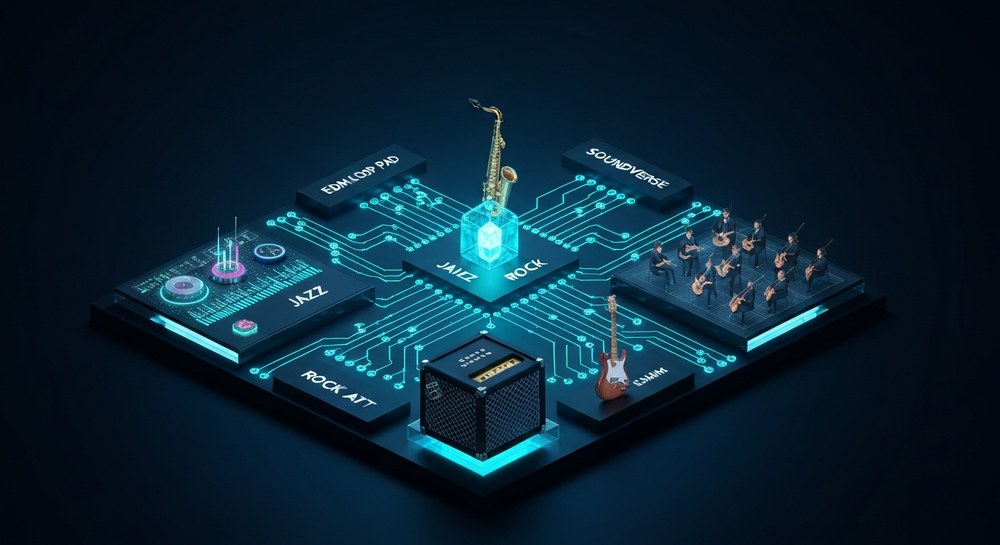
How does AI perform across different musical genres?
1. Electronic and EDM
Electronic genres—especially EDM, synthwave, and ambient—are where AI music production shines brightest. These styles rely heavily on structured repetition, tonal layering, and text-to-music adaptability, which aligns perfectly with algorithmic logic. Modern models deliver high AI music quality in electronic tracks, especially when generating loops for video backgrounds or gaming applications. Soundverse’s own AI Music Generator provides genre and mood control, enabling precise replication of modern club sounds without human mixing intervention. For a deeper dive, watch our guide on creating Deep House music.
2. Hip-Hop and Trap
Genres driven by rhythm and groove, such as hip-hop and trap, have seen strong genre performance improvements. In 2026, AI systems can create hard-hitting beats with dynamic compression matching professional studio levels. Text-based beat generation lets users specify tempo, drum kit type, or vibe, producing legitimate results comparable to human producers. Experimentation with AI rap creation demonstrates how deep learning produces accurate rhythmic phrases without vocals, achieving surprisingly good quality comparison against real producers.
3. Jazz and Blues
Jazz remains one of the most challenging genres for AI. Improvisation, swing timing, and expressive phrasing require nuanced interaction that machine learning still approximates rather than masterfully reproduces. That said, progress made through systems like Soundverse’s V5 models allows smoother transitions and harmonic sophistication compared to early 2024 results. Musicians exploring AI jazz creation note that while emotional connectivity may be limited, instrumental arrangements provide solid foundations for background scoring.
4. Rock and Metal
Rock and metal styles rely heavily on organic distortion and live performance textures, which AI still approximates synthetically. The AI music quality here tends to vary—instrumental tracks capture structural intensity but often miss human expressiveness. The AI metal generation guide shows progress in guitar tone replication using hybrid soundscape modeling. Soundverse’s text-to-music engine accurately simulates percussive drive and looping sections suitable for cinematic cues or commercials.
5. Classical and Orchestral
Machine learning models perform impressively in classical genres where harmonic logic is predictable and rule-based. 2026 systems achieve detailed orchestration with balanced timbre and precise instrument layering. Soundverse users generating symphonic backgrounds for film report exceptionally high AI music quality through structured prompt control—a major leap from the simplified harmonic frameworks of 2025.
6. Lofi and Chillhop
Genres built around texture, repetition, and mood—like lofi—have achieved remarkable synthesis realism. AI excels in reproducing the dusty vinyl feel and layered emotion that defines lofi authenticity. Many producers now rely on Soundverse’s looping mode to create seamless meditation or chill tracks without manual editing. The platform even supports lofi-specific text prompts for mood-based sessions, ensuring high consistency between iterations.
7. Country and Folk
Natural instrument genres like country or folk demonstrate mixed results. While chord structures and progressions are reproduced accurately, the subtle interplay of acoustic instruments remains difficult for AI. Nevertheless, background compositions for rural-themed content—especially when using Soundverse’s V4 model—show warm tonal balances appropriate for lifestyle videos. Producers experimenting with AI country generation find the genre performance suitable for instrumental soundtracks.
8. World and Ethnic Music
AI’s grasp of non-Western tonalities expanded between 2025 and 2026 through improved dataset diversity. Today, AI-generated world music features rhythmically complex patterns and authentic instrumentation textures like sitar or kalimba. Soundverse’s mood and instrument control options let creators request region-specific soundscapes for documentaries or cultural promotions—showing increasing equality in genre performance across ethnic sounds.
What factors influence quality comparison between genres?
Several variables contribute to quality comparison when evaluating AI-generated music:
- Dataset Diversity – Rich input data ensures genre depth and realistic tonal balance.
- Model Architecture – Transformer layers influence temporal resolution and harmonic fluidity.
- Prompt Specificity – The precision of descriptive text directly affects mood accuracy and instrument selection.
- Production Context – Genres optimized for commercial or cinematic loops often yield superior technical quality because they rely on clarity over human expressiveness.
Evaluating these metrics helps producers benchmark genre performance in line with professional standards. In 2026, commercial platforms are increasingly integrating automated quality tests before export, ensuring loop smoothness and tonal uniformity for end use.
How to make high-quality AI music by genre using Soundverse AI Music Generator
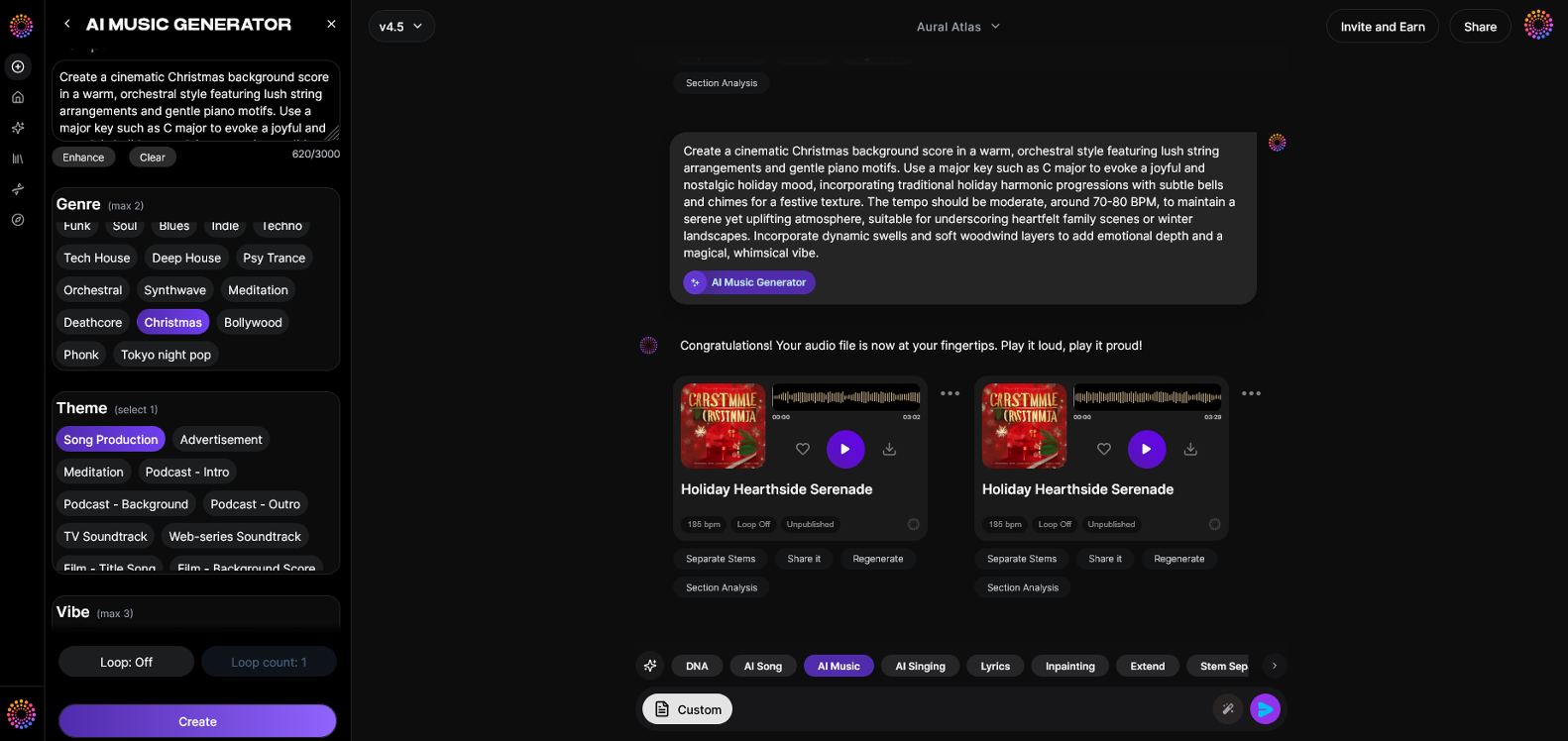
Soundverse offers one of the most refined approaches to AI music production. With its AI Music Generator, users can create fully produced instrumental tracks from text prompts—perfect for genre-based experimentation.
The system specializes in background tracks, beats, and soundscapes. Its Loop Mode allows seamless repetition ideal for games, meditation, or ads. Producers can specify genre, mood, and instrument detail through text to achieve realistic simulation across music types, supported by the latest V4 and V5 models.
The primary use cases include:
- Video soundtrack generation
- Game loop composition
- Meditation and wellness tracks
- Advertising and commercial scoring
Enhanced by tools like Section Analysis for structural mapping and Soundverse Trace for rights management, Soundverse provides an end-to-end professional pipeline. Musicians aiming for consistent AI music quality across genres benefit from this integrated environment with dataset transparency.
How does Soundverse compare to other platforms?
Compared with earlier-generation systems, Soundverse maintains higher precision in genre performance due to its robust descriptive processing. Competitors such as Mubert or Soundraw offer generative capabilities, but few combine metadata-level traceability and section-based structural identification. For cross-platform analysis, explore Soundverse’s related insights in its articles like Mubert alternatives, Soundraw alternative overview, and AI music industry trends.
Soundverse’s sound engine aligns AI capabilities with human production expectations. Instead of real-time previews, the workflow follows an asynchronous creation model—submit description, process composition, then download results. This ensures precise rendering and reduces generation errors common in earlier live systems.
What does 2026 signal for future AI music development?
By 2026, machine learning in music is entering its maturity phase. Genre specialization is now standard across leading production AI tools, allowing accurate replication of professional settings. Next-generation updates will likely emphasize emotional tone modeling and temporal improvisation within genres like jazz or folk.
Sound engineers and AI researchers increasingly view genre diversity as a benchmark for evaluating model advancement. High AI music quality is no longer about generating sound—it’s about curating authenticity. As AI continues integrating into traditional workflows, the line between human and machine creativity becomes softer yet more collaborative.
Experience the Future of AI Music Creation
Generate stunning, high-quality music tracks instantly with Soundverse AI. Explore endless genres, styles, and moods—all powered by cutting-edge generative technology tailored for artists and creators.
Related Articles
- How AI-Generated Music Is Transforming the Music Industry: Discover how AI is reshaping production, creativity, and the business of music across genres and platforms.
- The Role of AI Music in Film and Television: Learn how AI-driven composition tools are changing how producers source and create soundtracks for visual storytelling.
- AI Music Generator and Human Composers: A Future Together: Explore the harmony between human creativity and AI assistance in producing genre-diverse music experiences.
- The Benefits of Composing with AI Music Generator: Find out why musicians worldwide are adopting AI tools to boost efficiency, quality, and creative inspiration.
Here's how to make AI Music with Soundverse
Video Guide
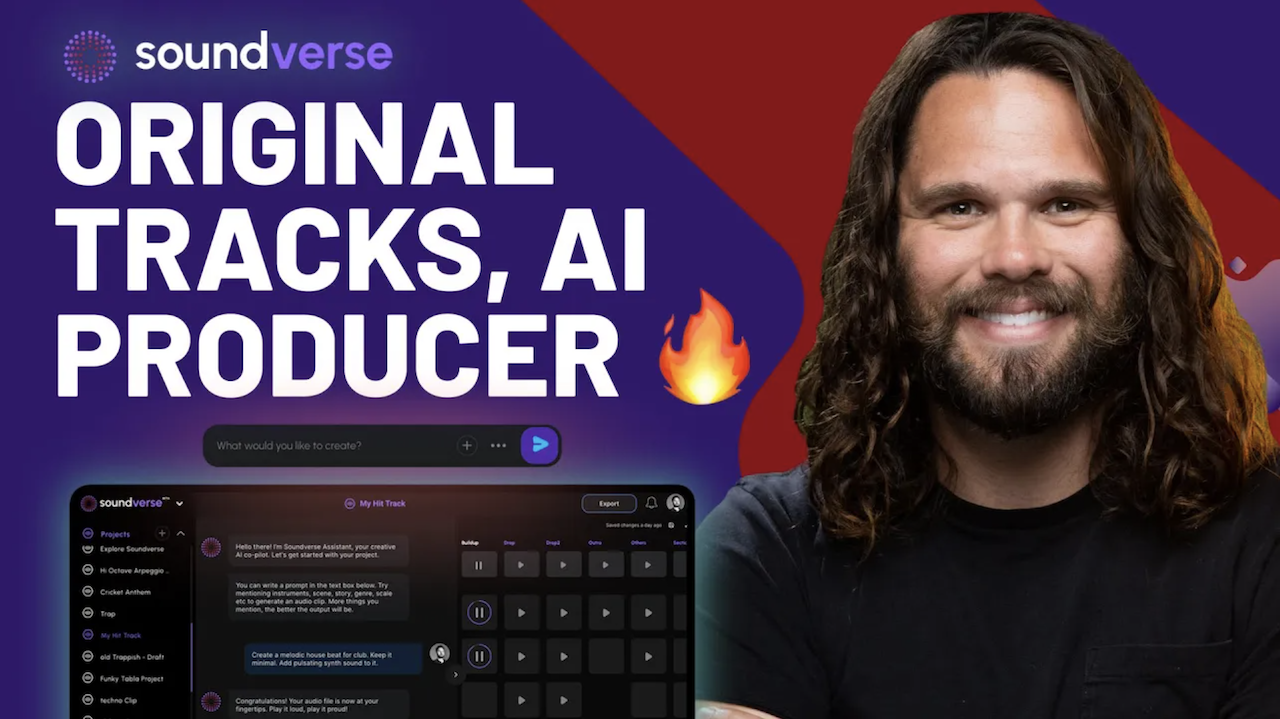
Here’s another long walkthrough of how to use Soundverse AI.
Text Guide
- To know more about AI Magic Tools, check here.
- To know more about Soundverse Assistant, check here.
- To know more about Arrangement Studio, check here.
Soundverse is an AI Assistant that allows content creators and music makers to create original content in a flash using Generative AI.
With the help of Soundverse Assistant and AI Magic Tools, our users get an unfair advantage over other creators to create audio and music content quickly, easily and cheaply.
Soundverse Assistant is your ultimate music companion. You simply speak to the assistant to get your stuff done. The more you speak to it, the more it starts understanding you and your goals.
AI Magic Tools help convert your creative dreams into tangible music and audio. Use AI Magic Tools such as text to music, stem separation, or lyrics generation to realise your content dreams faster.
Soundverse is here to take music production to the next level. We're not just a digital audio workstation (DAW) competing with Ableton or Logic, we're building a completely new paradigm of easy and conversational content creation.
TikTok: https://www.tiktok.com/@soundverse.ai
Twitter: https://twitter.com/soundverse_ai
Instagram: https://www.instagram.com/soundverse.ai
LinkedIn: https://www.linkedin.com/company/soundverseai
Youtube: https://www.youtube.com/@SoundverseAI
Facebook: https://www.facebook.com/profile.php?id=100095674445607
Join Soundverse for Free and make Viral AI Music

We are constantly building more product experiences. Keep checking our Blog to stay updated about them!