AI Music in Europe: Innovation, Regulation, and Cultural Shifts in 2026
Discover how AI music is shaping Europe's creative industry through ethics, innovation, and EU regulations in 2026.
AI Music in Europe: Innovation, Regulation, and Cultural Shifts
Artificial intelligence (AI) continues to reshape the global music landscape, and Europe stands at the epicenter of this evolution. In 2026, AI music Europe symbolizes not only technological innovation but also a cultural shift toward ethics, transparency, and creative collaboration between humans and machines. From Berlin's tech-driven studios to Parisian experimental collectives, European artists and policymakers are defining how AI music can coexist with traditional artistry under clear regulatory frameworks.
What makes Europe the leading hub for AI music innovation in 2026?
Europe's unique combination of deep cultural heritage and progressive digital policies has made it an ideal ground for the development of AI music. Across leading cities such as Berlin, Amsterdam, Stockholm, and Paris, startups and cultural institutions have integrated machine learning into music composition, mastering, and sound design. Platforms enabling text-to-music generation are now common, offering artists ways to explore new sonic territories.
Countries like Germany and France are particularly active in pioneering collaborative AI models. AI music Germany benefits from a strong research ecosystem, connecting academic institutions in Stuttgart and Munich with startups focusing on generative sound synthesis. AI music France, meanwhile, emphasizes aesthetic exploration, combining scenography, performance, and neural composition techniques in art-driven collectives.
A hallmark of the European approach is the blend of creativity and compliance. Initiatives funded by the European Research Council have encouraged the ethical deployment of AI music generators. Unlike earlier models from 2024 and 2025, today’s frameworks in 2026 prioritize consent-based data usage and transparent attribution.
How is AI influencing cultural production and artistic identity in Europe?
For centuries, European music has been defined by its diversity—from the opera houses of Italy to the electronica clubs of Germany. In 2026, AI amplifies this diversity. Artists use AI to reinterpret folk traditions, generate complex cinematic scores, or prototype sounds that blur the boundaries between organic and synthetic.
Emerging European AI artists are developing multi-genre works integrating historical datasets and neural pattern recognition to reimagine existing musical archives. The cultural dialogue around AI music now extends to questions of authorship: Who owns an AI-generated symphony? Is co-creation with algorithms redefining the concept of individuality in music?
These discussions resonate deeply across the European Union, influencing policy in music technology and copyright law. The EU AI Act, implemented in 2025 and refined for rollout in 2026, demands transparency and respect for creative rights. Under these regulations, companies must show that their training data follow clear consent mechanisms and that outputs include traceable attribution markers.
What are the EU regulations shaping the AI music ecosystem?
Regulation is central to the sustainability of AI music Europe. As the technology matures, the European Commission has introduced specific guidelines for generative AI models in creative industries.
Here are some regulation highlights:
- Data Licensing and Consent – Training datasets must only use licensed or public-domain materials, ensuring no unauthorized scraping of copyrighted songs.
- Attribution Enforcement – AI outputs should include metadata linking back to original contributors when applicable.
- Compensation Models – Rights-holders must receive recurring royalties whenever their contributions are used in AI-generated music.
- Transparency Audits – Models must explain inference paths — tracing which sources influence specific melodies or textures.
These layers of control ensure AI innovation aligns with social and cultural integrity. The goal is not to restrict creative expression but to empower a fair ecosystem where human creativity and machine intelligence enrich each other.
How are European AI artists adapting to this regulated new world?
By 2026, regulation no longer feels restrictive—it inspires creativity. Many European AI artists see policy as an opportunity to define their identity in the digital era. Berlin-based producers now integrate traceable watermarking into their compositions to signal authorship. Parisian ensembles use explainable algorithms that link their AI-generated harmonies to historical datasets of impressionist composers, creating rich intertextual performances.
Collaborations flourish between technologists and musicians. AI becomes a tool for cultural storytelling — translating human emotion into procedural generation. Music technology Europe thrives because artists want ethical tools that align with their values.
If you explore recent articles like How AI Generated Music Is Transforming The Music Industry or AI Music Generator And Human Composers—A Future Together, you’ll notice that this balance between machine precision and emotional authenticity drives most creative projects today. For a deeper dive, watch our guide on creating Deep House music and tutorial on using the Explore tab effectively from the Soundverse YouTube channel.
Which technologies and platforms are driving the AI music boom in Europe?
Several European and global platforms contribute to AI-driven production workflows. While generative tools like Endel (Germany) or HarmonAI (international) focus on personalized soundscapes, emerging platforms emphasize full-scale compositional integrity.
Sound design collectives in Scandinavia explore “algorithmic jams” through real-time data streams, while Southern European startups are experimenting with AI models tuned to regional rhythms such as flamenco or fado. Moreover, tools such as Soundverse AI Magic Tools provide creators the infrastructure to produce, remix, and license AI compositions efficiently. The region benefits from a thriving community showcased in 28 Best Music And Audio Startups in Europe to Watch in 2026 and supported by incubators listed in Top 10+ AI Music Generation Companies in Czech Republic (2026).
The challenge remains to unify these diverse innovations under ethical and legal frameworks. This is where transparent technology becomes critical.
How to make AI music in Europe ethically with Soundverse The Ethical AI Music Framework
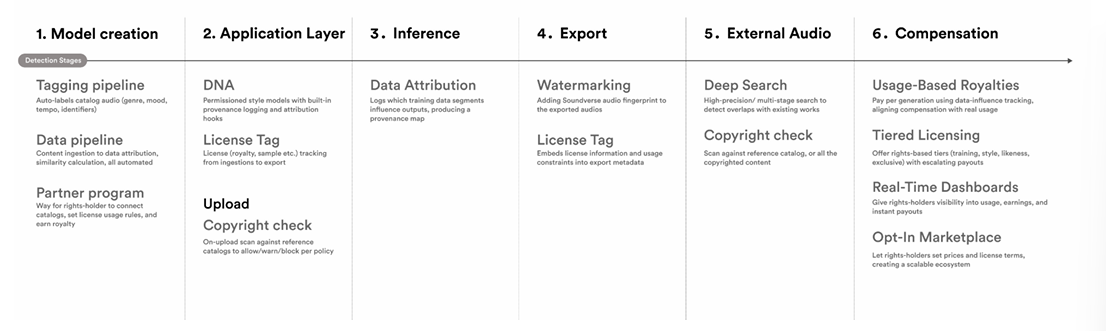
Now that you understand how AI music Europe is evolving, here is how to create compliant, transparent, and equitable AI music instantly using Soundverse The Ethical AI Music Framework.
What is The Ethical AI Music Framework?
The framework is a comprehensive end-to-end infrastructure created by Soundverse to bridge innovation and artist integrity. Instead of opaque systems, it relies on a six-stage transparent pipeline ensuring consent, attribution, and recurring compensation.
1. Licensed Data Sourcing
Only legally sourced and licensed audio data are used—no scraping from unverified web archives. This guarantees full compliance with EU copyright standards.
2. Permissioned Models (DNA)
Artists and rights-holders explicitly permit the usage of their works for AI training through Soundverse’s Content Partner Program, allowing fair inclusion without unauthorized data mixing.
3. Explainable Inference (Attribution)
Every AI-generated track can identify which training data contributed to its structure, creating transparency that satisfies both ethical and regulatory demands.
4. Traceable Export (Watermarking)
Once music is generated, Soundverse automatically embeds traceable watermarks for persistent attribution during distribution across digital platforms.
5. Deep Search (External Scanning)
The system continuously scans external environments for unlicensed use of registered works, providing rights-holders a secure, auditable path to check content reuse.
6. Recurring Compensation (Partner Program)
Participants receive royalties whenever their licensed content assists in new music generation—establishing a sustainable, fair-use economy for European creatives.
How Soundverse supports European compliance and creativity
Soundverse seamlessly integrates with EU policy concepts, making it the preferred choice for ethical music technology Europe. Its transparent pipeline matches the principles behind the AI Act while enabling creative freedom.
For professionals comparing different solutions, the platform offers advantages discussed in articles like Mubert Alternatives Soundverse and Soundverse Saar AI Voice Assistant, proving how traceability and attribution mechanisms outperform opaque generation systems.
With Soundverse, European artists can:
- Train customized AI models using consent-based datasets.
- Generate music in diverse styles representative of Europe’s cultural mosaic.
- Protect attribution through automated watermarking and scanning systems.
- Receive recurring payments for licensed contributions.
Whether you are developing avant-garde AI sound installations in France, algorithmic symphonies in Germany, or cross-genre experimental scores in Sweden, Soundverse offers a transparent foundation aligned with both creativity and EU ethics.
Create Your Own AI Music Today
Join Soundverse and start composing music instantly with our advanced AI tools. Whether you’re exploring new genres or producing for your next video, Soundverse empowers creativity without limits.
Start Creating Free
Related Articles
- How AI-Generated Music Is Transforming the Music Industry — Discover how algorithmic composition is reshaping the global music landscape and redefining artistic collaboration.
- The Role of AI Music in Film and Television — Explore how AI-driven compositions are revolutionizing soundtracks and enhancing storytelling in visual media.
- AI Music Generator and Human Composers: A Future Together — Learn how technology and human creativity are converging to create an exciting new era in music production.
- AI Music Generator: Top Picks and Review — Get insights into the best AI music generators available, including features and comparisons for creators across genres.
Here's how to make AI Music with Soundverse
Video Guide
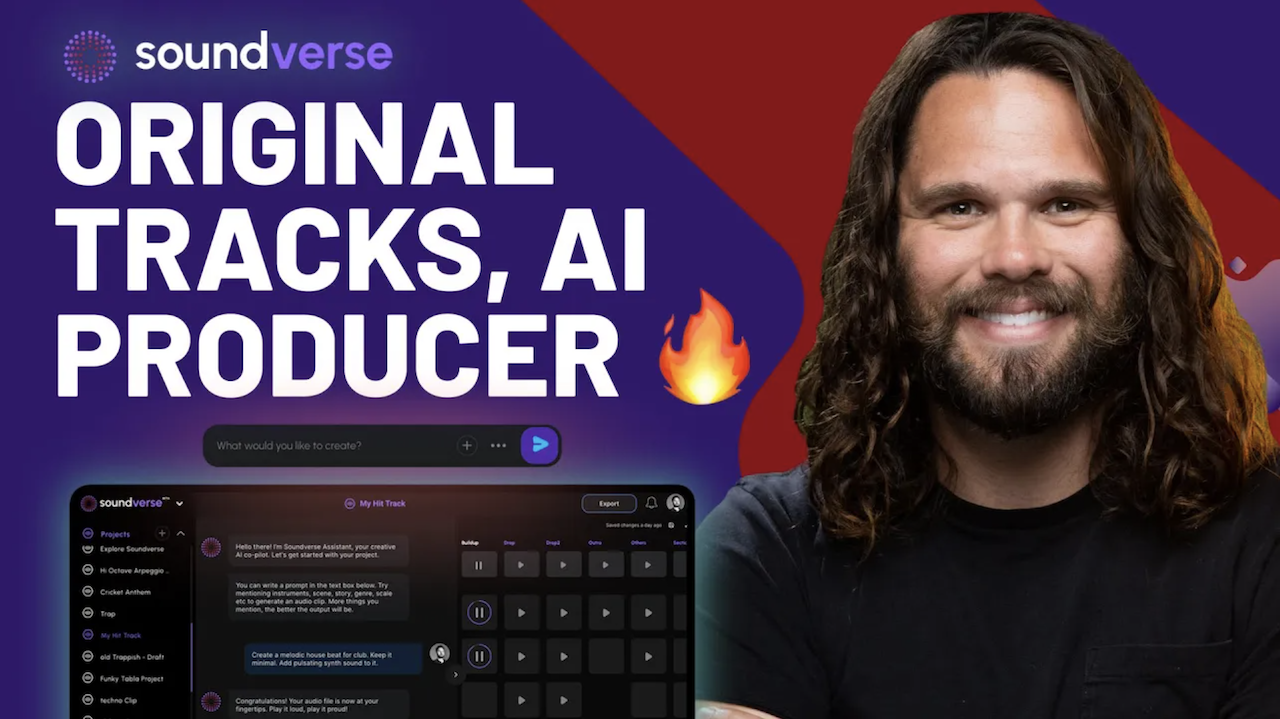
Here’s another long walkthrough of how to use Soundverse AI.
Text Guide
- To know more about AI Magic Tools, check here.
- To know more about Soundverse Assistant, check here.
- To know more about Arrangement Studio, check here.
Soundverse is an AI Assistant that allows content creators and music makers to create original content in a flash using Generative AI. With the help of Soundverse Assistant and AI Magic Tools, our users get an unfair advantage over other creators to create audio and music content quickly, easily and cheaply. Soundverse Assistant is your ultimate music companion. You simply speak to the assistant to get your stuff done. The more you speak to it, the more it starts understanding you and your goals. AI Magic Tools help convert your creative dreams into tangible music and audio. Use AI Magic Tools such as text to music, stem separation, or lyrics generation to realise your content dreams faster. Soundverse is here to take music production to the next level. We're not just a digital audio workstation (DAW) competing with Ableton or Logic, we're building a completely new paradigm of easy and conversational content creation.
TikTok: https://www.tiktok.com/@soundverse.ai
Twitter: https://twitter.com/soundverse_ai
Instagram: https://www.instagram.com/soundverse.ai
LinkedIn: https://www.linkedin.com/company/soundverseai
Youtube: https://www.youtube.com/@SoundverseAI
Facebook: https://www.facebook.com/profile.php?id=100095674445607
Join Soundverse for Free and make Viral AI Music

We are constantly building more product experiences. Keep checking our Blog to stay updated about them!