AI Music for Developers: Harnessing AI Music Development in 2026
Learn how AI music development empowers developers with audio generation and APIs in 2026.
AI Music for Developers
Artificial intelligence has extended its influence from language and image generation to the world of sound creation. In 2026, AI music development has become a core innovation area for software developers and creative technologists seeking to enhance digital experiences. By blending code with generative sound systems, developers can now integrate smart, adaptive music directly into their apps, games, and platforms.
What is AI Music Development?
AI music development is the process of creating software, APIs, and tools that use machine learning to generate, modify, or synthesize audio. It combines data-driven composition methods with algorithmic creativity, allowing developers to automate and personalize soundscapes for diverse applications—from gaming environments and mobile apps to interactive experiences and marketing campaigns.
This field covers more than just music composition. Modern AI music development also includes:
- Generative audio algorithms capable of producing endless variations.
- Machine learning music tools that analyze rhythms, harmonies, or timbres.
- AI sound synthesis that builds new tones from scratch.
- Developer audio generation frameworks that integrate music into software pipelines. With these tools, developers no longer rely solely on traditional audio libraries. Instead, they can craft sound dynamically—responding to user actions, ambient data, or contextual triggers in real time.
Why Developers Are Embracing AI Music in 2026
The last few years have seen a shift from manual asset creation to automated content pipelines. In 2026, generative AI music systems have matured, offering stability, scalability, and ethical licensing solutions. Here are the key reasons developers are rapidly integrating these technologies:
- Efficiency – Generative audio APIs reduce production times dramatically. A developer can produce hours of unique background music for a game or an app in minutes.
- Personalization – AI-driven sound engines can shape music according to user preferences, emotional data, or gameplay states.
- Scalability – Batch generation enables large-scale outputs suitable for enterprise-level applications.
- Copyright safety – Licensed AI training sets ensure developers can use outputs freely, especially in commercial software. This evolution mirrors the broader transformation of creative automation witnessed across industries since 2024. AI audio synthesis is no longer experimental—it is production-ready.
For comparison of leading technologies, you can review Best AI Music Generators in 2026 or explore 25 Best AI Music Generation Apps 2026. According to Jx Studios’ 2026 guide, these tools feature stem separation and intelligent mixing. Additional analyses, like AI Music Analysis 2026, explain how auto-tagging and descriptive metrics enhance generative workflows.
How Do Generative Audio APIs Work?
Generative audio APIs allow applications to request and receive music or sound assets programmatically. Through REST endpoints, developers send structured prompts or configuration data—genre, tempo, instrumentation, or emotional tone—and the API delivers fully realized audio outputs.
Core Components Include:
- Prompt interpretation: The system parses text or structured parameters into musical features.
- Machine learning generation: Deep neural networks trained on licensed metadata produce original compositions.
- Asynchronous delivery: Developers upload requests or batch jobs, and once processed, the system returns audio files—ensuring reliability and scalability.
By 2026, these APIs are integrated with frameworks such as Unity for game development, Unreal Engine for VR applications, and web-based platforms for marketing automation. Developers can easily embed outcomes directly into user experiences—making adaptive music an interactive design element. For a deeper dive, watch our guide on creating Deep House music and our tutorial on how to make music with Soundverse.
What Are Machine Learning Music Tools?
Machine learning music tools are specialized applications that analyze sound, extract musical features, or generate stems for remixing and editing. They use neural architectures trained on vast libraries to understand tempo, tonal structure, and arrangement patterns. For developers, these tools open creative possibilities such as:
- Automated mixing or mastering suggestions.
- Dynamic soundtrack generation based on gameplay or video content.
- Real-time arrangement adaptation (while remaining asynchronous on the technical level).
- Audio post-processing pipelines for enhancing fidelity or style consistency. Machine learning empowers developers to work not only as coders but as composers in a computational sense—building logic that governs how music evolves within digital systems.
What Is AI Sound Synthesis?
AI sound synthesis refers to producing original waveforms using deep neural networks rather than traditional oscillators or samples. This approach simulates the physical properties of instruments and sound environments digitally, resulting in authentic and sometimes entirely new textures.
For developers building spatial audio experiences or immersive AR/VR projects, AI sound synthesis offers infinite flexibility. Unlike sample-based libraries, AI can continuously refine timbre or dynamics based on sensor input or user behavior. The result is a living, evolving sonic ecosystem.
Learn more about how generative sound systems transform creative workflows in Soundverse’s AI Revolution article and see related case studies in AI-generated music impact analysis.
What Is a Music Creation SDK?
A music creation SDK provides a developer-friendly toolkit for building applications that generate, remix, or analyze music. SDKs usually include:
- Prebuilt functions for sending generation requests.
- Local libraries for stem management.
- JSON schema definitions for parameter mapping. For integration flexibility, many 2026 SDKs support Python, JavaScript, and C# environments. They’re particularly valuable for embedding music generation within mobile apps, game engines, or web APIs.
For developers comparing tools, explore Mubert, Amper, or Soundraw. Each provides unique approaches to generative music workflows—but enterprise-grade scalability and artist-licensed outputs are where Soundverse stands out significantly. You can read more comparisons in Mubert alternatives and Soundraw alternative coverage.
How AI Music Fits into Broader Developer Pipelines in 2026
Developers are increasingly merging audio intelligence with data analytics and content automation stacks. Key integrations include:
- Interactive applications: Games and experiential media use AI music to reflect in-game emotions or time-of-day cycles.
- Marketing automation: Generative music adjusts sonic branding to customer demographics.
- Video platforms: AI sound systems ensure every clip has unique, license-free soundscapes.
- IoT and smart devices: Ambient sound generation for home or workspace environments powered by contextual sensors. Such integrations solidify AI music as both a technical and artistic pillar in software ecosystems. By 2026, developer platforms prioritize creative adaptability as much as backend performance.
How to Make AI Music with Soundverse API
Now that you understand what AI music development entails, here is how developers create it instantly using the Soundverse API.
Soundverse API is an enterprise-grade interface offering programmatic access to Soundverse’s music generation and modification tools. It allows integration of DNA, Song Generation, and more into third-party apps.
Key Capabilities:
- REST Endpoints: APIs that communicate via standardized HTTP protocols for seamless integration.
- Batch Processing: Generate multiple tracks simultaneously for scalability.
- DNA Integration: Access Soundverse DNA, the artist-trained model producing ethically licensed, monetizable styles. Developers can:
- Connect their platform’s backend to Soundverse API through RESTful requests.
- Send metadata (genre, mood, instrument preference) or high-level prompts.
- Retrieve generated music asynchronously for embedding in games, platforms, or content apps.
Why It’s Ideal for Developers:
Soundverse provides ethical data use, production-ready audio, and transparent generation pipelines. It solves industry challenges of licensing and consistency while giving full control through developer-friendly syntax. For additional insights about how Soundverse’s AI magic tools help automate content creation, see Soundverse AI Magic Tools guide and its coverage of stem separation technology. By adopting Soundverse API, developers unlock the ability to create, manipulate, and deliver music at scale—without manual composition or licensing friction.
Start Creating Music with AI Today
Unlock the future of music creation with Soundverse’s advanced AI tools. Generate, remix, and customize tracks effortlessly while exploring intelligent composition workflows built for developers.
Related Articles:
- How AI-Generated Music Is Transforming the Music Industry — Discover how artificial intelligence is reshaping music creation, production, and collaboration across the industry.
- The Role of AI Music in Film and Television — Explore how AI music development powers emotional storytelling and dynamic scoring for film and TV.
- AI Music Generator and Human Composers: A Future Together — Learn how developers and musicians can collaborate with AI to create truly expressive and unique music.
- The Benefits of Composing with AI Music Generator — Uncover the advantages of using AI-driven composition tools to boost creativity and workflow efficiency.
Here's how to make AI Music with Soundverse
Video Guide
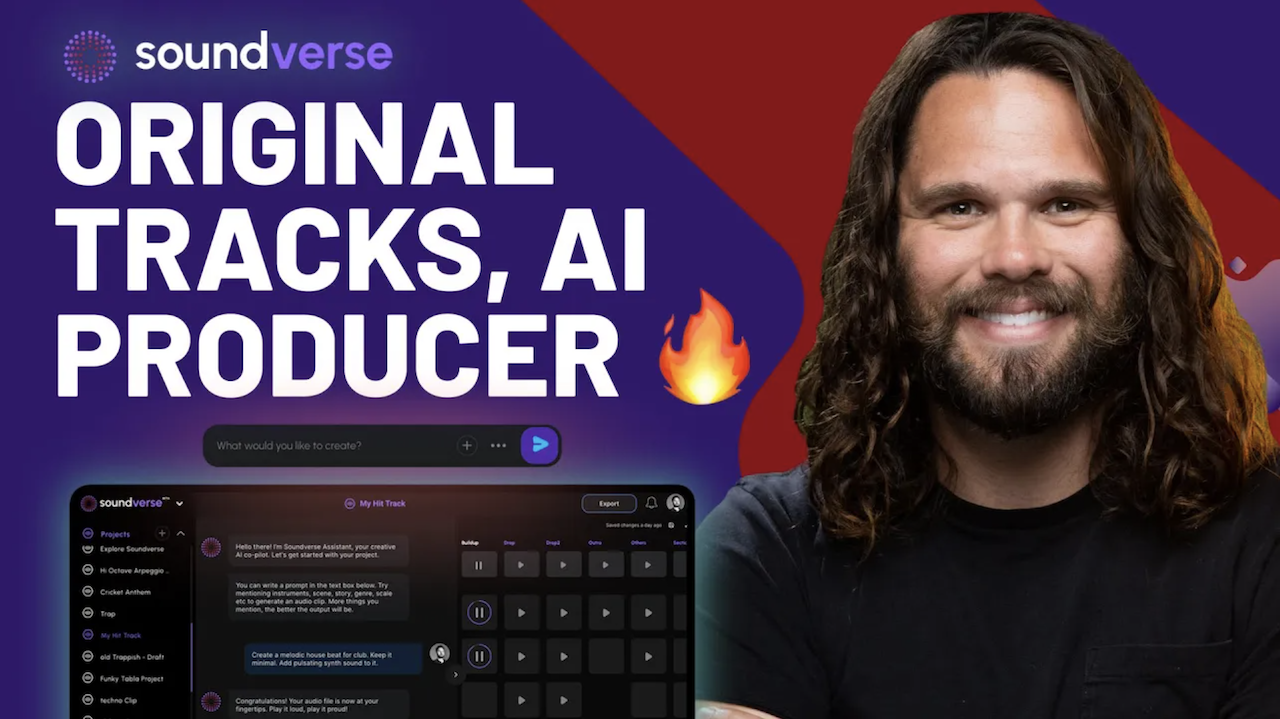
Here’s another long walkthrough of how to use Soundverse AI.
Text Guide
- To know more about AI Magic Tools, check here.
- To know more about Soundverse Assistant, check here.
- To know more about Arrangement Studio, check here.
Soundverse is an AI Assistant that allows content creators and music makers to create original content in a flash using Generative AI. With the help of Soundverse Assistant and AI Magic Tools, our users get an unfair advantage over other creators to create audio and music content quickly, easily and cheaply. Soundverse Assistant is your ultimate music companion. You simply speak to the assistant to get your stuff done. The more you speak to it, the more it starts understanding you and your goals. AI Magic Tools help convert your creative dreams into tangible music and audio. Use AI Magic Tools such as text to music, stem separation, or lyrics generation to realise your content dreams faster. Soundverse is here to take music production to the next level. We're not just a digital audio workstation (DAW) competing with Ableton or Logic, we're building a completely new paradigm of easy and conversational content creation.
TikTok: https://www.tiktok.com/@soundverse.ai
Twitter: https://twitter.com/soundverse_ai
Instagram: https://www.instagram.com/soundverse.ai
LinkedIn: https://www.linkedin.com/company/soundverseai
Youtube: https://www.youtube.com/@SoundverseAI
Facebook: https://www.facebook.com/profile.php?id=100095674445607
Join Soundverse for Free and make Viral AI Music
We are constantly building more product experiences. Keep checking our Blog to stay updated about them!