AI Music Education Tools: How Artificial Intelligence is Transforming the Way We Learn Music
Explore how AI music education tools and digital assistants are revolutionizing learning and teaching in 2026.
AI Music Education Tools: How Artificial Intelligence is Transforming the Way We Learn Music
Artificial intelligence has been reshaping every creative industry, but its role in music education is particularly transformative in 2026. Teachers and students are no longer limited by traditional one-way instruction or static learning resources. With AI music education tools, learning music theory, composition, and performance has become interactive, adaptive, and personalized.
What are AI music education tools in 2026?
AI music education tools refer to intelligent applications and platforms designed to help users learn, compose, and perform music through artificial intelligence technologies such as machine learning, neural networks, and natural language processing. These tools can analyze performance, suggest improvements, teach music theory, or even generate examples for practice. They are accessible through web platforms, mobile apps, and cloud-based creative studios.
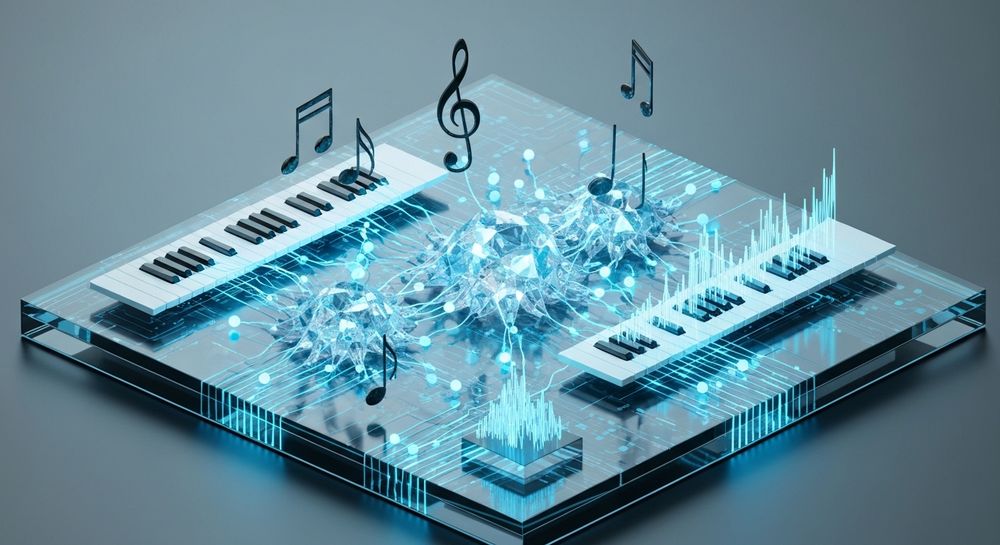
In 2026, these tools have matured beyond simple music generators or notation assistants. They now serve as full-fledged learning companions capable of interpreting voice input, customizing lessons, and synchronizing learning progress across devices. This evolution stems from advancements in deep learning and user-centered AI development witnessed since 2024.
How is artificial intelligence transforming music learning?
Artificial intelligence enhances music education by enabling adaptive learning experiences. Rather than following a fixed course curriculum, AI systems adjust lesson difficulty and content according to the learner’s progress.
- Personalized instruction: AI music teacher systems can assess playing patterns, tempo inconsistencies, and theory understanding to provide targeted feedback.
- Immediate analytics: Machine learning in music education identifies patterns and offers instant corrections after users upload or record their performances.
- Creative exploration: Tools encourage experimentation — for instance, letting students recompose a Bach-style piece in jazz form or analyze complex arrangements.
- Accessibility: Voice input support and cloud delivery have opened music learning to people of all skill levels and abilities.
This dynamic approach helps students grasp music theory, composition techniques, and emotional expression in a way that static lessons can’t achieve.
What are the most popular AI music education tools in 2026?
The landscape of AI music education in 2026 includes a variety of intelligent tools and platforms:
- Soundverse Agent: The conversational AI music assistant with multi-step reasoning and orchestration capabilities (discussed below).
- Yousician (https://www.yousician.com): Offers real-time feedback on instrument playing but has integrated basic machine learning corrections.
- Tonara (https://www.tonara.com): Connects teachers and students and uses AI to track practice progress.
- SmartMusic (https://www.smartmusic.com): A digital music learning platform featuring practice assessments and AI-driven accompaniment.
- Melodrive (https://www.melodrive.com): Interactive real-time composition assistance, popular for game-based music learning.
- Soundtrap (https://www.soundtrap.com): Collaborative studio environment with integrated lesson plans and automatic tracking.
While many tools focus on segment-specific learning (such as notation or instrument accuracy), Soundverse Agent stands out for its holistic conversational approach, allowing learners to interact naturally and perform multi-step creative tasks. For a deeper dive, watch our guide on creating Deep House music from the Soundverse Tutorial Series.
How do machine learning and AI tutors support modern music classrooms?
Machine learning in music education helps instructors monitor performance metrics at scale. Teachers can track tempo stability, pitch accuracy, and harmonic comprehension for multiple students simultaneously.
AI-powered music tutoring systems use pattern recognition models to identify errors in student recordings and provide feedback tailored to the learner’s cognitive style. Some AI music teacher assistants also include adaptive challenge systems that raise difficulty as a student masters each level.
This new dynamic transforms traditional evaluation methods. Instead of relying on manual grading or subjective assessment, educators in 2026 leverage algorithmic analysis to ensure fairness and consistency while still maintaining human mentorship. For instance, educators exploring adaptive tools can find examples in AI Tool Demo: Making Music With Suno - Edutopia and Make AI Your Personal Music Teaching Assistant | UF MMME Online.
How are digital music learning platforms changing accessibility?
Digital music learning platforms have democratized music education by eliminating geographical barriers. AI-enabled cloud systems allow students from anywhere to upload recordings, receive structured feedback, and collaborate remotely.
These platforms also integrate complementary learning tools — composition assistance, lyric generation, and section analysis — making them multipurpose hubs for creativity. A teacher can use an AI tool to design a lesson around harmony analysis and then include an automatically generated accompaniment.
For example, learners who visit Soundverse’s AI Magic Tools overview discover features that help produce structured music projects and instructions that align with modern pedagogy. Similarly, the Soundverse Assistant demonstrates how conversational AI reshapes collaboration between humans and algorithms. Soundverse tutorials like How to Make Music and Explore Tab provide visual demonstrations of these processes.
What are the educational benefits of using AI-powered music tutoring systems?
Integrating AI music education tools provides several pedagogical advantages:
- Instant feedback and correction: Students gain insight into timing, tonal balance, and phrasing immediately after submitting their recordings.
- Multi-step learning automation: Systems like Soundverse Agent organize multiple tasks — from generating melodies to analyzing structure — without manual tool switching.
- Contextual memory use: AI remembers the student’s previous sessions, allowing for continuity in long-term learning.
- Creative expansion: Students can prototype arrangement variations quickly, encouraging exploration and innovation.
- Time efficiency: Educators can manage many learners simultaneously while maintaining personalized support.
As highlighted in discussions within AI Music Generator and Human Composers: A Future Together, AI doesn’t replace human creativity — it amplifies it.
How to make music education instantly interactive using Soundverse Agent
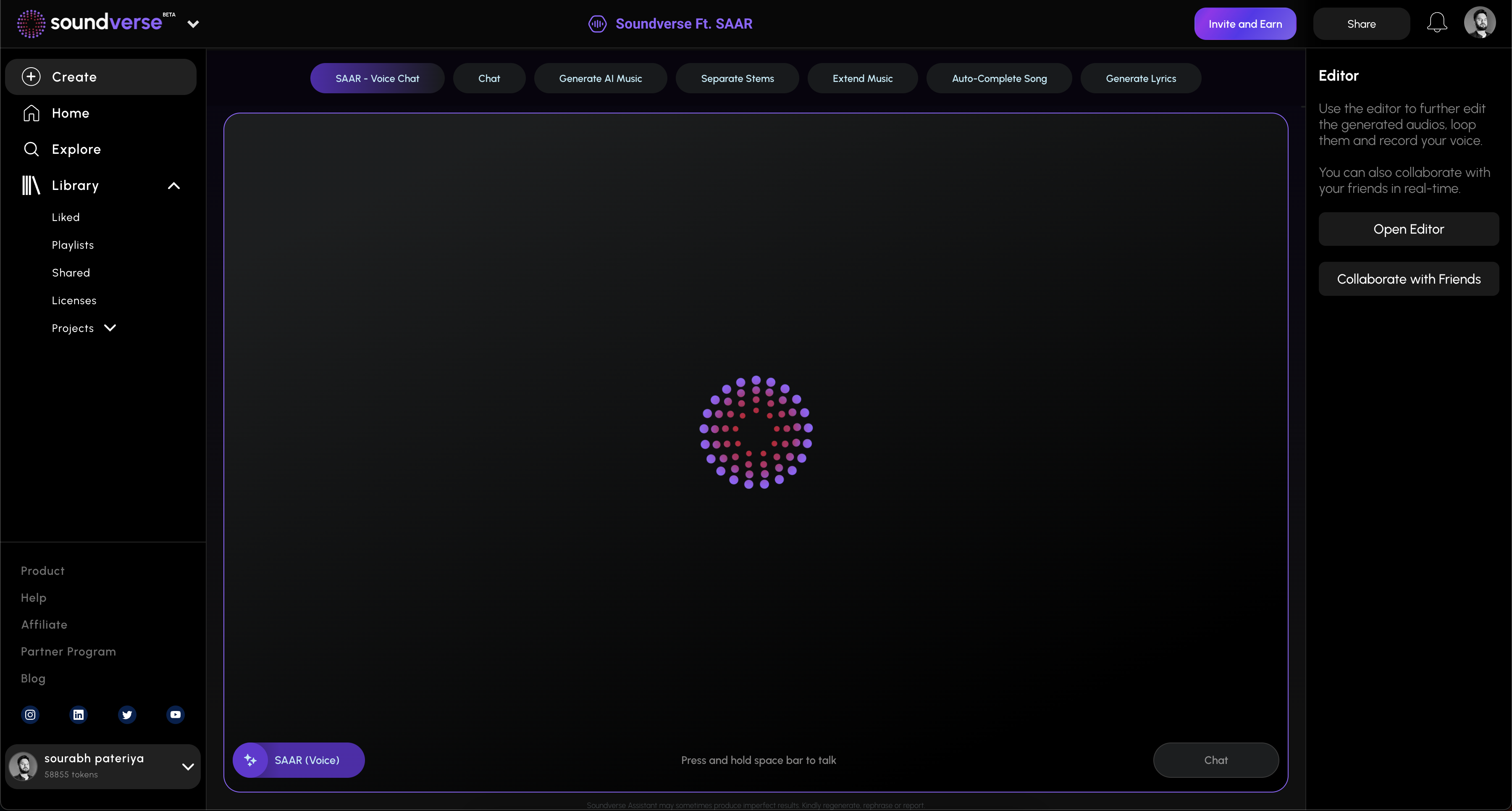
Now that you understand how AI transforms the educational experience, here is how to create dynamic music learning sessions using Soundverse.
Soundverse Agent Overview
Soundverse’s Agent is a conversational AI music assistant that acts as a centralized controller for the Soundverse platform. It interprets natural language commands like “create a pop song, then remove the drums,” performing multi-step orchestration automatically through smart integration of behind-the-scenes tools.
It utilizes contextual memory, cross-tool automation, and voice input, allowing both students and educators to execute complex workflows without technical expertise.
Educational Use Cases
- Beginners: Learn music theory interactively by simply asking questions or requesting examples.
- Producers and teachers: Automate demonstrations such as generating and separating musical sections.
- Rapid prototyping: Explore multiple music arrangements to teach composition and production structure.
How to make AI music education tools work effectively with Soundverse Agent
In practice, using Soundverse Agent for learning involves natural conversation and orchestration:
- Students can request theoretical examples like “show me chord progression in minor pentatonic” or “create a practice track for rhythm exercises.”
- Teachers can design sessions combining Soundverse’s other modules, such as the AI Lyrics Writer for text-based composition lessons or Section Analysis for dissecting song structure.
These integrations enable holistic learning experiences that merge auditory, visual, and conceptual comprehension.
Supporting Tools for Enhanced Teaching
The AI Lyrics Writer supports creative writing lessons, generating structured lyrics based on tone or genre references. Meanwhile, the Section Analysis tool automatically detects parts of a song (verse, chorus, bridge) with timestamps — an ideal resource for explaining composition layers.
Together, they build an enriched learning environment where learners can visualize how musical structure interacts with emotional storytelling.
Why educators and institutions choose Soundverse in 2026
Music educators and EdTech developers are turning to Soundverse Agent because it removes technical barriers to high-quality instruction. Institutions can deliver blended learning — combining hands-on practice with AI-assisted analysis — to cultivate creativity, critical listening, and technical skills simultaneously.
From music industry trends to new exploration of AI-generated music, adoption of AI tools continues to expand across schools and studios worldwide.
Start Learning Music Smarter with AI
Experience the future of musical education with Soundverse’s AI tools. Whether you're a beginner or advanced musician, unlock interactive learning, creative assistance, and music creation made simple with artificial intelligence.
Related Articles
- Soundverse Assistant: Your AI Music Co-Producer — Discover how the Soundverse Assistant helps streamline music creation and education by acting as your intelligent co-producer.
- AI Music Generator and Human Composers: A Future Together — Explore how human creativity and AI technology are merging to redefine music composition and learning experiences.
- The Role of AI Music in Film and Television — Learn how AI-driven music creation tools are expanding into media education, reshaping how soundtracks are taught and produced.
- Soundverse AI: Revolutionizing Music Creation for New-Age Content Creators — See how Soundverse’s AI ecosystem empowers creators and educators to engage with music production like never before.
Here's how to make AI Music with Soundverse
Video Guide
Here’s another long walkthrough of how to use Soundverse AI.
Text Guide
- To know more about AI Magic Tools, check here.
- To know more about Soundverse Assistant, check here.
- To know more about Arrangement Studio, check here.
Soundverse is an AI Assistant that allows content creators and music makers to create original content in a flash using Generative AI.
With the help of Soundverse Assistant and AI Magic Tools, our users get an unfair advantage over other creators to create audio and music content quickly, easily and cheaply.
Soundverse Assistant is your ultimate music companion. You simply speak to the assistant to get your stuff done. The more you speak to it, the more it starts understanding you and your goals.
AI Magic Tools help convert your creative dreams into tangible music and audio. Use AI Magic Tools such as text to music, stem separation, or lyrics generation to realise your content dreams faster.
Soundverse is here to take music production to the next level. We're not just a digital audio workstation (DAW) competing with Ableton or Logic, we're building a completely new paradigm of easy and conversational content creation.
TikTok: https://www.tiktok.com/@soundverse.ai Twitter: https://twitter.com/soundverse_ai Instagram: https://www.instagram.com/soundverse.ai LinkedIn: https://www.linkedin.com/company/soundverseai Youtube: https://www.youtube.com/@SoundverseAI Facebook: https://www.facebook.com/profile.php?id=100095674445607
Join Soundverse for Free and make Viral AI Music
We are constantly building more product experiences. Keep checking our Blog to stay updated about them!