AI Music Creator Revenue Share Models Explained
Explore how AI music revenue share models define creator payouts and royalty splits in 2026.
AI Music Creator Revenue Share Models Explained
In 2026, AI music creation has matured into a full-fledged ecosystem where independent musicians, AI producers, and rights-holders are all part of a transparent and equitable creative economy. The conversation around AI music revenue share models has moved past speculation and into implementation—platforms now offer structured ways to compensate creators whose content contributes to AI-generated works. Understanding how these models function, and how innovations like Soundverse’s Content Partner Program fit in, is essential for any creator navigating the new music monetization landscape.
What are AI music revenue share models?
AI music revenue share models outline how income generated from AI-created songs, beats, or compositions is distributed among participants. Traditionally, royalty splits were simple—musicians, producers, and labels divided proceeds from streaming or sync licensing. In the AI-driven era, these models integrate additional participants such as dataset contributors, AI engineers, and rights-holders whose songs helped train the algorithms. Each generation of music might be informed by hundreds of pieces of reference data, making attribution a core pillar of contemporary profit sharing.

AI platforms now feature royalty and attribution frameworks that ensure creators are compensated not just for complete songs but also for fragments and influences. This shift highlights how creator payouts in AI music must evolve to reflect diverse content inputs—samples, performances, and even metadata.
How have creator payouts evolved with AI music?
Between 2024 and 2025, most AI music platforms operated with one-off payments or upfront subscription models. In 2026, ongoing participation frameworks dominate. Creators are rewarded per generation—meaning each time the AI system uses a contributor’s licensed data to produce a new track, that creator earns a micro-royalty. This shift resembles the streaming revolution of the early 2010s but with deeper attribution tracking.

Several payout frameworks now coexist:
- Influence-Based Reward Systems: Compensation based on the statistical influence of contributed audio samples within an AI’s generated outputs.
- Tiered Licensing: Rights-holders select licensing tiers that define usage permissions, monetization intensity, and exclusivity.
- Attribution-Linked Payments: Creators receive royalties each time their data drives identifiable influence in an AI-made composition.
- Community-Based Pools: Certain generative platforms share overall platform revenue based on proportional creator contribution scores.
These creator payout techniques make AI participation fairer while protecting data ownership—a major factor in ethical AI development.
Why are royalty splits critical in AI music creation?
Royalty splits have always been the backbone of music monetization. In AI music, royalty logic now extends to algorithmic contributions. Instead of just splitting between performer and songwriter, royalty calculations may account for who provided the training material, whether music data originates from third-party licensors, and how frequently that data influences generation events.
Transparency technologies are transforming how creators track revenue streams. Attribution tokens, blockchain traces, and AI-generated fingerprints allow rights-holders to verify when and how their content was used. With the growing adoption of frameworks like Soundverse Trace—an AI music trust layer embedding attribution across the content lifecycle—musicians have visibility like never before.
For readers unfamiliar with this landscape, see related analyses on AI-generated music transforming the industry and music industry trends to understand how these payout systems evolved.
How do profit-sharing AI models maintain fairness and transparency?
Profit sharing in AI music relies on transparency before distribution. Unlike opaque AI systems that leave creators guessing about data usage, ethical frameworks now embed tracking from training dataset to output stage. Tiered licensing ensures different levels of access and monetization—for example, high-tier licensors might receive a greater share due to exclusivity, while lower tiers enable broader AI learning opportunities.
Transparency also drives trust. As AI music becomes mainstream in creative production, independent musicians demand visibility into how their work fuels the system. Dashboards enabling rights-holders to see generation frequency, compensation accrual, and attribution reporting help ensure fairness. For a deeper dive, watch our guide on creating Deep House music and explore our tutorial on the “Explore” Tab from Soundverse’s YouTube channel.
What challenges do independent musicians face in AI revenue sharing?
Despite these advances, independent artists still face challenges:
- Complex Attribution: AI systems often combine tens of thousands of micro-influences, making human-readable attribution complex.
- Legal Uncertainty: Some regions are still defining legal rights regarding dataset ownership and generated outputs.
- Platform Fragmentation: Each AI platform uses distinct payout logic, leading to inconsistent creator experiences.
To adapt, musicians must selectively engage with transparent frameworks and prefer opt-in programs that publish recurring compensation reports.
For artists considering AI collaboration tools, explore Soundverse AI Magic Tools and Mubert alternatives to compare ethical and creative flexibility.
How to make revenue sharing sustainable for AI music creators?
Sustainable AI revenue models depend on ongoing engagement and rights protection. The key lies in recurring compensation and influence tracking—not blanket licensing. Creators should prioritize:
- Contributing audio under clearly defined licensing tiers.
- Maintaining audit access to usage data and payouts.
- Selecting platforms that provide transparent attribution pipelines.
- Diversifying engagement across multiple AI environments to maximize reach.
These strategies ensure long-term revenue without compromising control over the original musical assets.
How to make AI music revenue sharing work with Soundverse Content Partner Program
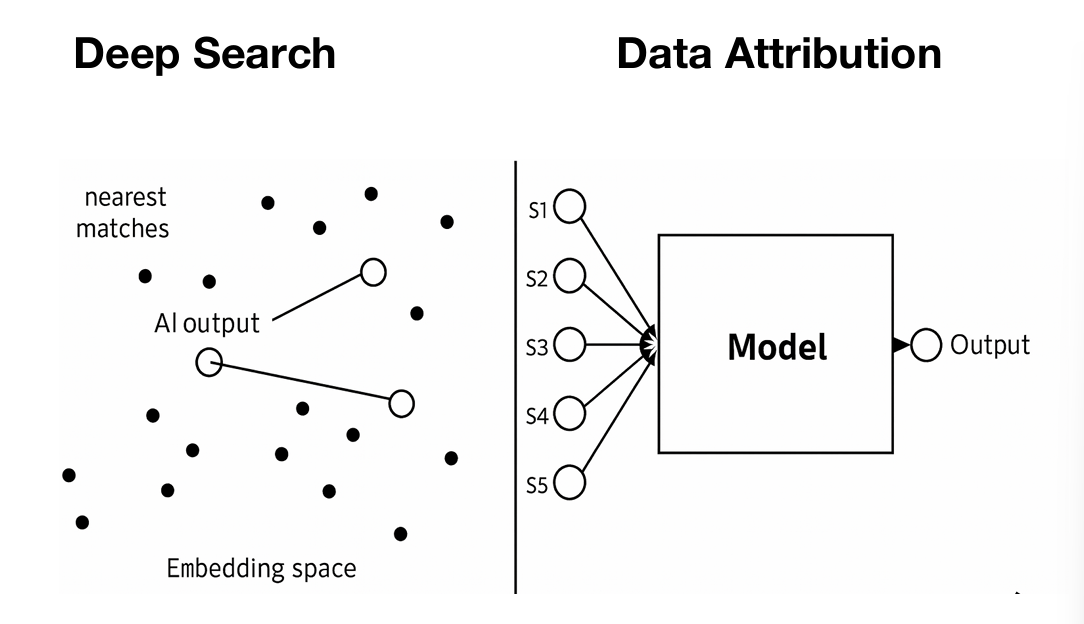
The Soundverse Content Partner Program stands as one of the most advanced implementations of recurring and ethical AI monetization in 2026. It functions as an opt-in licensing framework allowing rights-holders to contribute audio used for AI training while retaining ownership. Unlike systems that extract data without consent, Soundverse’s model emphasizes transparency and ongoing payment.
Its primary characteristics include:
- Influence-Based Payouts: Contributors earn royalties each time their audio influences AI music generation.
- Tiered Licensing (Tiers 1–6): Allows contributors to define how their content can be used and at what compensation level.
- Real-Time Dashboards: Rights-holders access earnings insights and attribution data reflecting actual usage.
- Transparency Reports: Routine updates show data utilization, training processes, and payout calculations.
Creators using Soundverse can transform dormant back catalogs into active revenue streams. It’s not just a collaboration tool; it is an ethical monetization gateway ensuring creators profit fairly from the AI economy. Integrated tools, like Soundverse Trace, uphold data governance throughout the lifecycle—from dataset creation to export—while the Ethical AI Music Framework guarantees consent and attribution integrity across every generation event.
By embedding attribution and payout intelligence directly into its ecosystem, Soundverse eliminates ambiguity in AI compensation. The result is a repeatable model of AI profit sharing aligned with artist integrity—a cornerstone for modern creators participating in generative ecosystems.
What’s next for AI music revenue share models in 2026?
The next evolution will focus on granular data economics. Micro-royalties will be calculated in real time based on fractional influence scores, and cross-platform compatibility will enable aggregation of income across multiple AI environments. More creators will integrate blockchain verification, while platforms like Soundverse will continue expanding their analytics dashboards and ethical AI foundations.
Looking forward, AI music will be judged not only by creativity but also by fairness. Those who adopt transparent frameworks today are positioning themselves for long-term success in a data-driven creative economy.
For creators exploring diversification, resources like Soundverse’s affiliate program and Soundraw alternatives offer further ecosystem insights.
Start Earning from Your AI-Generated Music Today
Explore Soundverse’s creator-friendly revenue share model and transform your AI tracks into passive income. Join thousands of artists using advanced AI tools to create, publish, and profit from their music instantly.
Related Articles
- How AI-Generated Music Is Transforming the Music Industry: Discover how artificial intelligence is reshaping the way songs are composed, produced, and monetized across digital platforms.
- Enhancing YouTube Content with Royalty-Free and Copyright-Free Music Using Soundverse AI: Learn how creators can elevate their YouTube videos using AI-generated tracks without worrying about licensing issues.
- Soundverse Assistant: Your AI Music Co-Producer: Find out how Soundverse’s AI assistant helps you refine, produce, and perfect songs faster than ever before.
- Navigating the World of Royalty-Free and Copyright-Free Music Using Soundverse AI: Understand the differences between royalty-free and copyright-free music—and how Soundverse empowers creators to stay compliant.
Here's how to make AI Music with Soundverse
Video Guide
Here’s another long walkthrough of how to use Soundverse AI.
Text Guide
- To know more about AI Magic Tools, check here.
- To know more about Soundverse Assistant, check here.
- To know more about Arrangement Studio, check here.
Soundverse is an AI Assistant that allows content creators and music makers to create original content in a flash using Generative AI. With the help of Soundverse Assistant and AI Magic Tools, our users get an unfair advantage over other creators to create audio and music content quickly, easily and cheaply. Soundverse Assistant is your ultimate music companion. You simply speak to the assistant to get your stuff done. The more you speak to it, the more it starts understanding you and your goals. AI Magic Tools help convert your creative dreams into tangible music and audio. Use AI Magic Tools such as text to music, stem separation, or lyrics generation to realise your content dreams faster. Soundverse is here to take music production to the next level. We're not just a digital audio workstation (DAW) competing with Ableton or Logic, we're building a completely new paradigm of easy and conversational content creation.
TikTok: https://www.tiktok.com/@soundverse.ai
Twitter: https://twitter.com/soundverse_ai
Instagram: https://www.instagram.com/soundverse.ai
LinkedIn: https://www.linkedin.com/company/soundverseai
Youtube: https://www.youtube.com/@SoundverseAI
Facebook: https://www.facebook.com/profile.php?id=100095674445607
Join Soundverse for Free and make Viral AI Music

We are constantly building more product experiences. Keep checking our Blog to stay updated about them!
Image Steps: []