AI for Music Theory Learning: How Artificial Intelligence Transforms Music Education in 2026
Discover how AI for music education revolutionizes theory learning with intelligent harmony and AI composition tools.
AI for Music Theory Learning
In 2026, artificial intelligence continues to reshape how people approach creativity, and one of the most fascinating areas of transformation is music theory learning. The integration of AI for music education enables students and educators to understand harmony, rhythm, melody, and structure through intuitive, interactive experiences that were unimaginable just a few years ago. Rather than memorizing scale charts or relying solely on human tutors, learners can now engage with conversational AI, adaptive apps, and machine learning systems that personalize music instruction.
What is AI for Music Education?
AI for music education refers to the use of artificial intelligence technologies—such as machine learning algorithms, neural networks, and voice-enabled assistants—to teach music concepts and assist with learning theory, composition, and performance. From recognizing harmonic patterns to generating practice exercises, these systems analyze musical data and provide feedback that evolves with the learner’s progress.
In the past, music theory was often perceived as a complex and academic discipline. AI simplifies it by translating abstract theory into interactive, visual, and auditory formats. For example, an AI tool can instantly illustrate how chord progressions change the emotional tone of a piece or simulate variations of a melody to demonstrate modes and scales.
How Does AI Help Students Learn Harmony and Composition?
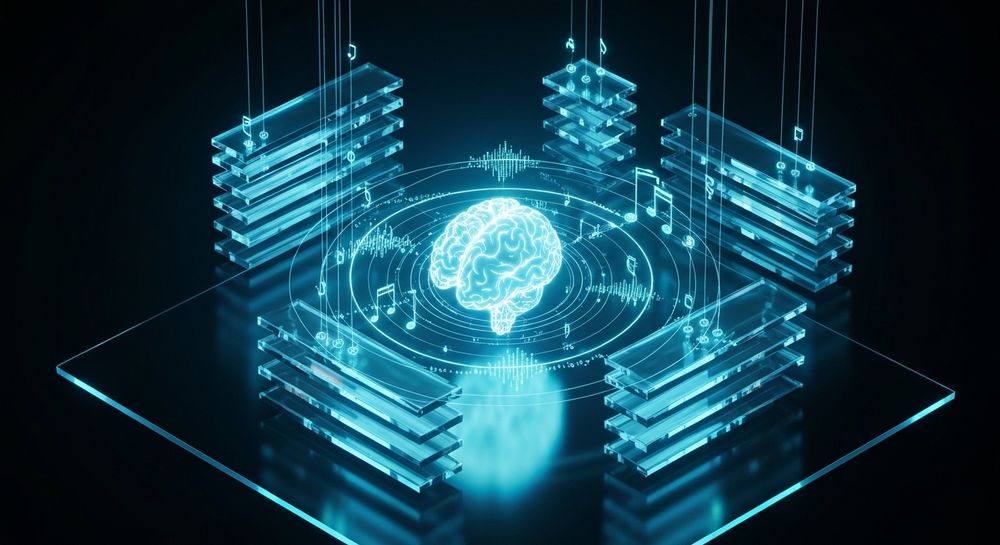
Harmony lies at the heart of music theory, and modern harmony AI tools are exceptionally capable of decoding it. Using machine learning in music analysis, AI can break down a song’s harmonic structure, explain relationships between chords, and show how tension and resolution are achieved.
Some applications allow users to input their own melodies or upload reference audio, which AI processes and harmonizes automatically. This form of interactive education replaces static sheet music examples with dynamic demonstrations, providing instant insight into the effects of chord substitutions, inversions, or modulations.
Meanwhile, AI composition tools expand possibilities further. Students can experiment by generating automated accompaniments or asking AI to create multiple examples of a concept, such as counterpoint or voice leading. These examples help learners visualize complex topics without needing to perform every step manually. For a deeper dive, watch our tutorial on how to make music or explore the Soundverse “Explore” tab for hands-on learning sessions.
What Are the Most Popular AI Tools for Learning Music Theory in 2026?
By 2026, numerous platforms have emerged that make deep musical understanding accessible. Among them:
- Flat.io – Ideal for collaborative notation and instant feedback from AI-supported suggestions.
- Yousician – A leading app using AI to listen and correct performance in real time.
- Meludia – Offers adaptive ear training with AI-based learning progression.
- Soundverse – A multifunctional AI environment that uses its Agent assistant for conversational learning and automated creation workflows.
- AIVA and Amper Music – While primarily used for composition, their harmonic generation models have instructional value for studying structure and form.
These platforms demonstrate how artificial intelligence in music is no longer limited to professional production. Now it’s central to building foundational skills, communication, and creativity. For those exploring alternatives and complementary options, Soundverse AI Magic Tools and Soundraw Alternative outline a growing ecosystem for creative education. External resources such as Top 25 AI Tools For Musicians (2026) - KraftGeek and Ultimate Guide - Best AI For Music Education 2026 confirm the growing role of intelligent theory tools in modern learning.
How Is Machine Learning in Music Changing Education?
Machine learning in music goes beyond notation; it listens, predicts, and adapts to each learner. When trained on thousands of songs, ML models identify patterns in melody, harmony, and rhythm and apply them to generate teaching material optimized for specific learning goals.
In traditional environments, students often rely on fixed exercises. Machine learning allows these exercises to scale, changing key signatures, intervals, or difficulty automatically based on past performance data. This adaptability has turned music theory learning into a living system that evolves organically.
Educators also benefit. They can analyze student progress using AI-generated insights, seeing not just completion rates but comprehension levels. Schools and conservatories increasingly adopt AI dashboards to help instructors personalize theory lessons, shifting from one-size-fits-all worksheets to nuanced feedback and intelligent tutoring systems. References like GENERATIVE AI IN MUSIC - USC Libraries Research Guides explore how such models support adaptive learning.
Why Are Music Theory Apps Shaping New Learning Habits?
Music theory apps powered by AI offer convenience and interactivity unmatched by traditional textbooks. Learners can practice harmonic analysis or melody construction anywhere. Many apps simulate piano or guitar keyboards directly on screens, enabling instant testing of theory lessons.
In 2026, these mobile tools often include voice interaction capabilities, allowing questions such as “Explain the difference between major and minor triads” or “Show me a modulation from C to G minor.” The system then responds visually or audibly, turning theory exercises into dialogue-based learning experiences. Apps emphasizing harmony AI promote better retention, as students learn not only through reading but by auditory reinforcement.
For technology enthusiasts, these apps provide an entry point into advanced creative AI concepts. They often connect with text-to-music systems discussed in articles such as Generate AI Music with Soundverse Text-to-Music and How to Create EDM with Soundverse AI, illustrating how learning theory can directly translate into composition. Check out our tutorial on making Deep House music for an example of practical composition exercises with AI integration.
How to Make AI for Music Theory Learning with Soundverse Agent
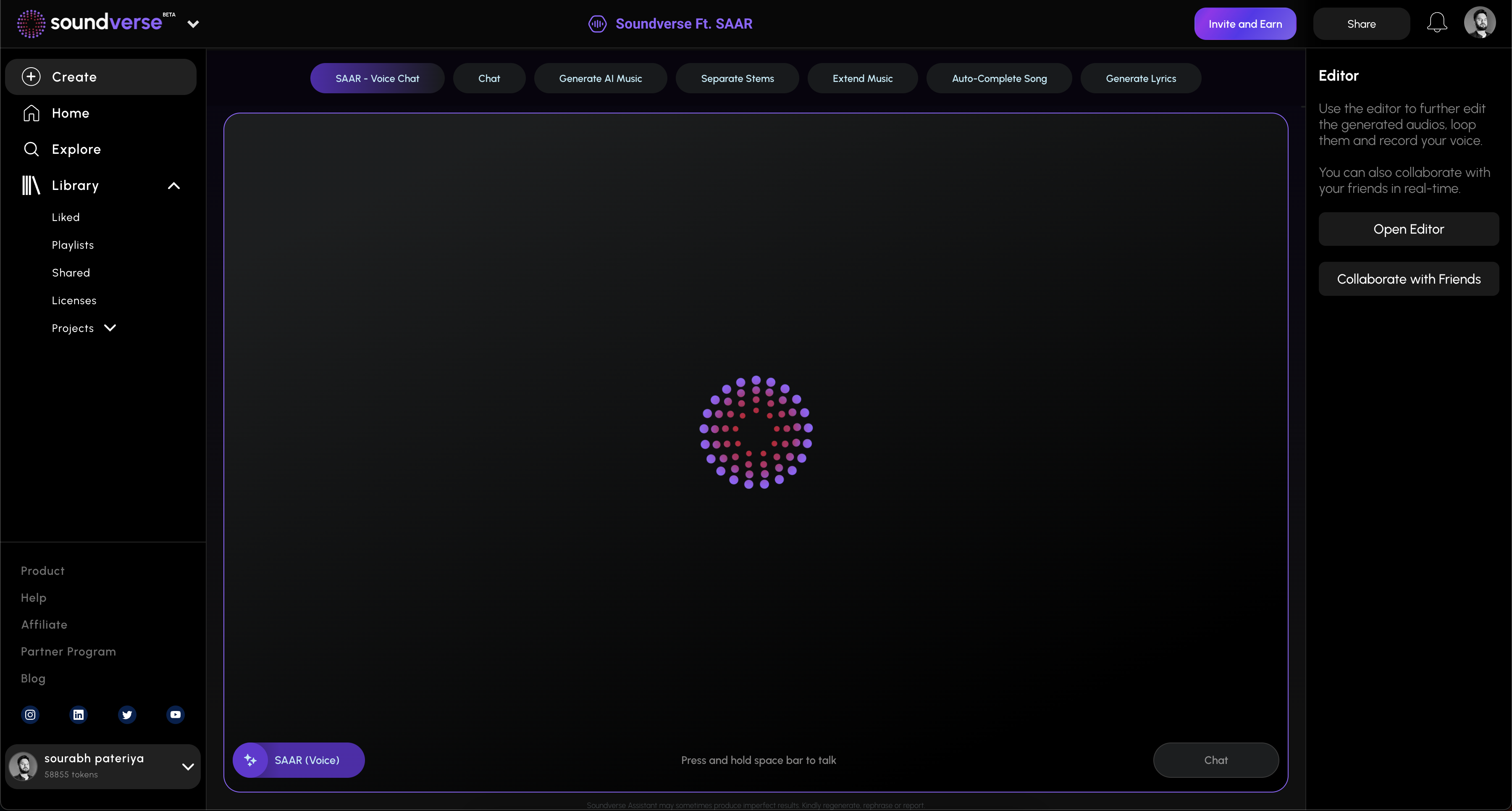
Now that you understand how AI transforms traditional music education, here is how to experience theory learning directly through Soundverse.
Soundverse’s Agent is the conversational AI music assistant designed as the centralized controller of the platform. It uses multi-step reasoning and contextual memory to interpret natural language requests. Users can ask: “Create a chord progression in D minor that follows classical harmony rules,” and Agent automatically coordinates the underlying tools that execute the workflow.
Soundverse Agent Core Capabilities
- Multi-step Tool Orchestration: Connects various tools like Arrangement Studio and Section Analysis to structure educational workflows automatically.
- Contextual Memory: Remembers previous prompts and maintains continuity through multiple learning sessions.
- Voice Input Support: Enables students or instructors to speak their requests rather than type them, streamlining interaction.
- Cross-Tool Workflow Automation: Integrates learning, composition, and analysis seamlessly without manual switching.
In the context of music theory learning, this means a student could initiate a conversation to explore harmonic variations, then have Agent apply Section Analysis to identify form within the example. Once generated, the student can open results inside Arrangement Studio to rearrange sections and test how structure affects musical coherence.
Soundverse thus converts abstract theory into tangible practice. Beginners can create and study music without technical experience, while educators use it to automate demonstrations and develop interactive lessons. Producers benefit from the same environment for rapid prototyping and harmonic experimentation.
For a broader view of how Soundverse powers creative education, explore Soundverse Assistant: Your AI Music Co-Producer and Soundverse Introduces Stem Separation AI Magic Tool. Additional research on Music Theory AI - Oreate AI Blog discusses how this approach enhances learners’ understanding of harmony and structure.
What’s Next for Artificial Intelligence in Music Education?
As we move deeper into 2026, the synergy between AI and pedagogy is becoming stronger. Schools are developing hybrid courses where students use AI tutors alongside traditional teaching, and online learning platforms integrate cross-disciplinary themes—music theory, programming, and creative design.
Researchers predict that within the next few years, adaptive AI environments will be able to explain not only Western harmony but also global music systems, bringing cultural inclusivity to theory education worldwide.
Ultimately, AI for music education democratizes access to deep musical understanding. Whether you’re an aspiring composer or an educator aiming to modernize your curriculum, embracing intelligent learning tools such as Soundverse Agent ensures that theory becomes interactive, responsive, and inspiring.
Artificial intelligence in music is no longer about replacing creativity; it is about enhancing it. Through harmony AI, machine learning interpretation, and composition assistance, learners now have an endless classroom that listens, thinks, and creates alongside them.
Experience the Future of Music Education with AI
Unlock interactive lessons, theory insights, and personalized practice powered by advanced AI tools. Elevate your learning and create with confidence using Soundverse’s innovative platform.
Related Articles
- The Role of AI Music in Film and Television — Discover how AI-driven music composition is reshaping soundtracks and production workflows in modern film and TV.
- How AI-Generated Music Is Transforming the Music Industry — Learn how AI technology is revolutionizing music creation and expanding opportunities for artists and educators.
- The Benefits of Composing with AI Music Generator — Explore how AI-assisted composition enhances creativity, speeds up learning, and empowers musicians at all skill levels.
- AI Music Generator and Human Composers: A Future Together — Gain insight into how AI tools and human creativity can harmonize to revolutionize music education and production.
Here's how to make AI Music with Soundverse
Video Guide
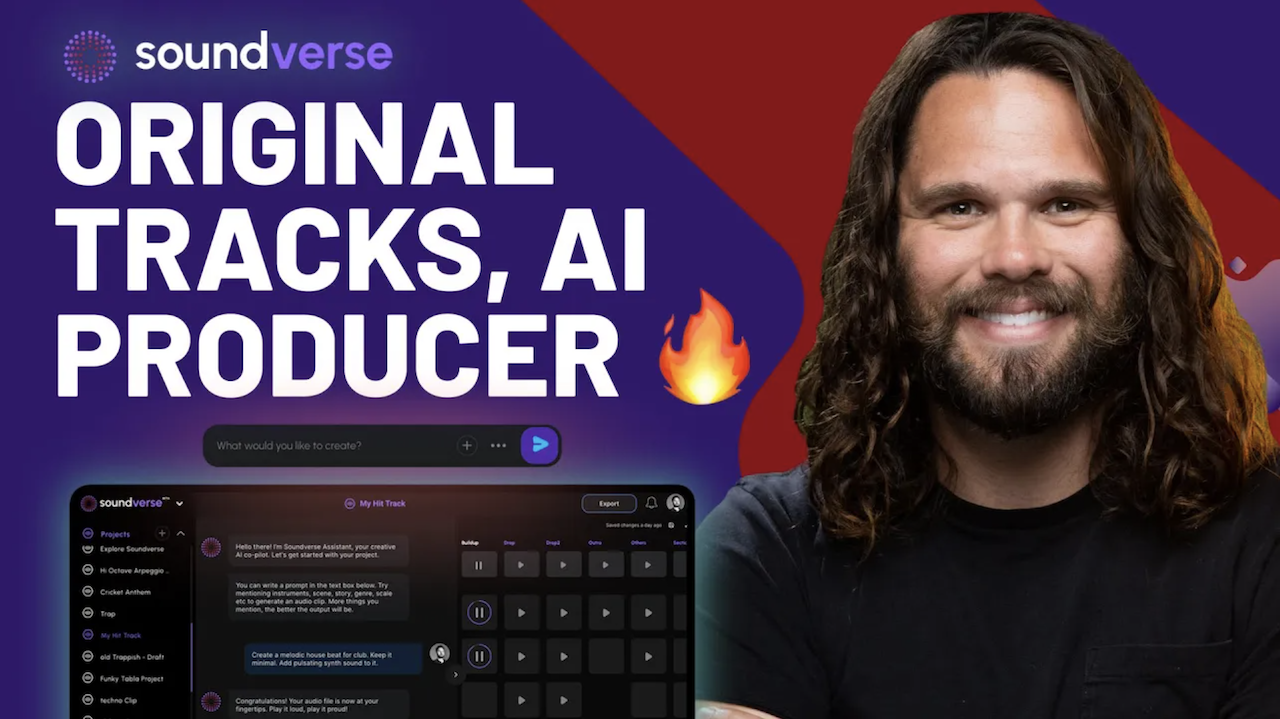
Here’s another long walkthrough of how to use Soundverse AI.
Text Guide
- To know more about AI Magic Tools, check here.
- To know more about Soundverse Assistant, check here.
- To know more about Arrangement Studio, check here.
Soundverse is an AI Assistant that allows content creators and music makers to create original content in a flash using Generative AI. With the help of Soundverse Assistant and AI Magic Tools, our users get an unfair advantage over other creators to create audio and music content quickly, easily and cheaply. Soundverse Assistant is your ultimate music companion. You simply speak to the assistant to get your stuff done. The more you speak to it, the more it starts understanding you and your goals. AI Magic Tools help convert your creative dreams into tangible music and audio. Use AI Magic Tools such as text to music, stem separation, or lyrics generation to realise your content dreams faster. Soundverse is here to take music production to the next level. We're not just a digital audio workstation (DAW) competing with Ableton or Logic, we're building a completely new paradigm of easy and conversational content creation.
TikTok: https://www.tiktok.com/@soundverse.ai
Twitter: https://twitter.com/soundverse_ai
Instagram: https://www.instagram.com/soundverse.ai
LinkedIn: https://www.linkedin.com/company/soundverseai
Youtube: https://www.youtube.com/@SoundverseAI
Facebook: https://www.facebook.com/profile.php?id=100095674445607
Join Soundverse for Free and make Viral AI Music

We are constantly building more product experiences. Keep checking our Blog to stay updated about them!