AI Classical Music Generation: How Artificial Intelligence is Transforming Orchestral Composition in 2026
Discover how AI classical music generation is reshaping orchestral composition and symphonies in 2026.
AI Classical Music Generation
Artificial intelligence has revolutionized nearly every creative field — and classical music is no exception. In 2026, AI classical music generation stands as one of the most fascinating intersections of technology and art. From machine learning symphonies to algorithmic orchestration, AI is helping composers and researchers reimagine how the classical tradition evolves in an increasingly digital age.
What is AI classical music generation?
AI classical music generation refers to the use of algorithms and machine learning models to compose, arrange, and produce orchestral music. Unlike early rule-based composition systems of the 1990s, today’s generative music technology can simulate human-level creativity by learning from stylistic data — such as harmonic progressions, instrumentation, and dynamics — found in existing musical works.
In essence, AI classical music generation combines neural networks trained on licensed musical datasets with advanced pattern recognition. The result is entirely new compositions that carry the emotional depth and structural complexity of human-made symphonies.
How is AI reshaping orchestral composition in 2026?
By 2026, orchestral AI systems have become deeply integrated into music production workflows. Instead of replacing composers, they serve as collaborative tools that accelerate ideation and reduce production time. AI can now generate orchestral motifs, counterpoint lines, and dynamic arrangements that composers refine into finished works.
Key technological shifts driving this change include:
- Deep-learning composition models: These handle intricate patterns of tonality, rhythm, and instrumentation better than any previous algorithm. For instance, OpenAI's MuseNet pioneered multi-style composition capability.
- Generative diffusion systems: Originally used in image creation, they are now applied to audio synthesis for producing authentic orchestral timbres.
- Context-aware style modeling: AI recognizes stylistic influences — for example, Romantic or Baroque — adapting mood and tempo accordingly.
- Realistic orchestral sampling: Modern datasets include thousands of recorded instrument articulations, making generated music almost indistinguishable from real orchestras.
This progress mirrors broader music industry trends that showcase the rise of AI-assisted creativity across genres.
What makes AI symphonies unique compared to traditional compositions?
Machine learning symphonies differ not only in origin but in their compositional architecture. Human composers typically build emotional arcs through manual orchestration, whereas AI systems analyze mathematical relationships between musical segments to achieve coherence.
Generative music technology allows AI composers to experiment beyond human perceptual limitations. For example, an AI system can simulate an orchestra of 300 virtual instruments layered across microtonal scales — something physically impossible but sonically intriguing.
Additionally, artificial intelligence composers can generate adaptive symphonies: dynamic musical pieces that change according to user input, gameplay progression, or film scenes. This ability opens new dimensions for interactive media and gaming soundtracks.
For creators interested in video scoring, watch our tutorial on how to make music from the Soundverse series.
What are the leading technological approaches behind generative orchestral music?
Several methods define the AI classical music generation field in 2026:
- Reinforcement Learning (RL) for musical structure: Models learn to improve cohesion by receiving rewards based on harmonic resolution.
- Transformer architectures: These process long sequences effectively, ideal for multi-minute orchestral arrangements.
- Variational Autoencoders (VAEs): Useful for generating emotionally rich motifs that evolve over time.
- Symbolic-to-Audio translation: Converts music notation data into high-fidelity digital recordings with expressive articulations.
- Cross-model collaboration: AI combines symbolic composition with audio synthesis and timbre modeling for realism.
These technologies underpin both academic research and commercial innovation across platforms such as Soundverse and others, referenced in guides like Best AI Music Generators to Create Original Songs in 2026 and Best AI Music Generators in 2026: Create Professional Audio with AI.
How are human composers collaborating with AI in the classical domain?
AI is not replacing classical composers — it’s expanding their toolkit. In 2026, many conservatories and film scoring programs teach hybrid workflows that mix traditional orchestration with generative tools. Composers use orchestral AI systems to experiment quickly and test musical ideas before committing to elaborate human recording sessions.
A typical workflow includes:
- Using generative prompts to design initial harmonic frameworks.
- Refining melodic lines manually to preserve emotional authenticity.
- Allowing AI models to suggest instrumentation balances and dynamic transitions.
The resulting compositions merge computational precision with human intuition, leading to a new form of co-creativity. Tools like ORB Composer exemplify this synergy by enabling orchestral arrangements from simple musical ideas.
Why is generative music technology important for sound engineers and researchers?
For sound engineers, AI-generated orchestral tracks offer flexibility in sound design. AI can produce looping orchestral textures for media backgrounds or generate unique ambiences tailored to specific moods. This innovation complements modern audio production tools, aligning with capabilities discussed in Soundverse AI Magic Tools and related workflow solutions.
On the research side, artificial intelligence composers are a rich testbed for exploring creativity simulation. Scholars analyze how models learn musical semantics, harmonic tension, and thematic development — posing philosophical questions about what it means for a machine to express emotion.
Curious about interactive creation? See Soundverse’s Explore Tab walkthrough to learn how musical discovery works visually.
What trends define AI classical music generation in 2026?
Three trends dominate in 2026:
- Ethical data training: AI models increasingly rely on licensed and fair-use music catalogs to prevent copyright conflicts.
- Hybrid aesthetic composition: Blending human improvisation with algorithmic orchestration becomes common in film and commercial scoring.
- Dynamic symphonic generation: Adaptive symphonies evolve in real time to user environments — for VR, gaming, and digital installations.
Reports such as the Ultimate Guide - Best Classical Music AI Generator 2026 and Basic Guide To AI Music Generators in 2026 reinforce these ongoing transformations across tools like AIVA, Soundraw, and Beatoven.
How to make AI classical music generation instantly with Soundverse AI Music Generator
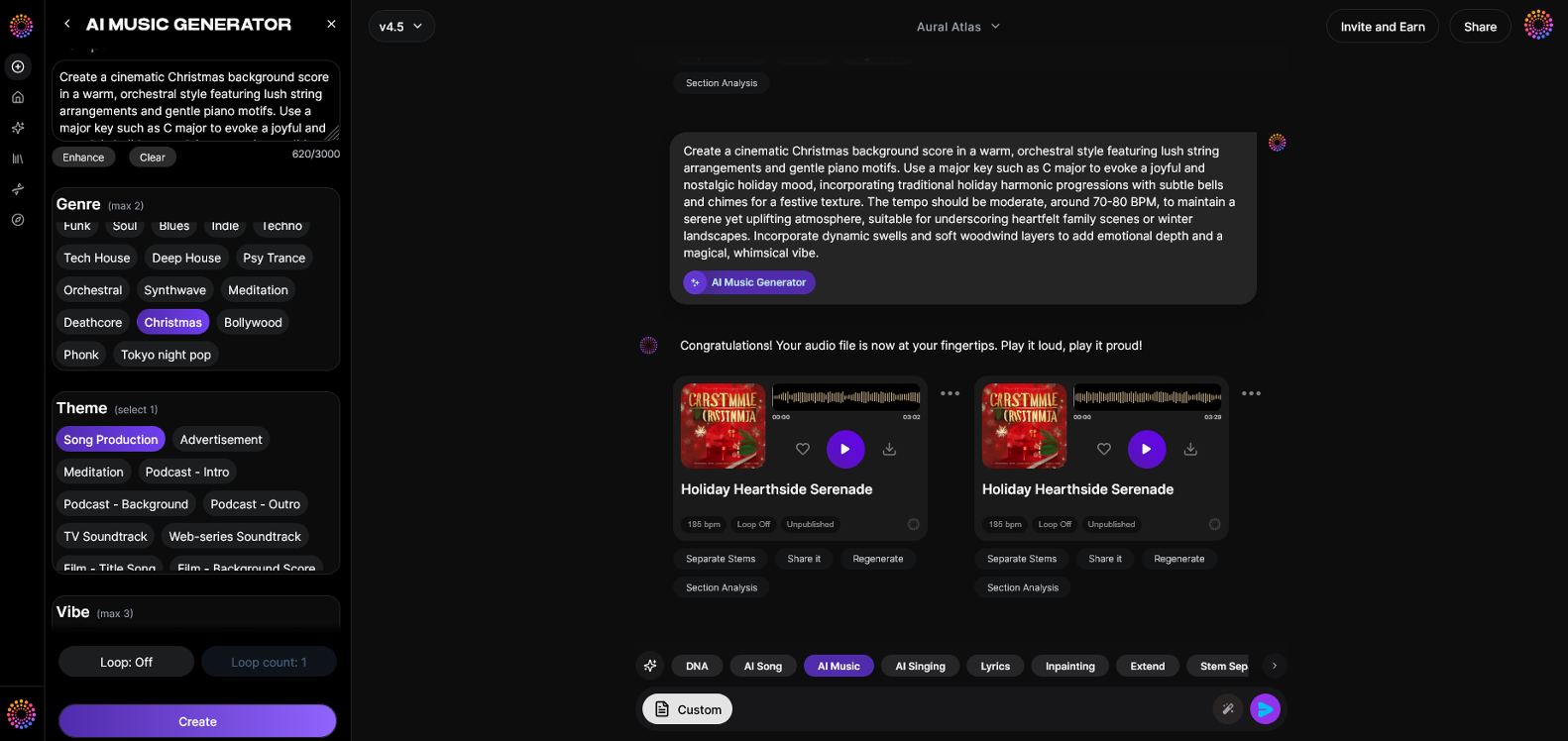
Now that you understand how AI classical music generation works, you can create fully produced orchestral soundscapes in minutes using Soundverse.
Soundverse’s AI Music Generator is designed specifically for instrumental music creation from text prompts. Its text-to-music capability enables users to describe a mood, genre, or instrumentation such as “Romantic symphonic overture with strings and brass,” and instantly receive a generated composition.
Core capabilities include:
- Text-to-music generation: Type detailed descriptions and generate orchestral music accordingly.
- Loop Mode: Ideal for seamless background soundscapes in films or video games.
- Genre, mood, and instrument control: Specify precise orchestral combinations.
- V4 and V5 model options: Choose models trained for stylistic diversity and refined instrumentation.
Typical use cases:
- Video background music and cinematic scores.
- Game soundtracks and thematic loops.
- Meditation and wellness soundscapes.
- Advertising and commercial scoring.
For creators seeking stylistic consistency, Soundverse DNA enhances generation accuracy by learning from licensed artist catalogs — ensuring both originality and copyright safety. Meanwhile, Similar Music Generator helps replicate a chosen reference track's vibe without copying its melody or structure, assisting directors and producers in maintaining sonic continuity.
To explore these features further, visit related Soundverse guides such as generate AI music with Soundverse text-to-music or AI music generator and human composers: a future together. You can also learn how AI-generated music is transforming the music industry and discover cross-genre techniques used in modern generative workflows.
Start Composing Classical Masterpieces with AI Today
Experience how AI classical music generation can help you compose intricate, emotionally rich orchestral pieces effortlessly. Join Soundverse and bring timeless compositions to life with intelligent creative assistance.
Related Articles
- How AI-Generated Music Is Transforming the Music Industry: Discover how artificial intelligence is reshaping professional music composition and production workflows across genres.
- AI Music Generator and Human Composers: A Future Together: Explore how human creativity and AI-powered tools can collaborate to produce harmonious, innovative compositions.
- The Benefits of Composing with AI Music Generator: Learn the advantages of integrating AI into your workflow for faster composition, orchestration, and mixing.
- The Role of AI Music in Film and Television: Uncover how AI-driven composition enhances cinematic storytelling and soundtracks for multimedia creators.
Here's how to make AI Music with Soundverse
Video Guide
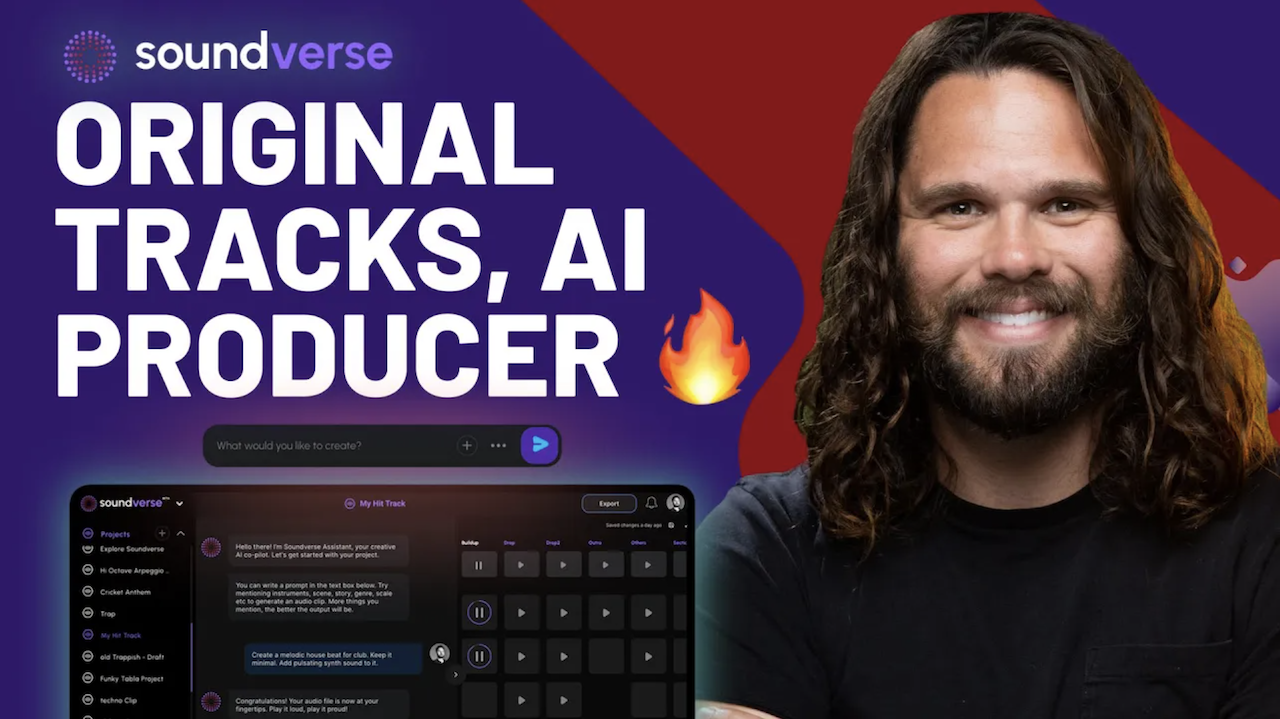
Here’s another long walkthrough of how to use Soundverse AI.
Text Guide
- To know more about AI Magic Tools, check here.
- To know more about Soundverse Assistant, check here.
- To know more about Arrangement Studio, check here.
Soundverse is an AI Assistant that allows content creators and music makers to create original content in a flash using Generative AI. With the help of Soundverse Assistant and AI Magic Tools, our users get an unfair advantage over other creators to create audio and music content quickly, easily and cheaply. Soundverse Assistant is your ultimate music companion. You simply speak to the assistant to get your stuff done. The more you speak to it, the more it starts understanding you and your goals. AI Magic Tools help convert your creative dreams into tangible music and audio. Use AI Magic Tools such as text to music, stem separation, or lyrics generation to realise your content dreams faster. Soundverse is here to take music production to the next level. We're not just a digital audio workstation (DAW) competing with Ableton or Logic, we're building a completely new paradigm of easy and conversational content creation.
TikTok: https://www.tiktok.com/@soundverse.ai
Twitter: https://twitter.com/soundverse_ai
Instagram: https://www.instagram.com/soundverse.ai
LinkedIn: https://www.linkedin.com/company/soundverseai
Youtube: https://www.youtube.com/@SoundverseAI
Facebook: https://www.facebook.com/profile.php?id=100095674445607
Join Soundverse for Free and make Viral AI Music

We are constantly building more product experiences. Keep checking our Blog to stay updated about them!