Will Spotify Follow iHeartRadio's AI Music Ban?
Explore if Spotify will adopt an AI music ban like iHeartRadio and how Soundverse ensures ethical AI music in 2026.
Will Spotify Follow iHeartRadio's AI Music Ban?
In 2026, the music industry faces a pivotal question: will Spotify align with iHeartRadio’s stance and ban AI-generated music from its platform? As artificial intelligence continues to reshape how sound is created, distributed, and monetized, the tension between innovation and artist protection grows more visible than ever. This discussion surrounding the Spotify AI music policy is not merely about technology but about ethics, creativity, and the future of streaming itself.
Why Did iHeartRadio Ban AI Music in the First Place?
In mid-2024, iHeartRadio publicly declared its decision to restrict AI-generated tracks from its broadcasting lineup, citing concerns over copyright, artist consent, and authenticity. It was the first major network to take a definitive stand, emphasizing the role of human artistry in defining cultural identity. While the ban was met with mixed reactions, it established a foundation for others to reconsider their streaming AI policy.
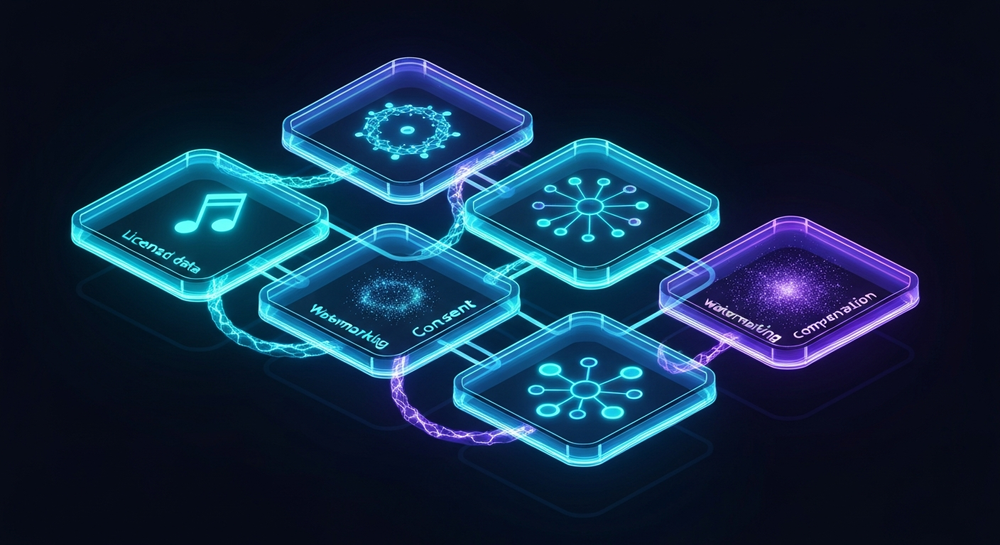
By 2025, the momentum around synthetic music had grown significantly, with creators using tools like Soundverse and other AI platforms to generate new compositions without extensive studio resources. However, as distribution scaled, so did the need to verify authorship and ensure fair compensation. iHeartRadio’s move prompted further industry-wide reflection, forcing services like Spotify to reevaluate what qualifies as “human music” in the age of generative AI.
What Is Spotify’s Current AI Music Policy in 2026?
As of 2026, Spotify has not issued a blanket ban similar to iHeartRadio’s, but the platform has tightened its regulations under a refined framework often referenced as the Spotify AI music policy. Instead of outright rejection, Spotify’s strategy emphasizes transparency and ethical sourcing. Tracks created with AI tools must clearly label their generative origin and comply with copyright verification standards.

This measured approach allows innovation to coexist with protection. Spotify continues to maintain partnerships with AI music platforms that uphold licensing compliance, verifying whether datasets used for training models included authorized content. This ensures human musicians remain credited and compensated—a concept strongly echoed by Soundverse’s principles. Spotify’s latest policy update reinforces this by requiring disclosure of AI use and preventing unauthorized voice cloning. Additionally, the company announced new ethics-focused protections in its official newsroom post.
How Do AI-Generated Tracks Affect Music Platforms in 2026?
Streaming platforms are now at the crossroads of opportunity and responsibility. AI-generated compositions can bring enormous variety and accessibility to listeners while letting creators produce professional work faster. Yet, this comes with potential risks like rights infringement or the dilution of cultural authenticity.
The challenge extends to maintaining fair monetization. As noted in music industry trends, streaming services are rethinking royalty structures in response to AI-assisted production. If a track generated by AI incorporates elements learned from human recordings, how should shares be distributed? Without robust verification mechanisms, revenue disputes could escalate.
Hence, the Spotify AI music policy reflects a broader movement toward traceability rather than exclusion. The rise of explainable and transparent systems demonstrates how streaming AI policy now prioritizes informed oversight over simple prohibition.
What Does 'Human Music' Mean in the Age of AI?
The idea of Spotify human music has evolved to represent more than just sound produced by a person. It encompasses creative intent, consent, and personal connection. Even if AI assists in composition, human direction should remain pivotal. By 2026, audiences are increasingly valuing hybrid art—tracks that blend algorithmic generation with emotional storytelling.
This trend is supported by creators who use AI not as a replacement but as a collaborator. Platforms including Soundverse help preserve that balance by embedding consent and attribution in every stage of production. The result is music that both innovates and respects its origins.
For deeper insights, watch our guide on creating Deep House music or explore how to make music with AI in our tutorial series and explore tab overview.
Will Spotify Likely Follow iHeartRadio’s Ban?
While iHeartRadio’s stance was rooted in safeguarding artistic purity, Spotify’s strategy appears more adaptive and long-term. Observers expect Spotify not to impose a blanket ban but instead refine its verification infrastructure to align with ethical standards. This mirrors how AI in the music creation process has matured—balancing creativity with legal and ethical compliance.
Analysts recognized that Spotify’s main interest in 2026 is sustaining diverse artist ecosystems while maintaining integrity. A total prohibition would alienate legitimate creators using authorized AI tools. Consequently, Spotify will likely champion full traceability—ensuring every generative process, dataset, and output adheres to transparent audit trails. Recent updates like Prompted Playlists expansion demonstrate Spotify’s commitment to creative AI use rather than exclusion.
What Role Does Soundverse Play in Shaping Ethical AI Music?
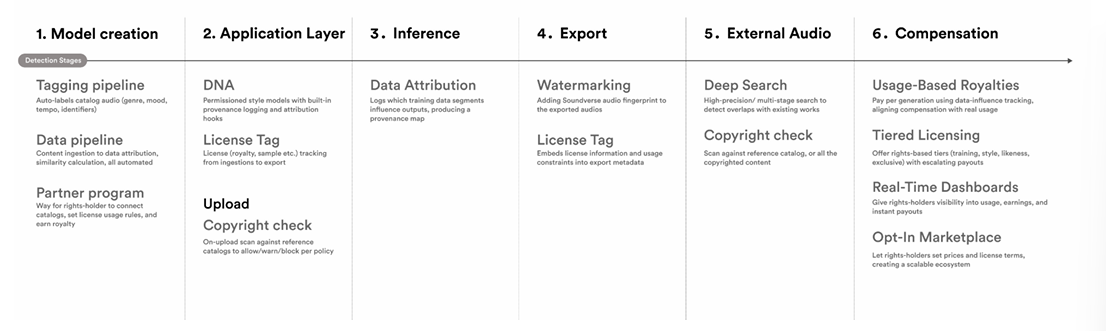
Soundverse leads the industry’s ethical framework with its focus on transparent and fair AI development. As more platforms reconsider their streaming AI policy, Soundverse has positioned its Ethical AI Music Framework as a robust model for responsible creation.
How to Make Ethical Streaming Decisions with Soundverse The Ethical AI Music Framework
The Ethical AI Music Framework offers a six-stage pipeline that directly counters opaque generation processes. It replaces black-box systems with full visibility, ensuring that artists maintain integrity and compensation throughout every phase.
- Stage 1: Licensed Data Sourcing – Soundverse eliminates scraping practices by using officially licensed datasets, guaranteeing legal compliance for enterprise use.
- Stage 2: Permissioned Models (DNA) – The AI can only learn from datasets where rights-holders have given explicit consent, maintaining the moral foundation of its training.
- Stage 3: Explainable Inference (Attribution) – Each output from Soundverse carries clear attribution data, allowing users and labels to trace creative origins.
- Stage 4: Traceable Export (Watermarking) – When music is generated and exported, embedded watermarks ensure track identity and source verification for future audits.
- Stage 5: Deep Search (External Scanning) – This stage facilitates external content scanning to detect if AI outputs inadvertently mirror existing copyrighted works.
- Stage 6: Recurring Compensation (Partner Program) – Through the Soundverse Partner Program, rights-holders receive royalties whenever their contributions are used in training or generated tracks.
Together, these six stages establish legal and artistic transparency. This method enables Spotify and similar platforms to adopt verified systems rather than impose restrictive bans. By embedding Soundverse features such as Soundverse Trace and the Content Partner Program, streaming services can guarantee that all AI-assisted outputs comply with artist consent and maintain equitable reward.
How Will Artists and Platforms Benefit from Transparent AI Music?
For artists, the implications are enormous. Instead of fearing AI as competition, creators gain a structured ecosystem that prioritizes their rights. Streaming platforms using frameworks like Soundverse maintain audience trust and access a legally sound catalog.
This transparency also encourages collaboration. Producers can now openly credit AI models’ influence without backlash, as attribution and licensing are proven through verifiable metadata. It matches the growing demand for ethically grounded innovation—the direction most platforms will adopt by late 2026.
Recent developments in AI-assisted music creation, such as the Soundverse Assistant co-producer and specialized features for text-to-music generation explained in generate AI music with Soundverse, continue to redefine how creativity works online. These tools show how AI can act responsibly within frameworks that support musician rights.
Create Your Own AI Music Today
Experience the freedom to compose, remix, and publish music using Soundverse’s advanced AI tools. Generate professional-quality tracks in seconds and stay ahead of the evolving digital music scene.
Related Articles
- How AI-Generated Music Is Transforming the Music Industry — Discover how new AI tools are redefining the boundaries of music creation and business models within the industry.
- The Role of AI Music in Film and Television — Explore how producers and filmmakers are using AI-generated music to enhance storytelling and reduce production time.
- Navigating the World of Royalty-Free and Copyright-Free Music Using Soundverse AI — Learn the key differences between royalty-free and copyright-free music—and how AI helps creators avoid licensing pitfalls.
- AI Music Generator and Human Composers: A Future Together — Uncover how human musicians and AI systems can collaborate to create unique, emotionally resonant soundscapes.
Here's how to make AI Music with Soundverse
Video Guide
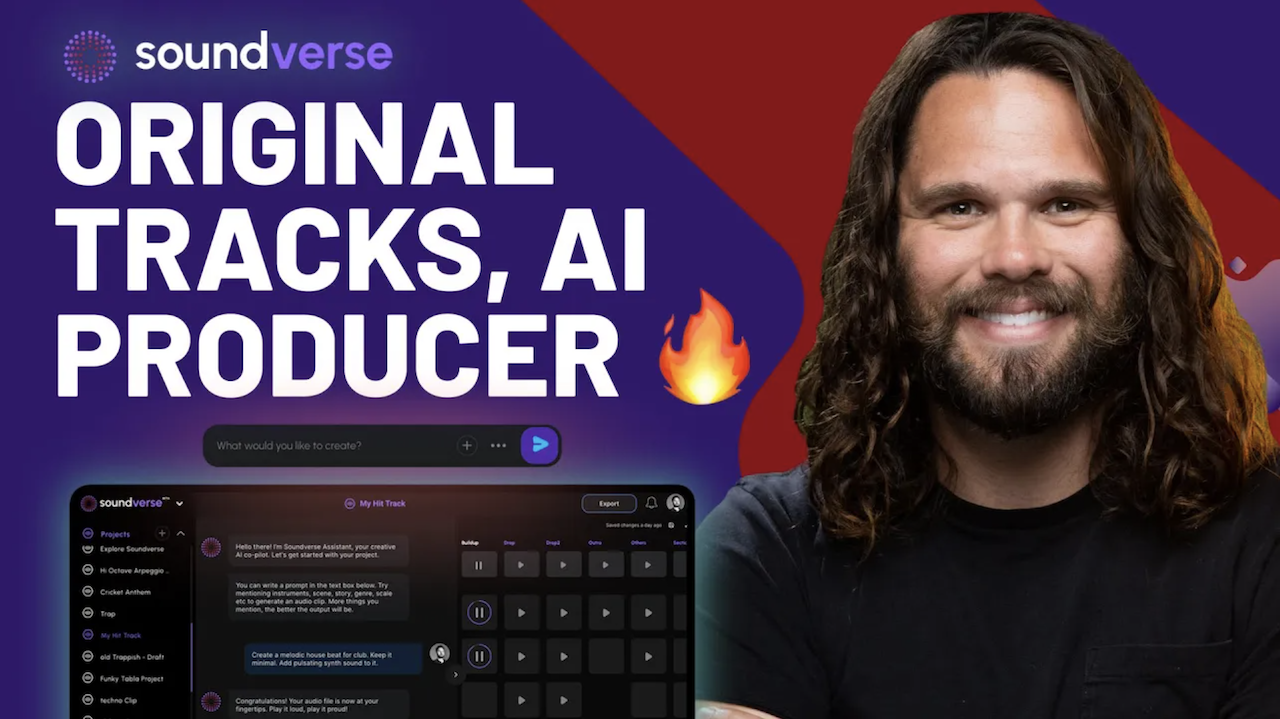 Here’s another long walkthrough of how to use Soundverse AI.
Text Guide
- To know more about AI Magic Tools, check here.
- To know more about Soundverse Assistant, check here.
- To know more about Arrangement Studio, check here.
Soundverse is an AI Assistant that allows content creators and music makers to create original content in a flash using Generative AI. With the help of Soundverse Assistant and AI Magic Tools, our users get an unfair advantage over other creators to create audio and music content quickly, easily and cheaply. Soundverse Assistant is your ultimate music companion. You simply speak to the assistant to get your stuff done. The more you speak to it, the more it starts understanding you and your goals. AI Magic Tools help convert your creative dreams into tangible music and audio. Use AI Magic Tools such as text to music, stem separation, or lyrics generation to realise your content dreams faster. Soundverse is here to take music production to the next level. We're not just a digital audio workstation (DAW) competing with Ableton or Logic, we're building a completely new paradigm of easy and conversational content creation.
TikTok: https://www.tiktok.com/@soundverse.ai
Twitter: https://twitter.com/soundverse_ai
Instagram: https://www.instagram.com/soundverse.ai
LinkedIn: https://www.linkedin.com/company/soundverseai
Youtube: https://www.youtube.com/@SoundverseAI
Facebook: https://www.facebook.com/profile.php?id=100095674445607
Join Soundverse for Free and make Viral AI Music
 We are constantly building more product experiences. Keep checking our Blog to stay updated about them!