Will Other Radio Stations Follow iHeartRadio's AI Ban?
Exploring the iHeartRadio AI ban and what it means for radio broadcasting policies in 2026.
Will Other Radio Stations Follow iHeartRadio's AI Ban?
In 2026, the broadcasting world continues to grapple with one of its biggest ethical and technological crossroads — artificial intelligence and its role in music creation. The iHeartRadio AI ban marked a turning point in this ongoing debate. While the decision was made back in 2025, its ripple effects are still shaping radio industry trends today. The central question many radio executives and media analysts are asking is simple yet complex: Will other radio stations follow iHeartRadio's AI ban?
Why Did iHeartRadio Ban AI Music?
The iHeartRadio AI ban aimed to preserve artist integrity, authenticity, and the human aspect of creative expression in broadcasting. In late 2025, iHeartRadio announced it would no longer air AI-generated tracks that lacked licensed training or clear consent from rights holders. Their stance was that AI-generated songs trained on unlicensed or scraped data compromised the ethics of artistic ownership.
Several factors contributed to this monumental decision:
- Data Ethics: Many generative models scraped public internet data, including copyrighted music without permission.
- Artist Compensation: Musicians and labels raised concerns about not receiving fair royalties for the use of their creative works in AI training.
- Audience Perception: Listeners began expressing doubts about authenticity. Were they hearing a human-made song or machine-generated imitation?
- Regulatory Pressures: U.S. Copyright Office deliberations in 2025 brought stronger scrutiny to unlicensed AI use, setting the stage for broadcasters to take proactive measures.
The result was the controversial iHeartRadio AI ban — a clear refusal to promote AI-generated content unless ethical standards were met.
What Does the iHeartRadio AI Ban Signal for Broadcast AI Policy?
This ban isn’t just a corporate policy change. It represents a philosophical stance fueling a wider conversation on ethical AI use in music and broadcasting.

As of 2026, broadcast AI policy discussions revolve around several core dimensions:
- Transparency in AI training: Stations and networks demand clarity about what datasets models use to generate content.
- Attribution and compensation: New frameworks, like Soundverse’s recurring royalties model, have emerged to ensure creators remain compensated for AI-driven reuse.
- Operational compliance: Broadcasters now face internal audits to confirm that played tracks comply with evolving copyright laws and AI ethics codes.
Industry insiders expect larger syndication networks, such as SiriusXM or Cumulus Media, to introduce stricter guidelines for generative content. The iHeartMedia “Guaranteed Human” campaign set a precedent, and others are following cautiously.
How Are Radio Industry Trends Shifting in 2026?
The radio industry, far from static, continues to evolve amid rapid digital transformation. The iHeartRadio AI ban highlights the balance between innovation and responsibility.
Here are three defining trends influencing broadcasters in 2026:
1. Ethical AI Framework Adoption:
Stations now seek tools with built-in ethical compliance, such as attribution tracing and explicit consent workflows. Solutions built on transparent pipelines are preferred over black-box generators. The emergence of Soundverse’s Ethical AI Music Framework is an example of how radio can combine innovation with moral accountability.
2. Hybrid Programming Models:
Human DJs increasingly coexist with AI-assistive tools rather than pure AI replacements. Instead of generating music entirely through AI, broadcasters use AI for playlist analytics, sound enhancement, and format adaptation.
3. Regulatory Collaboration:
Governments in Europe and the U.S. are working with audio technology companies to ensure lawful use of AI in broadcast content. Ethical AI becomes not just a technology choice but a legal requirement.
For broadcasters analyzing these changes, it’s critical to understand that tools like AI are not disappearing; they’re simply evolving to meet higher ethical and artistic standards.
Could Banning AI Music Hurt Innovation?
The debate around the iHeartRadio AI ban remains polarized. Critics argue that excluding AI-generated songs risks stifling musical innovation, making radio broadcasts less diverse and future-ready.
Yet, supporters maintain that innovation without ethics cannot be sustained. The issue isn’t AI as a concept — it’s unethical AI. As seen in recent streaming data analysis and music industry trends, audiences still crave originality and verified authorship.
Stations that ban AI entirely might struggle to compete with streaming services that embrace ethical AI content generation. Therefore, most experts predict a pivot — not toward blanket bans, but toward structured ethical frameworks.
How Soundverse’s Ethical AI Music Framework Offers a Solution
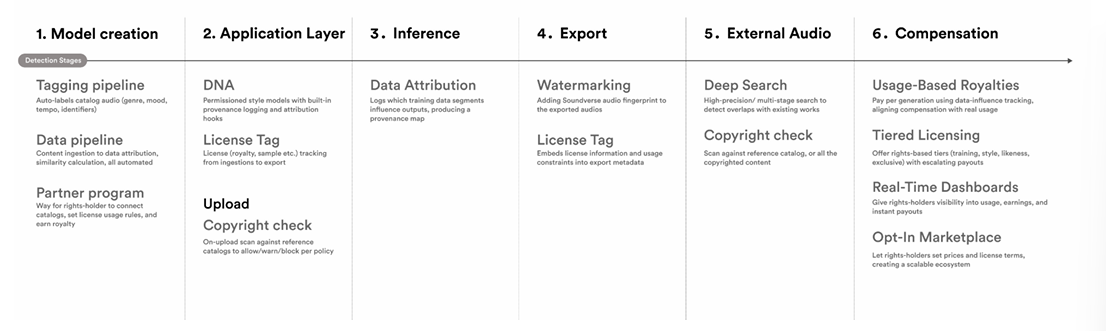
To achieve equilibrium between creativity and compliance, platforms like Soundverse are redefining how AI integrates with music production for broadcast.
How to make Ethical Radio AI Policies with Soundverse The Ethical AI Music Framework
The Ethical AI Music Framework by Soundverse is a comprehensive infrastructure ensuring that artists and broadcasters can collaborate with AI safely. Instead of opaque models trained on questionable datasets, Soundverse operates a six-stage transparent pipeline that prioritizes integrity and monetization for rights holders.
Stage 1: Licensed Data Sourcing guarantees all training data is sourced legally, avoiding scraping.
Stage 2: Permissioned Models (Soundverse DNA) ensures every AI engine operates with authorized catalog integration.
Stage 3: Explainable Inference allows attribution tracing so broadcasters can identify which artist-informed model contributed to a generation.
Stage 4: Traceable Export (Watermarking) embeds digital signatures in every track, confirming source validation.
Stage 5: Deep Search (External Scanning) continuously monitors digital spaces for unauthorized reuse.
Stage 6: Recurring Compensation (Partner Program) delivers royalties to participating artists whenever their sonic DNA influences generated content.
This end-to-end approach bridges innovation with transparency, allowing stations to use AI while respecting consent and protecting both artists and publishers.
Soundverse also integrates with complementary tools such as Soundverse Trace, adding another layer of trust by embedding rights protection throughout the content lifecycle. For those interested in monetization opportunities, the Content Partner Program enables audio rights-holders to join an AI ecosystem that pays back fairly based on use volumes.
For practical learning, watch our guide on creating Deep House music or the tutorial on making music via Soundverse to understand how ethical AI can empower content creation.
To see how Soundverse’s ethical infrastructure compares to other solutions, explore resource articles like Mubert alternatives or Soundraw alternative to understand responsible system choices available in 2026.
What Does This Mean for the Future of AI Music in Broadcasting?
AI-generated music isn’t vanishing from airwaves — it’s being redefined. With sustainability and accountability becoming the heart of audio innovation, the term AI music future now refers to collaborative, transparent AI models rather than autonomous black boxes.
Stations adopting ethical AI models can preserve artist trust while appealing to tech-savvy audiences. Ethical AI music generation platforms, like Soundverse, uphold regulations and offer creative flexibility without compromising legal standards.
2026 will likely witness the rise of hybrid broadcasting operations — part human, part AI — guided by frameworks that prioritize verified licensing. As seen in how AI-generated music is transforming the industry, combining ethical AI infrastructure with creative artistry sets the tone for the next radio evolution.
Create Music Freely—No Restrictions, Just Innovation
Soundverse empowers creators to generate original, royalty-free music using advanced AI tools. Explore limitless sound creation while staying ahead of industry changes.
Start Creating Now
Related Articles
- How AI-Generated Music Is Transforming the Music Industry: Explore how AI tools are shaping music production, from mainstream hits to indie creativity.
- AI Music Generator and Human Composers: A Future Together: Discover how collaboration between AI music systems and human composers is redefining artistry.
- The Role of AI Music in Film and Television: Learn how AI-generated compositions are revolutionizing the soundtrack industry across visual media.
- AI Music in the USA: Understand the evolving landscape of AI in American music—ethics, creativity, and regulation.
Here's how to make AI Music with Soundverse
Video Guide
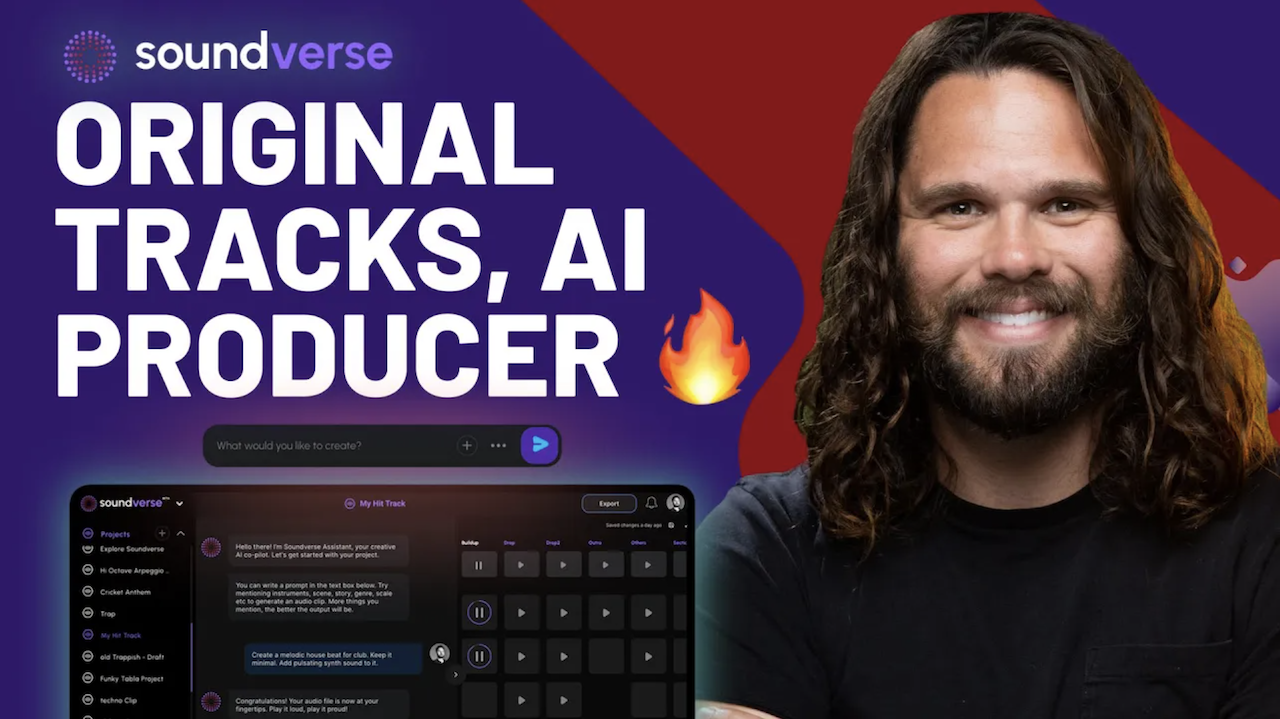
Here’s another long walkthrough of how to use Soundverse AI.
Text Guide
- To know more about AI Magic Tools, check here.
- To know more about Soundverse Assistant, check here.
- To know more about Arrangement Studio, check here.
Soundverse is an AI Assistant that allows content creators and music makers to create original content in a flash using Generative AI. With the help of Soundverse Assistant and AI Magic Tools, our users get an unfair advantage over other creators to create audio and music content quickly, easily and cheaply. Soundverse Assistant is your ultimate music companion. You simply speak to the assistant to get your stuff done. The more you speak to it, the more it starts understanding you and your goals. AI Magic Tools help convert your creative dreams into tangible music and audio. Use AI Magic Tools such as text to music, stem separation, or lyrics generation to realise your content dreams faster. Soundverse is here to take music production to the next level. We're not just a digital audio workstation (DAW) competing with Ableton or Logic, we're building a completely new paradigm of easy and conversational content creation.
TikTok: https://www.tiktok.com/@soundverse.ai
Twitter: https://twitter.com/soundverse_ai
Instagram: https://www.instagram.com/soundverse.ai
LinkedIn: https://www.linkedin.com/company/soundverseai
Youtube: https://www.youtube.com/@SoundverseAI
Facebook: https://www.facebook.com/profile.php?id=100095674445607
Join Soundverse for Free and make Viral AI Music

We are constantly building more product experiences. Keep checking our Blog to stay updated about them!