Why Do People Love Music So Much?
Explore the psychology of music, emotional connection, and benefits of listening in 2026.
Why Do People Love Music So Much
Music has always been an inseparable part of human life. It transcends cultural barriers, evokes emotions, and connects people across generations. Whether it's the rhythm of ancient drums or the futuristic compositions generated by AI, music continues to hold a timeless allure. In 2026, as technology and creativity intertwine more than ever, the question “why people love music” remains both fascinating and deeply complex.
What makes music universally loved?
Music resonates with every individual differently, but its universal appeal stems from our brain’s innate response to rhythm and melody. Scientific studies in neuropsychology show that when people listen to music, multiple areas of the brain light up—those linked to memory, emotion, and movement. This multisensory integration makes music not just sound, but experience.
People love music because it aligns with their emotional state. A slow piano track can comfort sadness, while upbeat pop energizes workout sessions. This emotional synchronization forms the basis of why music feels so personally meaningful. Music becomes the language of feeling—a way to express emotions that words often fail to capture.
What is the psychology of music?
The psychology of music explores how sound influences thought, behavior, and emotion. Therapists and neuroscientists have discovered that music triggers dopamine release—the same chemical associated with pleasure and reward. This reaction explains why listening to a favorite song can uplift the mood immediately.
From a psychological perspective, music acts as both an emotional catalyst and a cognitive enhancer. Studies from 2025 showed that background music can improve focus and creativity in workplaces worldwide. By 2026, many companies even curate AI-generated playlists to match employee energy cycles—a technique linking directly to emotional productivity.
Furthermore, memory and music share a profound bond. Alzheimer’s patients, for example, respond vividly to familiar tunes because music activates long-term memory circuits. This is more than nostalgia; it’s cognitive reinforcement through melody, showing how music penetrates the deepest layers of identity—an effect supported by research from UCLA on music-induced emotional arousal and memory.
How does music create an emotional connection?
Emotional connection to music isn’t random—it’s biological and social. Humans evolved with sound as a way to communicate and bond. Rhythmic chanting and song rituals helped ancient tribes sync emotionally during celebrations or mourning. In modern contexts, concerts replicate this collective energy, where thousands feel united by shared vibrations.
Music’s ability to mirror emotion also lies in its structure. Certain chord progressions trigger tension and release, imitating the ebb and flow of emotional experiences. That’s why cinematic scores amplify empathy—you feel the character’s journey through musical cues, as explored by the Max Planck Florida Institute’s “Science Meets Music” lecture series.
Across streaming platforms in 2026, algorithms now recommend songs based on emotional patterns rather than just listening history. This personalization highlights how deeply music aligns with human mood mapping. For a deeper dive, watch our guide on creating Deep House music and learn how to make music with Soundverse.
What are the benefits of listening to music?
The benefits of listening to music extend far beyond entertainment:
- Emotional Regulation: Music helps manage stress, anxiety, and even depression. Meditation tracks and ambient soundscapes, popularized in the wellness movement since 2024, are now everyday therapy for many.
- Cognitive Performance: Studies continue to show that instrumental music improves concentration and memory retention. Students, researchers, and creatives use AI-generated tracks to maintain productive flow—confirming insight from National University’s findings on how music boosts focus and study habits.
- Social Bonding: Shared playlists and collaborative music platforms enhance social connection. In 2026, music co-creation experiences have become vital for online communities.
- Health and Wellness: The concept of music therapy has evolved dramatically. With detailed genre and tempo control through AI systems, users can now design specific sound frequencies for relaxation or energy boosting.
- Cultural Appreciation: Music teaches empathy across borders. Appreciating the rhythms of different cultures expands understanding of history and identity.
How music affects the brain
Music’s influence on the brain is astonishing. The auditory cortex interprets sound patterns, while the limbic system manages emotional response. When rhythm synchronizes with heartbeat or breathing rate, physiological harmony occurs—calming or energizing the body. Studies by Karolinska Institutet show how music training enhances focus through stronger brain signals linked to attention.
Brain scans in 2026 demonstrate how listening to music boosts connectivity between neural pathways. Musicians and frequent listeners typically exhibit stronger cross-hemisphere communication, implying better problem-solving and creativity.
Music also modulates time perception. Fast beats make moments feel shorter, while ambient compositions stretch mental clarity—a technique applied widely in game soundtracks and meditation sessions.
What drives music appreciation across generations?
Music appreciation evolves, but the core human fascination with sound remains constant. Generational tastes may shift—from vinyl nostalgia to AI-made compositions—but the psychological foundation is the same: emotional resonance.
Younger listeners in 2026 value customized, mood-driven soundscapes. Meanwhile, traditionalists appreciate the authenticity and emotional storytelling of classic genres. Both perspectives converge in one belief—music is the mirror of human emotion.
Moreover, with AI-assisted creation tools, music appreciation now includes creative participation. Even non-musicians compose immersive tracks using text-to-music models, reflecting how access democratizes artistry.
How to make emotionally powerful music with Soundverse AI Music Generator
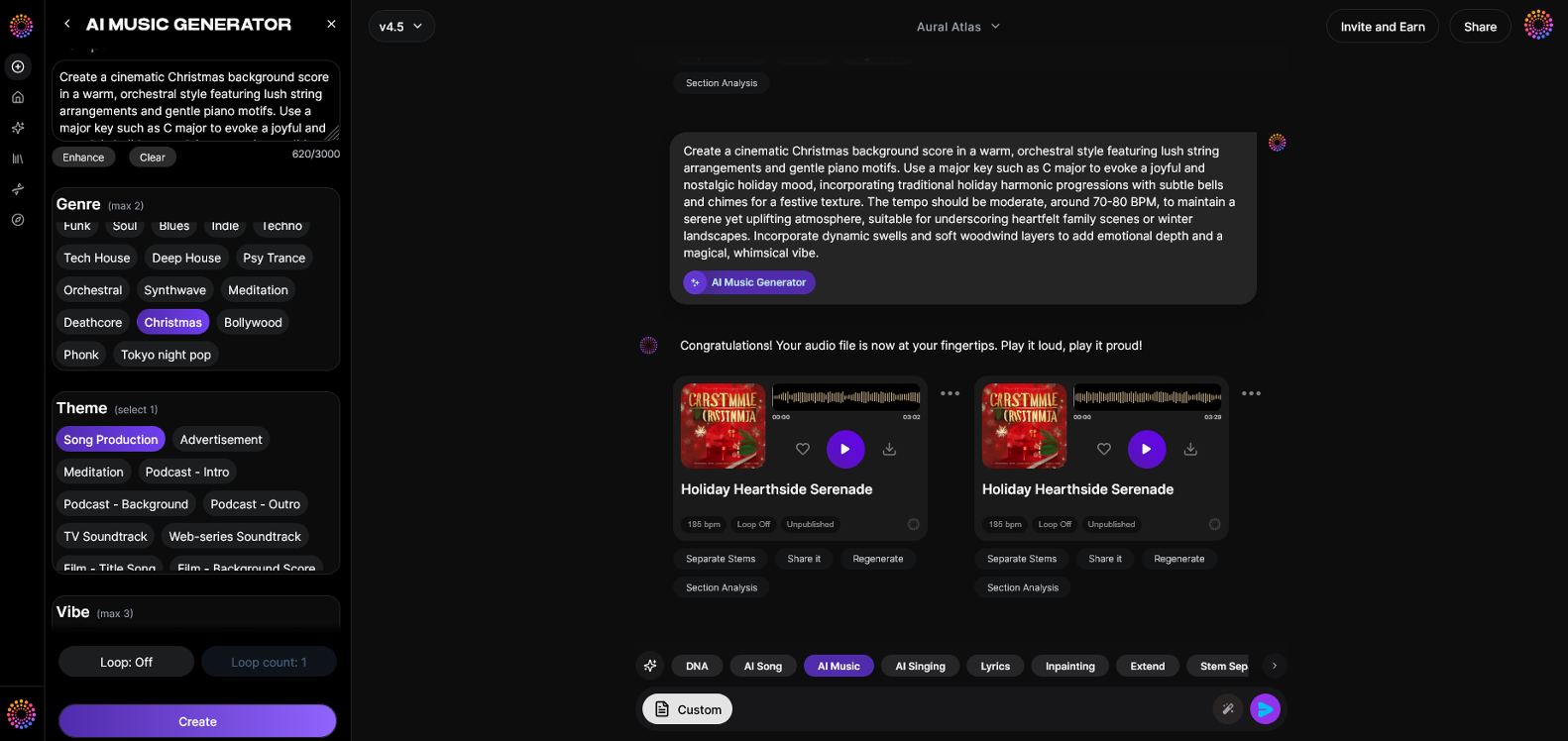
Now that you understand why people love music, here’s how to create emotion-rich soundscapes instantly using the Soundverse AI Music Generator.
Soundverse AI Music Generator allows anyone to create fully produced instrumental music from simple text prompts. It’s perfect for background tracks, beats, and atmospheric loops. With options for seamless Loop Mode, and detailed genre, mood, and instrument control, users design precisely the emotional tone they want.
Core Capabilities
- Text-to-Music Generation: Enter descriptive prompts such as “melancholic piano for night reflection” or “uplifting electronic beat for victory moment.”
- Loop Mode: Generate seamless instrumentals ideal for meditation or gaming soundtracks.
- Genre and Mood Customization: Choose the vibe—jazz, lo-fi, classical, cinematic, or ambient.
- V4 and V5 Model Options: Advanced versions for diverse production accuracy.
Primary Use Cases
- Video background music for YouTube or social media.
- Game soundtrack loops maintaining immersive flow.
- Meditation or wellness tracks aligning with health goals.
- Advertising and commercial scoring delivering emotional engagement.
Soundverse also integrates ethically with Soundverse DNA, a system trained on licensed catalogs to ensure originality and copyright-safe music generation. For song creation including vocals, users can explore the AI Song Generator which builds full songs from lyrics and melody.
For more AI music innovation insights, read:
- AI Music Generator and Human Composers: A Future Together
- How an AI Music Generator Inspires Creative Fusion
- The Benefits of Composing with AI Music Generator
- Generate AI Music with Soundverse Text-to-Music
Create Music That Moves You With Soundverse AI
Experience how AI can help you compose tracks that resonate emotionally and connect with listeners instantly. Transform ideas into beautiful melodies—no production expertise needed.
Related Articles
- How an AI Music Generator Inspires Creative Fusion: Discover how AI tools spark new waves of creativity by blending human emotion with machine precision.
- Most Popular Music Genres: Explore the most-loved music genres and find out why they resonate so deeply with audiences everywhere.
- The Role of AI Music in Film and Television: Learn how AI-generated music is shaping the emotional tone and storytelling of modern visual media.
- How AI-Generated Music Is Transforming the Music Industry: Understand how artificial intelligence is redefining musical creativity, production, and audience engagement.
Here's how to make AI Music with Soundverse
Video Guide
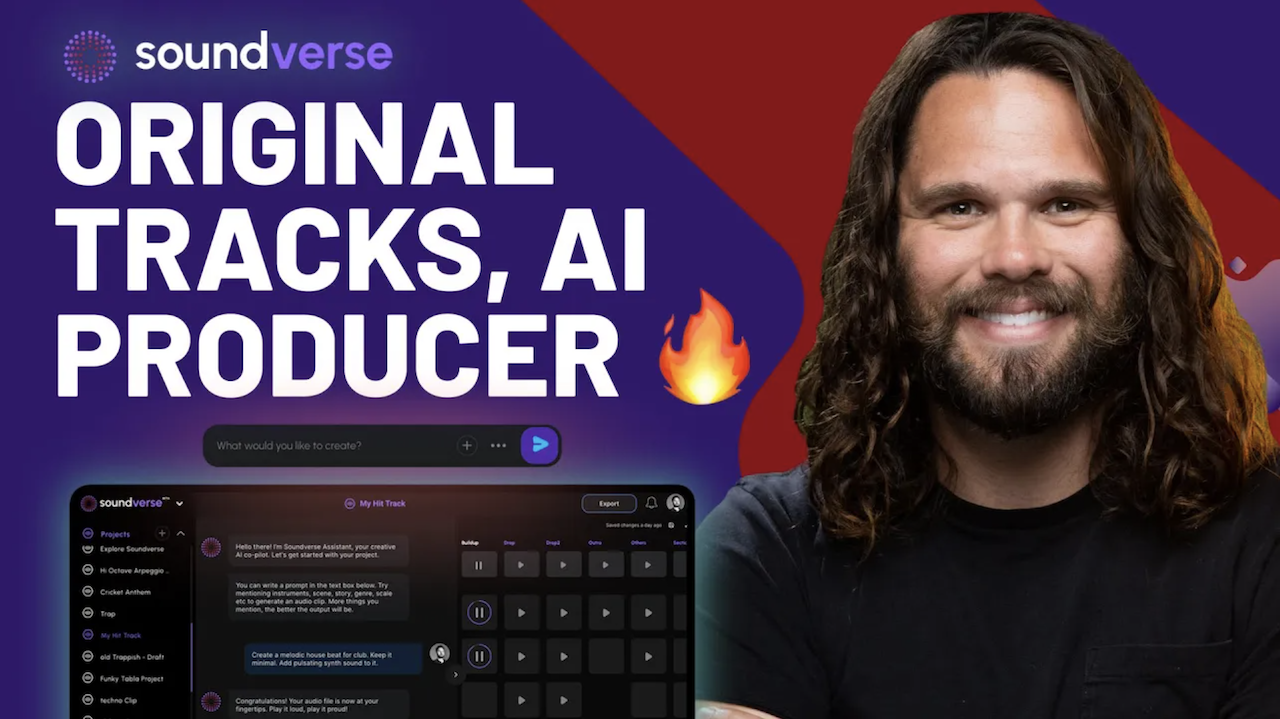
Here’s another long walkthrough of how to use Soundverse AI.
Text Guide
- To know more about AI Magic Tools, check here.
- To know more about Soundverse Assistant, check here.
- To know more about Arrangement Studio, check here.
Soundverse is an AI Assistant that allows content creators and music makers to create original content in a flash using Generative AI. With the help of Soundverse Assistant and AI Magic Tools, our users get an unfair advantage over other creators to create audio and music content quickly, easily and cheaply. Soundverse Assistant is your ultimate music companion. You simply speak to the assistant to get your stuff done. The more you speak to it, the more it starts understanding you and your goals. AI Magic Tools help convert your creative dreams into tangible music and audio. Use AI Magic Tools such as text to music, stem separation, or lyrics generation to realise your content dreams faster. Soundverse is here to take music production to the next level. We're not just a digital audio workstation (DAW) competing with Ableton or Logic, we're building a completely new paradigm of easy and conversational content creation.
TikTok: https://www.tiktok.com/@soundverse.ai
Twitter: https://twitter.com/soundverse_ai
Instagram: https://www.instagram.com/soundverse.ai
LinkedIn: https://www.linkedin.com/company/soundverseai
Youtube: https://www.youtube.com/@SoundverseAI
Facebook: https://www.facebook.com/profile.php?id=100095674445607
Join Soundverse for Free and make Viral AI Music

We are constantly building more product experiences. Keep checking our Blog to stay updated about them!