Why AI Can't Provide Full Song Lyrics Due to Copyright Restrictions
Understand why AI can't share full song lyrics and how Soundverse Trace ensures copyright-safe music generation.
Why AI Can't Provide Full Song Lyrics Due to Copyright Restrictions
Artificial intelligence has transformed creative industries, enabling rapid music generation, text composition, and multimedia synthesis. Yet, one persistent barrier remains in 2026 — AI cannot legally reproduce full song lyrics due to copyright restrictions. As creators and marketers leverage generative tools, understanding the boundary between inspiration and infringement is essential. This article explores the nuanced relationship between AI and copyright law, focusing on why music lyrics remain protected and how technology like Soundverse Trace safeguards originality across the digital music landscape.
What is at the core of AI song lyrics copyright restrictions?
At the heart of the issue is ownership. Song lyrics are considered literary works and their reproduction, whether by humans or machines, requires authorization from the rights holder. When an AI attempts to generate or reproduce recognizable lyrics from existing songs, it enters the domain of copyright infringement. In 2026, copyright enforcement around digital content has tightened, driven by global regulatory updates post-2025 that hold platforms accountable for AI-generated content misuse.
For instance, while AI can summarize a song's theme or create new lyrics inspired by a genre, it cannot output full text from a copyrighted composition. Doing so would violate both economic rights (controlled by publishers, labels, or authors) and moral rights (such as attribution and integrity). Hence, responsible AI design must include mechanisms to detect and block replication of protected lyrics.
How do copyright laws shape AI content limitations?
AI and copyright law have evolved together. Between 2024 and 2026, several new regulations emerged focusing on dataset transparency and data lineage. These laws require companies to demonstrate the use of licensed or public-domain materials when training AI models for creative output. For content creators and SEO specialists, this means that AI writing tools must now identify and avoid generating copyrighted material verbatim.
Under current frameworks, music lyrics copyright enforcement benefits from initiatives such as the EU AI Act and updates to the U.S. Copyright Modernization Bill of 2025. Both recognize AI systems as tools, not authors — meaning legal responsibility lies with users and developers. Consequently, AI-generated content featuring copyrighted lyrics can expose both creators and platforms to penalties or takedown notices. Ethical compliance isn't just optional — it's required.
Why do AI platforms block full lyrics while allowing partial excerpts?
Platforms like Soundverse, ChatGPT, and others have integrated safeguards to prevent users from accessing full song lyrics. These systems detect patterns that match existing lyric databases and automatically block or truncate responses. Short excerpts may be allowed under fair use when utilized for educational commentary or criticism, but complete lyric reproduction risks violating copyright protection.
From a technical perspective, this behavior results from model training constraints. Developers filter datasets to exclude copyrighted song lyrics, ensuring the AI generates only new lyrical material or stylistic imitations. This approach maintains creative freedom while aligning with copyright compliance standards across digital ecosystems.
What are the ethical implications of reproducing song lyrics with AI?
The ethical dimension extends beyond legality. AI ethics in creative content emphasizes respect for artistic ownership, cultural heritage, and original human creativity. When an AI system reproduces a copyrighted lyric, it undermines the economic rights of writers and musicians. Ethical frameworks in 2026 therefore demand transparency in data sources, consent-driven licensing, and ongoing royalties for rights holders who permit their works in AI models.
Creators should aim for responsible innovation: using AI to compose original verses rather than copying existing works. Platforms such as Soundverse Assistant and its content generation pipelines encourage ethical collaboration instead of replication. For a deeper dive, watch our guide on creating Deep House music or explore the Soundverse Tutorial Series on music creation.
How do copyright restrictions protect artists in the AI era?
Copyright restrictions on song lyrics serve an essential cultural function. They ensure artists retain credit and financial compensation while preserving control over how their works are reused or transformed. In a world where AI-generated content is abundant, protection mechanisms like watermarking and license tagging secure provenance.
Musicians benefit from traceability. By tracking where and when their lyrics appear, they can claim rightful royalties in scenarios of derivative AI adaptations or licensed reproductions. Such accountability supports continued artistic innovation without sacrificing ownership. Reports like AI Music Copyright Guide: What Creators Need to Know in 2026 further outline how creators navigate these challenges.
How the music industry in 2026 adapts to AI copyright compliance
As AI music generators expand, the music industry has shifted toward transparent data ecosystems. Rights holders increasingly opt into licensing programs, allowing AI tools to learn from authorized datasets. Programs such as Soundverse’s Content Partner Program symbolize this new collaboration — creators share assets for AI training in exchange for usage-based royalties. This approach replaces the black-box practices that dominated early generative models.
The transformation mirrors the broader trend highlighted in music industry reports: ethical AI integration drives trust, innovation, and profitability. Compliance has become a competitive advantage for forward-thinking tech and entertainment brands.
What alternatives exist for creating lyrics with AI?
Instead of reproducing copyrighted materials, creators can instruct AI systems to generate fresh, genre-aligned lyrics. Tools like Soundverse Text-to-Music or AI Musicfy Alternative empower users to craft new compositions — entirely royalty-free and copyright-safe. Using descriptive prompts such as emotional tone, story theme, or instrument vibe, these models build songs from scratch.
How to make AI song lyrics copyright-safe with Soundverse Trace
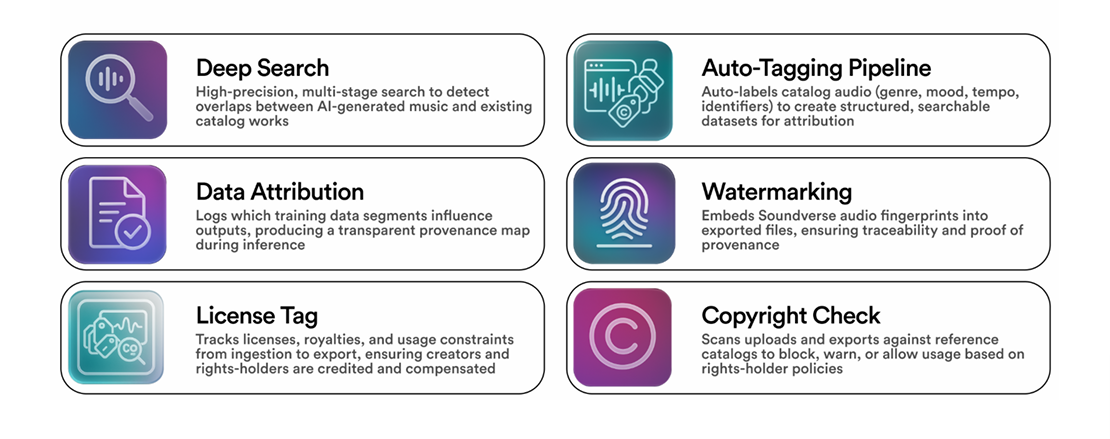
Now that you understand why AI can't provide full song lyrics due to copyright restrictions, here is how Soundverse helps ensure compliance and creativity.
Soundverse Trace acts as a comprehensive trust layer for AI music creation. It embeds attribution, deep search, and rights protection from dataset ingestion to final export. That means every AI-generated output can be verified for originality and licensing integrity.
Core Features of Soundverse Trace
- Deep Search: Performs 1:1 and 1:N scans to detect overlaps between generated outputs and existing catalogs—critical in avoiding unlicensed lyric or melody replication.
- Data Attribution: Logs which training data sources influenced a generated track or lyrical segment, supporting transparent credit to contributors.
- Audio Watermarking: Adds inaudible identifiers to ensure provenance tracking across platforms, enabling creators to verify origin post-publication.
- License Tagging: Preserves rights metadata, automating clearance workflows and payout distribution for rights-holders participating in AI-driven markets.
Why Soundverse Trace Matters in 2026
In 2026, generative music platforms face increasing scrutiny under global AI accountability standards. Soundverse Trace answers these demands by embedding compliance directly within creation pipelines. It helps automate the prevention of copyright infringement and facilitates royalty tracking when datasets include licensed lyrics or vocals.
Creators leveraging Soundverse Trace gain not just protection but trust. They can confidently publish AI-generated music knowing that their content maintains ethical, legal, and transparent lineage.
Create Copyright-Safe Music Instantly with Soundverse AI
Avoid copyright headaches and generate original tracks with Soundverse’s AI music tools. Bring your lyrics and ideas to life without restrictions or legal worries.
Related Articles
- Enhancing YouTube Content with Royalty-Free and Copyright-Free Music Using Soundverse AI: Discover how Soundverse empowers YouTubers to create copyright-safe, monetizable content effortlessly.
- Copyright-Free vs. Royalty-Free Music: What Creators Should Know: Learn the difference between copyright-free and royalty-free music to protect your content and earn safely.
- Navigating the World of Royalty-Free and Copyright-Free Music Using Soundverse AI: A complete guide to finding and using safe music for videos, podcasts, and digital media.
- The Role of AI Music in Film and Television: Explore how AI-generated music is shaping the future of entertainment while maintaining copyright compliance.
Here's how to make AI Music with Soundverse
Video Guide
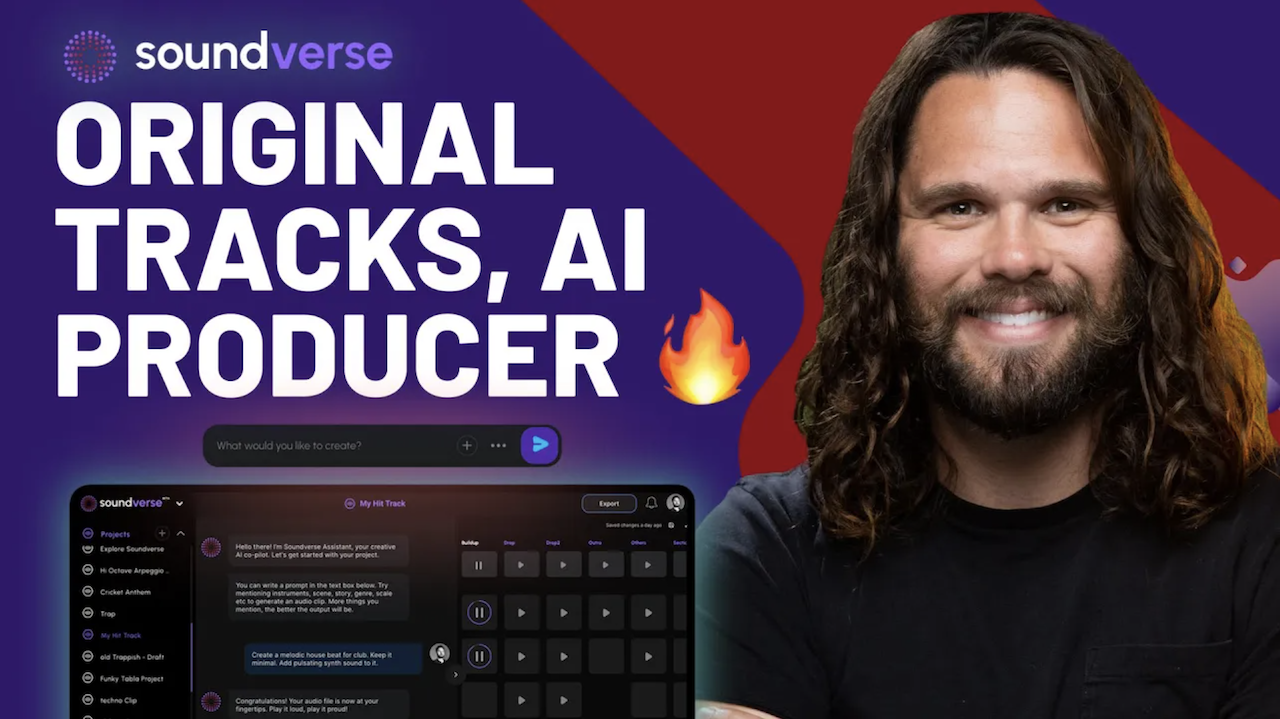
Here’s another long walkthrough of how to use Soundverse AI.
Text Guide
- To know more about AI Magic Tools, check here.
- To know more about Soundverse Assistant, check here.
- To know more about Arrangement Studio, check here.
Soundverse is an AI Assistant that allows content creators and music makers to create original content in a flash using Generative AI. With the help of Soundverse Assistant and AI Magic Tools, our users get an unfair advantage over other creators to create audio and music content quickly, easily and cheaply. Soundverse Assistant is your ultimate music companion. You simply speak to the assistant to get your stuff done. The more you speak to it, the more it starts understanding you and your goals. AI Magic Tools help convert your creative dreams into tangible music and audio. Use AI Magic Tools such as text to music, stem separation, or lyrics generation to realise your content dreams faster. Soundverse is here to take music production to the next level. We're not just a digital audio workstation (DAW) competing with Ableton or Logic, we're building a completely new paradigm of easy and conversational content creation.
TikTok: https://www.tiktok.com/@soundverse.ai
Twitter: https://twitter.com/soundverse_ai
Instagram: https://www.instagram.com/soundverse.ai
LinkedIn: https://www.linkedin.com/company/soundverseai
Youtube: https://www.youtube.com/@SoundverseAI
Facebook: https://www.facebook.com/profile.php?id=100095674445607
Join Soundverse for Free and make Viral AI Music
We are constantly building more product experiences. Keep checking our Blog to stay updated about them!