Who Created Metal Music: Tracing the Origin of Heavy Metal
Explore the origin of metal music, its early pioneers, and the evolution of heavy metal through history.
Who Created Metal Music
Metal music is one of the most powerful and expressive genres in modern history, known for its intensity, distorted guitars, and rebellious spirit. As we move through 2026, fans still debate who truly created metal music and which artists first defined this iconic sound. To understand its roots, we must explore the origin of metal music, its social context, and the early innovators who transformed rock into something heavier and more ferocious.
What Is the Origin of Metal Music?
The origin of metal music can be traced back to the late 1960s and early 1970s in the United Kingdom and parts of the United States. While many bands contributed to its formation, the consensus among historians and music critics points to a few groundbreaking groups that laid the foundation of the genre. Heavy metal arose as an evolution of blues rock and psychedelic rock, infused with darker themes and louder instrumentation. This period marked the beginning of what would later be called heavy metal, a term that came to symbolize the densest, most powerful form of rock.

The Social and Musical Context of Early Metal
Metal was not born in isolation—it grew from the industrial landscapes of cities like Birmingham, England, where bleak working-class life and mechanical noise inspired tougher music. Bands in these environments tuned their guitars lower, added distortion, and wrote lyrics about reality's darker sides. The late 1960s brought the rise of amplifiers capable of more extreme gain, allowing musicians to craft that aggressive tone that defined the future of heavy metal.
Who Were the Founders of the Metal Genre?
The founders of the metal genre are often considered to be Black Sabbath, Deep Purple, and Led Zeppelin. Each of these bands contributed key elements to what we now identify as metal.
- Black Sabbath is frequently cited as the first true heavy metal band. Their debut album in 1970 introduced eerie, minor-toned riffs and lyrical themes dealing with occultism, death, and despair—subjects rarely touched in other forms of rock.
- Deep Purple added high-speed instrumental passages and virtuosic guitar solos, expanding the genre’s technical landscape.
- Led Zeppelin, although more rooted in blues, influenced countless future metal bands with their use of distortion and mythic storytelling.
These acts collectively forged the blueprint for the metal sound: thick guitar distortion, emphatic drum patterns, and confrontational lyrical content.

How Did Early Metal Bands Shape the Genre?
Early metal bands defined the foundation upon which subgenres would emerge. The history of heavy metal reflects constant reinvention, from the doom-laden riffs of Black Sabbath to the melodic twin guitars of Judas Priest. By the late 1970s, the genre had solidified its identity, and newer groups like Iron Maiden and Motörhead accelerated its evolution.
The New Wave of British Heavy Metal (NWOBHM) movement in the late 1970s and early 1980s gave rise to faster tempos and more elaborate compositions. Bands from this era integrated technical proficiency, establishing metal as both an art form and cultural statement. Across the Atlantic, Metallica and Slayer introduced even heavier, thrash-oriented styles during the early 1980s, expanding the genre globally.
What Were the Key Influences on Heavy Metal?
Heavy metal borrowed elements from blues, classical, and psychedelic rock. The genre’s complexity came partially from classical music’s structural discipline. Guitarists like Ritchie Blackmore and Randy Rhoads incorporated scales and motifs reminiscent of Bach and Paganini, creating sophisticated musical frameworks.
Cultural influences further shaped metal. Post-war Britain’s industrial atmosphere, the counterculture of the 1960s, and rising political unrest inspired musicians to channel aggression and disillusionment into sound. American scenes later adapted this intensity to social issues like rebellion, freedom, and individualism.
For a deeper exploration of how modern innovation reshapes traditional genres, see related discussions like how AI-generated music is transforming the music industry and the most popular music genres. Both articles outline how technology continues influencing musical creativity.
How Did Metal Evolve Across the Decades?
The evolution of metal music spans over five decades, with each era adding new layers:
- Early 1970s: Foundational metal albums from Sabbath, Purple, and Zeppelin.
- 1980s: Emergence of subgenres like thrash (Metallica, Megadeth), glam (Mötley Crüe, Def Leppard), and power metal (Helloween).
- 1990s: Expansion into death, black, and industrial metal with bands like Pantera and Nine Inch Nails leading heavier experimentation.
- 2000s: Fusion with alternative and electronic sounds introduced new audiences to metal.
- 2020s: AI collaboration and digital soundscapes transform music creation, exemplifying how technology and artistry now coexist.
As of 2026, metal maintains a strong global presence, thriving both in underground scenes and in mainstream concerts. Artists continue to blend metal with other genres—electronic, folk, symphonic—showing that its evolution is far from over.
For further insights into composition and experimentation, explore our Soundverse Tutorial Series - How to Make Music, which breaks down modern approaches to AI-driven sound design.
Why Is the Origin of Metal Music Important Today?
Understanding where metal came from provides insight into how it continues to evolve. The genre remains a cultural phenomenon that represents intensity, authenticity, and freedom of expression. In the context of 2026, as digital production tools redefine composition, many creators look back to metal’s roots for inspiration—seeking its raw energy and uncompromising nature.
By revisiting the bands and trends that gave birth to heavy metal, modern producers learn how emotion and innovation can coexist within a single track. This historical understanding is essential for today’s AI-powered sound design, where algorithms now emulate the passion that defined early metal.
How to Make Metal Music with Soundverse AI Music Generator
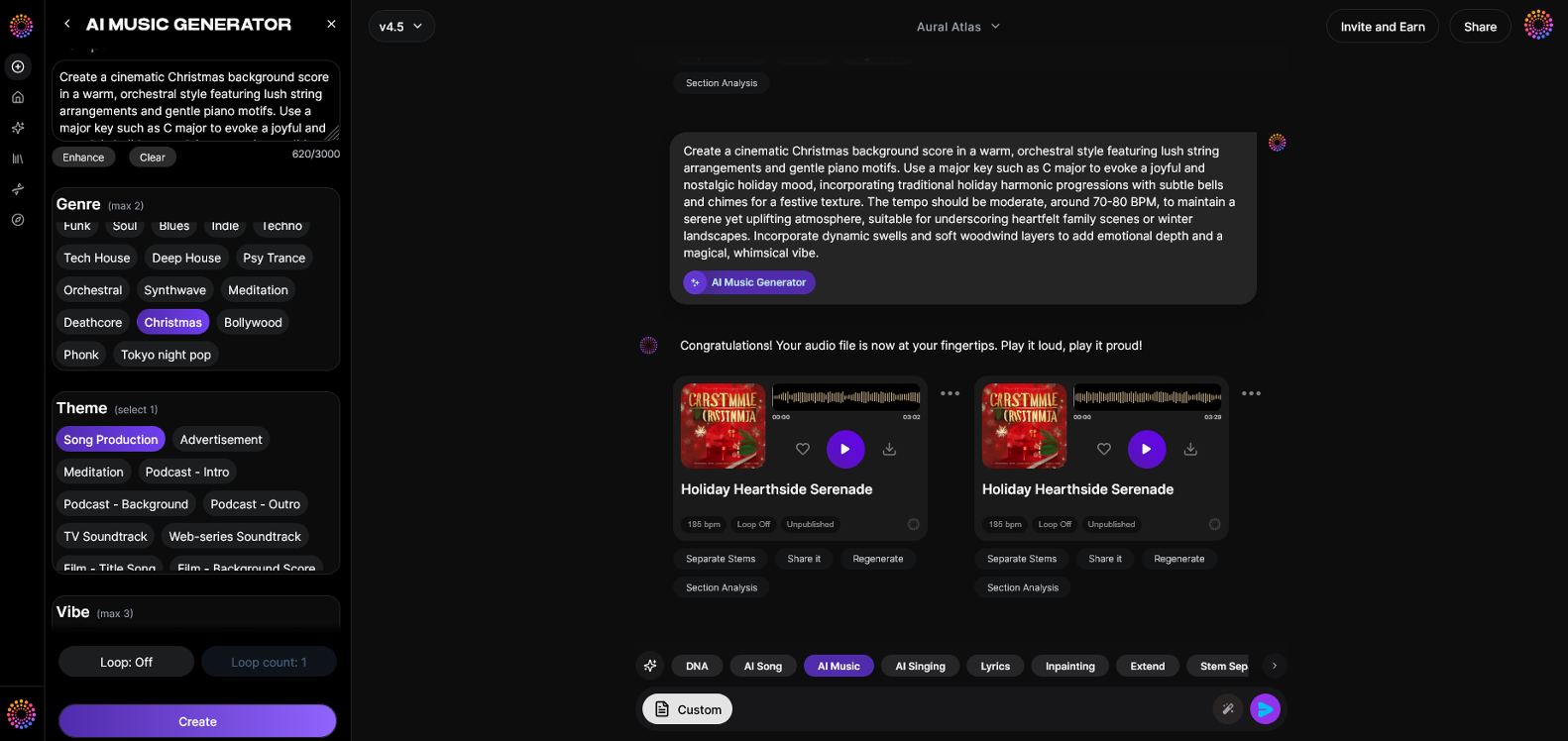
Soundverse offers creators a chance to channel the same intensity and depth that birthed metal’s earliest riffs. With its AI Music Generator, you can create fully produced instrumental tracks from text prompts. The feature specializes in building intricate soundscapes, rhythmic beats, and dynamic environments—all without vocals.
Using Soundverse, musicians and developers have full control over genre, mood, and instrumentation. The Loop Mode ensures seamless repetition for use in videos, games, or meditative arrangements. It operates asynchronously: users provide text prompts, select style and duration, and allow the AI to process the composition using its V4 or V5 model options.
If you’re exploring heavy metal sound creation, or even hybrid metal-electronic styles, Soundverse can help you craft instantly usable audio for projects. Check out create metal music with AI or discover how Soundverse acts as your AI music co-producer in Soundverse Assistant.
Why Artists Choose Soundverse in 2026
- Creative Freedom: Transform text descriptions into complex music.
- Genre Precision: Specify instruments like distorted guitars or double bass drums.
- Seamless Integration: Ideal for short loops or long-form background scoring.
- Cross-Platform Utility: Suitable for gaming, video content, or experimental sound art.
Soundverse has become a leading force in AI composition, complementing discussions on tools like Mubert alternatives and Soundraw alternatives. These articles illustrate how Soundverse is redefining what’s possible in digital music.
Create Your Own Metal Tracks with Soundverse AI
Experience the evolution of metal music by generating powerful riffs and intense instrumentals effortlessly. Soundverse AI lets you channel the raw energy of classic metal and craft your own sonic masterpiece in minutes.
Start Creating Metal Music
Related Articles
- Create Metal Music with AI — Discover how to produce authentic metal tracks with the help of AI tools designed for heavy genres.
- The Role of AI Music in Film and Television — Explore how AI-generated music is revolutionizing soundtracks for the big and small screens.
- How AI-Generated Music Is Transforming the Music Industry — Learn how artificial intelligence is shaping the future of music production and creativity.
- What AI Can Generate Songs — Find out which AI tools can help you create professional-quality tracks across multiple genres, including metal.
Here's how to make AI Music with Soundverse
Video Guide

Here’s another long walkthrough of how to use Soundverse AI.
Text Guide
- To know more about AI Magic Tools, check here.
- To know more about Soundverse Assistant, check here.
- To know more about Arrangement Studio, check here.
Soundverse is an AI Assistant that allows content creators and music makers to create original content in a flash using Generative AI. With the help of Soundverse Assistant and AI Magic Tools, our users get an unfair advantage over other creators to create audio and music content quickly, easily and cheaply. Soundverse Assistant is your ultimate music companion. You simply speak to the assistant to get your stuff done. The more you speak to it, the more it starts understanding you and your goals. AI Magic Tools help convert your creative dreams into tangible music and audio. Use AI Magic Tools such as text to music, stem separation, or lyrics generation to realise your content dreams faster. Soundverse is here to take music production to the next level. We're not just a digital audio workstation (DAW) competing with Ableton or Logic, we're building a completely new paradigm of easy and conversational content creation.
TikTok: https://www.tiktok.com/@soundverse.ai
Twitter: https://twitter.com/soundverse_ai
Instagram: https://www.instagram.com/soundverse.ai
LinkedIn: https://www.linkedin.com/company/soundverseai
Youtube: https://www.youtube.com/@SoundverseAI
Facebook: https://www.facebook.com/profile.php?id=100095674445607
Join Soundverse for Free and make Viral AI Music

We are constantly building more product experiences. Keep checking our Blog to stay updated about them!