Who Created Hip Hop: Exploring the Origin of Hip Hop Culture
Discover the origin of hip hop, DJ Kool Herc’s role, and Bronx beginnings defining hip hop history.
Who Created Hip Hop
Hip hop is more than just music—it’s a global cultural movement that shaped art, dance, and social identity for over five decades. As we explore the origin of hip hop, one name stands above the rest: DJ Kool Herc, whose Bronx block parties in the early 1970s sparked a revolution that transformed urban creativity forever.
What is the origin of hip hop?
The origin of hip hop can be traced back to the Bronx, New York City, during the early 1970s. In the aftermath of urban decline and social upheaval, young people sought expressive outlets to tell their stories, release tension, and find community. Streets that were plagued with poverty and neglected by city officials became fertile ground for artistic innovation. It was in this climate that the birth of hip hop culture took place.
Hip hop wasn’t born in a recording studio—it was born on the streets, in community centers, and at block parties. The first hip hop gatherings featured DJs playing funk, soul, and disco records while emphasizing the drum breaks—the rhythmic heart of each song that dancers loved. This innovation of isolating and looping breaks gave rise to breakdancing and the extended instrumental sections that defined early rap music.
Who is DJ Kool Herc and why is he recognized as the father of hip hop?
Clive Campbell, known as DJ Kool Herc, is widely regarded as the father of hip hop. He immigrated from Jamaica to the Bronx in the late 1960s and brought with him the sound system culture of Kingston—large speakers, rhythmic toasts, and dance-driven gatherings. In 1973, during a back-to-school party for his sister Cindy at 1520 Sedgwick Avenue, Kool Herc introduced the technique that became foundational to hip hop: the "breakbeat." Using two turntables, he extended the percussive parts of a song by switching back and forth between copies of the same record, creating seamless loops that allowed dancers, known as B-boys and B-girls, to show off their most expressive moves.
That first Bronx party is often marked as the birth of hip hop. It established the blueprint for what would become an entire culture encompassing four pillars: DJing, MCing (or rapping), B-boying (breakdancing), and graffiti art.
How did the Bronx shape the birth of hip hop culture?
During the 1970s, the Bronx was undergoing transformation. The city faced economic recession, crime, and decay. Yet the struggles also spurred creativity. Artists transformed abandoned spaces into art canvases and musical stages. Bronx hip hop beginnings became synonymous with innovation through adversity, marking the roots of a cultural revolution.
Community leaders, youth crews, and DJs collaborated to organize events that were safe spaces for expression. Hip hop quickly became not just entertainment but a way of uniting different neighborhoods. DJ Kool Herc’s innovations inspired successors like Afrika Bambaataa and Grandmaster Flash, who expanded the genre’s reach and technical artistry.
Afrika Bambaataa introduced the concept of hip hop as a universal culture built around peace, unity, love, and having fun. He also founded the Universal Zulu Nation, creating a spiritual and social framework for hip hop. Meanwhile, Grandmaster Flash pushed DJ technology further, refining turntable techniques like backspinning, cutting, and mixing, laying the groundwork for modern DJing.
What key milestones define the history of hip hop?
The history of hip hop can be divided into several defining stages:
- Early 1970s: The Bronx birth of hip hop, led by DJ Kool Herc’s block parties that emphasized breakbeats.
- Late 1970s: MCing evolved from party shout-outs to rhythmic storytelling. Crews like The Furious Five and The Cold Crush Brothers began performing with structured lyrical content.
- 1980s: Hip hop entered mainstream culture through records like Rapper’s Delight by The Sugarhill Gang, which marked the genre’s first commercial hit. This decade also saw breakdancing and graffiti gain international attention.
- 1990s: The golden age brought lyrical complexity, social commentary, and diverse styles across regions. Artists like Tupac, Biggie, and Nas deepened the genre’s cultural impact.
- 2000s–2020s: Hip hop evolved into a worldwide phenomenon, influencing fashion, film, and digital media. By 2026, hip hop remains one of the top global musical genres, continuously reinventing itself through technology and collaboration.
For those exploring more about modern music advances, consider reading How AI-Generated Music is Transforming the Music Industry and Music Industry Trends for insights on today’s shifts influencing hip hop production. For a deeper dive, watch our guide on creating Deep House music or learn how to make music with Soundverse AI.
What are the main elements of hip hop culture?
Hip hop’s core pillars developed organically as expressions of creativity:
- DJing: The art of mixing and scratching records to create continuous music.
- MCing (Rapping): Vocal rhythm and rhyme reflecting experiences and social commentary.
- B-boying (Breakdancing): Dynamic dance showcasing strength, rhythm, and agility.
- Graffiti Art: Visual language that claimed neglected spaces and expressed identity.
Together, these elements built an all-encompassing cultural identity that remains alive and evolving in 2026.
How have hip hop pioneers impacted global music?
The hip hop pioneers of the Bronx not only created a genre but a global movement. Their techniques became the foundation for almost every modern music style—from pop to electronic dance music. Sampling, looping, and beat-making are now core techniques in mainstream production, all tracing back to those early days with DJ Kool Herc and Grandmaster Flash.
Today, producers and creators around the world use technology to emulate the innovation of those early DJs. Tools like Soundverse enable a new generation to experiment with rhythm, style, and production versatility much like hip hop’s founders did—this time, powered by artificial intelligence.
How to make hip hop beats with Soundverse AI Music Generator
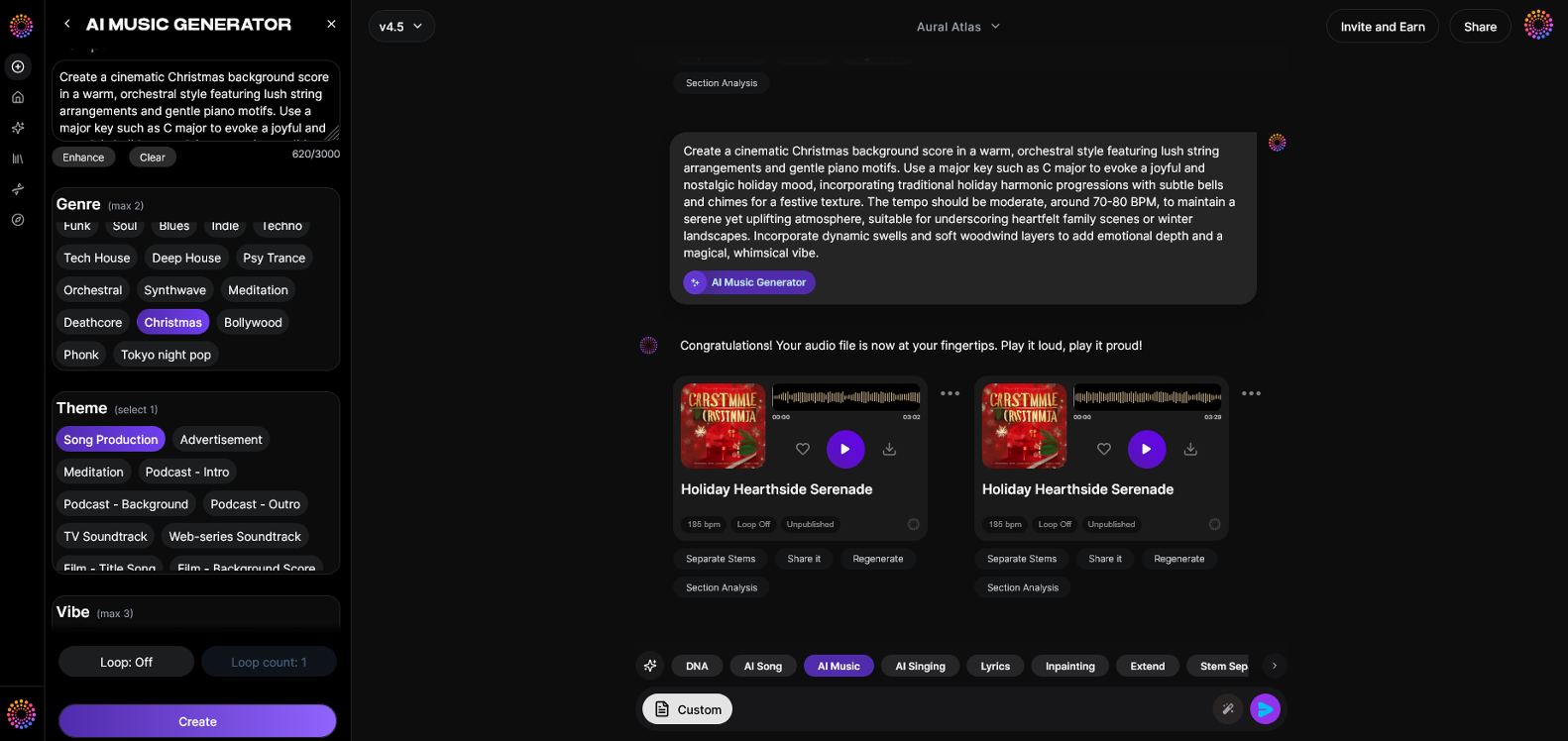
Soundverse empowers creators to channel the spirit of early Bronx innovation in limitless modern ways. Using the Soundverse AI Music Generator, you can create fully produced instrumental hip hop tracks simply by entering a text prompt.
Soundverse’s text-to-music system allows you to describe the mood, rhythm, and instrumentation you want. Want a gritty Bronx-style beat with deep drums and urban atmosphere? Just input your desired vibe, choose loop mode for seamless repetition, and let Soundverse’s AI handle the rest. The platform’s V4 and V5 Models provide detailed control over genre, mood, and instruments, ideal for generating hip hop backgrounds or rhythmic soundscapes for videos, games, or advertisements.
For more inspiration, explore Generate AI Music with Soundverse Text-to-Music and How to Create Rap Music with AI to discover workflow advantages when crafting beats inspired by hip hop history.
Soundverse also integrates with related tools such as the Similar Music Generator, which helps users match vibe-specific reference tracks, and the Section Analysis tool, automatically labeling song parts like intro, verse, and bridge. These features give creators precision in structure—something DJ Kool Herc pioneered manually by manipulating vinyl breaks.
Whether making beats for your creative projects or exploring the cultural evolution of hip hop, tools like Soundverse connect today's technology with the creative energy born in Bronx block parties decades ago.
Create Music That Pays Tribute to Hip Hop’s Roots
Use Soundverse AI to bring your beats to life. Generate authentic tracks inspired by the origin of hip hop and shape your sound with precision and creativity.
Related Articles
- How to Create Rap Music with AI — Discover how AI tools can help you produce rap music that reflects the raw energy and creativity of hip hop culture.
- How to Make Good Rap Lyrics — Learn tips and techniques to write impactful rap lyrics that tell your story and connect with audiences.
- Generate AI Music with Soundverse Text-to-Music — Turn your words into full tracks instantly using Soundverse’s advanced text-to-music generator technology.
- AI Music Generator and Human Composers: A Future Together — Explore how AI music tools and human creativity complement each other to shape the future of sound.
Here's how to make AI Music with Soundverse
Video Guide
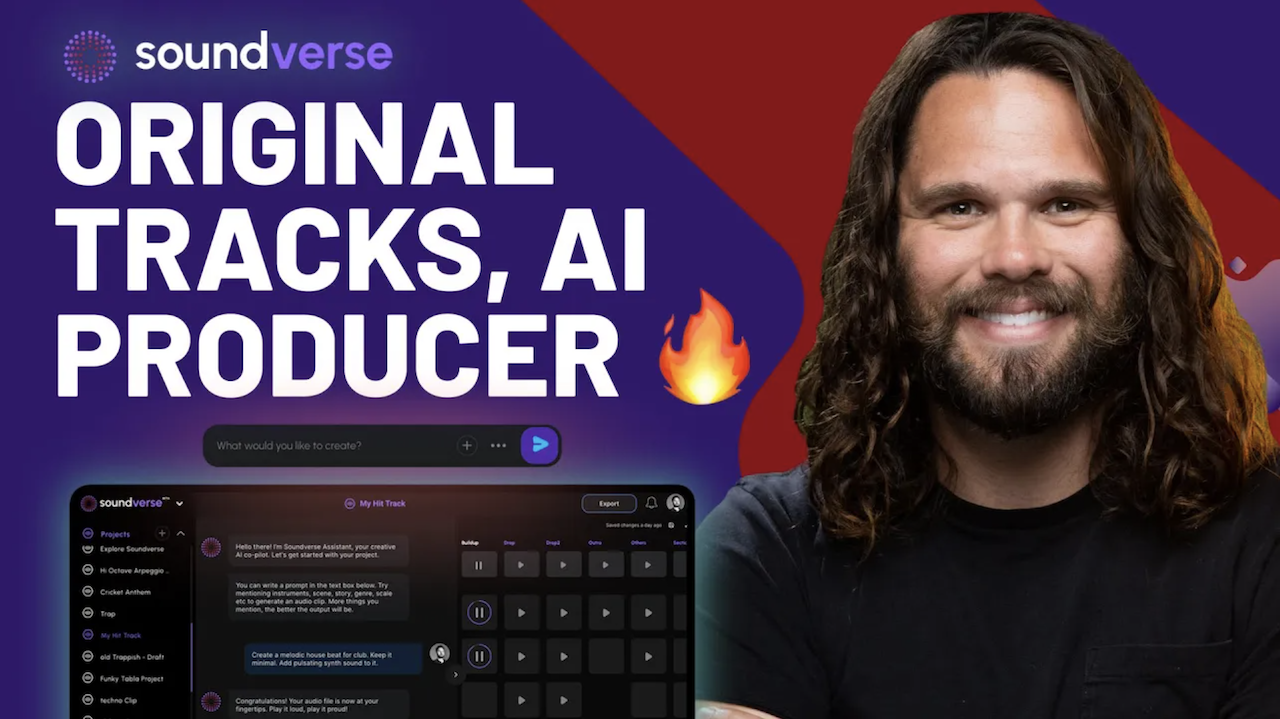
Here’s another long walkthrough of how to use Soundverse AI.
Text Guide
- To know more about AI Magic Tools, check here.
- To know more about Soundverse Assistant, check here.
- To know more about Arrangement Studio, check here.
Soundverse is an AI Assistant that allows content creators and music makers to create original content in a flash using Generative AI.
With the help of Soundverse Assistant and AI Magic Tools, our users get an unfair advantage over other creators to create audio and music content quickly, easily and cheaply.
Soundverse Assistant is your ultimate music companion. You simply speak to the assistant to get your stuff done. The more you speak to it, the more it starts understanding you and your goals.
AI Magic Tools help convert your creative dreams into tangible music and audio. Use AI Magic Tools such as text to music, stem separation, or lyrics generation to realise your content dreams faster.
Soundverse is here to take music production to the next level. We're not just a digital audio workstation (DAW) competing with Ableton or Logic, we're building a completely new paradigm of easy and conversational content creation.
TikTok: https://www.tiktok.com/@soundverse.ai
Twitter: https://twitter.com/soundverse_ai
Instagram: https://www.instagram.com/soundverse.ai
LinkedIn: https://www.linkedin.com/company/soundverseai
Youtube: https://www.youtube.com/@SoundverseAI
Facebook: https://www.facebook.com/profile.php?id=100095674445607
Join Soundverse for Free and make Viral AI Music

We are constantly building more product experiences. Keep checking our Blog to stay updated about them!