Which Artists Have Banned AI Use of Their Voices?
Discover which artists are enforcing AI voice bans in 2026 and how Soundverse Trace supports ethical voice protection.
Which Artists Have Banned AI Use of Their Voices?
In 2026, the conversation around artists banning AI voice use has transformed from niche debate to mainstream industry policy. As AI-generated vocals became more realistic and widely used across social platforms, musicians and rights-holders have started drawing the line between artistic innovation and unlawful imitation. This shift has been fueled by public cases of voice cloning, deepfakes, and concerns about exploitation without consent.
Why Have Artists Started Banning AI Voice Use?
The rise of generative music systems in 2024 and 2025 led to a surge in deepfake songs mimicking famous voices. While platforms such as Soundverse led with ethical frameworks, others used unlicensed data, leaving artists vulnerable. In 2026, more musicians are taking control of their vocal likeness—demanding clarity on how their voices are used in AI training and output generation.

The move is not only about copyright. It is about identity protection. A voice is personal, emotional, and integral to an artist’s brand. Unauthorized replication can distort reputation and affect royalty earnings, especially in a time when AI content virality determines streaming success.
Which Artists Have Officially Banned AI Use of Their Voices?
Several globally recognized performers have issued public and legal directives prohibiting their voices from being cloned or used by generative AI tools without approval. Among these are pop icons, major rappers, and influential producers. They represent different genres but share the same motivation: protecting creative integrity.

- Pop Superstars – Artists in this category have strict legal teams working to prevent AI voice replication. Many petitions and legal filings in 2025 led to public bans that continue to expand in 2026. They are setting the stage for future licensing models that prioritize consent.
- Hip-Hop and Rap Legends – Some rappers publicly rejected unauthorized voice cloning after fake singles surfaced on streaming platforms in late 2024. These cases highlighted the dangers of automatic viral spread when cloned tracks mimic signature delivery and lyrical cadence.
- Legacy Artists and Estates – Estates of late musicians now file explicit restrictions protecting historical catalogues and vocal archives from being ingested into generative machine learning datasets.
- Indie and Alternative Voices – Increasingly, smaller artists are joining the movement by licensing their voice directly through ethical AI programs instead of unlicensed scraping. They choose platforms supporting attribution and recurring payouts.
These decisions collectively form a new cultural standard—voice protection as a pillar of artist rights.
What Motivates Anti-AI Artists?
Anti AI artists are not opposed to technology itself—they oppose unethical use. Many support collaboration when it respects permission protocols. The distinction between cooperation and exploitation has become clear in 2026: use AI, but only with verified consent. The anti ai artist movement is both creative and defensive. It adds pressure to record labels and distributors to ensure transparency about training datasets. Ethical frameworks such as the Soundverse Content Partner Program demonstrate that fair compensation and creative control can coexist.
Anti ai artists emphasize the following guiding principles:
- Consent: No voice should be used in AI training without prior authorization.
- Attribution: Every sampled vocal or stylistic element must carry metadata linking to rightful owners.
- Royalty Ownership: Monetization must include recurring payout systems.
Together, these ideas move the industry toward responsible adoption of synthetic voice generation.
How the Music Industry Is Responding in 2026
Record labels and streaming platforms have started integrating voice protection protocols of their own. Legal departments now consider vocal likeness as intellectual property, not simply biometric data. In 2026, voice protection clauses appear in new recording contracts worldwide.
International organizations have also joined the conversation, advocating for regulation that treats voice cloning as a boundary requiring explicit consent. As music consumers grow more conscious about authenticity, the ethical incentives align with audience trust. Transparent AI music systems gain reputation, while opaque models face backlash.
Platforms like Soundverse are at the forefront of this transformation—promoting consent-driven collaboration between artists and machine learning developers. Readers exploring how these technological shifts influence artistry can also review detailed reports at Music Industry Trends for broader insights into ethical innovation across genres.
For additional context, Bandcamp’s AI-generated music ban in January 2026 further underscores how platforms are rejecting unlicensed synthetic content. Coverage from VICE and InsideHook reflects a growing consensus among creators focused on authenticity.
For creators interested in practical workflows, watch our Soundverse Tutorial Series – How to Make Music exploring consent-based production.
How to Make Voice Protection Ethical with Soundverse Trace
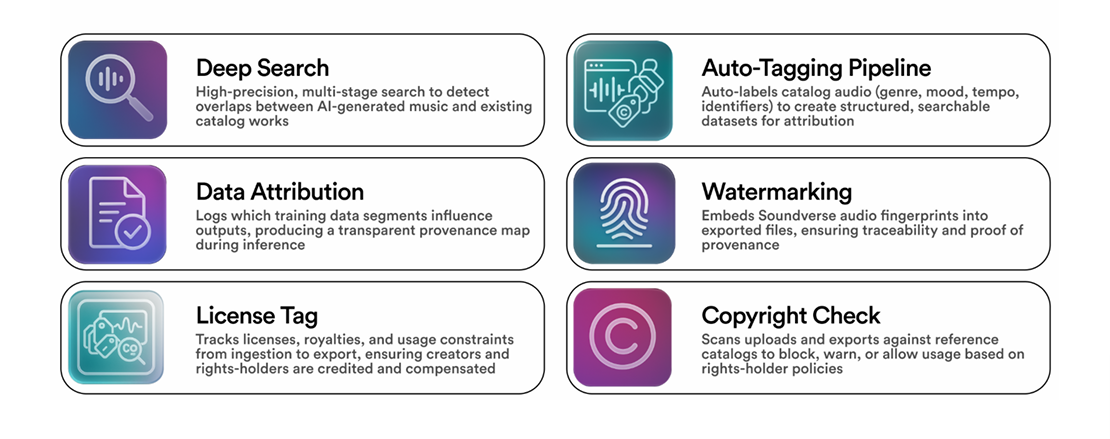
As artists banning AI voice use become more prevalent, the need for transparent rights assurance systems is essential. Soundverse Trace provides the foundation for ethical AI production. It is a comprehensive trust layer for AI music that embeds attribution, deep search, and rights protection across the entire lifecycle—from dataset creation to final export.
Soundverse Trace’s Deep Search scans audio datasets with precision, identifying overlaps between AI outputs and original recordings. Its Data Attribution system logs which input data influenced each generated result, offering auditability for rights-holders. Audio Watermarking embeds inaudible fingerprints inside every AI-rendered track, ensuring long-term traceability even after distribution. Finally, License Tagging preserves rights metadata from ingestion to export, maintaining complete protection for artist voices.
With these features, Soundverse Trace transforms AI output validation from guesswork into a verifiable record. Rights-holders can automate royalty tracking and initiate takedowns for violations without manual investigation.
This capability is changing the dynamics of voice protection in AI-generated music. Integrating Soundverse Trace with frameworks such as the Ethical AI Music Framework or Soundverse DNA opens opportunities for monetized collaboration—allowing artists to choose consent-based training participation rather than facing unlicensed imitation.
For a deeper dive into real project workflows, explore our guide on creating Deep House music and learn how transparent data attribution maintains creative control.
The Broader Context: Collaborating, Not Restricting
Even among artists banning AI voice use, a new discussion is emerging around selective collaboration. Opt-in systems provide ways to safeguard identities while exploring creative innovation. Programs like the Content Partner Program empower rights-holders to earn royalties when their voices are used in authorized AI projects. This is a proactive approach—turning what was once a threat into a new revenue channel built on transparency.
For those exploring sound evolution technologies further, related articles such as Generating AI Music with Soundverse Text-to-Music and Soundverse Assistant as Your AI Co-Producer provide insights into creating music ethically inside the AI ecosystem.
Protect Your Creative Voice in the AI Era
Join Soundverse and harness AI tools that respect creativity, empower artists, and give you full control over how your music and voice are used online.
Get Started with Soundverse
Related Articles
- How AI-Generated Music Is Transforming the Music Industry — Discover how AI is redefining music creation, production, and distribution for modern artists.
- AI Music Generator and Human Composers: A Future Together — Explore the collaborative possibilities between human creativity and AI-powered music tools.
- AI Music in the USA — Learn how AI-generated music is shaping regulations and creative practices across the United States.
- Soundverse Introduces Stem Separation AI Magic Tool — See how Soundverse’s AI tool lets you isolate vocals and instruments with precision and ease.
Here's how to make AI Music with Soundverse
Video Guide
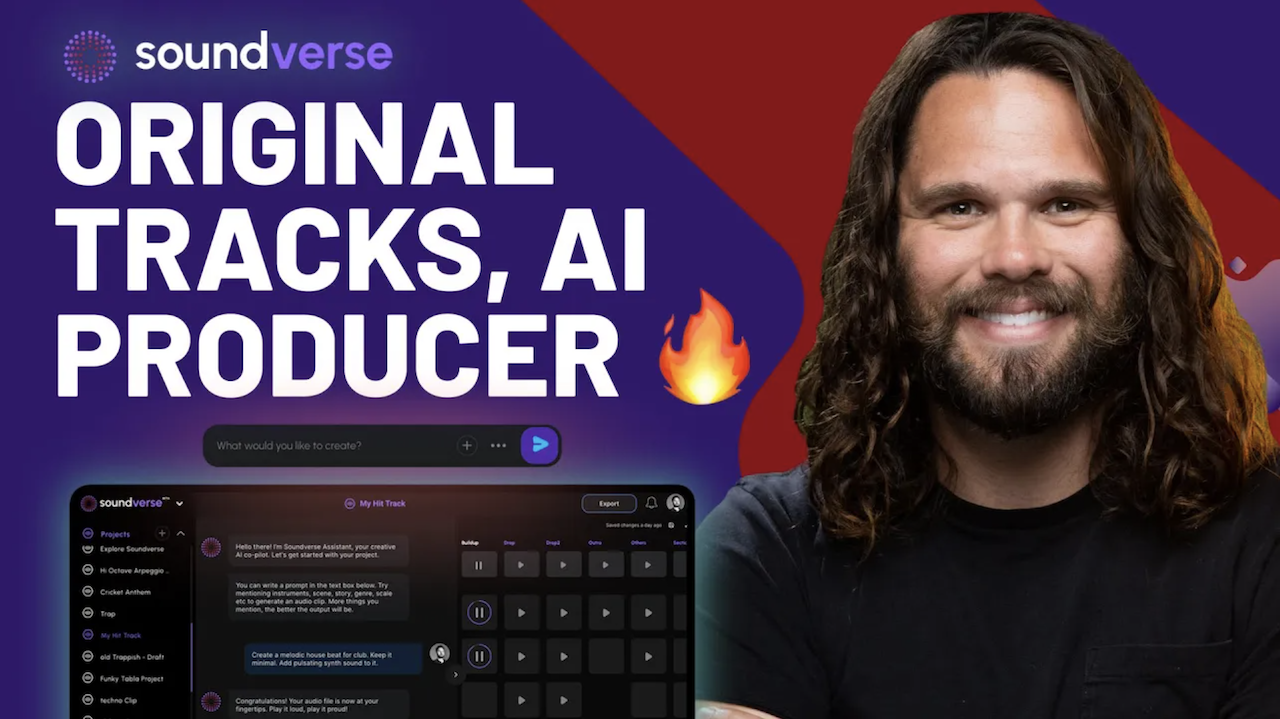
Here’s another long walkthrough of how to use Soundverse AI.
Text Guide
- To know more about AI Magic Tools, check here.
- To know more about Soundverse Assistant, check here.
- To know more about Arrangement Studio, check here.
Soundverse is an AI Assistant that allows content creators and music makers to create original content in a flash using Generative AI. With the help of Soundverse Assistant and AI Magic Tools, our users get an unfair advantage over other creators to create audio and music content quickly, easily and cheaply. Soundverse Assistant is your ultimate music companion. You simply speak to the assistant to get your stuff done. The more you speak to it, the more it starts understanding you and your goals. AI Magic Tools help convert your creative dreams into tangible music and audio. Use AI Magic Tools such as text to music, stem separation, or lyrics generation to realise your content dreams faster. Soundverse is here to take music production to the next level. We're not just a digital audio workstation (DAW) competing with Ableton or Logic, we're building a completely new paradigm of easy and conversational content creation.
TikTok: https://www.tiktok.com/@soundverse.ai
Twitter: https://twitter.com/soundverse_ai
Instagram: https://www.instagram.com/soundverse.ai
LinkedIn: https://www.linkedin.com/company/soundverseai
Youtube: https://www.youtube.com/@SoundverseAI
Facebook: https://www.facebook.com/profile.php?id=100095674445607
Join Soundverse for Free and make Viral AI Music

We are constantly building more product experiences. Keep checking our Blog to stay updated about them!
Image Steps: []