When Was Rap Music Created? Exploring the Origin of Rap Music from the Bronx to Global Fame
Discover the origin of rap music, its 1970s Bronx roots, and evolution into hip-hop culture.
When Was Rap Music Created?
Rap music, now a global cultural force and one of the most influential genres of the 21st century, has an origin story deeply rooted in creativity, resistance, and community. For anyone exploring the history of hip-hop or researching how music can evolve through social movements, understanding the origin of rap music is key. In this article, we take a closer look at how rap was born, who shaped its earliest forms, and how it has evolved into today’s expansive hip-hop scene by 2026.
What is the origin of rap music?
The origin of rap music traces back to the early 1970s in the Bronx, New York City. According to A Short History of Hip-Hop in the Bronx - NYC Tourism, August 11, 1973, is often pinpointed as the day hip-hop culture began. This era was marked by poverty, racial tension, and urban decay, but also an incredible explosion of creativity among young people. DJs such as Kool Herc, Afrika Bambaataa, and Grandmaster Flash began experimenting with breaks—segments of funk and soul records where percussion and rhythm dominated. By looping these instrumental sections, they created extended grooves for dancers. This technique became the heartbeat of the emerging hip-hop culture.
At block parties and park jams, the DJ was king, but soon MCs (Master of Ceremonies) began speaking rhythmically over the beats, hyping up the crowd and telling stories. These early rap verses—spontaneous, rhythmic, and often improvised—marked the birth of rap as a vocal art form distinct from traditional singing.

How did the 1970s hip-hop Bronx movement shape the genre?
The Hip-Hop in the Bronx scene of the 1970s laid the foundation for everything that followed. The Bronx was a melting pot of Caribbean sound system culture, African rhythms, and American funk. DJ Kool Herc, who migrated from Jamaica, transformed the idea of toasting (chatting rhythmically over beats) into a distinctly urban style. This interplay of cultures helped give rise to rap’s rhythmic speech patterns and emphasis on storytelling.
As hip-hop became more popular, the three core elements emerged—DJing, MCing, and breakdancing. Later, graffiti art was added, forming the four pillars of hip-hop culture. The history of hip-hop is therefore inseparable from the birth of rap culture; they grew together, influencing fashion, language, and attitudes. The History of Hip Hop in the Bronx - Arts in the City - YouTube documentary outlines how New York City can claim this international art form as its own.
Who were the early rap artists that defined the sound?
By the late 1970s and early 1980s, rap was moving beyond block parties into studios. Tracks like “Rapper’s Delight” by The Sugarhill Gang (1979) were pivotal in popularizing rap music internationally. Soon, pioneers such as Grandmaster Flash and the Furious Five brought deeper storytelling and social consciousness into their music. Run-DMC, LL Cool J, and Public Enemy expanded rap’s cultural and political reach through the 1980s.
These early rap artists demonstrated that rap was more than entertainment—it was a form of protest, identity expression, and community dialogue. Through rhythmic poetry and wordplay, they turned personal experience into universal messages. For more insights, explore the History of Rap & Hip-Hop - Timeline of African American Music, which documents early rap’s mainstream rise.
For more insights on how technology is influencing modern rap production, check out How AI-generated music is transforming the music industry and Music industry trends.
How has the evolution of rap music unfolded through the decades?
Rap music underwent multiple transformations during its 50-year lifespan. In the 1980s, rap became synonymous with hip-hop’s golden age—complex wordplay and intricate production defined classics from artists like Eric B. & Rakim and A Tribe Called Quest. The 1990s saw the genre diversify: East Coast lyricism and West Coast gangsta rap created distinct identities, while Southern hip-hop introduced new rhythms and slang.
By the 2000s, rap fused with pop, R&B, and electronic music, producing global stars and crossover hits. In the 2010s and early 2020s, streaming platforms democratized access, enabling independent artists worldwide to join the conversation. Now, in 2026, rap continues to dominate global charts, from experimental lo-fi and AI-assisted beats to politically charged underground movements. For example, the Listening Guide: 1970s Hip-Hop offers context for how early hip-hop evolved into today’s multi-genre forms.
For a broader look at how AI tools influence modern composition, read The benefits of composing with AI Music Generator and Best AI Music Generator: Top Picks and Review. For a deeper dive, watch our guide on how to make music and explore the Soundverse “Explore” Tab tutorials.
What was the cultural significance of early rap and hip-hop?
Rap was never just music—it was a social statement. In its early years, hip-hop addressed realities that mainstream media ignored: poverty, racial inequality, and systemic injustice. Through storytelling, MCs transformed local experiences into universal messages. The birth of rap culture also gave rise to unique fashion, slang, and visual art.
By 2026, universities across the globe teach rap history as part of cultural studies curricula. This shift reflects how deeply embedded hip-hop is in modern identity, language, and activism.
How has technology transformed rap creation in the modern era?
In the past two years (2024–2025), the integration of AI and digital music tools revolutionized the way artists produce rap beats and instrumentals. Tools like Soundverse allow creators to focus on lyrical storytelling while AI handles the sonic background.
For instance, Soundverse’s text-to-music AI can instantly create rap instrumental tracks using genre, mood, and rhythm descriptions—perfect for rappers, producers, or educators studying music evolution.
How to make rap-inspired music with Soundverse AI Music Generator
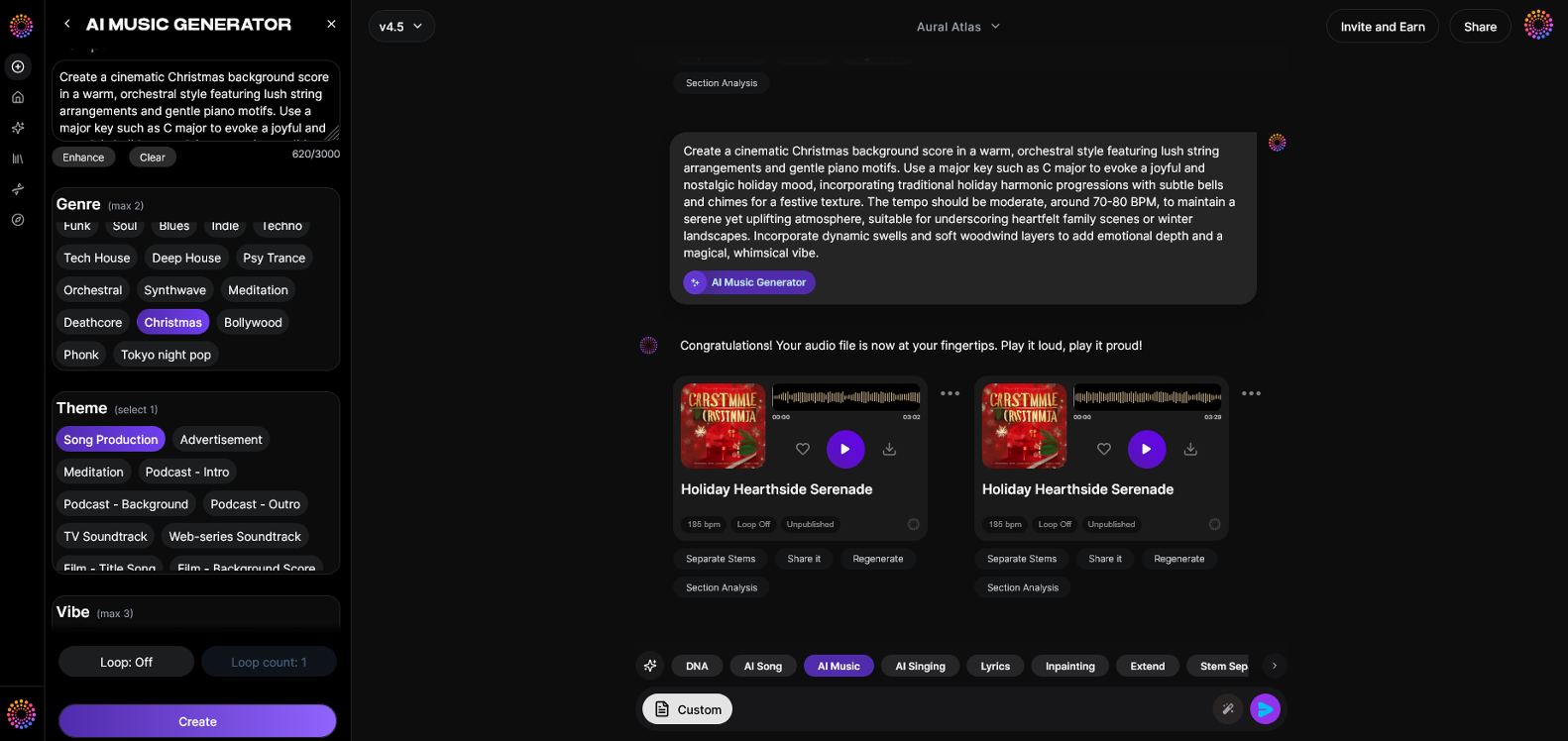
Soundverse’s AI Music Generator enables users to create fully produced instrumental tracks from simple text prompts. Unlike lyric-based platforms, this tool focuses on crafting background beats, loops, and full compositions without vocals—ideal for rap instrumentals and hip-hop soundscapes.
Core Capabilities:
- Text-to-music: Write a short description like “a 90s East Coast boom bap beat” or “modern trap rhythm with deep bass,” and the AI converts it into a full instrumental track.
- Loop Mode: Generate seamless loops perfect for freestyle sessions or video backgrounds.
- Control and flexibility: Choose detailed settings for genre, mood, and instruments to shape each beat.
- V4 and V5 Model options: Advanced composition engines for users seeking nuanced production outputs.
Primary Use Cases:
- Video and podcast background music
- Game and app soundtrack loops
- Meditation and wellness tracks with rhythmic elements
- Commercial scoring and advertising beats
Using Soundverse’s AI Music Generator, both emerging and professional creators can explore the roots of rap by generating beats reminiscent of the 1970s Bronx or modern trap productions. Combined with tools like the AI Singing Generator for acapella vocals or the AI Song Generator for full compositions, Soundverse offers an integrated ecosystem for producing music that mirrors the evolution of hip-hop.
Discover how to apply these tools in creative contexts by exploring How to create rap music with AI, Soundverse AI revolutionizing music creation for new-age content creators, and Generate AI music with Soundverse text-to-music.
Create Your Own Rap Tracks with AI Today
Experience the evolution of rap firsthand by generating beats and verses powered by Soundverse AI. Turn your inspiration into studio-quality music instantly and explore the future of sound creation.
Related Articles
- How to Create Rap Music with AI: Discover how Soundverse AI makes crafting authentic rap beats and flows easier than ever.
- How to Make Good Rap Lyrics: Learn the art of writing lyrics that resonate and elevate your rap tracks using creative techniques.
- Generate AI Music with Soundverse Text-to-Music: Turn your ideas into full-length songs using Soundverse's text-to-music generation tools.
- The Role of AI Music in Film and Television: Explore how AI-generated music enhances storytelling across film, TV, and digital media.
Here's how to make AI Music with Soundverse
Video Guide
Here’s another long walkthrough of how to use Soundverse AI.
Text Guide
- To know more about AI Magic Tools, check here.
- To know more about Soundverse Assistant, check here.
- To know more about Arrangement Studio, check here.
Soundverse is an AI Assistant that allows content creators and music makers to create original content in a flash using Generative AI. With the help of Soundverse Assistant and AI Magic Tools, our users get an unfair advantage over other creators to create audio and music content quickly, easily and cheaply. Soundverse Assistant is your ultimate music companion. You simply speak to the assistant to get your stuff done. The more you speak to it, the more it starts understanding you and your goals. AI Magic Tools help convert your creative dreams into tangible music and audio. Use AI Magic Tools such as text to music, stem separation, or lyrics generation to realise your content dreams faster. Soundverse is here to take music production to the next level. We're not just a digital audio workstation (DAW) competing with Ableton or Logic, we're building a completely new paradigm of easy and conversational content creation.
TikTok: https://www.tiktok.com/@soundverse.ai
Twitter: https://twitter.com/soundverse_ai
Instagram: https://www.instagram.com/soundverse.ai
LinkedIn: https://www.linkedin.com/company/soundverseai
Youtube: https://www.youtube.com/@SoundverseAI
Facebook: https://www.facebook.com/profile.php?id=100095674445607
Join Soundverse for Free and make Viral AI Music

We are constantly building more product experiences. Keep checking our Blog to stay updated about them!