When Was Dubstep Created? Tracing the History of Dubstep from Its UK Origins to Global Fame
Explore the origin of dubstep, its UK garage influence, and how Soundverse helps recreate similar sounds.
When Was Dubstep Created?
Dubstep stands as one of the most influential electronic genres of the 21st century, shaping modern bass music and influencing production styles across EDM, hip-hop, and pop. But when was dubstep created, and how did its distinct wobbling basslines and dark atmospheres emerge from London’s underground scene? This article dives deep into the history of dubstep, uncovering its origin, evolution, and the artists who pioneered it — alongside how platforms like Soundverse now help creators replicate and innovate on early dubstep aesthetics in 2026.
What Is the History of Dubstep?
The history of dubstep is rooted in the late 1990s and early 2000s London music scene. It evolved from the UK garage movement, itself a derivative of American house music mixed with Jamaican sound system culture. While UK garage was upbeat and soulful, a group of experimental producers started stripping away the vocals and focusing on darker, bass-heavy grooves. This experiment led to the earliest forms of dubstep around 1998–2002.
The term “dubstep” itself emerged to describe tracks that leaned more toward dub’s low-end rhythms rather than garage’s swing. In this sense, the history of dubstep reflects a cultural cross-pollination—a mixture of Jamaican dub engineering, British electronica, and urban grit from London’s South district. According to Red Bull, dubstep emerged parallel to grime around the turn of the century, shaped by London’s youth experimenting with bass frequencies.
What Was the Origin of Dubstep?
The origin of dubstep was mostly organic rather than corporate. Young producers and DJs in London—particularly from Croydon—were using limited gear to make deep, brooding tracks focused on sub-bass. Pioneering record shops like Big Apple Records became central to this underground revolution. Stereofox cites Croydon as dubstep’s birthplace, born from UK garage’s transformation.
Artists such as El-B, Horsepower Productions, Zed Bias, and Oris Jay helped carve the early templates of the genre by experimenting with rhythm patterns and bass frequencies that deviated from standard garage grooves. By 2001, the music press began acknowledging the emergence of a new style distinct from UK garage. The term “dubstep” appeared on promotional releases from the label Tempa, marking the genre’s official distinction. As Producertech notes, the boroughs of Croydon and Brixton played central roles in defining dubstep’s early cultural foundation.
How Did UK Garage Influence the Development of Dubstep?
UK garage’s influence on dubstep cannot be overstated. Garage’s use of shuffling hi-hats, syncopated beat structures, and expressive basslines gave dubstep its foundation. However, unlike garage—which emphasized vocal-driven and dancefloor tunes—dubstep slowed things down to around 140 BPM and focused more on instrumental mood.
Producers used dub techniques such as delay, reverb, and heavy low-end emphasis inspired by reggae sound system culture. This UK garage influence bridged the vibrant club scene with introspective sonic experimentation. It’s this combination that made early dubstep resonate with listeners who sought emotional depth and physical power in music. As detailed by Study.com, dubstep evolved from UK sound system traditions that defined rhythm and groove culture.
Who Were the Early Dubstep Artists?
Understanding the early dubstep artists helps define the genre’s identity. In Croydon, figures such as Skream, Benga, Hatcha, and Artwork formed the blueprint of what many people recognized as the first true dubstep movement. Their work, especially through the Big Apple Records store, became iconic.
Hatcha’s sets at the legendary club night “Forward>>” introduced audiences to unreleased dubs and exclusive tracks, making each performance feel immersive and exploratory. Digital Mystikz (Mala and Coki) later reinforced dubstep’s spiritual depth through their DMZ label, while producers like Loefah expanded the minimal aesthetic with darker, punchier drum programming.
These early dubstep artists defined the origin of dubstep both culturally and sonically. Their creative ethos led to the rise of the genre that would later dominate global stages. The timeline also aligns with insights from Wikipedia, placing dubstep’s origin in South London’s early 2000s experimental circles.
What Is the Dubstep Timeline?
Late 1990s: Dubstep’s story begins amid UK garage’s golden era. Producers like El-B and Horsepower Productions start merging garage rhythms with dub-inspired mixing.
2001: The word “dubstep” gains traction thanks to Tempa Records and the club “Forward>>.” Artists start producing tracks with strong bass emphasis and half-step rhythms.
2004–2006: Dubstep gains underground popularity. Burial, Digital Mystikz, and Skream become household names among electronic fans. The genre is featured in BBC Radio 1 programs and independent compilation releases.
2010–2012: Dubstep explodes globally. American producers like Skrillex and Flux Pavilion reinterpret the sound, adding aggressive midrange synths and cinematic drops—often referred to as “brostep.”
2013–2025: Dubstep fragments into multiple subgenres—post-dubstep, future garage, and deep dub. Many electronic musicians incorporate its techniques into pop and hip-hop.
2026: Today, dubstep continues to inspire innovation in AI-generated production and hybrid genres. Artists blend its principles with trap, techno, and jazz-inspired forms, creating limitless possibilities for sound design.
For a deeper dive into early electronic techniques, watch our Soundverse Tutorial Series - 10. Make Deep House Music or How to Make Music to learn how these production principles echo through AI tools today.
How Has the Evolution of Dubstep Sound Shaped Modern Music?
The evolution of dubstep sound symbolizes technology’s role in reshaping artistic identity. What began as a minimalist underground genre has evolved into a global sonic language. Its heavy bass design influenced soundtracks, advertisements, and even virtual reality music experiences.
This evolution saw traditional production methods merge with digital experimentation. Software synths like Massive and Serum contributed heavily to shaping the aggressive sound design of the 2010s. By 2026, creators now use AI-based platforms—such as Soundverse—to analyze, replicate, and transform classic dubstep vibes into entirely new expressions.
Dubstep’s continuous evolution stems from its foundational balance between simplicity and intensity. The genre thrives on contrast—slow rhythms countering high-energy, bold frequency modulation.
How to Make Dubstep-Inspired Instrumentals with Soundverse Similar Music Generator
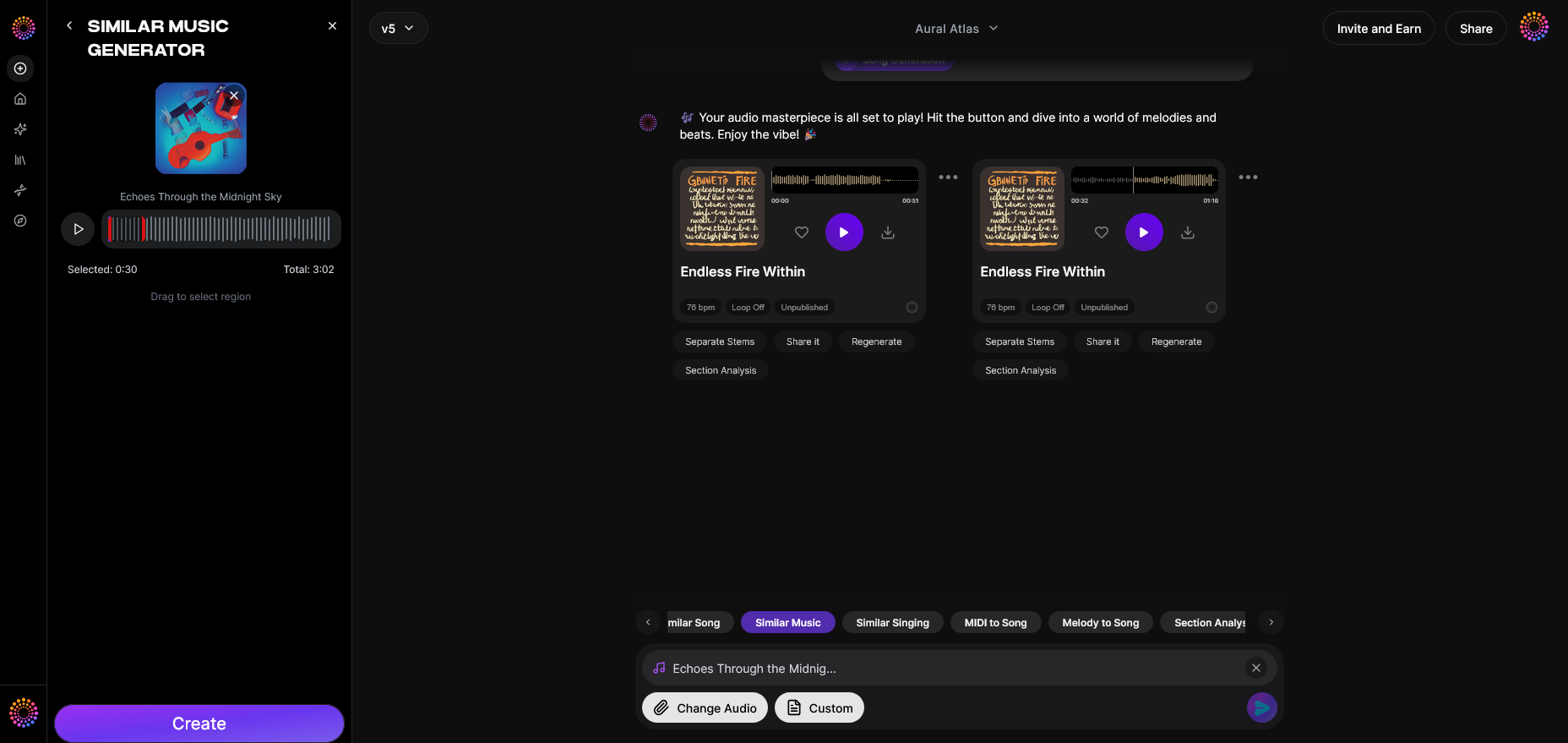
Soundverse’s Similar Music Generator brings the history of dubstep into the hands of modern creators. It produces original instrumental compositions inspired by a reference track, perfect for those who want the vibe of early dubstep without copying existing songs.
Core Functionality
- Instrumental Style Transfer: The system analyzes tempo, key, and mood from the reference track to craft authentic soundscapes similar to early dubstep productions.
- Detailed Musical Analysis: Whether you aim for Skream-style deep rhythms or DMZ-like atmospheric ambience, the tool interprets the track’s emotional pulse.
- Reference-Based Loop Creation: Film composers, game developers, and podcasters can generate loops inspired by underground bass culture.
Primary Use Cases
- Film and TV Scoring: Replace temporary music cues with original compositions maintaining the intended tension or intensity found in early dubstep.
- Game Environments: Create immersive sound designs that enhance dark, futuristic themes.
- Podcast Music: Produce intros or outros matching that unique, low-end dub sound.
Soundverse ensures all creations are royalty-free and original, ideal for projects exploring the evolution of dubstep sound through AI.
If your production requires an even broader range, explore the AI Music Generator for text-to-music compositions, or the Similar Song Generator when you need full vocal-ready tracks.
Create Your Own Dubstep Track with AI
Dive into the history of dubstep, then make your own beats instantly using Soundverse. Our AI-powered platform lets you generate unique, high-energy tracks in minutes—no production experience required.
Start Creating Now
Related Articles
- How to Create EDM with Soundverse AI – Learn to craft electrifying EDM tracks using AI tools designed for modern creators.
- How AI-Generated Music Is Transforming the Music Industry – Discover how artificial intelligence is reshaping music production, creativity, and sound innovation.
- Create Metal Music with AI – Unleash heavy riffs and dynamic sounds using AI tools that adapt to any metal style.
- Most Popular Music Genres – Explore the world’s most listened-to genres and their cultural influence through time.
Here's how to make AI Music with Soundverse
Video Guide
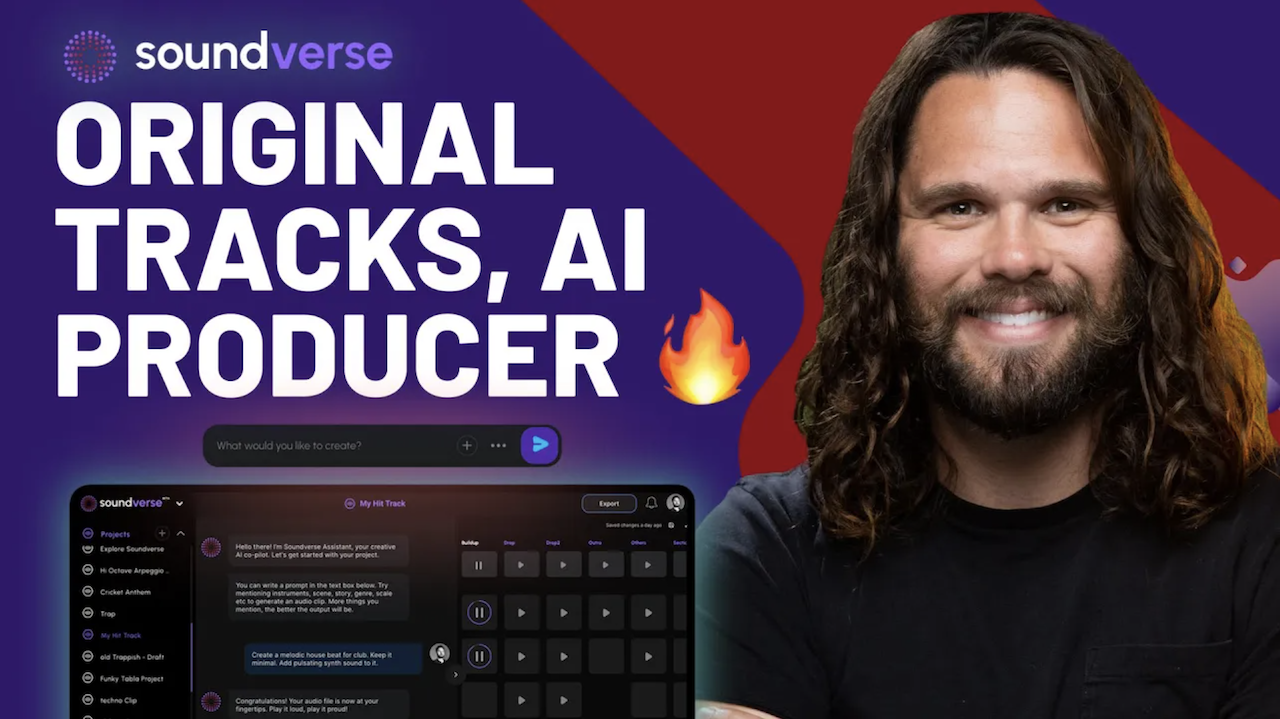
Here’s another long walkthrough of how to use Soundverse AI.
Text Guide
- To know more about AI Magic Tools, check here.
- To know more about Soundverse Assistant, check here.
- To know more about Arrangement Studio, check here.
Soundverse is an AI Assistant that allows content creators and music makers to create original content in a flash using Generative AI. With the help of Soundverse Assistant and AI Magic Tools, our users get an unfair advantage over other creators to create audio and music content quickly, easily and cheaply. Soundverse Assistant is your ultimate music companion. You simply speak to the assistant to get your stuff done. The more you speak to it, the more it starts understanding you and your goals. AI Magic Tools help convert your creative dreams into tangible music and audio. Use AI Magic Tools such as text to music, stem separation, or lyrics generation to realise your content dreams faster. Soundverse is here to take music production to the next level. We're not just a digital audio workstation (DAW) competing with Ableton or Logic, we're building a completely new paradigm of easy and conversational content creation.
TikTok: https://www.tiktok.com/@soundverse.ai
Twitter: https://twitter.com/soundverse_ai
Instagram: https://www.instagram.com/soundverse.ai
LinkedIn: https://www.linkedin.com/company/soundverseai
Youtube: https://www.youtube.com/@SoundverseAI
Facebook: https://www.facebook.com/profile.php?id=100095674445607
Join Soundverse for Free and make Viral AI Music

We are constantly building more product experiences. Keep checking our Blog to stay updated about them!