What Type of Music Makes You Feel Sad?
Explore sad music types and how emotional genres evoke feelings of melancholy and reflection.
What Type of Music Makes You Feel Sad?
Music has an extraordinary ability to influence our emotions. Whether it's the chill of a minor chord or the slow tempo of a ballad, certain melodies can make us feel a deep sense of melancholy. In 2026, researchers and music enthusiasts continue to study the impact of sound on mood, discovering new ways in which compositions evoke sadness, nostalgia, and empathy. Understanding sad music types helps us decode why certain genres and styles resonate when we are feeling low.
What are the main sad music types?
Sad music types often overlap with emotional music genres that emphasize slower tempos, soft dynamics, and minor keys. These characteristics collectively contribute to feelings of sorrow or reflection. The primary sad music types include:
- Classical Adagios – Pieces composed in slow tempo, often featuring strings and piano, are widely associated with sadness and introspection. Works from historical composers like Chopin or Beethoven use harmonic tension and resolution to create emotional depth. Even modern classical composers in 2026 continue to explore these elements digitally.
- Ambient and Downtempo – These genres use minimalism and extended notes to create space for emotional contemplation. Their subtle textures make them ideal for meditative reflection or emotional release.
- Soft Rock and Ballads – Ballads, whether acoustic or electric, traditionally express themes of heartbreak and loss. The slow rhythm and lyrical vulnerability make them one of the most recognizable depressing songs formats.
- Blues – Rooted in historical expression of pain and struggle, blues remains timeless in evoking sadness through nuanced guitar bends, emotional vocal phrasing, and storytelling.
- Indie Folk – Known for raw vocals and stripped-down instrumentation, indie folk embodies melancholy music that connects deeply with listeners who value authenticity.
- Lo-Fi Chill Tracks – A modern evolution of sad soundscapes blending nostalgic textures, tape crackles, and emotional chord progressions. In 2026, lo-fi remains widely used in study and relaxation playlists.
- Cinematic Soundtracks – Instrumental scores used in film and television provide emotional cues. Dramatic orchestration and evolving motifs help audiences empathize with on-screen emotion. The size of this genre in digital production has grown significantly over the past few years.
Why does music make us feel sad?
The connection between music and emotions is both psychological and physiological. Sad music triggers hormonal and neurological reactions that mirror real emotional experiences. It engages the limbic system – the part of the brain responsible for emotion – and stimulates empathy mechanisms. Research from 2024 and 2025 revealed that listening to melancholy music often activates similar brain regions that respond to grief or nostalgia, supported by findings from The pleasures of sad music: a systematic review.
By 2026, these insights have evolved in practical applications, such as emotional therapy and AI-assisted composition. Depressing songs may not just cause sadness; they can also promote emotional regulation and stress relief. As noted in Sad music study tests the direct effect hypothesis of 'pleasurable ..., listeners often report cathartic effects after hearing sorrowful melodies.
What are the core characteristics of sad songs?
Sad song characteristics vary by genre but share common technical and expressive foundations:
- Minor Keys – Minor scales and harmonic minor intervals tend to evoke feelings of tension and melancholy as discussed in The Tragedy Paradox: Why We Like Sad Music.
- Slow Tempo – Beats per minute (BPM) generally range between 60 and 80, emphasizing a reflective pace.
- Soft Dynamics – Gentle instrumentation and low volume contribute to emotional subtlety.
- Expressive Melodies – Melodies that rise and fall slowly mimic human speech patterns associated with sadness.
- Sparse Instrumentation – Reducing musical elements allows more emotional space for resonance.
- Empathetic Themes – Lyrical content or implied emotion often deals with loss, longing, or internal struggle.
Understanding these traits helps creators craft music that resonates deeply with emotional well-being audiences. Researchers also note interesting correlations between individual personality types and responses to certain emotional music genres.
How do emotional music genres differ in their sadness expression?
Different emotional music genres express sadness in distinctive ways:
- Classical focuses on compositional balance between dissonance and harmony. Emotional weight is conveyed through tempo and orchestration.
- Blues blends lyrical storytelling with instrumental phrasing. Each note carries narrative grief.
- Pop Ballads integrate emotional intensity with accessibility, making universal themes digestible for large audiences.
- Cinematic Scores depend on contextual emotion – the music amplifies narrative sadness in movies or games.
- Electronic Ambient emphasizes texture and tonal color rather than traditional melody, creating abstract sadness.
For beginners exploring these styles, you can watch our guide on creating music in Soundverse or explore the "Explore" Tab walkthrough for discovering emotional genres.
How has sad music evolved by 2026?
The evolution of sad music follows technological progress. Since 2024 and 2025, the use of AI in generating melancholy music has surged. Platforms now analyze emotions and translate them into instrumental soundscapes without lyrics. The boundary between composer and software continues to blur.
Artists and producers use advanced AI tools not only to reproduce emotion but also to innovate new forms of expression. For example, emerging models can transform text descriptions into fully produced tracks. The advancement has inspired creators worldwide to compose music aligned with mood-based themes such as grief, nostalgia, or longing. Trends from music industry 2026 studies show increasing interest in emotional authenticity, aided by machine learning.
How Soundverse AI Music Generator helps you create sad music instantly
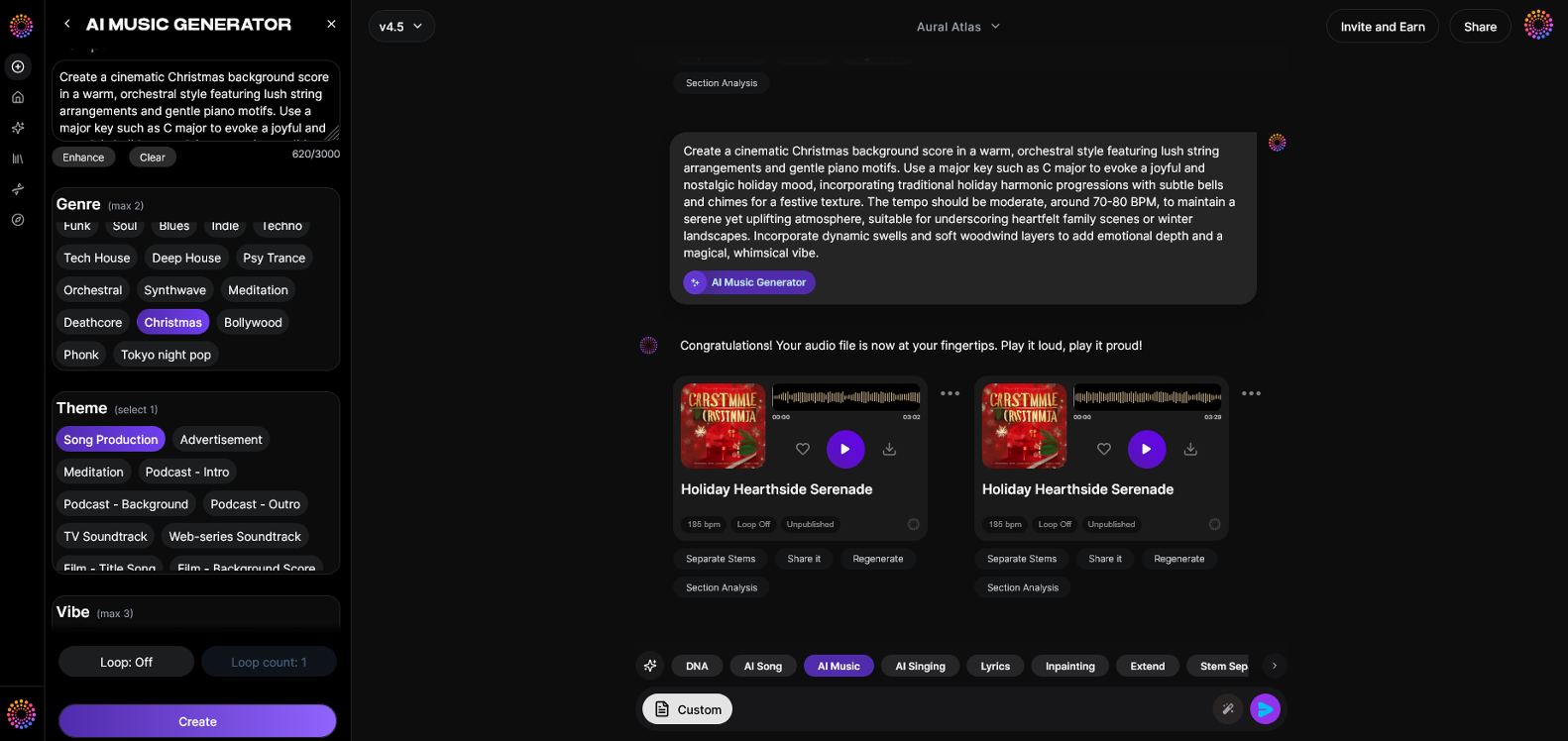
Now that you understand how emotional and sad music types influence listeners, here is how Soundverse makes it effortless to create your own.
The Soundverse AI Music Generator lets users transform text descriptions into instrumental compositions. It specializes in background tracks, beats, and immersive soundscapes without vocals. Users simply enter a mood or genre prompt describing the tone they want—such as "melancholy piano ambience" or "depressing cinematic strings"—and Soundverse generates a fully produced instrumental track.
Core Capabilities
- Text-to-Music Creation: Converts written descriptions into professional-quality compositions.
- Loop Mode: Produces seamless looping soundtracks ideal for meditation, relaxation, or film scenes.
- Detailed Control: Users can fine-tune genre, instruments, and emotional tone.
- Model Options (V4/V5): Ensures flexibility for different production needs and environments.
Whether you are producing a film, creating a meditative playlist, or researching emotional acoustics, these features simplify the generation process.
For those inspired by reference tracks, the Similar Music Generator builds new compositions that recreate a specific emotional atmosphere from a guide track. Meanwhile, the AI Song Generator adds vocal arrangements and lyrics, completing the emotional storytelling process.
You can explore how Soundverse compares to other platforms in articles such as Mubert alternatives, Soundraw alternative, and Best AI music tools. Each illustrates how Soundverse leads in mood-driven composition accuracy.
Create Emotionally Powerful Music with Soundverse AI
Transform your feelings into sound. Generate melodies that capture sadness, joy, or nostalgia in seconds using AI-powered composition tools designed for creators at every level.
Related Articles
- How to Create Healing Meditation Music with Soundverse AI — Discover how Soundverse AI helps you design calming and emotionally restorative music perfect for meditation or relaxation.
- Generate AI Music with Soundverse Text-to-Music — Learn how to turn your thoughts and emotions into fully produced music tracks using Soundverse's text-to-music generator.
- The Role of AI Music in Film and Television — Explore how AI compositions take center stage in creating emotionally rich soundtracks for movies and TV.
- Most Popular Music Genres — From blues to classical, uncover which music genres evoke specific emotions and how they influence listeners around the world.
Here's how to make AI Music with Soundverse
Video Guide

Here’s another long walkthrough of how to use Soundverse AI.
Text Guide
- To know more about AI Magic Tools, check here.
- To know more about Soundverse Assistant, check here.
- To know more about Arrangement Studio, check here.
Soundverse is an AI Assistant that allows content creators and music makers to create original content in a flash using Generative AI.
With the help of Soundverse Assistant and AI Magic Tools, our users get an unfair advantage over other creators to create audio and music content quickly, easily and cheaply.
Soundverse Assistant is your ultimate music companion. You simply speak to the assistant to get your stuff done. The more you speak to it, the more it starts understanding you and your goals.
AI Magic Tools help convert your creative dreams into tangible music and audio. Use AI Magic Tools such as text to music, stem separation, or lyrics generation to realise your content dreams faster.
Soundverse is here to take music production to the next level. We're not just a digital audio workstation (DAW) competing with Ableton or Logic, we're building a completely new paradigm of easy and conversational content creation.
TikTok: https://www.tiktok.com/@soundverse.ai
Twitter: https://twitter.com/soundverse_ai
Instagram: https://www.instagram.com/soundverse.ai
LinkedIn: https://www.linkedin.com/company/soundverseai
Youtube: https://www.youtube.com/@SoundverseAI
Facebook: https://www.facebook.com/profile.php?id=100095674445607
Join Soundverse for Free and make Viral AI Music

We are constantly building more product experiences. Keep checking our Blog to stay updated about them!