What Type of Music Is Considered Sad Music?
Explore sad music genres, melancholic songs, and emotional tracks that evoke sadness, plus how to create them using Soundverse AI.
What Type of Music Is Considered Sad Music?
Sad music is one of the most powerful forms of emotional expression in sound. Whether it’s a slow piano piece, a heart-wrenching orchestral composition, or a minimal ambient texture, sad music connects deeply with human emotions. But what type of music is truly considered “sad music,” and what makes a song or track evoke melancholy? In this guide, we’ll explore the science, psychology, and genres behind melancholic songs, as well as how creators in 2026 can produce emotional music instantly using Soundverse AI Music Generator.
What defines sad music?
Sad music refers to compositions that evoke feelings of sorrow, loss, loneliness, or introspection. These songs often have slow tempo tracks, soft instrumentation, and minor key harmonies. Unlike upbeat or high-energy music, sad music generally suppresses rhythm intensity and emphasizes harmony and melody to convey emotional depth. Decades of music psychology research confirm that the brain associates slower tempos and minor tonalities with sadness, while sustained notes and minimal percussion patterns reinforce a feeling of space and emotional weight.
In 2026, as emotional music continues to dominate cinematic production and digital content, creators are increasingly using AI tools to analyze and generate music that mirrors human emotional undertones. Soundverse, for example, allows users to create fully produced instrumental music from a simple text description, capturing moods such as “melancholic,” “nostalgic,” or “depressing.” This approach aligns with Soundverse AI’s guides on sad music creation, showing how AI can capture a wide range of feelings—from heartache to quiet reflection.
What genres are known for evoking sadness?
Certain genres are naturally inclined to evoke sadness due to their tonal structure, instrumentation, and performance style. Below are some of the genres most associated with sad music:
- Classical Adagio: Slow movements in classical symphonies—often composed in minor keys—represent some of the earliest examples of emotional composition. Composers like Chopin and Beethoven used tempo and harmony to express grief and longing.
- Blues: The blues evolved as an expressive form rooted in hardship, melancholy, and resilience, making it one of the most emotional genres. Its lyrical themes often revolve around personal pain and redemption.
- Ambient and Downtempo: Modern ambient tracks emphasize atmosphere and texture. Their sparse melodies and low-frequency drones create an immersive, introspective space that often feels melancholic.
- Indie and Alternative Rock: Indie artists frequently use subdued vocal tones and minimal arrangements to portray emotional vulnerability.
- Folk and Country Ballads: Country music frequently tells stories of heartache and loss through acoustic instrumentation and nostalgic lyrics.
- Film Soundtracks: In film scoring, sad music enhances emotional storytelling. Think of slow orchestral builds, string ensembles, and minor harmonies that accompany scenes of reflection, loss, or emotional turning points.
To learn more about how music genres evolved emotionally, explore this article on music industry trends from Soundverse.

What musical elements make a song feel sad?
While genre matters, musical structure plays an even larger role in evoking sadness. Here are the defining elements:
1. Tempo
Sad music typically features a slow tempo, around 60–80 beats per minute. This pacing mirrors a slower heartbeat and induces calm introspection.
2. Key and Harmony
Minor keys, diminished chords, and dissonant intervals are commonly used to create emotional tension. These tonal combinations psychologically associate with unease or longing.
3. Dynamics and Volume
Lower volume ranges and gradual crescendos build emotion subtly. Unlike fast, loud compositions, sad tracks use restraint to achieve emotional contrast.
4. Instrumentation
Piano, cello, violin, and acoustic guitar dominate sad music because their timbres carry strong emotional resonance. Ambient producers in 2026 often combine these with soft synth pads to create digital melancholy.
5. Rhythm and Space
Sparse percussion and longer note sustains enhance reflective moods. Modern producers often use reverb and delay to expand a track’s spatial depth.
If you are exploring textures like these, you might find inspiration in how to create music evoking the desert, where similar tonal isolation is discussed.
Why do people listen to sad music?
Psychologically, listening to sad music is paradoxical yet therapeutic. Studies show humans often engage with melancholic songs to process complex emotions safely. Sad music can:
- Stimulate empathy and emotional connection
- Help listeners reflect and release suppressed feelings
- Provide comfort through shared experience
- Support creative focus—especially for writers and artists
In 2026, AI research has progressed to identify emotional correlations in sound. Content creators, video editors, and game developers are using AI-generated emotional music to amplify storytelling impact. Soundverse AI’s research on music for mental health demonstrates how emotionally adaptive music supports well-being.
For more on production applications, watch our tutorial on how to make music from the Soundverse YouTube channel.
What are current trends in sad music (2026)?
Sad music in 2026 has evolved beyond traditional acoustic performances into hybrid digital compositions. Producers blend organic instruments with ambient textures generated by AI for emotional depth. Common trends include:
- Cinematic Minimalism: Sparse compositions with long reverberations create space for emotional intensity.
- AI-Assisted Emotional Scoring: Creators use AI tools to fine-tune emotional accuracy in compositions. Check out how AI-generated music is transforming the music industry.
- Cross-Genre Melancholy Fusion: Sad elements are merged into pop, electronic, and even hip-hop for storytelling variety.
- Loopable Background Moods: Loop-mode compositions are now common for meditation, documentaries, and cinematic YouTube content.
As Soft Media production expands, Soundverse continues to lead the way with AI-driven text-to-music creation that replicates human-expressed melancholy through non-vocal soundscapes.
For practical guidance, the Soundverse AI Music Generator App describes how to instantly compose emotional music for modern creators.
How to make sad music with Soundverse AI Music Generator
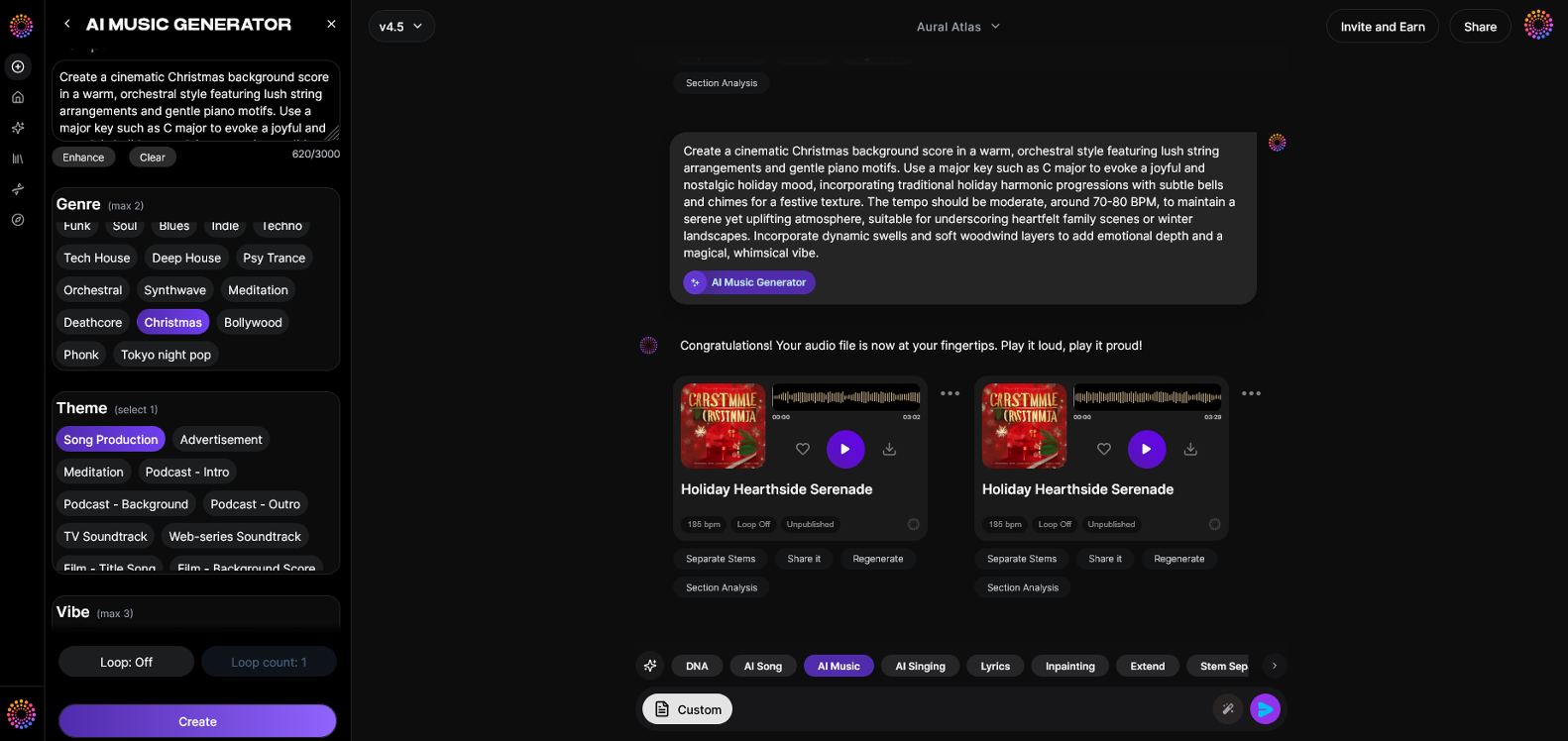
Now that you understand what defines sad music, here’s how to create it instantly using Soundverse.
Soundverse’s AI Music Generator empowers users to create fully produced instrumental music from text prompts. It specializes in background tracks, beats, and atmospheric soundscapes—with options for seamless looping.
Using its Text-to-Music capability, users simply enter a description like “slow piano with emotional undertones” or “melancholic ambient strings for reflection.” The generator then interprets the mood and produces a unique instrumental composition tailored to that emotional context.
Core Features of Soundverse AI Music Generator
- Text-to-Music Creation: Generate music using descriptive emotional or genre cues.
- Loop Mode: Perfect for content where continuous emotional flow is needed—ideal for films or meditation projects.
- Detailed Genre and Mood Control: Choose tempo, style, and instruments fitting your desired emotional palette.
- Model Options (V4/V5): Advanced algorithms enhance tonal realism and genre precision.
Major Use Cases
- Emotional background music for cinematic storytelling.
- Game soundtracks and loops that evoke sadness or suspense.
- Meditation and wellness tracks for reflective experiences.
- Commercial and ad scoring that resonates emotionally.
For creative professionals exploring AI music generation, Soundverse also provides complementary tools such as:
- Similar Music Generator: Produces instrumentals inspired by a reference track for story continuity.
- Similar Song Generator: Generates complete songs in a matching style without copyright issues.
You can learn how Soundverse supports creators in projects ranging from healing meditation music to complex film and TV scoring.
Create Emotionally Rich Music with Soundverse AI
Turn feelings into sound instantly. Use AI-powered tools to compose sad, emotional, or cinematic music tailored to your creative vision effortlessly.
Start Creating Now
Related Articles
- How to Create Healing Meditation Music with Soundverse AI — Discover how soothing tones and gentle rhythms can evoke peace and emotional balance using Soundverse AI.
- How to Create Jazz Music with Soundverse AI — Learn the art of generating soul-stirring jazz pieces with Soundverse’s intuitive AI composition tools.
- AI Music Generator and Human Composers: A Future Together — Explore how AI music technology complements human emotion and creativity to shape the next era of music.
- What Are Song Stems and Why Do You Need Them — Understand how song stems enhance remixing and emotional depth in music production workflows.
Here's how to make AI Music with Soundverse
Video Guide

Here’s another long walkthrough of how to use Soundverse AI.
Text Guide
- To know more about AI Magic Tools, check here.
- To know more about Soundverse Assistant, check here.
- To know more about Arrangement Studio, check here.
Soundverse is an AI Assistant that allows content creators and music makers to create original content in a flash using Generative AI. With the help of Soundverse Assistant and AI Magic Tools, our users get an unfair advantage over other creators to create audio and music content quickly, easily and cheaply. Soundverse Assistant is your ultimate music companion. You simply speak to the assistant to get your stuff done. The more you speak to it, the more it starts understanding you and your goals. AI Magic Tools help convert your creative dreams into tangible music and audio. Use AI Magic Tools such as text to music, stem separation, or lyrics generation to realise your content dreams faster. Soundverse is here to take music production to the next level. We're not just a digital audio workstation (DAW) competing with Ableton or Logic, we're building a completely new paradigm of easy and conversational content creation.
TikTok: https://www.tiktok.com/@soundverse.ai
Twitter: https://twitter.com/soundverse_ai
Instagram: https://www.instagram.com/soundverse.ai
LinkedIn: https://www.linkedin.com/company/soundverseai
Youtube: https://www.youtube.com/@SoundverseAI
Facebook: https://www.facebook.com/profile.php?id=100095674445607
Join Soundverse for Free and make Viral AI Music

We are constantly building more product experiences. Keep checking our Blog to stay updated about them!