What Makes a Song Explicit: Understanding Explicit Songs Meaning in 2026
Learn what makes songs explicit, how music censorship works, and why parental advisory labels matter.
What Makes a Song Explicit
In 2026, music creation and consumption have reached unprecedented complexity. With streaming platforms hosting millions of tracks, listeners constantly encounter songs labeled as “explicit.” But what exactly makes a song explicit? Understanding explicit songs meaning involves more than spotting a label—it’s about exploring how language, culture, and regulation influence the boundaries of artistic expression.
What Does Explicit Mean in Music?
An explicit song typically contains lyrics, sounds, or themes considered unsuitable for younger audiences. This could include profanity, sexual references, substance mentions, or violent imagery. These elements are often flagged by record labels or streaming services, leading to the addition of an explicit lyrics or parental advisory label. Platforms like Spotify and TIDAL require explicit labeling so users can manage playback preferences.
The distinction between clean vs explicit tracks has become more pronounced since 2025, as AI and human moderation systems have improved in detecting objectionable content. Today in 2026, AI-assisted classification tools help platforms tag songs in real time based on textual and auditory analysis, ensuring compliance across global content rating systems.

How Did Explicit Music Classification Evolve?
The concept of explicit music dates back to the late 1980s when the Parental Advisory label was introduced by the Recording Industry Association of America (RIAA). It became a recognizable symbol—black and white text signaling potentially mature content. For parents and guardians, this label served as a quick reference point before purchasing physical albums.
Fast forward to streaming in 2024 and 2025, the music rating system adapted to digital platforms. Spotify, Apple Music, and SoundCloud began using metadata flags. Today, these labels automatically sync to streaming algorithms and parental restrictions, making it easier for families to maintain listening preferences. Streaming platforms, as noted in Disc Makers’ overview, maintain distinct policies for distributing explicit material across regions.
What Factors Make a Song Explicit?
Explicit songs are not confined to profanity. The criteria extend to cultural sensitivities and evolving standards of decency.
Here are key factors that contribute to a song being flagged:
- Language Use – Profane or offensive words trigger automatic flagging.
- Themes and Imagery – Sexuality, violence, and substance use are primary reasons for an explicit rating.
- Contextual Delivery – Metaphors or double meanings can classify lyrics as explicit depending on interpretation.
- Cultural Sensitivity – What is considered explicit in one region might be acceptable in another, pushing streaming platforms to localize their rating systems.
As noted in Soundverse’s music industry trends article, regional artificial intelligence models increasingly adapt to cultural contexts while assessing lyrics to ensure global harmonization.
Why Do Artists Release Explicit Versions?
Artists often produce both clean vs explicit tracks to broaden reach. Clean versions allow radio play and family-friendly streaming, while explicit versions retain artistic integrity. Many music enthusiasts appreciate raw lyrical emotion that an unfiltered performance delivers.
For content creators and emerging musicians exploring AI-generated music with tools like Soundverse, learning how lyrical tonality influences censorship classifications is crucial. Soundverse’s own text-to-music generation systems enable controlled lyric themes, balancing creativity with compliance.
How Does Music Censorship Work in 2026?
In 2026, music censorship operates through a hybrid approach—automated AI detection and human moderation. Platforms analyze both the textual transcript and the audio waveform. Machine learning systems tag phrases, tone intensities, and contextual metadata that might align with restricted categories.
This data is cross-referenced with local jurisdiction rules. For example, a song flagged in one country may still stream freely elsewhere. The challenge lies in maintaining equitable access while respecting age limitations. Platforms as described by Muzartdisco highlight varying approaches to explicit labeling and restriction.
Additionally, social media short-form clips force creators to self-censor when repurposing explicit material. AI music tools often assist with automatic removal or replacement of inappropriate words, giving creators safe “clean” versions for platforms like TikTok and Instagram.
For a deeper dive into practical creation techniques, watch our Soundverse Tutorial - How to Make Music or Deep House Music guide on YouTube.
The Role of Parental Advisory in a Streaming-First World
While the parental advisory label was once a sticker on a physical CD cover, it now exists digitally as metadata within streaming libraries. Parents can toggle parental restrictions on accounts or use AI voice assistants to manage playlist compliance.
In this context, as seen in AI music in the USA, regulation has become dynamic. Rather than uniform bans, content moderation relies on semantic understanding of artistic intention. Thus, advisory systems in 2026 act more as contextual guides than instruments of censorship.
How to Make Explicit Music with Ethical AI
For lyricists experimenting with AI-assisted songwriting, platforms like Soundverse enable creation without breaching ethical boundaries. Using attribution-aware frameworks ensures artists remain compliant while maintaining creative freedom. Ethical AI music frameworks validate that training datasets don’t propagate harmful or nonconsensual content.
Creators using explicit language can do so responsibly—retaining expressive power without infringing rights or spreading misinformation.
How Soundverse Trace Helps Manage Explicit Songs Ethically
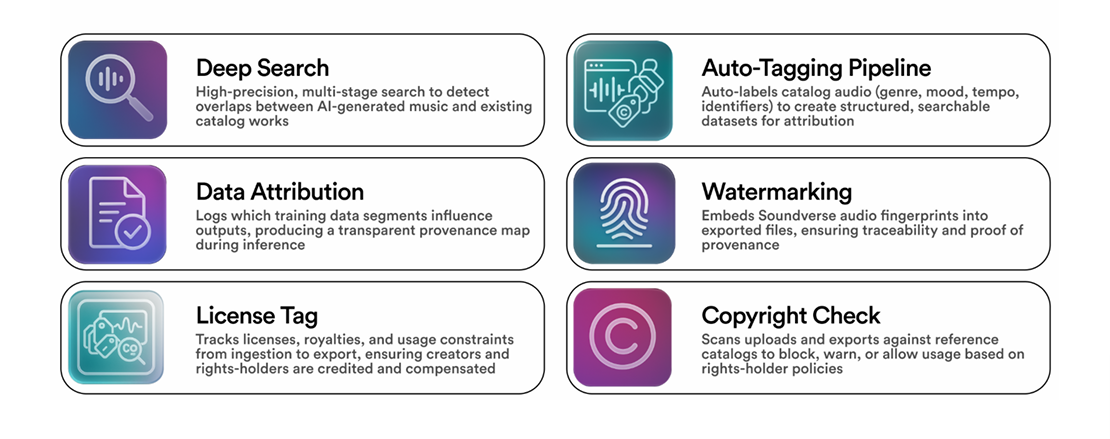
Soundverse’s Soundverse Trace feature brings transparency and trust to AI music production. As a comprehensive trust layer, it integrates audio rights management from dataset creation to export.
How Soundverse Trace Works for Explicit Music
Soundverse Trace offers multiple capabilities designed not for censorship itself but to ensure accountability:
- Deep Search: Uses high-precision scanning to identify data overlaps or reused sound elements in explicit tracks.
- Data Attribution: Logs which datasets influenced AI-generated compositions, giving clarity on source inspirations.
- Audio Watermarking: Embeds inaudible identifiers within tracks so rights ownership remains traceable even if lyrics are adjusted.
- License Tagging: Maintains metadata integrity from ingestion to final export, vital when distributing explicit or clean versions.
By embedding these technologies, Soundverse Trace ensures that even controversial or mature music is produced ethically and legally. This aligns with Soundverse’s broader Ethical AI Music Framework, which prioritizes creative freedom alongside compliance.
For artists navigating explicit themes, Soundverse’s system prevents accidental use of copyrighted lyrics or samples. It also automates royalty logging for contributors via the Content Partner Program, supporting rights-holders through recurring attribution-based payouts.
You can explore related tools and resources such as Soundverse Assistant or the article on AI Music Generator and Human Composers: A Future Together to understand how Soundverse fosters balanced innovation.
The Future of Explicit Music Classification in 2026
Looking ahead, explicit classification systems are evolving into ethical moderation networks. As AI continues refining contextual sensitivity, creators will have more tools to generate differentiated versions automatically. Regulatory bodies may adopt blockchain-based metadata verification to track lyric origins—parallel to what Soundverse Trace offers for music attribution.
The dialogue around censorship versus expression remains ongoing. Explicit music will continue reflecting authentic human emotion—anger, love, rebellion—yet it must coexist with safeguarding audience diversity.
Create Music That Matches Your Message
Use Soundverse AI to generate clean, customized tracks that fit your style perfectly—no explicit content limitations. Compose, mix, and share professional-quality music instantly.
Start Creating with Soundverse
Related Articles
- Enhancing YouTube Content with Royalty-Free and Copyright-Free Music Using Soundverse AI: Learn how to elevate your YouTube videos using ethical, copyright-safe tracks generated entirely by AI.
- Copyright-Free vs Royalty-Free Music: What Creators Should Know: Understand the difference between royalty-free and copyright-free music to make smarter creative decisions.
- Navigating the World of Royalty-Free and Copyright-Free Music Using Soundverse AI: Explore how Soundverse helps creators produce and use music legally and responsibly while maintaining creative freedom.
- The Role of AI Music in Film and Television: Discover how AI-generated compositions are transforming soundtracks and setting new standards for media production.
Here's how to make AI Music with Soundverse
Video Guide
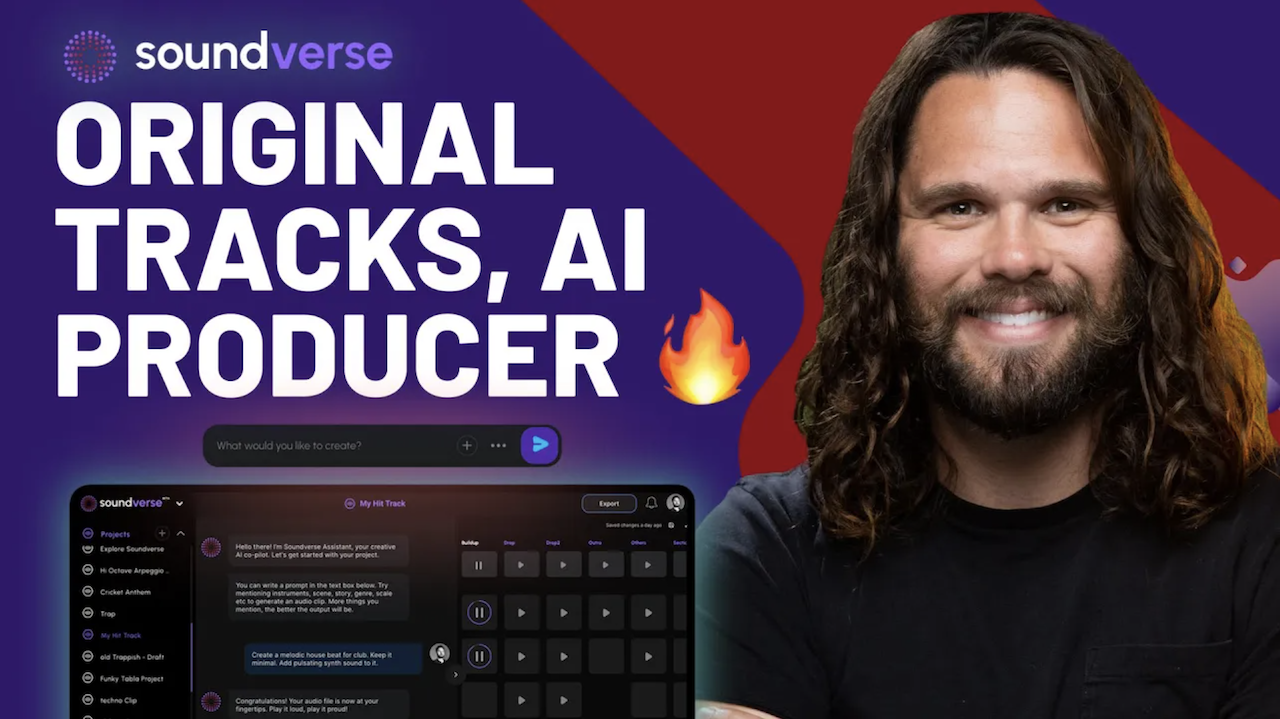
Here’s another long walkthrough of how to use Soundverse AI.
Text Guide
- To know more about AI Magic Tools, check here.
- To know more about Soundverse Assistant, check here.
- To know more about Arrangement Studio, check here.
Soundverse is an AI Assistant that allows content creators and music makers to create original content in a flash using Generative AI. With the help of Soundverse Assistant and AI Magic Tools, our users get an unfair advantage over other creators to create audio and music content quickly, easily and cheaply. Soundverse Assistant is your ultimate music companion. You simply speak to the assistant to get your stuff done. The more you speak to it, the more it starts understanding you and your goals. AI Magic Tools help convert your creative dreams into tangible music and audio. Use AI Magic Tools such as text to music, stem separation, or lyrics generation to realise your content dreams faster. Soundverse is here to take music production to the next level. We're not just a digital audio workstation (DAW) competing with Ableton or Logic, we're building a completely new paradigm of easy and conversational content creation.
TikTok: https://www.tiktok.com/@soundverse.ai
Twitter: https://twitter.com/soundverse_ai
Instagram: https://www.instagram.com/soundverse.ai
LinkedIn: https://www.linkedin.com/company/soundverseai
Youtube: https://www.youtube.com/@SoundverseAI
Facebook: https://www.facebook.com/profile.php?id=100095674445607
Join Soundverse for Free and make Viral AI Music

We are constantly building more product experiences. Keep checking our Blog to stay updated about them!
Image Steps: []