What Is Underscoring in Music? Understanding Film Scoring and Soundtrack Composition in 2026
Learn how underscoring in music shapes emotion in film and how to create it with Soundverse AI Music Generator.
What Is Underscoring in Music?
Underscoring in music is one of the most powerful tools composers use to guide emotion, reinforce narrative, and subtly shape a viewer’s experience in film, television, and other visual media. In 2026, as audiences become increasingly sophisticated in how they perceive audiovisual storytelling, understanding musical underscoring—and the evolving film scoring techniques behind it—has become a vital skill for composers, filmmakers, and AI music creators alike.
What does “underscoring in music” mean?
Underscoring in music refers to instrumental or background music composed to accompany the dialogue or visual action of a film, TV show, video game, or advertisement. Unlike songs where music takes the spotlight, underscoring sits beneath the surface, enhancing emotion, tension, and rhythm without distracting from the visuals.
For example, a gentle piano progression under a heartfelt conversation adds warmth to the moment, while an eerie string drone beneath a suspense scene heightens anticipation. In simple terms, underscoring provides the emotional glue that connects story and viewer.
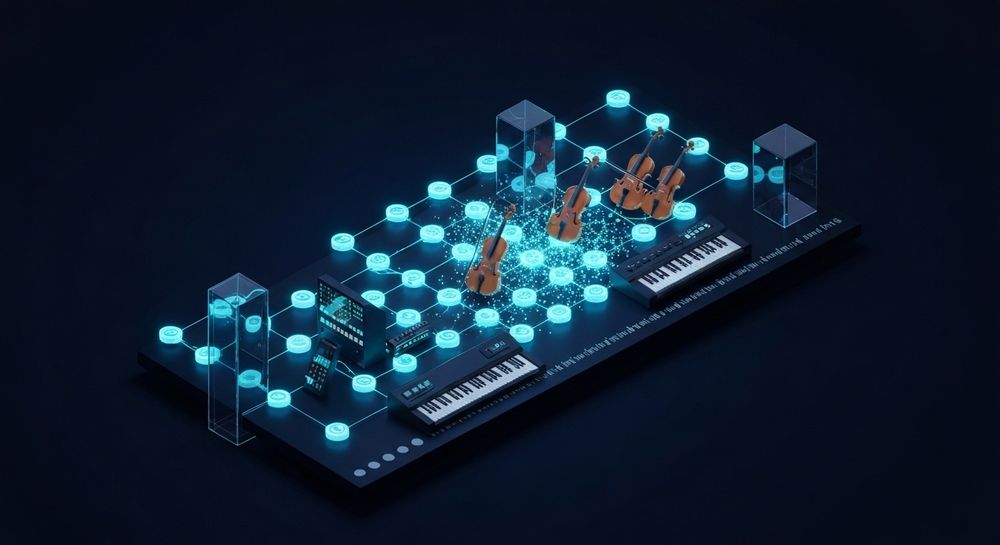
How does musical underscoring differ from a soundtrack?
A soundtrack can include both songs and score—everything that appears in the film’s musical landscape. Underscoring is part of the film’s score but not necessarily part of the release that audiences listen to outside of the film.
The soundtrack might feature main themes, title songs, or end credits music, while underscoring weaves throughout the dialogue and scenes, often unnoticed but deeply felt. Modern soundtrack composition in 2026 has embraced AI tools, sample libraries, and real-time orchestration plugins to make this process faster and more adaptable.

Why is underscoring so important in film scoring techniques?
Music in film serves emotional, narrative, and psychological functions. Here are a few crucial reasons underscoring remains essential:
- Emotion and Tone Setting – It helps establish the mood, whether joyful, foreboding, romantic, or melancholic.
- Narrative Continuity – Underscoring links scenes together and maintains pacing.
- Character Development – Leitmotifs and subtle music cues tell audiences what a character feels even when unspoken.
- Subtext and Foreshadowing – Strategic musical cues can reveal emotional truths or hint at future events.
In 2026, film scoring techniques have incorporated hybrid workflows combining traditional composition with AI-assisted generation. This enables composers to experiment faster and audition musical underscoring examples instantly.
What are common musical underscoring examples?
Some typical underscoring patterns include:
- Mood Pads and Ambient Textures: Used in science fiction and drama to sustain tension or mystery.
- Rhythmic Underscoring: Percussive patterns that match action sequences without overpowering the scene.
- Motivic Underscoring: Repeated melodic fragments associated with characters or themes.
- Minimalist Piano Underscore: Popular in documentaries and emotional storytelling.
- Orchestral Sweeps and Strings: Frequently used in epic or romantic genres to enhance grandeur.
Whether composed by traditional means or generated through AI, underscoring remains a subtle art of emotional precision. The art of musical invisibility is the true essence behind this craft.
How has technology changed background music in films?
The past decade reshaped soundtrack composition. AI models, virtual instruments, and advanced DAWs make creating adaptive underscoring easier than ever. Sound designers can now modify tension, tempo, and instrumentation to match live edits, thanks to new generative algorithms.
Platforms like Soundverse have revolutionized the way background music in films is produced. They empower creators to generate entire underscoring pieces by simply describing the scene or mood they want.
If you want to explore how AI tools can match cinematic tone, check related articles like How AI-generated Music is Transforming the Music Industry, The Role of AI Music in Film and Television, and Most Popular Music Genres.
For a deeper dive into creation techniques, watch our guide on how to make music and the tutorial on exploring Soundverse’s “Explore” tab on YouTube.
What makes effective underscoring?
Effective underscoring requires balance. The music must support but never dominate the visual moment. Composers achieve this through:
- Dynamic Range Management: Adjusting volume levels so dialogue remains clear.
- Instrument Choice: Softer textures (strings, pads, woodwinds) are used over narration-heavy scenes.
- Motif Integration: Small recurring phrases create cohesion and emotional familiarity.
- Psychological Timing: Placing musical changes exactly where emotional shifts occur.
Film scoring in 2026 emphasizes these subtleties even more. Machine learning algorithms now help identify where emotional peaks will occur in visual media, guiding the placement of musical underscoring.
How does underscoring influence audience perception?
Audiences rarely notice underscoring consciously, yet it profoundly affects their experience. Studies in cognitive film theory suggest that underscoring can alter perception of pacing, empathy, and even memory retention. The manipulation of sound and silence drives immersion, pulling the viewer deeper into the story’s world.
This has made underscoring an essential academic focus for music students and film courses worldwide, as understanding it helps bridge the gap between composition and psychology.
How to make underscoring in music with Soundverse AI Music Generator
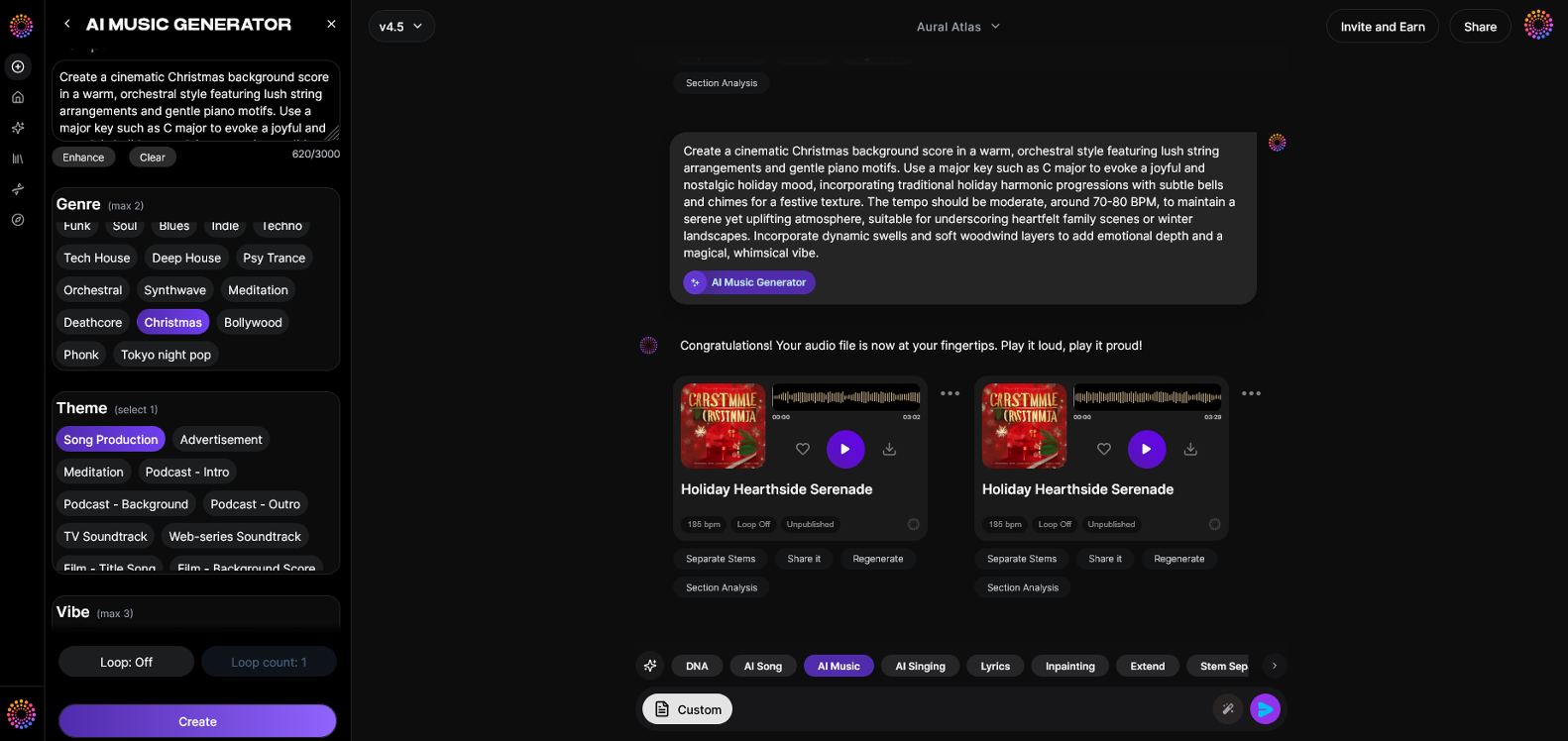
Now that you understand what underscoring in music is and how it complements storytelling, let’s explore how you can create your own cinematic underscoring instantly using Soundverse.
Soundverse’s AI Music Generator enables creators to produce fully developed instrumental backgrounds through text prompts—perfect for film scoring and soundtrack composition. Users can describe the desired emotion, style, or scene, and Soundverse transforms that description into a polished musical piece.
Core capabilities include:
- Text-to-music creation: Generate complete instrumental scores by simply typing a descriptive prompt.
- Loop Mode: Ideal for background music in films and games, ensuring seamless repetition.
- Customized musical control: Refine genre, mood, and instrumentation for precise emotional alignment.
- V4 and V5 Model Options: Choose between versions optimized for dynamic scoring and ambient production.
This makes it ideal for:
- Video background music production
- Game soundtracks and ambient loops
- Meditation and wellness tracks
- Commercial scoring and advertising
Soundverse also offers the Similar Music Generator, which produces compositions inspired by a reference track or 'temp score'—perfect for filmmakers needing consistency in tone.
If you’re working on an intense thriller sequence, your text prompt might be something like “low string drones, pulsing synths, and slow-building tension,” and Soundverse will generate an instrumental cue tailored for that. For a serene nature sequence, “gentle piano with air textures and warm ambiance” would render a completely different piece suited for that visual.
To explore Soundverse’s other AI music creation tools, check guides like Generate AI Music with Soundverse Text-to-Music, Soundverse Assistant – Your AI Music Co-Producer, and Soundverse Introduces Stem Separation AI Magic Tool.
Create Emotionally Rich Scores with AI
Bring your stories to life through music that perfectly matches the mood. Soundverse helps you generate professional-quality underscores and soundtracks effortlessly.
Related Articles
- The Role of AI Music in Film and Television — Discover how AI music tools are transforming the way filmmakers and producers use underscores and background music.
- How AI-Generated Music Is Transforming the Music Industry — Explore the growing influence of AI in the music industry and how it's reshaping composition and production workflows.
- The Benefits of Composing with AI Music Generator — Learn how AI can streamline your composition process and help you produce high-quality, emotionally resonant music faster.
- Navigating the World of Royalty-Free and Copyright-Free Music Using Soundverse AI — Find out how to use Soundverse to create and source music legally for your videos, games, and multimedia projects.
Here's how to make AI Music with Soundverse
Video Guide
Here’s another long walkthrough of how to use Soundverse AI.
Text Guide
- To know more about AI Magic Tools, check here.
- To know more about Soundverse Assistant, check here.
- To know more about Arrangement Studio, check here.
Soundverse is an AI Assistant that allows content creators and music makers to create original content in a flash using Generative AI. With the help of Soundverse Assistant and AI Magic Tools, our users get an unfair advantage over other creators to create audio and music content quickly, easily and cheaply. Soundverse Assistant is your ultimate music companion. You simply speak to the assistant to get your stuff done. The more you speak to it, the more it starts understanding you and your goals. AI Magic Tools help convert your creative dreams into tangible music and audio. Use AI Magic Tools such as text to music, stem separation, or lyrics generation to realise your content dreams faster. Soundverse is here to take music production to the next level. We're not just a digital audio workstation (DAW) competing with Ableton or Logic, we're building a completely new paradigm of easy and conversational content creation.
TikTok: https://www.tiktok.com/@soundverse.ai Twitter: https://twitter.com/soundverse_ai Instagram: https://www.instagram.com/soundverse.ai LinkedIn: https://www.linkedin.com/company/soundverseai Youtube: https://www.youtube.com/@SoundverseAI Facebook: https://www.facebook.com/profile.php?id=100095674445607
Join Soundverse for Free and make Viral AI Music

We are constantly building more product experiences. Keep checking our Blog to stay updated about them!