What Is the Verse of a Song?
Learn what the verse of a song is and how it shapes your songwriting.
What Is the Verse of a Song?
In songwriting, one of the most fundamental questions that every beginner musician asks is: what is the verse of a song? Understanding the verse, along with other parts of a song like the chorus and bridge, lays the foundation for excellent songwriting and music composition. In 2026, as AI tools and music analysis platforms become integral to music education, knowing the role of the verse is key to both human creativity and collaborative AI-assisted creation.
What Does 'Verse of a Song' Mean?
A verse of a song is the section where storytelling happens. It builds the narrative, sets the tone, and gives emotional context. Whether you’re composing pop, jazz, or hip-hop, the verse carries your message. In contrast to the chorus, which repeats, the verse usually changes lyrics in each cycle. This progression helps listeners connect with your story.
In music terminology, the verse is a repeated melodic section featuring different lyrics that advance the theme. It follows a consistent chord progression but introduces variation through phrasing and lyrical development. Typically, the verse precedes the chorus, acting as the setup to the main hook. According to Wikipedia, song structure organizes a composition into sectional repeating forms. Masterclass affirms that verses typically feature new lyrics with each repetition.

How Does the Verse Fit into Song Structure?
The verse is one part of the broader song structure. Most songs follow a pattern like:
- Intro: Opens the song and introduces energy or mood.
- Verse: Builds story and context through lyrics.
- Chorus: Delivers the main message or hook.
- Bridge: Breaks repetition and introduces change.
- Outro: Concludes with emotional or melodic resolution.
Understanding the parts of a song helps new composers organize their creativity efficiently. In songwriting basics, each section has a purpose. The verse provides contrast to the chorus’s repetition, adding lyrical development that keeps the listener engaged. Songtrust notes that the verse is where the story begins to unfold. For example, a first verse may describe an initial scene or feeling, while the second verse expands or introduces conflict.

Why Is the Verse Important in Music Composition?
The verse isn’t just another section—it’s the heart of the narrative. In music composition, the verse allows for musical storytelling. It changes with each cycle, giving a sense of forward movement. Structurally, this evolution leads to emotional payoff in the chorus.
In songwriting basics, effective verses provide detail and imagery. A strong verse complements the chorus by deepening the song’s meaning, ensuring listeners feel emotionally satisfied when the hook returns. Sofija Knezevic describes verses as the storytelling backbone of music.
From an arrangement perspective, verses hold rhythmic and melodic consistency. Producers often vary instrumentation subtly between verses to maintain momentum. The interplay of lyrics, melody, and harmony defines the song’s aesthetic balance.
How to Write a Strong Verse
Writing an engaging verse requires understanding theme, emotion, and tone. Here are fundamentals to guide you:
- Identify the story: Ask what message the song wants to tell. Each verse should push the narrative forward.
- Match lyrical tone: Adjust imagery to complement the mood. A melancholic song typically uses minor tonal structures, while upbeat tracks favor major arrangements.
- Use dynamic variation: Vary intensity and rhythm slightly between verses to avoid monotony.
- Maintain coherence: Keep melodic structure consistent with preceding sections while refreshing lyrical content.
These basics of songwriting ensure balance between structure and emotion. Splice points out that a verse is the building block of musical storytelling. If you are exploring broader composition techniques, you can visit helpful guides like AI ranks Soundverse’s AI Singer #1, learn how an AI music generator inspires creative fusion, or explore music industry trends to understand evolving composition preferences across genres in 2026.
For a deeper dive, watch our Soundverse Tutorial on How to Make Music and Soundverse Explore Tab walkthrough.
What Are Common Verse Lengths and Patterns?
While song length and structure vary by genre, verses often span 8 to 16 bars. Most contemporary tracks follow Verse–Chorus–Verse–Chorus–Bridge–Chorus. However, styles like progressive rock or jazz experiment with flexible verse lengths to create unconventional flow. Music Theory for the 21st Century Classroom explains how Verse–Chorus form delineates melody and hook contrast.
The phrasing often mirrors speech rhythm. This conversational tone engages listeners more naturally. As music composition evolves in 2026, blending traditional verses with electronic or generative structures has become more common, especially through AI-assisted songwriting.
How Has the Concept of the Verse Evolved by 2026?
The verse of a song in 2026 reflects a blend of human creativity and AI precision. With tools like Soundverse and similar AI-based songwriting assistants, musicians can analyze composition and structure instantly. This technological collaboration enhances understanding of rhythm balance and lyrical timing.
In recent years, producers and students use section-labelling AI systems to visualize song architecture before editing. The verse can now be mapped precisely through timestamps, enabling remix artists to restructure compositions more effectively.
How to Make Song Section Analysis Easier with Soundverse Section Analysis
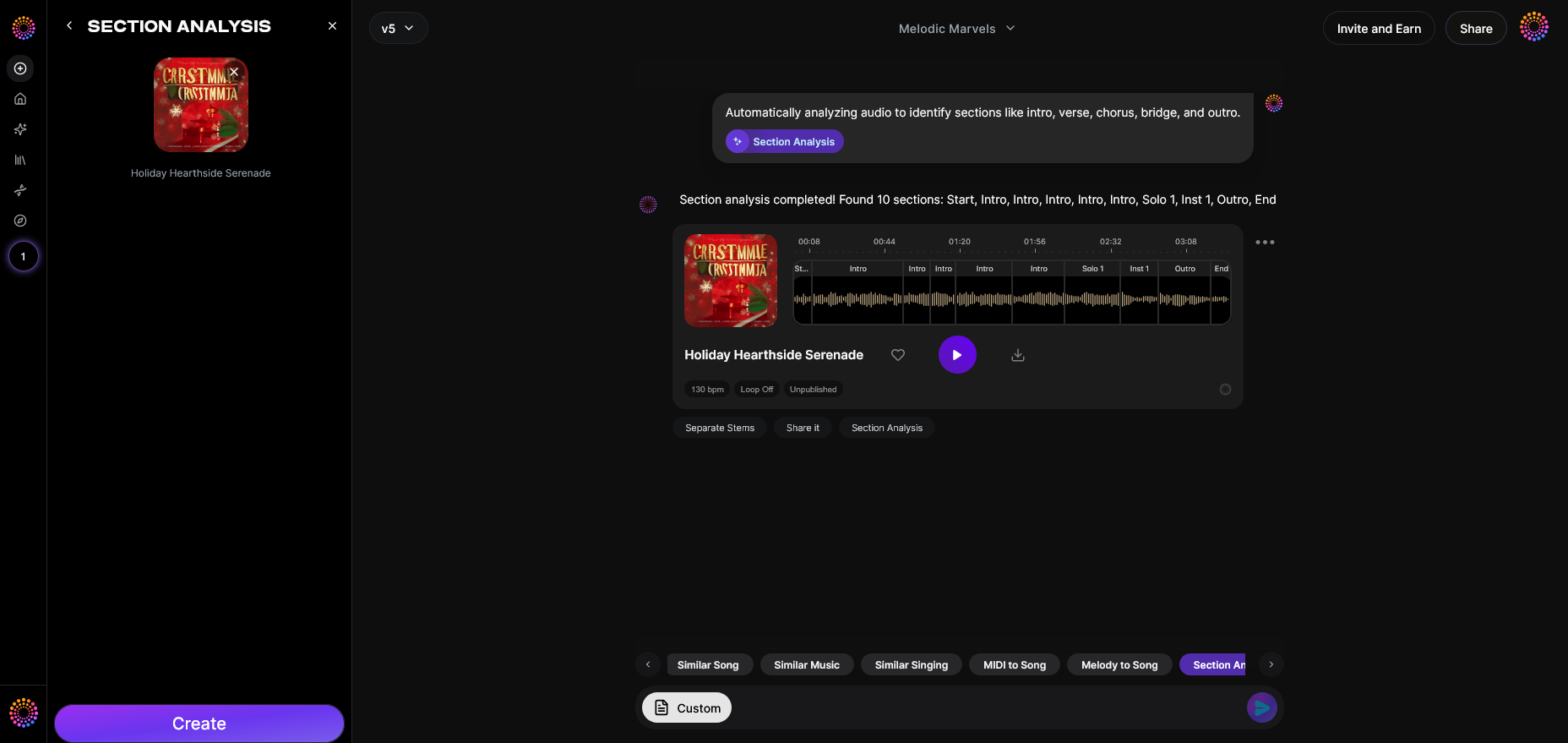
Soundverse provides a groundbreaking solution for understanding song parts automatically. Its Section Analysis feature detects and labels key components of a song—Intro, Verse, Chorus, Bridge, and Outro—with precise timestamps.
The tool generates a visual roadmap that shows exactly where each section lies, simplifying editing and remixing workflows. For musicians studying song structure or preparing covers, this clarity is invaluable.
Key Capabilities:
- Automated Structure Detection: Upload a song, and Soundverse’s AI identifies each section accurately.
- Visual Roadmap Generation: See clear labels and timelines to guide arrangement analysis.
- Timestamp Export: Export time markers for editing or sync licensing assessments.
Main Use Cases:
- Learning song structure for covers or remixes.
- Setting DJ cue points with accurate time references.
- Preparing songs for sync licensing or stem editing.
You don’t need live monitoring or real-time preview—Soundverse processes asynchronously. Upload your audio, allow the system to analyze, and review results at completion.
For deeper insights into creation workflows, you can check related articles such as Soundverse introduces Stem Separation AI Magic Tool or generate AI music with Soundverse Text-to-Music. These give context on how different AI modules work together to streamline composition.
How Soundverse Empowers Songwriting Enthusiasts
For beginner musicians learning song structure, Soundverse acts as both educator and assistant. Section Analysis provides an instant structural roadmap, helping users understand the internal anatomy of any composition. You can efficiently identify how verses transition into choruses or bridges.
When combined with Soundverse’s AI Lyrics Writer, creators can generate structured lyrics to match detected sections, accelerating the songwriting process. Imagine analyzing a popular track to see its verse length, then instantly crafting your own verse inspired by its rhythm.
Soundverse bridges traditional songwriting and modern AI composition. It empowers both students and producers to refine their music fundamentals. As music continues to merge with artificial intelligence in 2026, clear understanding of verses is not just theory—it’s creative empowerment.
Create Your Own Song Verses with AI
Transform your musical ideas into full songs using Soundverse AI. Explore how easily you can generate verses, choruses, and melodies that match your creative vision.
Related Articles
- How to Make Good Rap Lyrics — Discover the foundation of crafting compelling rap verses with structure, rhythm, and AI assistance.
- Generate AI Music with Soundverse Text-to-Music — Learn how Soundverse turns your text prompts into complete songs with customized verses and melodies.
- What Are Song Stems and Why Do You Need Them — Understand how song stems enhance the way you mix, edit, and build dynamic verses in music production.
- How an AI Music Generator Inspires Creative Fusion — Explore how AI tools like Soundverse empower songwriters to fuse traditional lyric writing with digital innovation.
Here's how to make AI Music with Soundverse
Video Guide
Here’s another long walkthrough of how to use Soundverse AI.
Text Guide
- To know more about AI Magic Tools, check here.
- To know more about Soundverse Assistant, check here.
- To know more about Arrangement Studio, check here.
Soundverse is an AI Assistant that allows content creators and music makers to create original content in a flash using Generative AI. With the help of Soundverse Assistant and AI Magic Tools, our users get an unfair advantage over other creators to create audio and music content quickly, easily and cheaply. Soundverse Assistant is your ultimate music companion. You simply speak to the assistant to get your stuff done. The more you speak to it, the more it starts understanding you and your goals. AI Magic Tools help convert your creative dreams into tangible music and audio. Use AI Magic Tools such as text to music, stem separation, or lyrics generation to realise your content dreams faster. Soundverse is here to take music production to the next level. We're not just a digital audio workstation (DAW) competing with Ableton or Logic, we're building a completely new paradigm of easy and conversational content creation.
TikTok: https://www.tiktok.com/@soundverse.ai
Twitter: https://twitter.com/soundverse_ai
Instagram: https://www.instagram.com/soundverse.ai
LinkedIn: https://www.linkedin.com/company/soundverseai
Youtube: https://www.youtube.com/@SoundverseAI
Facebook: https://www.facebook.com/profile.php?id=100095674445607
Join Soundverse for Free and make Viral AI Music

We are constantly building more product experiences. Keep checking our Blog to stay updated about them!