What Is the Beat in Music?
Learn what the beat in music means and how it shapes rhythm, tempo, and time signature.
What Is the Beat in Music?
Introduction
For anyone just beginning their journey into music theory, understanding what the beat in music means is fundamental. The beat serves as the heartbeat of every composition—it’s what keeps the listener moving, tapping their foot, nodding their head, or swaying with rhythm. In 2026, as music creation becomes even more democratized through AI-powered tools, mastering basic concepts like beats, musical rhythm, tempo, and time signatures is more vital than ever for musicians and creators alike.
This comprehensive guide will break down what a beat is, how it connects to rhythm and tempo, and why it forms the foundation of all music fundamentals. You’ll also discover how Soundverse’s AI Music Generator can help you create precise, loopable beats that align perfectly with your creative vision.
What does “beat in music” actually mean?
In simple terms, the beat in music is the steady pulse that underlies most musical compositions. It serves as the recurring moment in time that helps listeners perceive rhythmical flow. When you clap along to a song or tap your foot, you’re essentially following its beat. You can learn more about this definition through AIMM’s glossary on “Beat”, which describes the beat as the fundamental pulse of music.
The beat organizes the flow of notes and rhythms—it’s what turns random sounds into structured music. Whether you’re listening to a pop track, a jazz number, or an EDM piece, beats guide the listener through the experience, offering predictability and pleasure. According to Wikipedia’s entry on “Beat (music)”, the beat is the basic unit of time and pulse at the mensural level.
How is the beat related to musical rhythm?
To truly understand the beat in music, we must also understand musical rhythm. Rhythm refers to the pattern of sounds and silences arranged over time. The beat acts as the timekeeper of these rhythms. If rhythm is the way the notes move, then the beat is the floor they dance on.
For example, a drummer laying down a groove sets the beat for other musicians to follow. When rhythm patterns fit well with the beat, music feels cohesive and emotionally engaging. Rhythm without a beat feels chaotic—beat without rhythm feels mechanical.
In music education, teachers often describe rhythm as how long and short notes interact with the beat, creating musical phrases and variation. For additional insight, check out Rhythm and Beat - Understanding the fundamentals of music education, which elaborates on how rhythm and beat connect in both learning and performance.
What role does tempo play in defining the beat?
Tempo in music simply means the speed at which the beat occurs. It is measured in beats per minute (BPM). A track at 120 BPM has 120 beats every minute, creating a moderate pace that listeners often perceive as danceable. A slower tempo conveys calmness, while faster tempos generate excitement or intensity.
Modern musicians use tempo as a creative device. Contemporary genres such as trap, lo-fi, and techno manipulate speed to control listener emotion. Knowing your tempo ensures that all instruments—and all generated beats—align rhythmically.
In 2026, wide use of DAWs and AI beat-creation tools makes tempo adjustment effortless, allowing both beginners and professionals to intuitively explore the emotional range of music timing.
How does the time signature shape the beat?
A time signature defines how beats are grouped within a measure. It indicates how many beats appear in each bar and which note value receives one beat—for instance, 4/4 means four quarter-note beats per measure. This structured format lets musicians synchronize performances easily.
Many popular songs use 4/4 because it feels natural and balanced. Waltzes usually use 3/4, while more complex jazz or progressive tracks might experiment with irregular patterns like 5/8 or 7/8. Understanding time signature allows you to layer rhythms without losing internal structure.
For music students, this concept helps identify where strong beats (like beat one) and weak beats (like beat three) appear, enabling richer compositions and expressive timing. As Britannica’s definition of beat explains, the beat represents the basic rhythmic unit of a measure within a bar.
What is the pulse in music, and how is it different from the beat?
The pulse in music is the regular, underlying sense of movement that you feel even when no explicit percussion is heard. It’s linked closely to the beat but sometimes refers to a subtler, internal rhythm listeners perceive collectively.
While the beat is typically associated with clear timing markers like drum hits, pulse can exist through melodic phrasing or consistent chord progressions. Classical music or ambient tracks often rely on pulse to evoke flow without strong rhythmic accents.
Recognizing the difference between pulse and beat trains your ear to listen more deeply. It helps you understand how composers create tension and release through timing—even in genres where traditional beats are absent.
Why understanding beat matters for beginner musicians
Learning how beats work empowers musicians to build cohesive tracks, whether performed live or created digitally. Without an accurate sense of beat and rhythm, even skilled instrumentalists can sound disorganized.
By mastering beat and timing, students gain control over musical expression. They learn to compose tighter grooves, avoid sync mismatches, and achieve professional-sounding arrangements. Understanding beats also helps you communicate better with other musicians, since timing is a universal musical language.
For a practical introduction, watch Soundverse Tutorial Series - 9. How to Make Music on the official YouTube channel where beat creation and harmony are demonstrated interactively.
How to make beats with Soundverse AI Music Generator
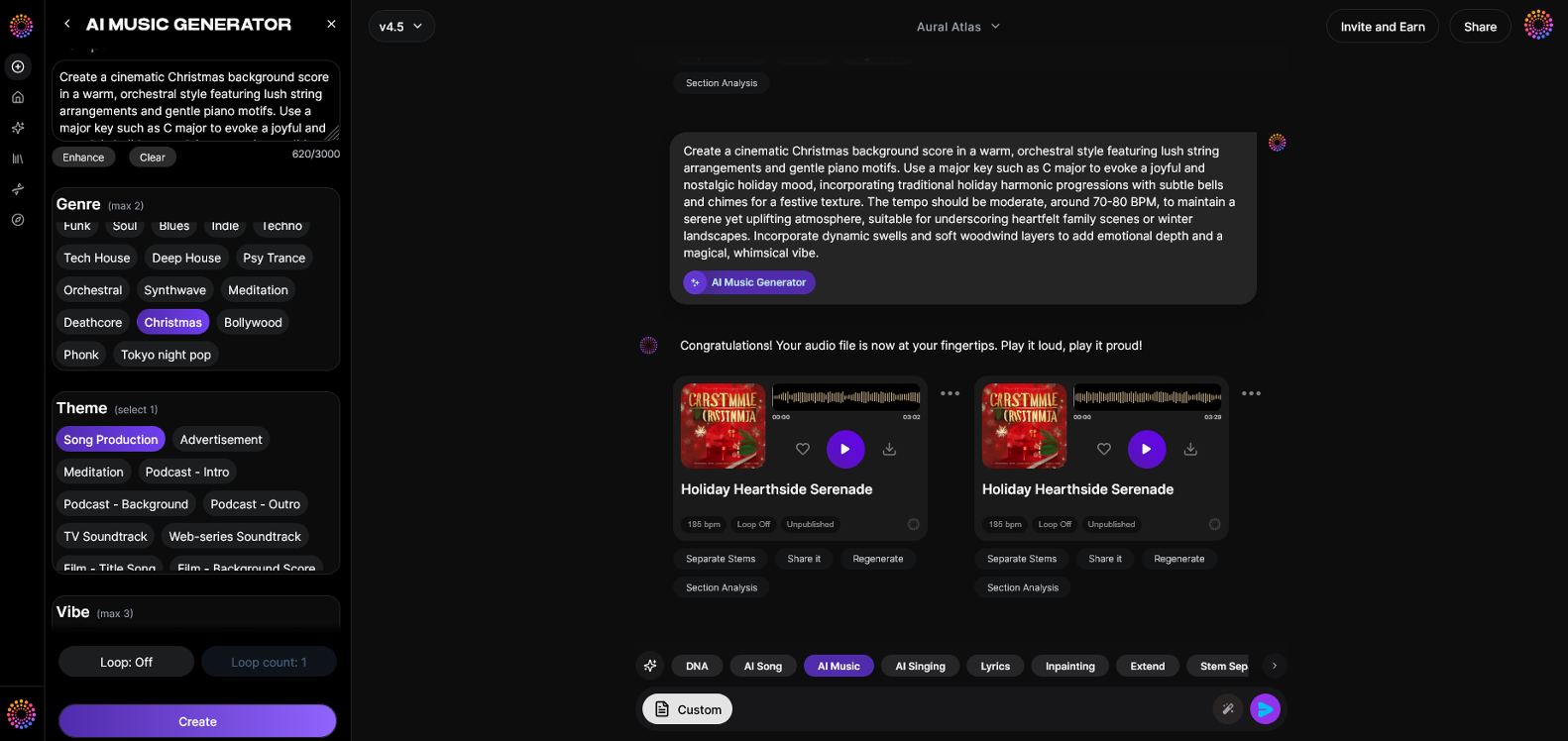
Soundverse’s AI Music Generator transforms text descriptions into fully produced instrumental compositions. It’s an ideal tool for learning how beat structures interact with musical rhythm and tempo in practical settings.
Official Description & Capabilities:
The AI Music Generator lets you create instrumental background tracks, beats, and soundscapes directly from text prompts. You can choose genres, moods, and instruments, enable Loop Mode for seamless repetition, and even select between V4 and V5 Models depending on production depth.
Primary Use Cases:
- Perfect for background tracks in videos or games.
- For meditation and wellness creators seeking gentle rhythmic flow.
- For advertisers wanting catchy, loopable music.
By describing the desired musical vibe—for instance, “a chill beat at 90 BPM with soft percussion and a steady pulse”—Soundverse automatically crafts rhythmically accurate tracks. Users can then export these beats for teaching, performing, or remixing.
For artists needing further control, tools like the Stem Separator help isolate drum or bass parts for study. Similarly, the Voice to Instrument tool converts vocal rhythms or beatboxing into instrumental equivalents, ensuring smooth beat formation.
You can explore more about AI-generated rhythm creation by reading Generate AI Music with Soundverse Text-to-Music and How AI Generated Music is Transforming the Music Industry.
For a deeper, visual tutorial, watch Soundverse Tutorial Series - 10. Make Deep House Music for examples of beat layering and tempo control.
Exploring beat creativity in 2026
The current year has seen a surge of creators using AI platforms to enhance beat complexity. From indie composers to student musicians, people are no longer restricted by hardware or studio access. A smartphone with Soundverse can now generate intricate rhythmic passages in minutes.
Educational institutions have embraced AI-assisted production as a training tool. Beginners studying music fundamentals experiment with tempo and beat grouping to visualize abstract theory. The mix of human creativity and machine precision defines a modern music-learning experience.
Advanced Soundverse features such as genre and mood filters—introduced earlier in 2026 and highlighted in Now Generate Music with Filters Such as Genre, Theme, Instruments, or Even Vibe—enable learners to analyze how beats evolve across styles like jazz, EDM, or classical.
For further exploration, check out Soundverse Tutorial Series - 8. "Explore" Tab, which shows how users can navigate trending beat structures in the Explore section.
How to improve your sense of beat
- Practice clapping and counting aloud. Counting “1-2-3-4” helps internalize 4/4 rhythm.
- Play along with metronomes or looped AI-generated beats. Adjust tempo as you grow comfortable.
- Study different time signatures. Try identifying how emphasis shifts between 3/4 and 6/8.
- Analyze recordings. Focus on percussion to feel consistent pulse placement.
- Experiment using Soundverse. Generate diverse beats and compare how structure changes between genres.
Repetition builds intuitive timing. Once internalized, the beat becomes second nature—you’ll hear it everywhere, even in silence.
Create Your Own Beat with Soundverse AI
Turn your musical ideas into professionally produced tracks with intelligent beat generation and rhythm control. Explore limitless creative possibilities with Soundverse AI’s intuitive music tools designed for every type of creator.
Related Articles
- Generate AI Music with Soundverse Text-to-Music: Learn how to instantly convert text prompts into fully composed music using Soundverse’s AI text-to-music technology.
- The Role of AI Music in Film and Television: Discover how AI-generated music is revolutionizing soundtracks in movies and TV, offering creators new rhythm and tone possibilities.
- How AI-Generated Music Is Transforming the Music Industry: Explore how AI is reshaping music production, from beat creation to full-scale composition across all genres.
- The Benefits of Composing with AI Music Generator: Uncover how tools like Soundverse can help you craft unique beats, harmonies, and melodies effortlessly.
Here's how to make AI Music with Soundverse
Video Guide
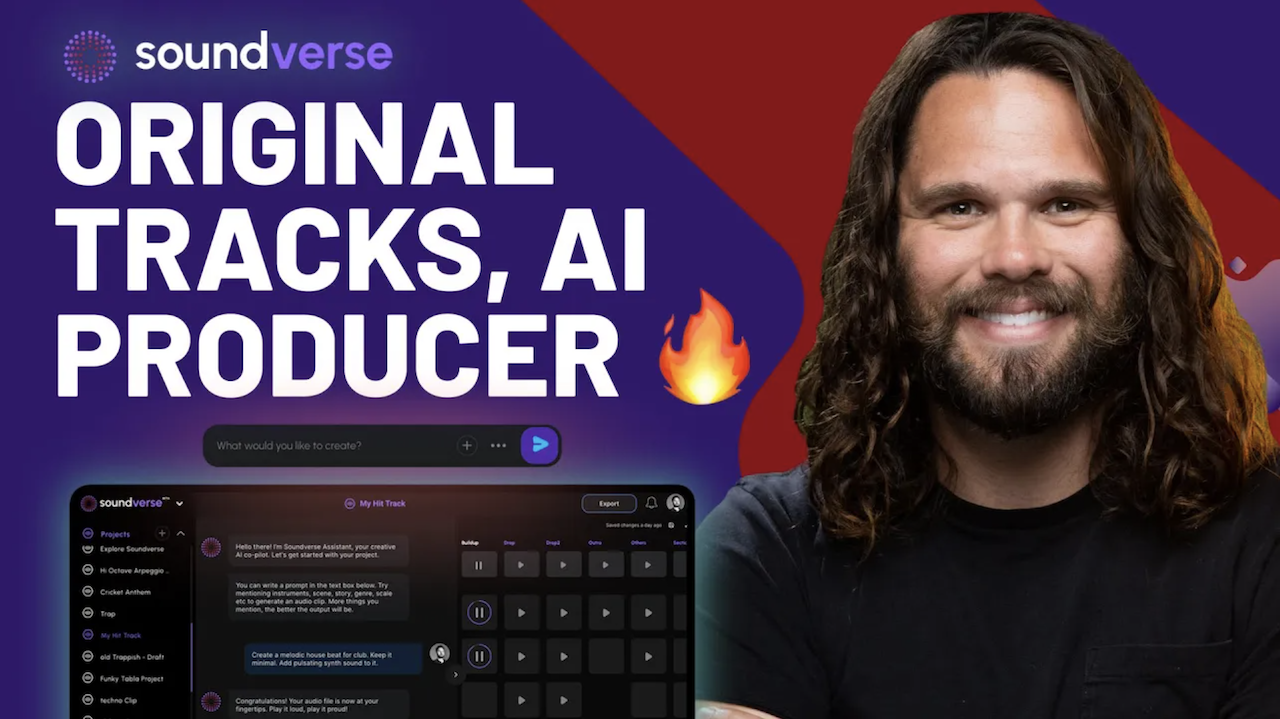
Here’s another long walkthrough of how to use Soundverse AI.
Text Guide
- To know more about AI Magic Tools, check here.
- To know more about Soundverse Assistant, check here.
- To know more about Arrangement Studio, check here.
Soundverse is an AI Assistant that allows content creators and music makers to create original content in a flash using Generative AI. With the help of Soundverse Assistant and AI Magic Tools, our users get an unfair advantage over other creators to create audio and music content quickly, easily and cheaply. Soundverse Assistant is your ultimate music companion. You simply speak to the assistant to get your stuff done. The more you speak to it, the more it starts understanding you and your goals. AI Magic Tools help convert your creative dreams into tangible music and audio. Use AI Magic Tools such as text to music, stem separation, or lyrics generation to realise your content dreams faster. Soundverse is here to take music production to the next level. We're not just a digital audio workstation (DAW) competing with Ableton or Logic, we're building a completely new paradigm of easy and conversational content creation.
TikTok: https://www.tiktok.com/@soundverse.ai
Twitter: https://twitter.com/soundverse_ai
Instagram: https://www.instagram.com/soundverse.ai
LinkedIn: https://www.linkedin.com/company/soundverseai
Youtube: https://www.youtube.com/@SoundverseAI
Facebook: https://www.facebook.com/profile.php?id=100095674445607
Join Soundverse for Free and make Viral AI Music
We are constantly building more product experiences. Keep checking our Blog to stay updated about them!