What Is Copyright Free? Understanding Rights, Royalty-Free, and Safe Use in 2026
Learn what copyright free means in 2026, explore royalty-free & public domain content, and discover Soundverse Trace for legal audio creation.
What Is Copyright Free?
In 2026, the demand for copyright free music, visuals, and media has soared as content creators, marketers, and educators navigate increasingly complex copyright laws. Whether publishing on YouTube, designing ads, or teaching digital media, using legally safe materials is crucial to prevent takedowns and lawsuits. But what exactly does “copyright free” mean, and how is it different from royalty-free, public domain, and Creative Commons materials?
What does copyright free mean in 2026?
The term copyright free refers to content that is not protected by copyright laws. This could mean the work was never subject to copyright, or the copyright has expired. When something is copyright free, anyone can use, modify, or distribute it without seeking permission or paying licensing fees.
However, in today’s creative ecosystem, true copyright free material is rare. Most content still carries ownership, even if shared freely. As AI-generated media becomes mainstream, creators must verify whether generated content inadvertently reproduces copyrighted works. Platforms like Soundverse help bridge that gap with AI-traceable tools ensuring compliance and attribution integrity.
What is the difference between copyright free and royalty-free?
Copyright free and royalty-free are often confused, but they mean different things. Royalty-free content is still copyrighted; however, it can be used without paying royalties per use. Typically, creators pay once for a license to use the work in multiple projects.
For example, a royalty-free track from an audio library allows unlimited usage after purchase, but the creator retains ownership. Meanwhile, a copyright free track has no restrictions—it belongs to the public entirely. This distinction is vital for businesses creating marketing videos or online courses.
If you're exploring alternatives to complex licensing models, check out guides like Enhancing YouTube Content with Royalty-Free and Copyright-Free Music Using Soundverse AI and Navigating the World of Royalty-Free and Copyright-Free Music Using Soundverse AI.
For a deeper dive into creating tracks efficiently, watch our guide on how to make music or the Deep House creation tutorial from the Soundverse Tutorial Series.
What is public domain content?
Public domain works are free for everyone to use. Copyright expires after a certain period—often 70 years after the author’s death—or the creator intentionally releases the work into the public domain. Classic literature, old film reels, and historic recordings fall into this category.
According to Duke University School of Law and Cornell’s Public Domain Overview, works of art published in 1930 will enter the public domain in 2026, meaning they become usable by everyone. As noted by Copyright Lately, iconic creations like Nancy Drew and The Maltese Falcon will soon be accessible without restriction.
Using public domain materials is one of the safest ways to create educational and commercial content without licensing headaches. However, users must ensure that newer versions or adaptations of public domain works (such as remastered soundtracks or translated texts) are not copyrighted themselves.
What are Creative Commons licenses?
Creative Commons (CC) licenses provide structured ways to share creative works. Creators specify how others may use, modify, or redistribute their content. The licenses range from completely open (CC0) to restrictive (CC BY-NC-ND), where users must provide attribution and cannot use the work commercially.
Educators and designers use Creative Commons resources to enhance lesson plans and visual projects without violating copyright laws. Yet, understanding license variations is key—some allow remixing, some only redistribution, others prohibit changes or monetization.
How do copyright laws affect creators in 2026?
Copyright laws continue to evolve, particularly around AI-generated media. While 2024 and 2025 introduced legal debates around authorship by algorithms, 2026 marks the year where regulatory clarity begins to emerge. Many jurisdictions now recognize AI-assisted creation but emphasize human oversight for copyright ownership.
For creators using AI tools, legal compliance requires proving originality and proper attribution. Without verification mechanisms, output may unintentionally replicate protected works. That’s where advanced trust layers like Soundverse Trace become essential.
How to make copyright free content with Soundverse Soundverse Trace
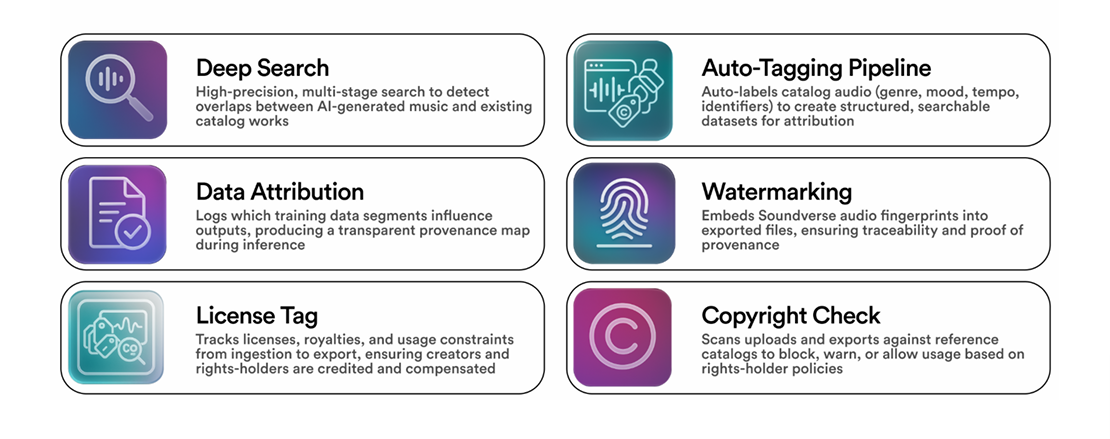
Soundverse Trace is a comprehensive trust layer for AI music ensuring every creator can produce legally compliant audio. It embeds attribution, rights protection, and data lineage throughout a project’s lifecycle—from dataset creation to final export.
Core capabilities:
- Deep Search: Conduct high-precision scans (1:1 and 1:N) to detect overlaps between AI-generated outputs and existing copyrighted material.
- Data Attribution: Log which training datasets influenced output, ensuring transparent ownership tracking.
- Audio Watermarking: Apply inaudible fingerprints in generated audio, maintaining origin integrity.
- License Tagging: Preserve rights metadata from initial ingestion to export.
These features collectively offer proactive defense against copyright infringement while simplifying rights management. Instead of guessing whether your composition is copyright free, Soundverse Trace verifies and documents provenance automatically.
The technology supports professional creators, record labels, and brands that demand reliable licensing. It also integrates with the Ethical AI Music Framework, guaranteeing attribution and recurring compensation for rights-holders via the Content Partner Program—an opt-in system enabling shared benefits between AI innovation and artist integrity.
For those exploring AI composition and voice modeling workflows, related resources such as Generate AI Music with Soundverse Text to Music and Soundverse Assistant: Your AI Music Co-Producer provide deeper insights into creative applications built on ethical AI usage.
Why copyright compliance matters in AI creation
The explosion of generative media demands verifiable rights control. AI can accidentally reference parts of copyrighted audio, creating risks for professional projects. For brands running large campaigns or streaming creators monetizing content, a single infringement claim can result in demonetization or removal.
Tools like Soundverse Trace act as a safeguard, embedding accountability and permission tracking directly inside the audio file. This approach empowers industry-wide transparency and supports fair compensation ecosystems, aligning innovation with integrity.
The future of copyright free resources in 2026
As AI technology scales, access to genuinely free use content will grow—but authenticity verification will be paramount. Expect platforms to integrate blockchain-style provenance chains and licensing automation. Soundverse is already pioneering this shift with Trace, ensuring compliant creative workflows.
Creators, marketers, and educators who understand distinctions between copyright free, royalty-free, public domain, and Creative Commons will thrive in this new ecosystem. Awareness, attribution, and ethical alignment will define success in 2026 and beyond.
Start Creating Copyright-Free Music Instantly
Unlock endless creative possibilities with Soundverse AI’s text-to-music generator. Produce unique, copyright-free tracks tailored to your style in seconds.
- Copyright Free vs Royalty Free Music: What Creators Should Know — Learn the key differences between copyright-free and royalty-free music and how each impacts your creative projects.
- Enhancing YouTube Content with Royalty-Free and Copyright-Free Music Using Soundverse AI — Discover how to elevate your YouTube videos using high-quality, copyright-free tracks generated by Soundverse AI.
- Navigating the World of Royalty-Free and Copyright-Free Music Using Soundverse AI — Explore how Soundverse simplifies music licensing and helps creators easily access copyright-free audio for any project.
- Generate AI Music with Soundverse Text-to-Music — Transform your ideas into original, copyright-free music instantly with Soundverse’s powerful AI-driven text-to-music tool.
Here's how to make AI Music with Soundverse
Video Guide
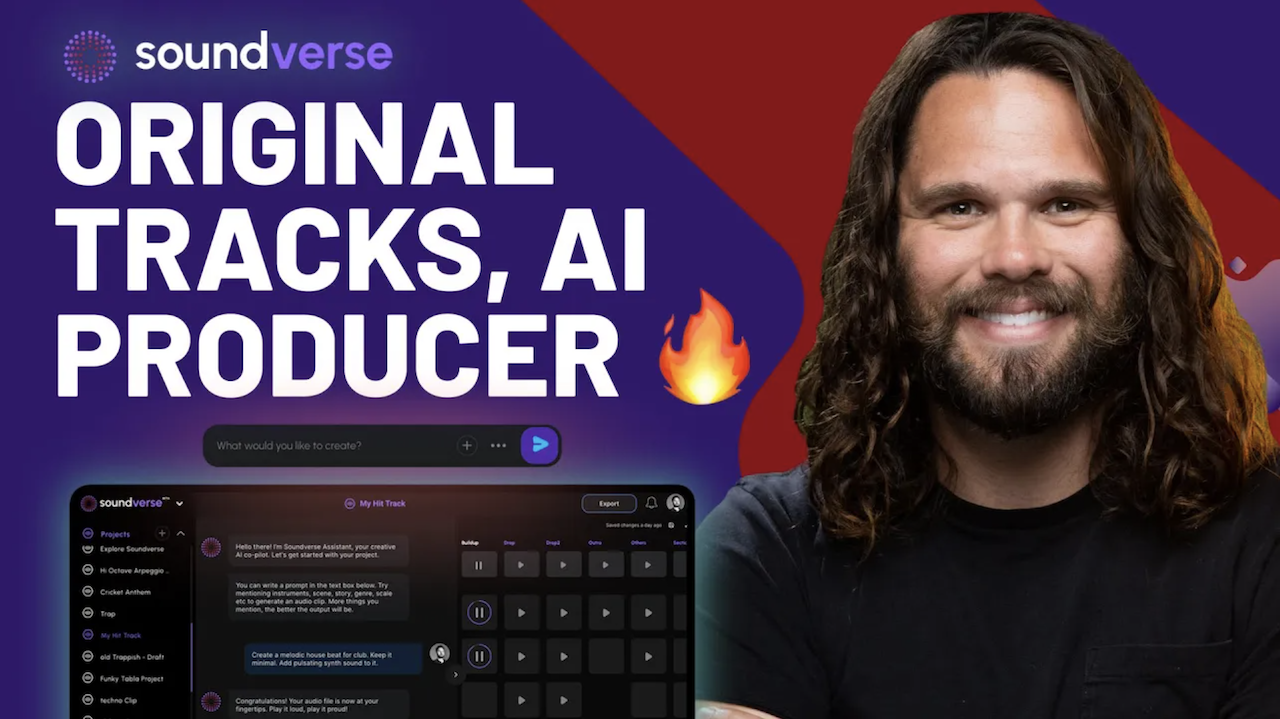
Here’s another long walkthrough of how to use Soundverse AI.
Text Guide
- To know more about AI Magic Tools, check here.
- To know more about Soundverse Assistant, check here.
- To know more about Arrangement Studio, check here.
Soundverse is an AI Assistant that allows content creators and music makers to create original content in a flash using Generative AI. With the help of Soundverse Assistant and AI Magic Tools, our users get an unfair advantage over other creators to create audio and music content quickly, easily and cheaply. Soundverse Assistant is your ultimate music companion. You simply speak to the assistant to get your stuff done. The more you speak to it, the more it starts understanding you and your goals. AI Magic Tools help convert your creative dreams into tangible music and audio. Use AI Magic Tools such as text to music, stem separation, or lyrics generation to realise your content dreams faster. Soundverse is here to take music production to the next level. We're not just a digital audio workstation (DAW) competing with Ableton or Logic, we're building a completely new paradigm of easy and conversational content creation.
TikTok: https://www.tiktok.com/@soundverse.ai
Twitter: https://twitter.com/soundverse_ai
Instagram: https://www.instagram.com/soundverse.ai
LinkedIn: https://www.linkedin.com/company/soundverseai
Youtube: https://www.youtube.com/@SoundverseAI
Facebook: https://www.facebook.com/profile.php?id=100095674445607
Join Soundverse for Free and make Viral AI Music
We are constantly building more product experiences. Keep checking our Blog to stay updated about them!
Image Steps: []