What Is Comfortable Melancholy Music?
Discover the essence of comfortable melancholy music and how Soundverse AI helps create calming emotional soundscapes.
What Is Comfortable Melancholy Music?
Comfortable melancholy music is one of those genres that quietly sneaks into your emotions — soothing yet stirring, sad yet strangely comforting. As we step into 2026, this emotional style has evolved beyond traditional soundtrack compositions, becoming a staple in introspective playlists, meditation sessions, and film scores emphasizing cinematic sadness. It’s not about heartbreak anthems or despair but rather the beauty of subtle emotional tension that makes listeners feel deeply alive.
What defines comfortable melancholy music in 2026?
The term “comfortable melancholy music” describes instrumental compositions that evoke tranquility through sadness. They are often ambient, deeply textural, and emotionally resonant without turning dark or gloomy. Listeners find comfort in the balance — melodies that embrace gentle sorrow while maintaining harmonic warmth and calm pacing.

In 2026, this style is perfectly aligned with modern emotional music trends. With the growing demand for mental wellness soundscapes and filmic emotionality, comfortable melancholy music provides the ideal emotional architecture for reflection and stability. Artists and soundtrack composers use this genre to guide audiences into intimate moments — whether in film montages, game environments, or personal study playlists.
Why do listeners find sadness comfortable?
Sadness, when gentle, can become therapeutic. Modern melancholy doesn’t aim to depress; it offers a safe space to process emotion. Research in affective music theory over the last few years (2024–2025) has revealed that slower tempos, sustained chords, and reverb-heavy soundscapes stimulate introspection more than excitement. In 2026, listeners crave this type of comfort in melancholy because it mirrors self-awareness and mindfulness.

Emotional music listeners increasingly describe these melodies as cinematic sadness — elegant compositions that sound like a film’s reflective ending scene. The combination of orchestral textures, ambient pads, and subtle progression provides both familiarity and depth, echoing how sad music comfort listeners when upset or evoke peacefulness and transcendence.
What instruments and structures define modern melancholy?
Modern melancholy sound design in 2026 employs instruments that emphasize resonance and warmth rather than drama:
- Piano and Strings – The classic pairing for cinematic sadness; minimal, expressive, and organic.
- Ambient Synths – Used to create ethereal layers that slowly drift, adding dream-like motion to the music.
- Soft Percussion – Light cymbal touches or gentle beats that maintain subtle rhythm without intrusion.
- Reversed Elements – Sound designers use reverse reverb or reversed piano samples to give the track a reflective feel.
These elements combine into intricate but calm arrangements that make listeners feel both nostalgic and peaceful. The music doesn’t demand attention—it allows space for thought.
How comfortable melancholy music influences film and creative work
In filmmaking and game scoring, comfortable melancholy music turns narrative emotion into sonic experience. Directors often turn to this genre during transitional or introspective scenes. It helps express emotion without forcing dialogue — allowing viewers to fill in the emotional blanks.
This same effect makes comfortable melancholy perfect for creative flow. Many professionals use emotional music to improve focus or help manage stress. By choosing music built around tonal balance and harmonic restraint, creators find emotional stability during their workflow.
For content creators navigating royalty-free sound solutions, understanding when and how to apply these soundscapes is essential. Articles like The Role of AI Music in Film and Television and Navigating the World of Royalty-Free and Copyright-Free Music Using Soundverse AI expand this concept into professional usage.
The rise of emotional music in AI composition trends
In the last two years, AI-generated composition shifted toward refined mood crafting. Systems like Soundverse’s AI Music Generator introduced texture control and emotional precision through text-to-music input. This allowed composers in 2025 to specify not just “sad piano music” but fine-tuned moods like “comforting melancholy for rainy afternoon reflections.” By 2026, these emotional parameters have become standard creative tools.
AI-based creation no longer replaces emotion—it amplifies it. When paired with inspiration frameworks such as Soundverse Assistant, artists can translate cinematic sadness into original instrumental pieces suitable for any media environment.
For extra inspiration, watch our Soundverse Tutorial Series - How to Make Music or explore the “Explore” Tab walkthrough to discover text-to-music creative possibilities.
How to make comfortable melancholy music with Soundverse AI Music Generator
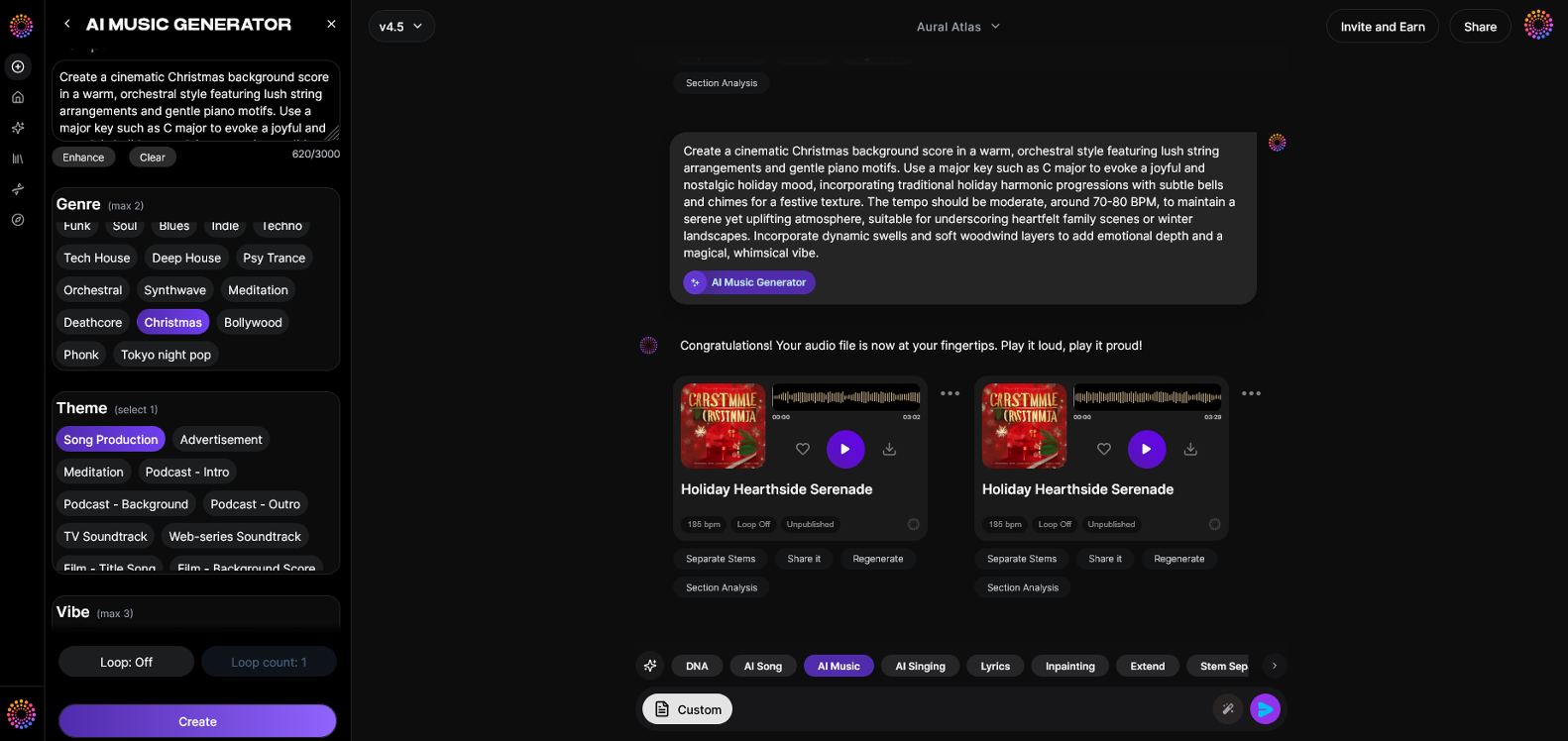
Soundverse’s AI Music Generator is a powerful tool designed specifically for creating instrumental emotional compositions. It allows users to create fully produced instrumental music directly from text prompts. Whether you’re crafting background music for a film, designing game soundtracks, or exploring meditation soundscapes, it handles the workflow from idea to download seamlessly.
Key capabilities:
- Text-to-music generation: Describe your musical mood — e.g., “cinematic sadness with soft piano and distant strings” — and generate it instantly.
- Loop Mode: Perfect for creators who need seamless looping capabilities for games, ads, or ambient content.
- Detailed genre/mood/instrument control: Adjust the mood (melancholic, uplifting, nostalgic), instruments (piano, synth, strings), and ambiance layers for nuanced tone fitting.
- Model Options (V4 and V5): Choose between two refined engines specialized in emotional precision and realistic audio rendering.
These capabilities make Soundverse not just a production platform but a creative companion for composers exploring nuanced emotional expression.
Soundverse also integrates with Similar Music Generator, which builds original compositions inspired by reference scores — a method ideal for filmmakers replicating familiar emotional cues without copyright concerns. Furthermore, Soundverse DNA ensures ethical sound generation by training on licensed catalogs, empowering music creators to generate authentic, monetizable, and copyright-safe tracks.
If you’re experimenting with creative soundscapes, see how other genres respond to emotional AI composition in articles such as How to Create Healing Meditation Music with Soundverse AI and The Benefits of Composing with AI Music Generator.
Practical applications in 2026
Comfortable melancholy music is now seen in multiple industries:
- Film and Television: Used for introspective character arcs or montage scenes.
- Gaming: Background atmospheres during reflective or post-battle segments.
- Wellness and Meditation: As calming tracks promoting emotional clarity.
- Advertising: Employed subtly in luxury brand emotional storytelling.
In all cases, the appeal lies in emotion-driven authenticity. Modern melancholy connects deeply with modern audiences seeking stillness amid digitally cluttered environments.
The future balance of emotion and AI
By 2026, AI and human creators have reached collaborative maturity. Emotional intelligence in sonic architecture is becoming as crucial as technical precision. Comfortable melancholy is no longer niche—it defines empathic sound design. As audiences become more aware of emotional tone, AI allows creators to merge cinematic sadness with peaceful comfort effortlessly.
As summarized in How AI-Generated Music Is Transforming the Music Industry, tools like Soundverse demonstrate how intelligent systems model complex emotional structures, maintaining musical authenticity while expanding artistic capacity.
Create Your Own Comfortable Melancholy Music with AI
Transform your emotions into melodies effortlessly. Soundverse lets you generate mood-driven music with AI—perfect for relaxation, storytelling, or creative projects.
Related Articles
- How to Create Healing Meditation Music with Soundverse AI: Learn how to design calming, emotionally rich meditation tracks with the power of AI.
- How to Create Jazz Music with Soundverse AI: Discover how AI can help you craft smooth and expressive jazz compositions effortlessly.
- Generate AI Music with Soundverse Text-to-Music: Turn words into music instantly using Soundverse’s AI-powered text-to-music generation tool.
- The Role of AI Music in Film and Television: Explore how AI-generated soundtracks are redefining cinematic storytelling.
Here's how to make AI Music with Soundverse
Video Guide

Here’s another long walkthrough of how to use Soundverse AI.
Text Guide
- To know more about AI Magic Tools, check here.
- To know more about Soundverse Assistant, check here.
- To know more about Arrangement Studio, check here.
Soundverse is an AI Assistant that allows content creators and music makers to create original content in a flash using Generative AI. With the help of Soundverse Assistant and AI Magic Tools, our users get an unfair advantage over other creators to create audio and music content quickly, easily and cheaply. Soundverse Assistant is your ultimate music companion. You simply speak to the assistant to get your stuff done. The more you speak to it, the more it starts understanding you and your goals. AI Magic Tools help convert your creative dreams into tangible music and audio. Use AI Magic Tools such as text to music, stem separation, or lyrics generation to realise your content dreams faster. Soundverse is here to take music production to the next level. We're not just a digital audio workstation (DAW) competing with Ableton or Logic, we're building a completely new paradigm of easy and conversational content creation.
TikTok: https://www.tiktok.com/@soundverse.ai
Twitter: https://twitter.com/soundverse_ai
Instagram: https://www.instagram.com/soundverse.ai
LinkedIn: https://www.linkedin.com/company/soundverseai
Youtube: https://www.youtube.com/@SoundverseAI
Facebook: https://www.facebook.com/profile.php?id=100095674445607
Join Soundverse for Free and make Viral AI Music

We are constantly building more product experiences. Keep checking our Blog to stay updated about them!