What Is an Open Verse? Understanding Its Meaning and 2026 Music Collaboration Trends
Learn what 'open verse' means, how it became a TikTok trend, and how musicians can collaborate using Soundverse tools in 2026.
What Is an Open Verse?
Introduction
In the music world of 2026, collaboration is no longer limited by geography or studio access. Digital platforms have transformed how artists interact, create, and share music. One of the most exciting developments of the past few years is the explosion of the open verse trend — a movement that transformed TikTok into a giant collaborative studio. But what exactly does "open verse" mean, and why has it become such a cornerstone for musicians and creators in 2026?
This guide breaks down the open verse meaning, explores how it developed through platforms like TikTok, shows how creators use it to grow their audiences, and highlights how tools like Soundverse Section Analysis empower musicians to perfect their collaborations.
What Does ‘Open Verse’ Mean?
An open verse refers to a segment of a song intentionally left blank or “open” for other artists to add their own lyrics, melody, or instrumentation. Unlike a remix — where the original track is altered — an open verse invites direct participation. The idea is that anyone can record themselves performing a verse to complement the existing structure.
The concept gained momentum around 2024 and boomed in 2025, with TikTok becoming the hub of creativity. Musicians began posting short demos under tags like #openversechallenge or #openverse. By 2026, this evolved into a recognized format used across streaming platforms, music contests, and AI music creation tools.
Why Did the Open Verse Trend Explode on TikTok?
TikTok’s video format supports quick collaboration. When an artist posts a track with an open verse, users can stitch, duet, or overlay their addition seamlessly. The combination of fast sharing, viral discovery, and algorithmic promotion allowed the open verse trend to flourish.

Key reasons for its popularity:
- Accessibility: You don’t need a studio — just a phone, a mic, and creativity.
- Engagement: Audiences love watching new verses evolve from the same base track.
- Community: It turns solo songwriting into a collaborative event.
- Opportunity: Unknown artists often go viral when their open verse submission connects emotionally.
Creators now use tutorials and songwriting guides like How to make good rap lyrics to craft memorable additions that stand out.
What Is the Purpose of an Open Verse Challenge?
An open verse challenge is basically a call for musical collaboration. The original artist posts a song snippet — usually with vocals on verses and chorus, leaving one part blank — and encourages others to “fill” the space. Participants reply with their performance, creating a wave of unique versions.
These challenges bridge genres and generations. You might see an indie singer collaborating with a hip-hop producer or an EDM DJ remixing a country melody. The open verse meaning thus goes beyond structure — it’s about global creative connection.
The evolution from trend to established format
By 2026, open verse has become an essential content type on TikTok, YouTube Shorts, and Instagram Reels. It’s used for songwriting competitions, brand campaigns, and even education in online music production courses.
How to Do an Open Verse
If you’re a creator wanting to join an open verse TikTok challenge, here’s how to approach it effectively:
- Choose your track carefully. Look for songs labeled “open verse” in the caption or hashtags.
- Write your verse. Craft lyrics that match the tone, rhythm, and key of the song. Tools like AI Lyrics Writer help speed up brainstorming.
- Record your performance. You can sing, rap, or play an instrument over the open section.
- Edit and upload. Combine your recording with the original clip, then post with relevant hashtags.
- Engage with the community. Comment on others’ submissions and collaborate for follow-up tracks.
Each open verse project showcases artistic individuality while remaining anchored to a shared musical foundation.
How Open Verse Collaboration Has Shaped Music Creation in 2026
By 2026, open verse collaborations have normalized remote co-production. Many musicians intentionally upload instrumental bases and chorus segments, inviting fans to complete their compositions. Some major record labels now scout talent through open verse submissions.
The movement also reflects growing interest in AI-assisted music creation. Artists mix human expression with machine intelligence for precision editing or voice enhancement. Platforms like Soundverse play a pivotal role, giving creators technical control over arrangement, remixing, and structure detection.
Open verse projects demonstrate how boundaries are dissolving — music is now participatory, iterative, and algorithmically discoverable. For a deeper dive, watch our guide on creating Deep House music and overview of music creation basics on the Soundverse YouTube Channel.
How to Make Open Verse Collaborations with Soundverse Section Analysis
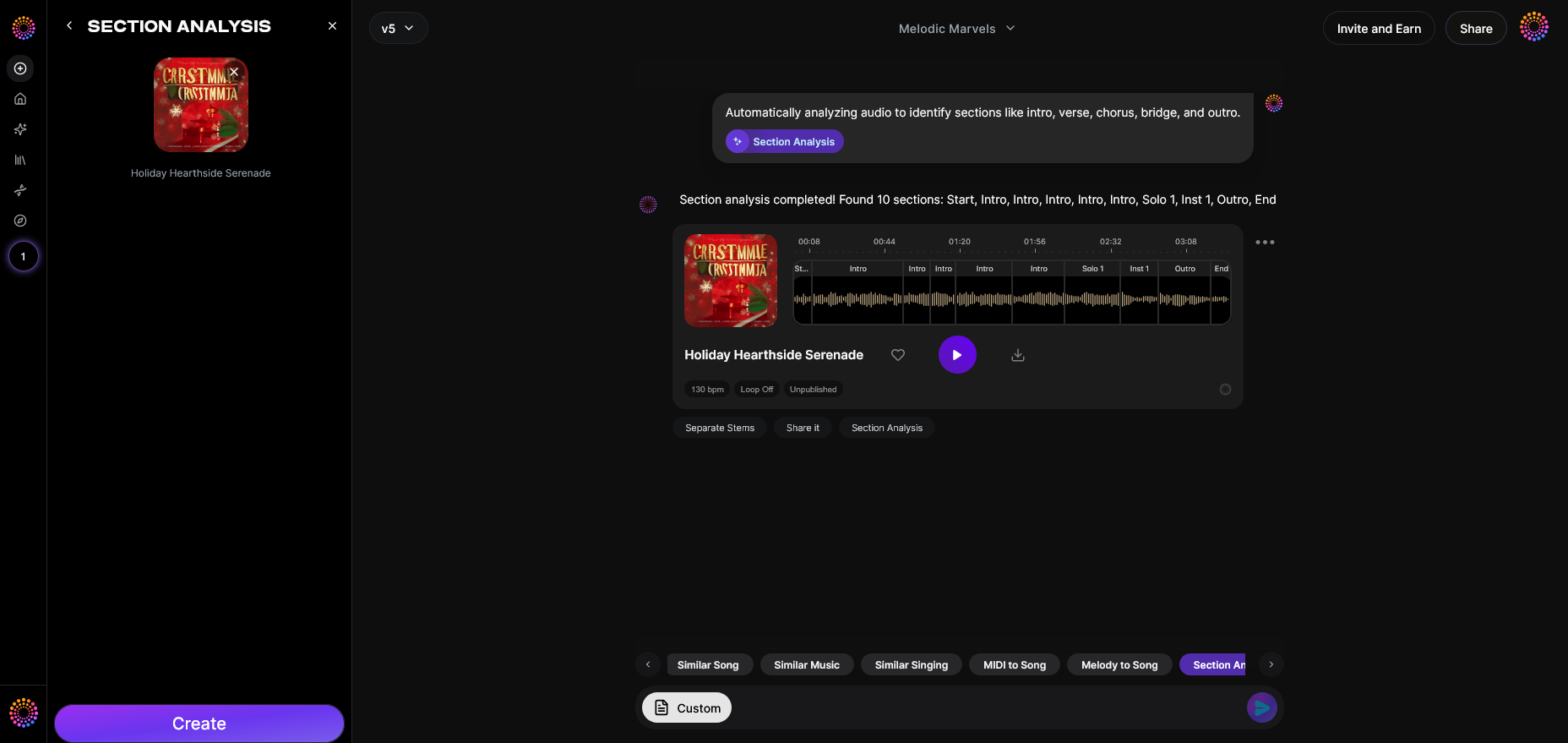
Soundverse’s Section Analysis feature is built for creators managing multi-artist projects like open verses. It automatically detects and labels song sections — Intro, Verse, Chorus, Bridge, and Outro — with precise timestamps.
This structured roadmap helps users identify exactly where to insert a new open verse. You can upload your song, let the system analyze it asynchronously, and receive a visual section breakdown. This makes it easier to instruct collaborators (“Add verse between 1:15–1:45”) and maintain consistent song flow.
Core capabilities include:
- Automated structure detection: The AI system parses your track to identify repetition and arrangement patterns.
- Visual roadmap generation: You see labeled segments within a timeline for seamless editing.
- Timestamp export: Perfect for referencing when doing inpainting edits, remixes, or open verse additions.
Common use cases for Section Analysis:
- Preparation for inpainting edits — replacing or enhancing a specific part without affecting the rest.
- Learning structure for covers — helpful for TikTok musicians performing open verse duets.
- Remixing and cue setting for DJs or producers.
- Sync licensing assessment — evaluating the composition’s structure for placement opportunities.
By pairing Section Analysis with other Soundverse tools like Inpainting and AI Lyrics Writer, a musician can create versatile and polished collaborations that resonate with audiences.
Why Soundverse Is Essential for the Open Verse Trend
Soundverse isn’t just another AI platform; it’s a co-creative toolkit for the 2026 music ecosystem. When participating in the open verse challenge, understanding the existing song structure is crucial — and that’s exactly what Section Analysis delivers. You can:
- Upload your instrumental or vocal track.
- Generate a detailed section map.
- Export timestamps for collaborators.
This keeps open verse projects organized, time-efficient, and professional. Emerging creators benefit from its automation, while advanced users appreciate the editing precision.
If your creativity extends to genre experimentation, explore guides like How to Create EDM with Soundverse AI or How to Create Country Music with Soundverse AI. These show how Soundverse supports diverse collaboration styles, aligning perfectly with open verse workflows. You can also watch Soundverse’s Explore Tab tutorial to learn how to discover and manage creative content spaces efficiently.
The Future of Open Verse in 2026 and Beyond
Music collaboration will continue evolving throughout 2026 and beyond. Open verse formats may expand into full-length crowd-sourced albums, where each track features dozens of contributors. With AI tools supporting section detection, lyric generation, and structure optimization, artists can focus more on creativity and less on technical barriers.
Social media creators, too, find open verses valuable for engagement metrics — they generate participatory content loops, challenge replies, and remix videos that attract organic followers. As digital identities blend with musical expression, the open verse remains a symbol of global creative unity.
Create Your Own Open Verse Now with Soundverse
Turn your ideas into music instantly. Whether you want to collaborate, remix, or start a viral challenge, Soundverse’s AI tools make creation simple, fast, and inspiring.
Get Started Free
Related Articles
- How to Create Rap Music with AI: Explore how AI can help you produce rap beats and verses effortlessly using Soundverse’s text-to-music technology.
- How to Make Good Rap Lyrics: Learn actionable tips and techniques to craft memorable rap lyrics that resonate with audiences.
- Generate AI Music with Soundverse Text-to-Music: Discover how to instantly generate full songs by describing your vibe, genre, or instruments in words.
- Soundverse Assistant: Your AI Music Co‑Producer: Meet your creative partner that helps you choose the right tools and directions for every music project.
Here's how to make AI Music with Soundverse
Video Guide
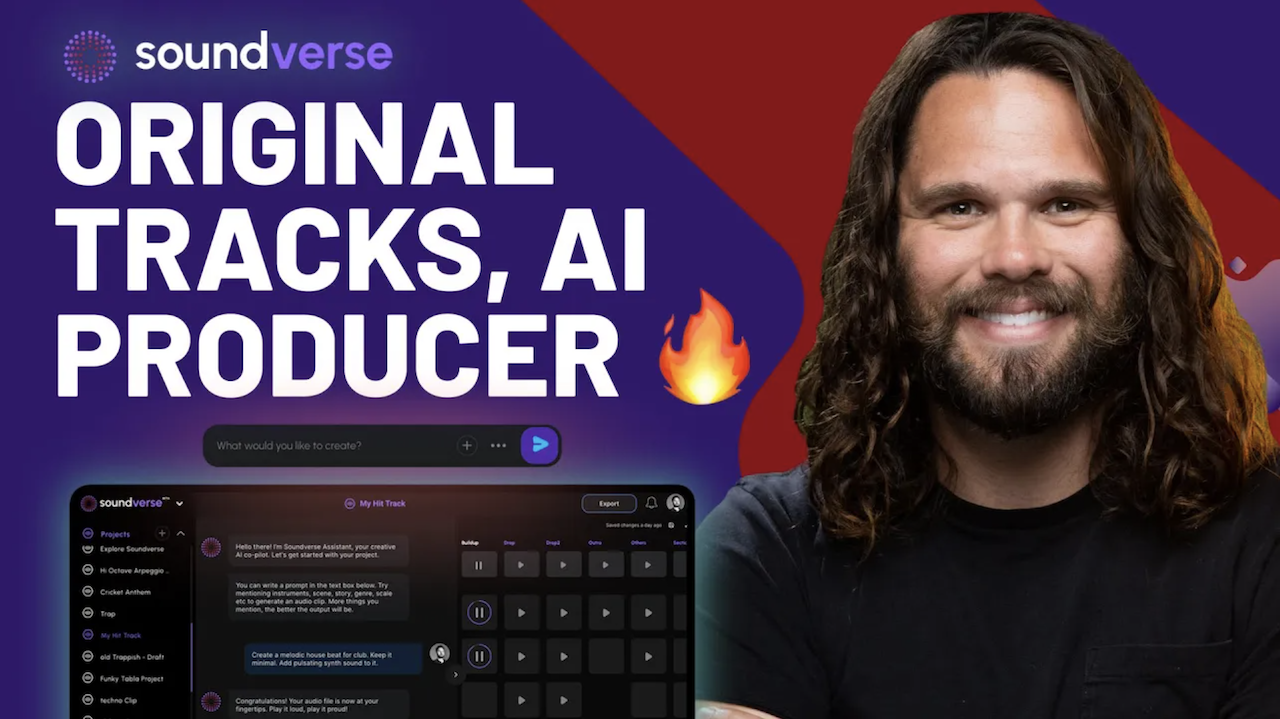
Here’s another long walkthrough of how to use Soundverse AI.
Text Guide
- To know more about AI Magic Tools, check here.
- To know more about Soundverse Assistant, check here.
- To know more about Arrangement Studio, check here.
Soundverse is an AI Assistant that allows content creators and music makers to create original content in a flash using Generative AI.
With the help of Soundverse Assistant and AI Magic Tools, our users get an unfair advantage over other creators to create audio and music content quickly, easily and cheaply.
Soundverse Assistant is your ultimate music companion. You simply speak to the assistant to get your stuff done. The more you speak to it, the more it starts understanding you and your goals.
AI Magic Tools help convert your creative dreams into tangible music and audio. Use AI Magic Tools such as text to music, stem separation, or lyrics generation to realise your content dreams faster.
Soundverse is here to take music production to the next level. We're not just a digital audio workstation (DAW) competing with Ableton or Logic, we're building a completely new paradigm of easy and conversational content creation.
TikTok: https://www.tiktok.com/@soundverse.ai
Twitter: https://twitter.com/soundverse_ai
Instagram: https://www.instagram.com/soundverse.ai
LinkedIn: https://www.linkedin.com/company/soundverseai
Youtube: https://www.youtube.com/@SoundverseAI
Facebook: https://www.facebook.com/profile.php?id=100095674445607
Join Soundverse for Free and make Viral AI Music
We are constantly building more product experiences. Keep checking our Blog to stay updated about them!