What Is AI-Generated Music?
Discover what AI-generated music is and how it's shaping music creation in 2026.
What Is AI-Generated Music?
Artificial intelligence has entered nearly every creative industry, and music is no exception. As technology advances rapidly in 2026, the concept of AI-generated music has gone from experimental novelty to mainstream production tool. From independent producers and YouTube creators to video game developers and wellness studios, AI is now a regular collaborator in music creation. But what exactly is AI-generated music, how does it work, and what does it mean for musicians today?
What does AI-generated music mean?
AI-generated music refers to compositions created or assisted by artificial intelligence systems rather than human-only musicians. Instead of playing instruments or manually producing tracks, creators can now input text prompts, select genres or moods, and let machine learning algorithms translate those ideas into complete musical pieces. These systems use neural networks trained on thousands of songs to learn patterns of rhythm, harmony, and texture, generating new pieces that sound professional and emotionally resonant.
It’s important to note that AI-generated music doesn’t rely solely on pre-existing samples. Modern models analyze musical structures and build fresh arrangements, often capable of matching particular vibes like cinematic tension, lofi calm, upbeat advertising jingles, or epic game soundscapes.
How is artificial intelligence used in music creation?
Artificial intelligence in music can serve several roles depending on its application. Algorithms can perform everything from composing background instrumentals to assisting in mastering and mixing. Machine learning in music focuses on learning from vast audio datasets — identifying chord progressions, instrumentation layers, and sound textures — and then creating new music based on probabilistic models.
By 2026, these techniques are being used across multiple verticals:
- Composition Assistance: AI composers can generate melodies or harmonies that inspire human musicians to develop full arrangements.
- Automatic Production: AI music tools now sequence beats, layer instruments, and blend FX without manual intervention.
- Mood Scoring: For filmmakers and advertisers, AI can produce tracks matching the desired emotional tone in seconds.
- Loop Generation: Perfectly timed background loops are used extensively in games and meditation apps.
This means AI-generated music isn’t designed to replace musicians but to help them work faster, experiment freely, and expand creative possibilities.
Why is AI-generated music popular in 2026?
Over the past two years, AI music generation tools have matured beyond simple melody generators. In 2024 and 2025, much of the technology was limited to demo-level sound quality and basic genres. However, 2026 has brought the proliferation of advanced text-to-music models capable of studio-grade results across diverse styles.
Several factors drive this popularity:
- Accessibility: Anyone can create music—no instruments or expensive DAW setup required.
- Speed: AI systems produce full tracks in minutes compared to hours of manual composition.
- Customization: Users can specify genre, tempo, instrument types, and emotional cues.
- Integration: Many creators use AI to fill specific needs—like video soundtracks or social content—without heavy licensing costs.
For creators exploring efficient and copyright-safe production, AI-generated music has become central to workflows, as highlighted in how AI-generated music is transforming the music industry. For an overview of how these tools advance model-based creativity, read Best AI Music Generators in 2026: Create Professional Audio with AI.
What technologies power AI music generation?
Behind AI-generated music lie several machine learning architectures:
- Generative Adversarial Networks (GANs) learn to mimic sound styles and create original sequences.
- Transformers (like GPT models) process musical tokens and predict notes and tempo transitions based on context.
- Recurrent Neural Networks (RNNs) specialize in time-series data, ideal for rhythm and melody continuity.
These methods are merged with audio synthesis engines that turn abstract note instructions into real sounds. 2026 models have become multi-modal, capable of accepting text prompts, genre selections, or even humming samples to guide composition. AI's Mainstream Move: What Music Looks Like in 2026 predicts such techniques may lead AI tracks to chart alongside human compositions.
Do AI composers threaten human creativity?
The rise of AI composers sparks ongoing debate. While some fear automation could replace creative jobs, most professionals view AI as an augmentation tool—not competition. Human musicians bring cultural intuition, storytelling, and interpretative depth that algorithms simply emulate but never fully replicate. AI assists with technical composition and production speed, while creativity remains human-led.
The Ethical AI Music Framework ensures transparency, consent, and fair compensation when AI influences artistic work. These ethics help align technology with a culture of respect for original creators. For an understanding of cultural policies, see Saving Country Music's New Policy on AI Music for 2026.
What industries benefit the most from AI-generated music?
Today AI music touches nearly every creative sector:
- Film & Television: Automated scoring for trailers and ambient cues—explored in the role of AI music in film and television.
- Video Games: Loop-based AI soundscapes adapt dynamically in gameplay.
- Advertising: Quick generation of on-brand audio identities.
- Health & Wellness: AI engines provide meditation tracks customized to listener mood.
- Content Creation: YouTubers and podcasters now rely on tools like Soundverse to produce royalty-free background music efficiently.
For a deeper dive, watch our guide on creating Deep House music or How to Make Music - Soundverse Tutorial Series.
How to make AI-generated music with Soundverse AI Music Generator
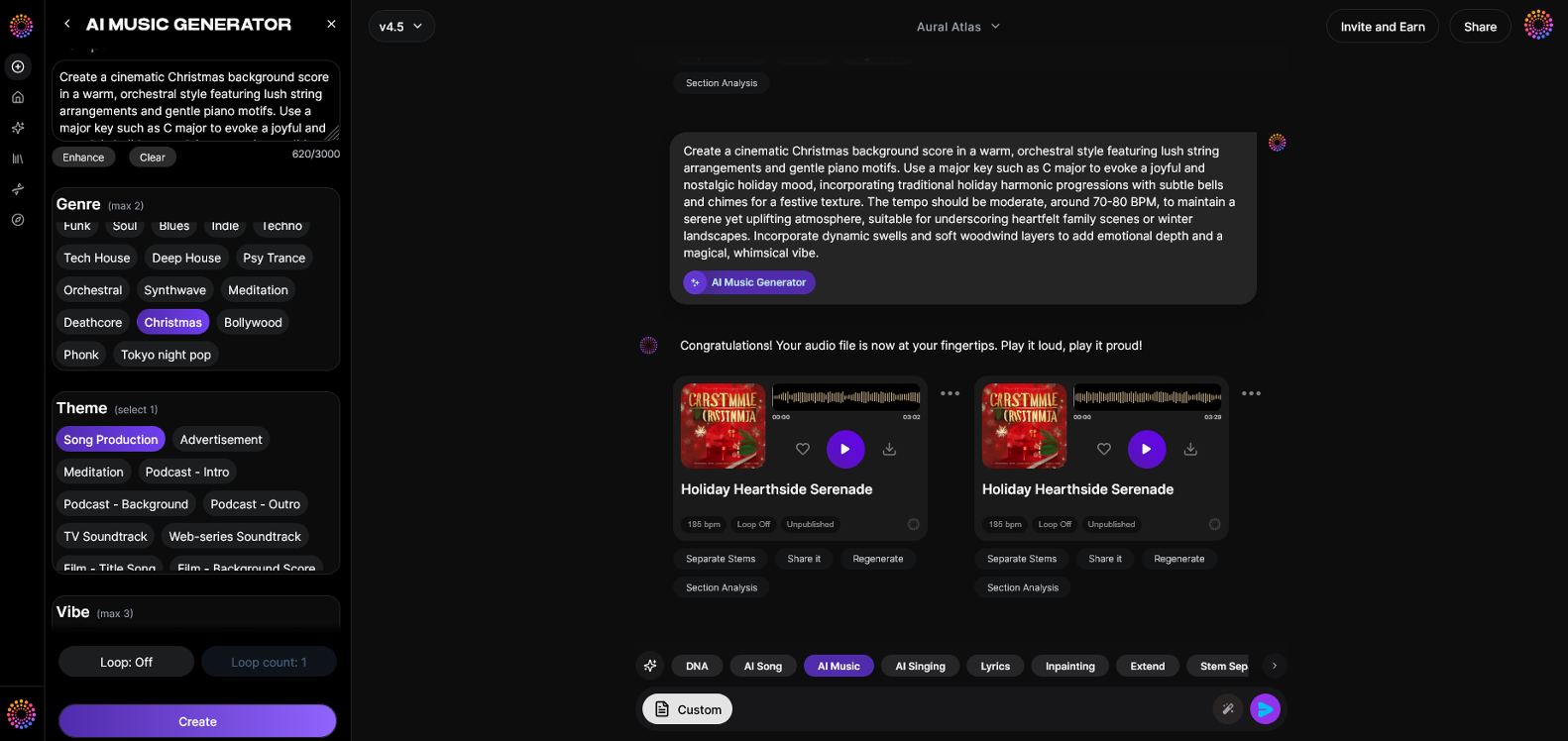
Among the 2026 innovations, Soundverse shines as one of the most advanced platforms for instrumental AI generation.
Feature Overview: The Soundverse AI Music Generator enables the creation of fully produced instrumental music directly from text prompts. Users simply describe the desired genre, vibe, or instrumentation, and the AI composes a piece fitting those parameters. It specializes in background tracks, beats, and ambient soundscapes—without vocals—with optional Loop Mode for seamless repetition.
Core Capabilities Include:
- Text-to-music conversion for instantly producing tracks.
- Loop Mode for infinite playback loops ideal for games and meditation apps.
- Accurate control over genre, mood, and instrument balance.
- Access to V4 and V5 model options offering various sonic characteristics.
Primary Use Cases:
- Create video background soundtracks that elevate storytelling.
- Produce dynamic in-game music loops.
- Generate meditation and wellness soundscapes.
- Develop commercial scoring for advertisements.
Soundverse’s ecosystem also includes complementary tools:
- AI Song Generator – Adds lyrics and vocal synthesis to create complete songs.
- AI Singing Generator – Generates vocal tracks or experimental voice textures.
For creators seeking deeper AI musical workflows, you can explore generate AI music with Soundverse text-to-music or learn how to make AI-generated music for specific genres.
Is AI-generated music royalty-free?
Soundverse and similar platforms increasingly focus on delivering royalty-safe content. Since the composition is generated algorithmically without sampling copyrighted works, creators can freely use outputs for commercial projects. However, understanding licensing distinctions between royalty-free and copyright-free remains important. For reference, review navigating the world of royalty-free and copyright-free music using Soundverse AI to learn how AI-generated music supports ethical usage. Legal aspects are covered in AI Music and the Law in 2026: What Creators Can and Cannot Do.
What is the future of AI-generated music?
By mid-2026, AI music has moved from being futuristic to foundational. Trends suggest that hybrid collaboration—humans guiding AI for customized sound outputs—will define the next stage. As generative models grow more context-aware, they’ll tailor music dynamically in immersive environments: think virtual concerts, smart soundscapes reacting to heartbeats, or adaptive tracks for metaverse experiences.
Machine learning in music continues to advance its analytic accuracy, making song structure more precise and expressive. Integration with creative assistants such as Soundverse SAAR AI Voice Assistant is making composition conversational: creators talk, and AI translates words into sonic art. To understand transformation scenarios further, watch Explore Tab Tutorial and check What AI Means for the Music Industry in 2026 - YouTube.
Create Your Own AI-Generated Music Today!
Experience the future of music creation with Soundverse. Instantly generate high-quality, royalty-free tracks tailored to your vibe, genre, and mood—all powered by advanced AI.
Start Making Music Now
Related Articles
- How AI-Generated Music Is Transforming the Music Industry: Discover how AI is reshaping creativity, production, and business models across the modern music industry.
- How to Make AI-Generated Music: Learn the step-by-step process of creating music using AI tools and unleash your creative potential.
- The Benefits of Composing with AI Music Generator: Explore the key advantages of integrating AI into your composition workflow for efficiency and inspiration.
- AI Music Generator and Human Composers: A Future Together: Find out how AI and human creativity can collaborate to produce groundbreaking music innovations.
Here's how to make AI Music with Soundverse
Video Guide
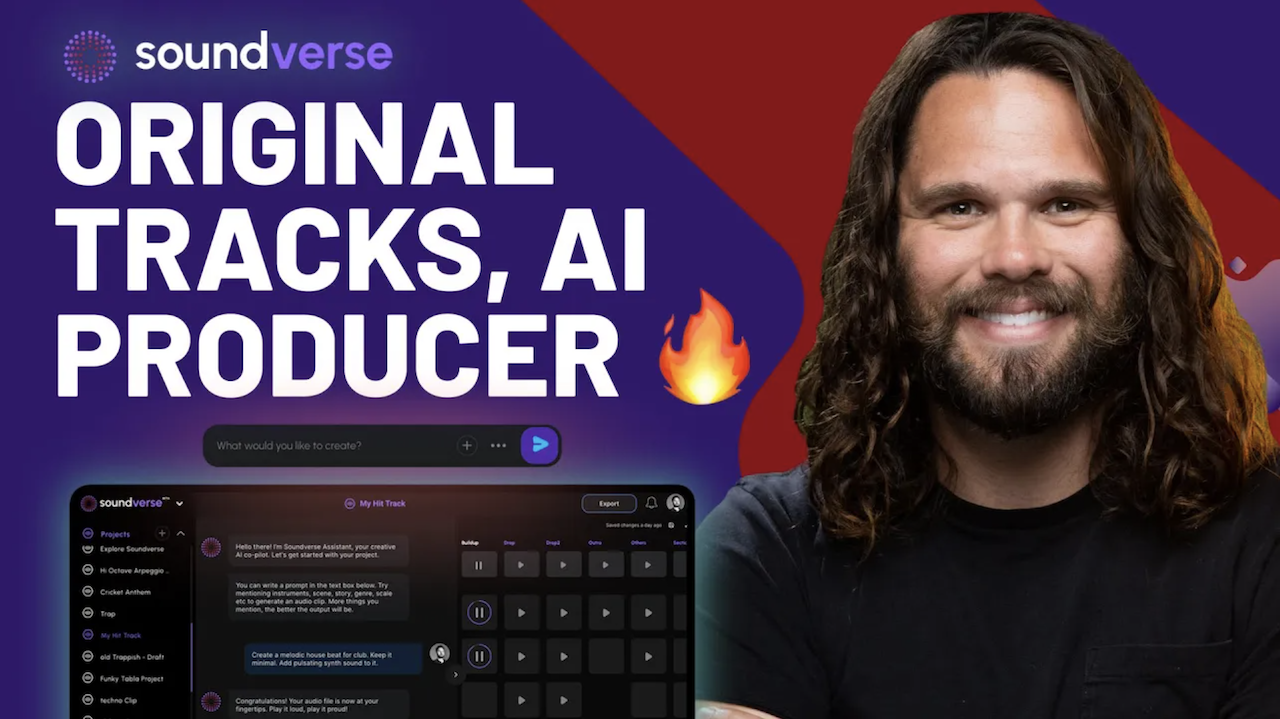
Here’s another long walkthrough of how to use Soundverse AI.
Text Guide
- To know more about AI Magic Tools, check here.
- To know more about Soundverse Assistant, check here.
- To know more about Arrangement Studio, check here.
Soundverse is an AI Assistant that allows content creators and music makers to create original content in a flash using Generative AI. With the help of Soundverse Assistant and AI Magic Tools, our users get an unfair advantage over other creators to create audio and music content quickly, easily and cheaply. Soundverse Assistant is your ultimate music companion. You simply speak to the assistant to get your stuff done. The more you speak to it, the more it starts understanding you and your goals. AI Magic Tools help convert your creative dreams into tangible music and audio. Use AI Magic Tools such as text to music, stem separation, or lyrics generation to realise your content dreams faster. Soundverse is here to take music production to the next level. We're not just a digital audio workstation (DAW) competing with Ableton or Logic, we're building a completely new paradigm of easy and conversational content creation.
TikTok: https://www.tiktok.com/@soundverse.ai
Twitter: https://twitter.com/soundverse_ai
Instagram: https://www.instagram.com/soundverse.ai
LinkedIn: https://www.linkedin.com/company/soundverseai
Youtube: https://www.youtube.com/@SoundverseAI
Facebook: https://www.facebook.com/profile.php?id=100095674445607
Join Soundverse for Free and make Viral AI Music

We are constantly building more product experiences. Keep checking our Blog to stay updated about them!