What Is Acapella? Understanding Vocal-Only Music in 2026
Discover acapella music, styles, and groups in 2026, plus how Soundverse AI generates acapella vocals.
What Is Acapella?
Acapella music has continued to inspire and evolve through decades of creativity and innovation. But in 2026, the definition of acapella has expanded far beyond choir halls and collegiate singing groups. Powered by artificial intelligence and innovative sound design tools, artists today explore vocal-only music as a limitless medium—combining technology and artistry to produce sounds never thought possible.
What is acapella music?
Acapella refers to vocal performances created without instrumental accompaniment. The term comes from the Italian phrase “a cappella,” meaning “in the style of the chapel.” Traditionally, acapella singing was associated with sacred music, where choirs performed harmonies using only voices. In modern music, acapella can encompass everything from pop covers to experimental soundscapes.
In an acapella performance, singers use the full expressive range of the human voice—melody, rhythm, harmony, texture—to simulate what instruments or production might otherwise add. Beatboxing, vocal percussion, and layered harmonies all contribute to a full, rich sound that feels complete even without instruments.
What are the main types of acapella singing?
By 2026, acapella has diversified into several distinct styles, each with unique creative techniques.

- Traditional Choir Acapella – Common in classical or sacred settings, this style emphasizes harmony and precision among multiple vocal parts.
- Contemporary Pop Acapella – Groups recreate popular songs using voices for drum beats, basslines, and instrumental textures.
- Vocal Jazz Acapella – Characterized by improvisation, scat singing, and complex chord progressions inspired by jazz ensembles.
- Barbershop Quartets – Four-part harmony arrangements focusing on consonance and vocal blending.
- Experimental Acapella – Artists and producers mix vocal samples, effects, and AI-generated textures to push creative boundaries.
- Digital/AI Acapella – Emerging as a major trend in 2026, this form uses AI technology to generate realistic vocal recordings from text or lyric input, enabling songs with pure voice output.
Each type showcases how singers and producers reinterpret vocal performance to fit new genres and technologies.
Why is acapella music gaining popularity in 2026?
The resurgence of acapella music in recent years is closely linked to the rise of online music creation and digital collaboration. Platforms like TikTok and YouTube have turned short-form vocal content into viral gold. Singers record intricate harmonies and share layered vocal productions without needing expensive instruments.
Additionally, AI tools are redefining creative boundaries. The accessibility of music generators and voice synthesis software has allowed solo creators to produce professional-quality acapella music without needing a full choir. For content creators, vocalists, and producers, these tools simplify experimentation—whether crafting original vocal performances or remixing popular tunes.
Another factor driving this trend is sustainability in digital creation. Vocal-only tracks require minimal recording equipment, fewer post-production resources, and no reliance on virtual instruments. Acapella therefore represents a movement toward minimalistic yet emotionally rich sound design.
What makes a great acapella vocal performance?
Unlike instrumental tracks, acapella depends entirely on vocal talent and production techniques. A standout acapella performance typically includes:
- Precision in pitch and tone: Pure intonation ensures vocal parts blend perfectly.
- Dynamic harmonies: Layered vocal textures create depth and emotional movement.
- Rhythmic vocal percussion: Beatboxing or rhythmic chanting adds energy and groove.
- Balance in mix: Even without instruments, mixing and mastering play a vital role in clarity.
- Authentic expression: Emotional delivery matters more than ever since the voice is the only instrument.
As technology continues to evolve, producers now complement these human skills with AI-powered voice tools for studio-grade results.
For a deeper dive into modern creative workflows, watch our guide on how to make music or explore the Deep House music tutorial on the Soundverse YouTube channel.
How to make acapella music with Soundverse AI Singing Generator
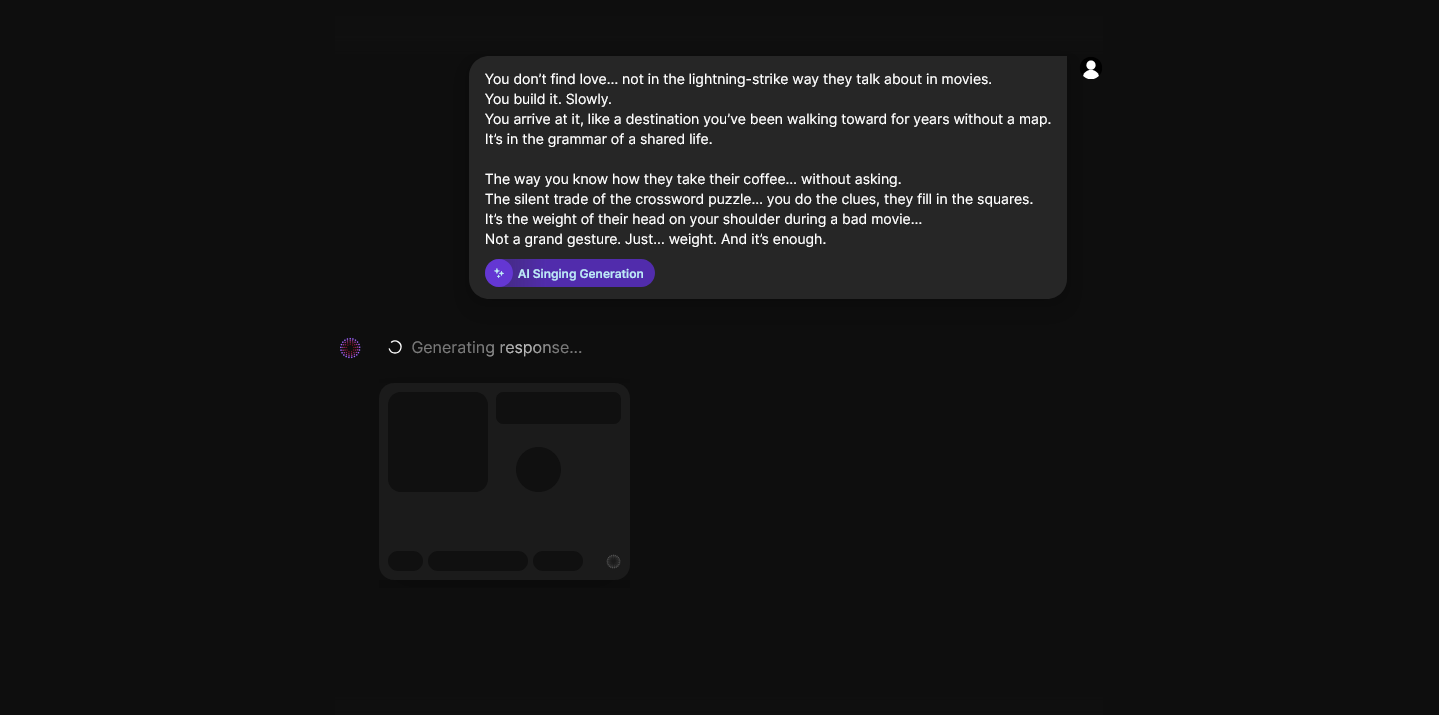
Soundverse has become a leading solution for music creators looking to generate acapella vocals quickly and professionally. The AI Singing Generator empowers users to transform text or lyrics directly into acapella vocal performances that rival studio recordings.
Overview of Soundverse AI Singing Generator
The Soundverse AI Singing Generator allows creators to generate professional-quality vocal performances purely from text input. Whether you are composing pop, rap, opera, or ambient projects, the system can produce accurate vocal lines without the need for external instruments.
Core capabilities include:
- Text-to-singing generation.
- Diverse singing styles such as Pop, Rock, Rap, Opera, and ASMR.
- Reference audio support for style matching—ideal for consistent character voices.
- Clean acapella output for seamless integration into mixes or standalone use.
Primary use cases:
- Vocal references for producers.
- Electronic music vocal chops.
- Character voices for games or animations.
- Multilingual vocal tracks for global projects.
Soundverse is not a real-time singing system; users input text or upload audio, and the AI asynchronously processes it. Once ready, creators can download the generated acapella file.
How Soundverse helps singers and producers in 2026
Soundverse’s tools elevate acapella creation by streamlining the entire vocal production process. Musicians who once needed advanced equipment or trained ensembles can now produce intricate harmonies with only text and creativity.
This innovation supports a broader mission seen across Soundverse’s ecosystem. Other tools complement acapella creation:
- The Similar Singing Generator matches tone and emotion from reference voices for consistency.
- The Stem Separator lets users extract vocals from mixed tracks, a useful feature for remixing classic acapella moments.
- The Voice Swap tool enables changing vocal speakers while keeping expressive authenticity.
Producers who explore deeper AI workflows can learn more through articles like How AI Music Is Transforming the Music Industry and What AI Can Generate Songs. These explain how text-to-music and voice AI converge to redefine creative processes.
Why Soundverse leads the acapella AI movement
In 2026, music creation relies not only on performance but also technological accessibility. Soundverse’s AI Singing Generator represents the future of acapella by merging human emotion with machine precision. Instead of needing an entire vocal group, one artist can craft a multilayered choir sound instantly.
The clean acapella output makes it easy to layer with instruments or use characteristic voice textures—such as whispering or playful “Meow Meow” tones—for experimental compositions. This flexibility makes acapella viable across genres including Lo-fi, EDM, Metal, and even cinematic scores.
Moreover, Soundverse aligns with the broader trend of collaborative AI music creation seen in 2026’s music industry trends. The tools empower creators world-wide to merge artistry and innovation while maintaining individuality.
Start Creating Stunning Acapella Tracks with Soundverse AI
Unlock the power of voice-only compositions using advanced AI tools. Generate, separate, and refine vocals effortlessly to bring your acapella ideas to life.
Related Articles
- Soundverse Introduces Stem Separation AI Magic Tool — Discover how Soundverse’s innovative stem separation technology lets creators isolate vocals for acapella production and remixing.
- Soundverse Assistant: Your AI Music Co-Producer — Learn how Soundverse Assistant helps musicians and producers perfect vocal arrangements and harmonies in seconds.
- Generate AI Music with Soundverse Text-to-Music — Explore how you can turn simple text prompts into full musical compositions, including acapella-style pieces.
- What Are Song Stems and Why Do You Need Them — Understand the importance of song stems in creating clear, isolated vocal tracks for acapella or remix projects.
Here's how to make AI Music with Soundverse
Video Guide
Here’s another long walkthrough of how to use Soundverse AI.
Text Guide
- To know more about AI Magic Tools, check here.
- To know more about Soundverse Assistant, check here.
- To know more about Arrangement Studio, check here.
Soundverse is an AI Assistant that allows content creators and music makers to create original content in a flash using Generative AI.
With the help of Soundverse Assistant and AI Magic Tools, our users get an unfair advantage over other creators to create audio and music content quickly, easily and cheaply.
Soundverse Assistant is your ultimate music companion. You simply speak to the assistant to get your stuff done. The more you speak to it, the more it starts understanding you and your goals.
AI Magic Tools help convert your creative dreams into tangible music and audio. Use AI Magic Tools such as text to music, stem separation, or lyrics generation to realise your content dreams faster.
Soundverse is here to take music production to the next level. We're not just a digital audio workstation (DAW) competing with Ableton or Logic, we're building a completely new paradigm of easy and conversational content creation.
TikTok: https://www.tiktok.com/@soundverse.ai
Twitter: https://twitter.com/soundverse_ai
Instagram: https://www.instagram.com/soundverse.ai
LinkedIn: https://www.linkedin.com/company/soundverseai
Youtube: https://www.youtube.com/@SoundverseAI
Facebook: https://www.facebook.com/profile.php?id=100095674445607
Join Soundverse for Free and make Viral AI Music

We are constantly building more product experiences. Keep checking our Blog to stay updated about them!