What Is a Verse in Music? Understanding Song Structure for 2026 Songwriters
Learn what a verse in music is, how it fits into song structure, and how Soundverse helps you analyze songs in 2026.
What Is a Verse in Music?
A verse in music is one of the most fundamental components of modern songwriting. For beginner musicians, music students, and aspiring songwriters, understanding what a verse is—and how it interacts with other parts of a song—is an essential step in mastering songwriting basics. As music continues to evolve in 2026, artists are using technology like Soundverse to refine and analyze song structures more effectively than ever before.
What does 'verse in music' mean?
In simple terms, a verse in music is a section that tells the story or develops the theme of the song. It usually features lyrical variation while maintaining the same melody. Each verse advances the narrative, giving listeners more details about the emotions, situation, or characters introduced in the song. In contrast to the chorus, which is often repeated and serves as the emotional and melodic centerpiece, verses provide the unfolding journey that keeps listeners engaged.
When you listen to popular songs across different genres—pop, jazz, rock, or country—the verse is often where the lyrical content changes, offering new insight or perspective while preparing for the chorus. It helps create progression, tension, and release within the overall song structure.

How does a verse fit into a song’s structure?
To fully understand a verse in music, it helps to look at the broader song structure. A typical arrangement includes several distinct elements:
- Intro: The opening section that sets the tone and introduces the song’s mood.
- Verse: The storytelling portion where lyrics evolve from one narrative point to another.
- Pre-Chorus (optional): A short buildup leading into the main hook or chorus.
- Chorus: The repeating and memorable section that encapsulates the main idea or emotional high point.
- Bridge: A contrasting section that adds variety, often appearing later in the song.
- Outro: The closing passage that wraps up the composition.
Within this framework, the verse serves a unique role—it connects and transitions smoothly between different emotional peaks. In 2026, music creators are paying more attention than ever to how the verse contributes to overall flow and listener retention. Reference guides like Song structure on Wikipedia and Verse-Chorus Form outline how this interplay defines modern composition.

What is the difference between chorus vs verse?
The difference between the chorus and the verse is both lyrical and structural:
- Verse: Focuses on storytelling, new lyrical ideas, and narrative progression. Each verse typically introduces different lyrics.
- Chorus: Focuses on repetition, catchiness, and emotional climax. The chorus often carries the song’s hook, repeating the same lyrics and melody.
Think of the verse as the journey and the chorus as the destination. The interplay between these two keeps a composition dynamic and memorable. For example, a songwriter may use the verse to build tension, leading the listener toward the emotionally charged chorus. As noted by Masterclass’s lesson on Music 101, each verse brings new context while maintaining familiarity in melody.
For beginners learning songwriting basics, mastering this distinction helps you structure songs that captivate audiences. It’s the difference between a composition that feels cohesive and one that lacks direction.
Why are verses important in songwriting?
The verse is where a songwriter’s creativity truly shines. It allows exploration of different perspectives, emotions, and imagery without altering the song’s melodic framework. Here’s why verses matter:
- Narrative Development: Each verse adds depth to the story or emotional theme.
- Dynamic Progression: They create contrast and lead into the chorus, maintaining listener interest.
- Creative Flexibility: Writers can vary lyrics while keeping the same underlying rhythm and melody.
- Emotional Impact: Verses set the stage for the emotional release that occurs during the chorus.
In 2026, many emerging artists use AI-assisted tools to test how verse and chorus layouts influence engagement metrics like listener retention and replay value. Studying these patterns helps in crafting songs optimized for streaming algorithms and emotional impact. Splice’s guide on writing a verse explains how verse length and arrangement vary across genres.
How technology is reshaping song structure analysis in 2026
AI has revolutionized how musicians learn and analyze structure. Platforms like Soundverse lead the transformation by enabling creators to automatically detect song sections. Whether you’re working on pop, EDM, or lo-fi, structural clarity has become a vital ingredient in successful composition.
Today, producers don't have to manually dissect audio tracks. With automated section detection tools, they can visualize where verses, choruses, and bridges occur—making remixing and editing far more efficient. For example, many students exploring music industry trends use AI-generated insights to understand how successful songs are structured. Similarly, creators leveraging AI music generators align their compositions to professional industry standards simply by analyzing section flow.
For a deeper dive, watch our guide on creating Deep House music and tutorial on how to make music, available on the Soundverse YouTube channel.
How to analyze a verse in music using modern tools
When studying a verse, pay attention to three main characteristics:
- Lyrical variation: Notice how each verse brings new lyrical perspective.
- Melodic consistency: Most verses share the same musical base while varying words and emotions.
- Dynamic transition: Observe how energy builds from verse to chorus.
With modern tools like Soundverse Arrangement Studio, creators can visualize these transitions. You can see timestamped segments of the verse, making it easier to edit or remix specific portions without guesswork.
How to make verse analysis effortless with Soundverse Section Analysis
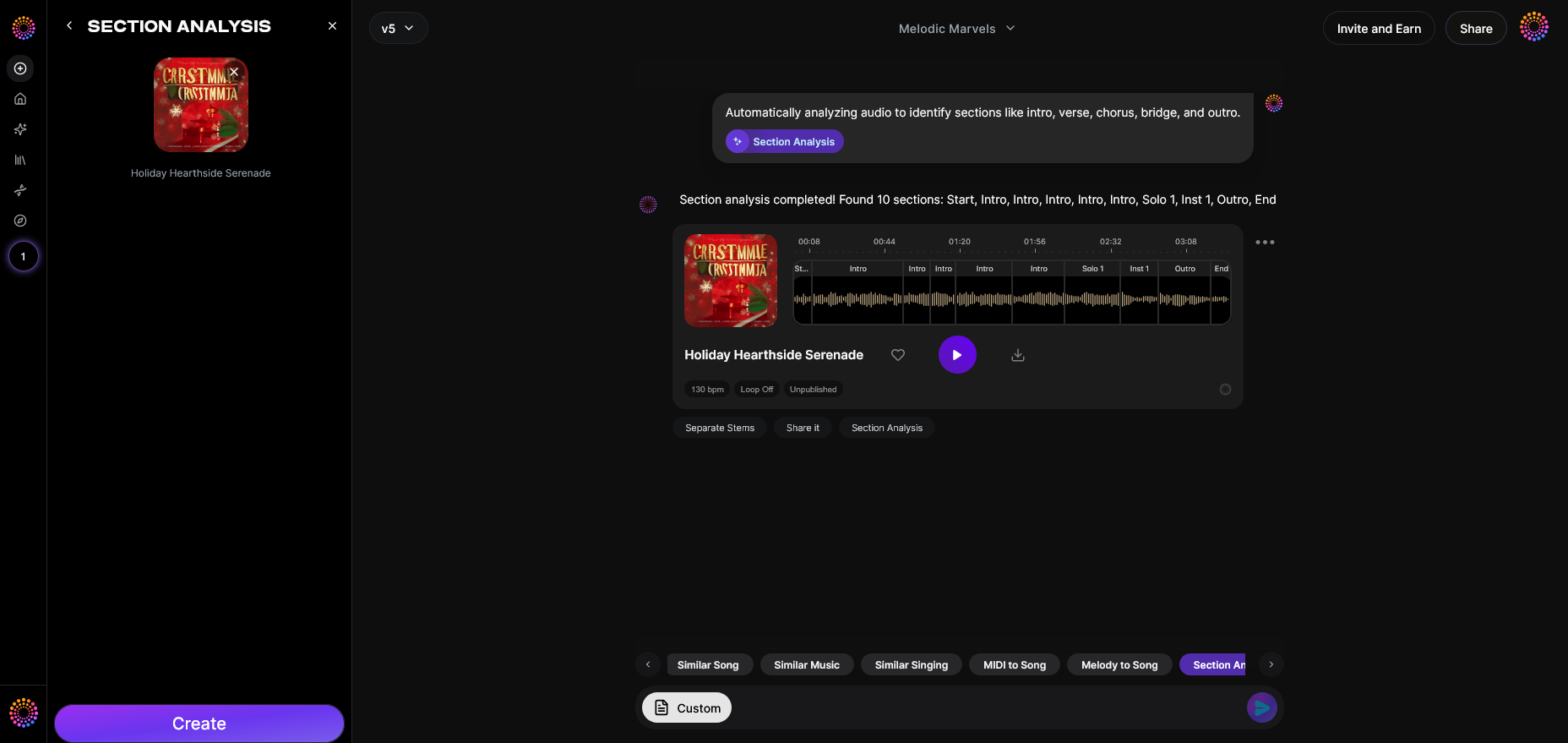
Soundverse’s Section Analysis feature provides a powerful way to understand verses and other song components in detail. It automatically detects and labels sections—Intro, Verse, Chorus, Bridge, Outro—with high precision. Each segment is mapped with timestamps, giving creators a complete roadmap for editing and remixing.
Key capabilities include:
- Automated Structure Detection: Soundverse AI identifies song sections without manual intervention.
- Visual Roadmap Generation: See a clear visual layout showing where the verse begins and ends.
- Timestamp Export: Export section data for external editing or DJ cue points.
Primary use cases:
- Learning song structure for covers: Students can recognize verse placement to practice sections individually.
- Remixing and DJ cue setting: DJs can jump directly to verse or chorus parts for creative transitions.
- Sync licensing assessment: Producers can evaluate the structure quickly for placements in film or TV projects.
By using Section Analysis, musicians speed up learning and editing workflows. Instead of guessing where sections start, creators get precise data to guide musical decisions. Whether you’re creating country music (How to Create Country Music with Soundverse AI) or experimenting with modern pop arrangements, this analytical clarity ensures smoother production.
How Soundverse integrates with songwriting basics
Soundverse not only helps analyze verses—it complements lyric creation through integrated features. Its AI Lyrics Writer uses tone, theme, and genre inputs to generate structured lyrics compatible with your existing melody. When combined with Section Analysis, songwriters can instantly match verses to ideal lyrical flows while maintaining consistent story progression.
This ecosystem approach supports beginner musicians by turning theory into practice. Once you understand what a verse is conceptually, Soundverse gives you concrete tools to implement that knowledge into real projects.
Common mistakes beginners make with verses
Even experienced writers sometimes struggle with verse design. Here are a few pitfalls to avoid:
- Overly repetitive lyrics: Repetition belongs in the chorus, not the verse.
- Mismatched energy: Keep verses proportional to chorus intensity for smooth flow.
- Weak transitions: Ensure each verse leads logically into the next or into the chorus.
- Ignoring rhythm: Maintaining consistent rhythm patterns keeps the verse connected musically.
Using tools like Soundverse helps eliminate these errors by visually outlining how each section interacts. You can identify pacing issues and structural imbalances faster than manual analysis would allow.
Why learning verse structure matters more than ever in 2026
In 2026, audience attention spans have shortened due to streaming platforms and social media formats. Songs that effectively balance verse and chorus dynamics stand out because they maintain engagement from start to finish. Understanding the verse’s role equips new creators to craft songs optimized for these modern listening habits.
Musicians also use structural data to repurpose sections for short-form content—like reels or TikTok teasers—where the verse often acts as a subtle hook. The more strategically crafted your verses, the more flexible your music becomes across various digital platforms.
Start Creating Your Own Verses with AI Today!
Transform your musical ideas into fully produced tracks in minutes using Soundverse’s intelligent text-to-music technology. Write, compose, and generate original music instantly—no studio required.
Create Music Now
Related Articles
- How to Make Good Rap Lyrics — Discover practical tips and creative techniques to craft compelling rap verses and lyrics that stand out.
- Generate AI Music with Soundverse Text-to-Music — Learn how to use Soundverse to effortlessly turn your ideas or lyrics into fully produced music tracks.
- What Are Song Stems and Why Do You Need Them — Understand how breaking down music into stems helps you remix, rearrange, and produce more efficiently.
- How to Create Rap Music with AI — Explore how AI can help you build rhythmic, lyrical rap tracks quickly and creatively with Soundverse tools.
Here's how to make AI Music with Soundverse
Video Guide

Here’s another long walkthrough of how to use Soundverse AI.
Text Guide
- To know more about AI Magic Tools, check here.
- To know more about Soundverse Assistant, check here.
- To know more about Arrangement Studio, check here.
Soundverse is an AI Assistant that allows content creators and music makers to create original content in a flash using Generative AI. With the help of Soundverse Assistant and AI Magic Tools, our users get an unfair advantage over other creators to create audio and music content quickly, easily and cheaply. Soundverse Assistant is your ultimate music companion. You simply speak to the assistant to get your stuff done. The more you speak to it, the more it starts understanding you and your goals. AI Magic Tools help convert your creative dreams into tangible music and audio. Use AI Magic Tools such as text to music, stem separation, or lyrics generation to realise your content dreams faster. Soundverse is here to take music production to the next level. We're not just a digital audio workstation (DAW) competing with Ableton or Logic, we're building a completely new paradigm of easy and conversational content creation.
TikTok: https://www.tiktok.com/@soundverse.ai
Twitter: https://twitter.com/soundverse_ai
Instagram: https://www.instagram.com/soundverse.ai
LinkedIn: https://www.linkedin.com/company/soundverseai
Youtube: https://www.youtube.com/@SoundverseAI
Facebook: https://www.facebook.com/profile.php?id=100095674445607
Join Soundverse for Free and make Viral AI Music

We are constantly building more product experiences. Keep checking our Blog to stay updated about them!