What Is a Verse in Music? Understanding Song Structure for Beginners
Learn what a verse in music is, how it fits into song structure, and how Soundverse helps you identify it automatically.
What Is a Verse in Music?
In 2026, as more new artists and music students turn to AI-powered tools for songwriting, understanding the basic parts of a song remains essential. Among all the elements of song structure, the verse plays one of the most important roles—it sets up the story, introduces emotional tone, and keeps a song moving forward. Whether you are planning your first composition or exploring advanced tools like Soundverse, learning what a verse in music is and how it interacts with other sections like the chorus will give your tracks stronger form and flow.
What is a verse in music?
A verse in music is typically the section of a song where the lyrics or musical ideas expand upon the story or emotion introduced in the opening. Every new verse often brings different lyrics but maintains similar melodies or chord progressions, helping the song feel familiar yet fresh. In pop, rock, R&B, country, and even electronic songs, verses tend to alternate with choruses, creating contrast and dynamic movement.
In most songwriting basics, the verse lays the foundation. It is usually the longest lyrical section in the track and provides space for narrative development. While the chorus carries the main hook, the verse contributes context. Think of the verse as the storytelling engine—the moment listeners connect with detail before the broader emotional climax of the chorus.

Why does the verse matter in song structure?
Understanding song structure is a major step for anyone studying music composition. The verse determines pacing and sets up how other parts of a song—such as the pre-chorus, chorus, and bridge—will feel. Common modern structures include:
- Verse–Chorus–Verse–Chorus–Bridge–Chorus – the most widespread pattern in contemporary music.
- Verse–Verse–Bridge–Verse – used in folk and storytelling-focused genres.
- Intro–Verse–Pre-chorus–Chorus–Verse – highly used in pop and dance music for building energy.
Having clear verses ensures that listeners stay engaged. Without strong verses, even a catchy chorus may feel unsupported.
How does a verse differ from a chorus?
The chorus vs verse relationship defines the emotional rhythm of a song. The chorus repeats the most memorable lines—the catchphrase or the melody hook. The verse, meanwhile, develops tension or narrative leading up to that repetition. In songwriting basics, the contrast between them is intentional: the verse feels intimate and exploratory, while the chorus delivers payoff and release.
For beginners, it helps to analyze both sections by listening carefully. The verse often changes lyrics every time it appears, while the chorus remains mostly identical throughout the track.
How do songwriters build effective verses?
Creating a compelling verse involves balancing melody, rhythm, and lyrical structure. Here are key tips for composing verses:
- Match the storytelling tone: Decide what the verse will reveal about the song’s theme. If the chorus expresses emotion, let the verse describe events or imagery.
- Keep consistent rhythm: A verse typically maintains continuity with similar tempo and chord progression.
- Lead naturally to the chorus: The best verses create anticipation for the hook. Adjust harmony or intensity slightly near the end to make the transition smooth.
- Vary your lyrics: Each verse should contribute new elements to the story or emotion rather than repeat previous lines.
Songwriting is both art and technique. Once you start analyzing structure, you’ll find countless examples that mix classical and modern approaches. Many tutorials—including those exploring AI music composition tools—suggest analyzing your favorite songs first, identifying how the verses function compared to other sections.
What are the main parts of a song besides the verse?
While the verse is central to storytelling, understanding all parts of a song ensures your composition flows well. Standard structures include:
- Intro: Sets the mood or energy level and introduces musical motifs.
- Pre-chorus: A short bridge that connects the verse to the chorus and builds anticipation.
- Chorus: The repetitive and memorable section—the song’s identity.
- Bridge: Provides contrast or a shift before returning to the main theme.
- Outro: Concludes the track, often echoing earlier ideas.
Studying these sections helps beginners grasp the architecture of songwriting. In 2026, strong awareness of song sections also supports remixing, sync licensing, and cover creation—skills increasingly sought in music production education.
For a deeper dive into hands-on creation, watch Soundverse’s tutorial on making music or explore our Deep House music guide.
How to make song structure analysis easier
Manually identifying the parts of a song can be challenging, especially during remixing or editing. Producers often rely on visualization tools to detect the start and end of each section accurately. That’s where AI-powered structure mapping like Soundverse’s Section Analysis comes into play, simplifying what used to take hours.
How to make verse analysis easy with Soundverse Section Analysis
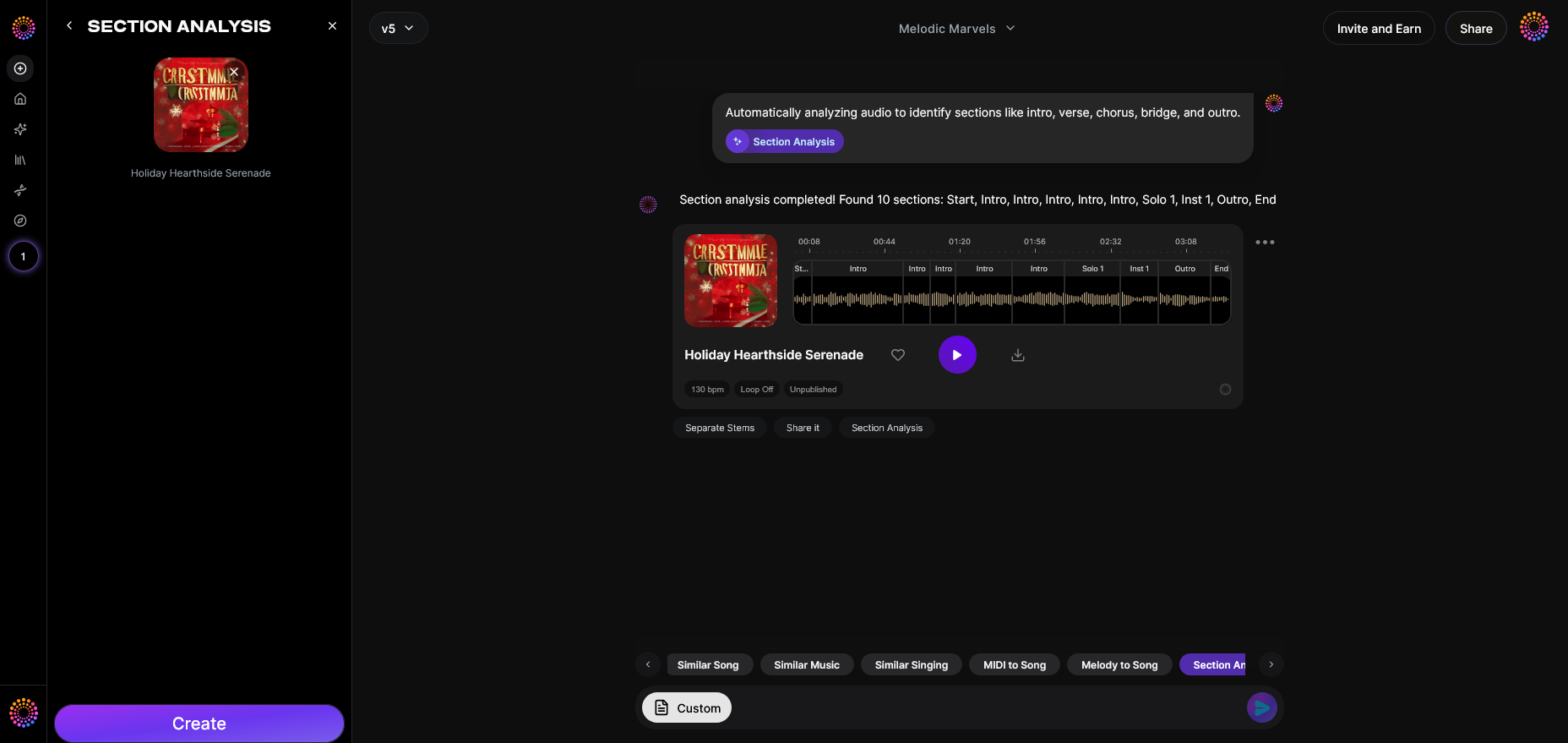
Soundverse’s Section Analysis feature automatically detects and labels song structure sections such as Intro, Verse, Chorus, Bridge, and Outro, with precise timestamps. Once you upload a track, the system generates a visual roadmap showing each part’s location, helping musicians and editors preview structure efficiently.
Core capabilities include automated structure detection, visual roadmap generation, and timestamp export—ideal for remixing, cover preparation, or sync licensing assessments. When evaluating your verses, this tool highlights exactly where each verse starts and ends, ensuring you have accurate insight for arrangement changes or lyric rewriting.
It works asynchronously: you upload or record audio, the AI analyzes it, and results are displayed for review. This avoids any need for live preview, keeping the focus on precise and reliable composition mapping.
Learning song sectioning through this automated process supports tasks like:
- Inpainting edits: Precisely replacing or regenerating only selected sections without affecting the entire track.
- Cover song learning: Reviewing the structure of reference tracks to understand verse placement.
- DJ cue setting and remixing: Quickly finding key transition points.
Using Soundverse Section Analysis feels like having an expert music theorist break down your song blueprint in seconds. You can combine it with features like AI Lyrics Writer or Inpainting to reconstruct sections while preserving the rest of your track.
Why beginners love Soundverse for songwriting basics
For new musicians, having clarity on verses helps them experiment freely. Soundverse provides immediate insight into structure before finalizing arrangements. Beginners working on projects like pop, country, or electronic styles—explored in blogs such as How to Create EDM with Soundverse AI—gain enormous advantage by knowing exactly how each section fits together.
Whether writing lyrics with AI or experimenting with mood transitions, understanding verses also improves creative flow. Tools like Soundverse visualize music composition in a way that makes theoretical learning hands-on.
Start Creating Music Smarter with AI
Unlock endless musical possibilities with Soundverse. Generate professional-quality tracks, experiment with lyrics, and bring your sound ideas to life—all with the power of AI at your fingertips.
Related Articles
- How to Make Good Rap Lyrics: Discover proven techniques to write compelling rap verses that flow smoothly and connect emotionally with listeners.
- Generate AI Music with Soundverse Text-to-Music: Learn how to turn written ideas into full musical compositions instantly using Soundverse’s text-to-music engine.
- The Benefits of Composing with AI Music Generator: Explore how an AI music generator can enhance creativity, speed up production, and help refine your songwriting process.
- AI Music Generator and Human Composers: A Future Together: Delve into how human creativity and AI music tools can collaborate to create the next evolution of musical artistry.
Here's how to make AI Music with Soundverse
Video Guide

Here’s another long walkthrough of how to use Soundverse AI.
Text Guide
- To know more about AI Magic Tools, check here.
- To know more about Soundverse Assistant, check here.
- To know more about Arrangement Studio, check here.
Soundverse is an AI Assistant that allows content creators and music makers to create original content in a flash using Generative AI. With the help of Soundverse Assistant and AI Magic Tools, our users get an unfair advantage over other creators to create audio and music content quickly, easily and cheaply. Soundverse Assistant is your ultimate music companion. You simply speak to the assistant to get your stuff done. The more you speak to it, the more it starts understanding you and your goals. AI Magic Tools help convert your creative dreams into tangible music and audio. Use AI Magic Tools such as text to music, stem separation, or lyrics generation to realise your content dreams faster. Soundverse is here to take music production to the next level. We're not just a digital audio workstation (DAW) competing with Ableton or Logic, we're building a completely new paradigm of easy and conversational content creation.
TikTok: https://www.tiktok.com/@soundverse.ai Twitter: https://twitter.com/soundverse_ai Instagram: https://www.instagram.com/soundverse.ai LinkedIn: https://www.linkedin.com/company/soundverseai Youtube: https://www.youtube.com/@SoundverseAI Facebook: https://www.facebook.com/profile.php?id=100095674445607
Join Soundverse for Free and make Viral AI Music

We are constantly building more product experiences. Keep checking our Blog to stay updated about them!