What Is a Verse in a Song? Understanding Song Structure for Beginners
Discover what a verse in a song is, its role in song structure, and how Soundverse helps you analyze and compose music effortlessly.
What Is a Verse in a Song?
A verse in a song is one of the most fundamental elements of modern music composition. Whether you’re writing your first song or analyzing a hit from your favorite artist, understanding what a verse is—and how it interacts with other parts of a song—will allow you to craft more compelling music. In 2026, songwriting education and AI-assisted composition have evolved tremendously, offering beginner musicians accessible tools to learn song structure without needing formal training.
What is a Verse in a Song?
A verse in a song is the section that typically carries the story, message, or emotional progression. Each verse has different lyrics but usually follows a similar melody and rhythm pattern. While the chorus might be the catchy, repetitive part people remember most, the verse provides context, depth, and narrative continuity. According to M5 Music’s definition, the verse often presents new lyrics while retaining similar melody and structure, helping drive the narrative. The Splice blog also describes the verse as the storytelling block of a song.

For beginner musicians, think of the verse as the chapter of your musical story—it moves the listener through the plot, expanding the ideas introduced in the intro and leading into the chorus. In most genres, verses alternate with choruses and sometimes bridges, creating a structure such as intro → verse → chorus → verse → chorus → bridge → chorus → outro.
How Does the Verse Fit into Song Structure?
Song structure refers to how different parts of a song—intro, verse, chorus, bridge, and outro—are arranged. The verse typically follows the intro and precedes the chorus, setting the stage for the emotional climax. As noted by Masterclass, the verse often repeats with new lyrics each time, maintaining a consistent melody.

Common patterns include:
- Pop songs: Verse → Chorus → Verse → Chorus → Bridge → Chorus.
- Rock songs: Intro → Verse → Chorus → Verse → Chorus → Solo → Outro.
- Hip-hop songs: Verse → Chorus/Hook → Verse → Chorus/Hook.
- Electronic dance music (EDM): Verse or Drop → Build-up → Chorus (Drop) → Breakdown → Drop.
Knowing this layout helps aspiring songwriters create balance and musical tension. Understanding song structure is also key when studying trends in composition—learn more about how AI is influencing this in our article on how AI-generated music is transforming the music industry.
What Is the Difference Between the Chorus and the Verse?
When comparing chorus vs verse, the chorus is usually the emotional highlight—the part listeners recall instantly. It often contains the main refrain or hook and repeats several times throughout the track. The verse, in contrast, builds up to that moment by developing lyrical and thematic content. The Songtrust Blog explains that the verse is where storytelling begins to unfold, while the Music Theory Classroom describes the chorus as the hook-filled centerpiece.
A simple way to remember:
- Verse: Tells the story (different lyrics each time).
- Chorus: Summarizes the song’s theme (same lyrics repeated).
Advanced composers often manipulate this relationship for artistic effect—for example, minimalistic verses contrasted with explosive choruses create dynamic range. You can explore related techniques for creating impactful melodies and arrangements in our guide on Soundverse Arrangement Studio.
Why Is the Verse Important in Music Composition?
The verse anchors the listener’s journey through the song. It provides momentum and gives the chorus its meaning. Without a strong verse, the chorus risks feeling disconnected or shallow. A well-written verse establishes tone, rhythm, and mood. In songwriting basics, composers often use verses to:
- Reveal character or narrative development.
- Transition between moods or keys.
- Create anticipation for the chorus.
For music students, identifying verses helps analyze harmony progression, beat pattern variation, and lyrical pacing—all crucial components of understanding parts of a song.
How to Identify a Verse in Songs You Love
To spot a verse, listen for these clues:
- It usually follows the intro and may repeat with new lyrics.
- It often has a similar melody across verses, but with subtle rhythmic or instrumental variations.
- It feels “calmer” compared to the chorus.
In 2026, many creators use AI tools like Soundverse to automatically identify song parts. This helps learners decode professional-level compositions more easily, a skill that was harder to master manually before 2025. For additional creative inspiration, check out our tutorial on making music and Deep House creation guide from Soundverse’s YouTube channel.
You can also check out how Soundverse compares to other creative tools in our detailed analysis of Mubert alternatives and Soundraw alternatives for a clearer understanding of structural analysis advantages.
How Song Structure and Sections Influence Creativity
Understanding the parts of a song allows you to think strategically about flow and emotion. For example:
- The intro sets expectation.
- The verse delivers content and evolution.
- The chorus unifies the composition.
- The bridge surprises the listener.
- The outro gives closure.
This framework shapes every modern genre—from rock to EDM, jazz to country. To explore how genre affects structure, visit How to Create Country Music with Soundverse AI and How to Create Jazz Music with Soundverse AI.
How to Make Verse Analysis Easy with Soundverse Section Analysis
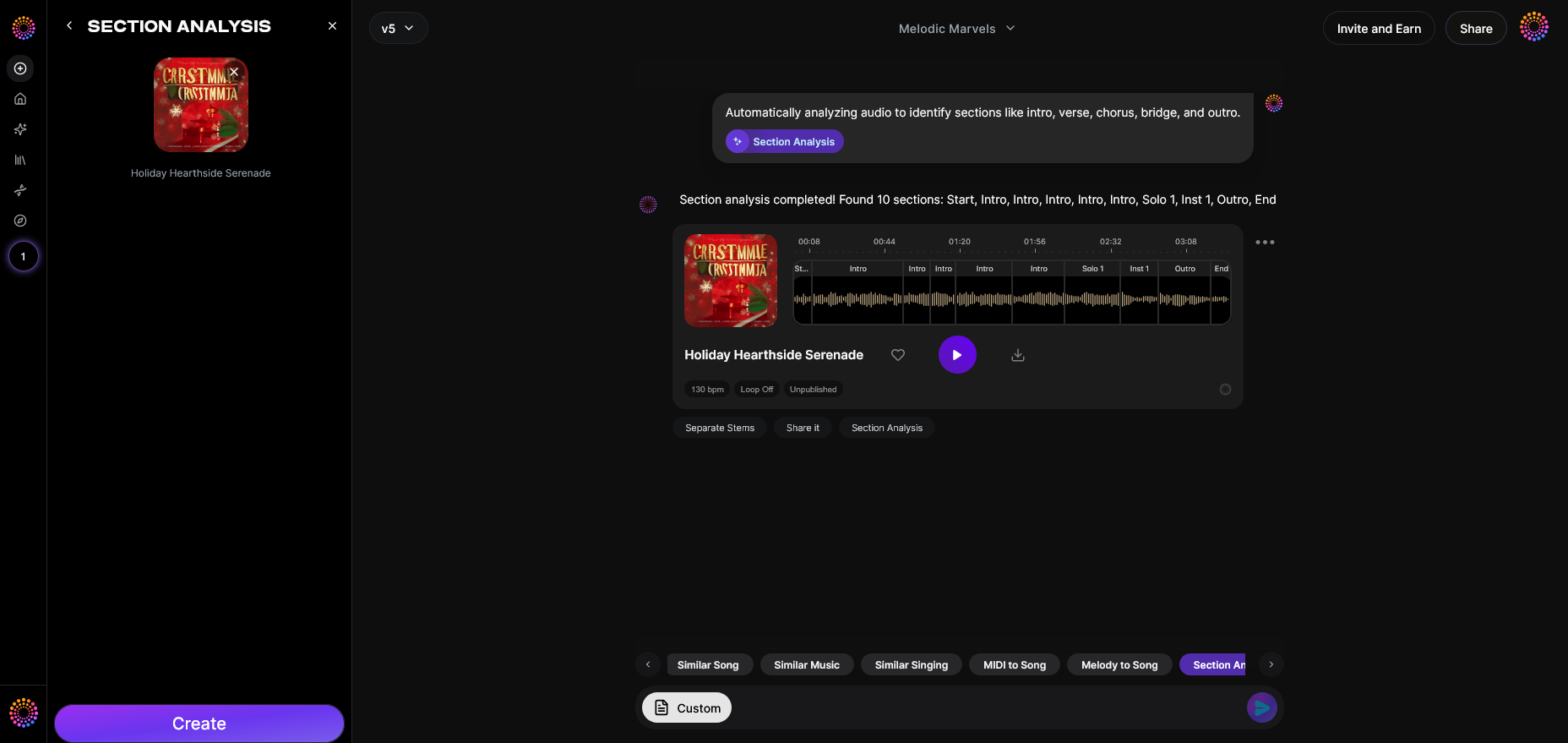
Soundverse’s Section Analysis feature has become a go-to learning tool for emerging songwriters and producers in 2026. It automatically detects and labels song structure sections (Intro, Verse, Chorus, Bridge, Outro) with precise timestamps. The visual roadmap makes understanding complex compositions effortless.
How Section Analysis Works:
- Automated structure detection: Soundverse scans your uploaded song and identifies every structural section precisely.
- Visual roadmap generation: The results display as an editable roadmap—ideal for remixing, learning, or cover adaptations.
- Timestamp export: You can export timestamps to align with editing timelines or DJ cue points.
Primary Use Cases:
- Preparation for Inpainting edits: Allows users to insert new sections or improve existing parts by knowing exact boundaries.
- Learning song structure for covers: Beginner musicians can see where verses and choruses lie, making it easier to recreate songs accurately.
- Remixing and DJ cue setup: DJs use timestamps to create seamless transitions.
- Sync licensing assessment: Professionals quickly identify where structural emphasis lies for media synchronization.
Paired with the AI Lyrics Writer, Soundverse empowers creators to generate lyrics perfectly matched to each section’s theme and tone. This integration under the ‘Help Me Write’ feature streamlines songwriting, connecting lyric generation directly to detected verses and choruses.
Start Creating Your Own Verses with AI-Powered Music Tools
Turn your lyrical ideas into complete songs in minutes using Soundverse AI’s text-to-music generator. Discover how easy it is to shape verses, choruses, and full tracks effortlessly.
Related Articles
- How to Make Good Rap Lyrics: Explore techniques and AI-assisted methods to craft expressive rap verses that stand out.
- Generate AI Music with Soundverse Text-to-Music: Learn how to turn text prompts into full-length songs using Soundverse's intelligent music generation tools.
- The Benefits of Composing with AI Music Generator: Discover how AI composition tools streamline song creation, enhance creativity, and save time.
- What Are Song Stems and Why Do You Need Them: Understand song stems and how they help producers remix, mix, and master their tracks with precision.
Here's how to make AI Music with Soundverse
Video Guide
Here’s another long walkthrough of how to use Soundverse AI.
Text Guide
- To know more about AI Magic Tools, check here.
- To know more about Soundverse Assistant, check here.
- To know more about Arrangement Studio, check here.
Soundverse is an AI Assistant that allows content creators and music makers to create original content in a flash using Generative AI. With the help of Soundverse Assistant and AI Magic Tools, our users get an unfair advantage over other creators to create audio and music content quickly, easily and cheaply. Soundverse Assistant is your ultimate music companion. You simply speak to the assistant to get your stuff done. The more you speak to it, the more it starts understanding you and your goals. AI Magic Tools help convert your creative dreams into tangible music and audio. Use AI Magic Tools such as text to music, stem separation, or lyrics generation to realise your content dreams faster. Soundverse is here to take music production to the next level. We're not just a digital audio workstation (DAW) competing with Ableton or Logic, we're building a completely new paradigm of easy and conversational content creation.
TikTok: https://www.tiktok.com/@soundverse.ai
Twitter: https://twitter.com/soundverse_ai
Instagram: https://www.instagram.com/soundverse.ai
LinkedIn: https://www.linkedin.com/company/soundverseai
Youtube: https://www.youtube.com/@SoundverseAI
Facebook: https://www.facebook.com/profile.php?id=100095674445607
Join Soundverse for Free and make Viral AI Music

We are constantly building more product experiences. Keep checking our Blog to stay updated about them!