What Is a Verse in a Song? Understanding Song Structure and Composition
Learn what a verse in a song is, how it shapes music composition, and how Soundverse helps analyze song structure effectively.
What Is a Verse in a Song?
In the world of songwriting, few elements are as foundational as the verse. When you listen to your favorite tracks—whether pop, rock, hip-hop, or country—the verse often holds the story. But what exactly is a verse in a song? In 2026, as AI-driven music tools continue to refine how musicians and producers work, understanding song structure and composition has become an essential skill for every aspiring artist.
What is a verse in a song?
A verse in a song is the section that carries most of the lyrical content and storytelling. It usually follows the intro and precedes the chorus. Each verse typically presents new lyrics that advance the song’s narrative or expand on its theme. Unlike the chorus, which tends to repeat and serve as the emotional and melodic hook, the verse provides contrast and forward momentum.
In most contemporary music, the verse changes slightly in instrumentation or intensity as the song progresses, but it retains the core melody and rhythm pattern. In genres ranging from pop to country, the verse sets up the mood before leading into the chorus that resolves tension or amplifies emotional expression.

How does a verse fit into song structure?
To understand how a verse operates, it helps to see the overall framework of song structure. Typical parts of a song include:
- Intro – Sets the tone and prepares the listener.
- Verse – Tells the story through evolving lyrics; builds toward the chorus.
- Chorus – The memorable hook, often repeated throughout.
- Bridge – Offers contrast between repeated sections.
- Outro – Brings closure to the song.
Understanding these parts of a song helps beginner songwriters design compositions that feel complete and emotionally satisfying. The balance between verse and chorus is especially crucial. The chorus vs verse dynamic ensures a mix of familiarity and progression—listeners get repetition from the chorus and storytelling from the verse. As explained in Song structure - Wikipedia, this pattern underpins much of modern pop and rock music.
Why is the verse so important in songwriting?
For lyricists and composers, the verse serves as the foundation of storytelling. It is in the verse that the songwriter introduces characters, emotions, or narrative progression. Each verse might reveal new details while maintaining a similar melody to create cohesion. According to Splice, the verse is the storytelling backbone of musical composition.
In songwriting basics, mastering how to write effective verses can make a track feel authentic and emotionally engaging. A song with weak verses may sound repetitive or empty, even if the chorus is catchy. In 2026, many emerging artists are using AI-assisted songwriting platforms—like Soundverse—to study how professional tracks balance these elements.
What are common verse structures in modern music?
Modern verse construction often follows patterns that have evolved over decades:
- AABA structure: Found in traditional pop or jazz songs, where the verse returns after a bridge.
- Verse-Chorus structure: The most popular format in mainstream music, alternating between verse and chorus.
- Extended verse: Common in genres like rap and folk where storytelling dominates.
- Verse only: Some ambient or experimental compositions may rely on verse-like progression without a formal chorus.
Songwriters and producers analyze these structures to create arrangements that fit the intended genre, narrative style, and listener experience, as noted in Music 101: What Is a Verse? Plus Tips for Writing Innovative Verses.
How does the verse relate to music composition and melody?
Compositionally, the verse gives room for melodic development. The music underneath a verse typically supports lyrical phrasing while allowing variations in rhythm, harmony, or tone. A well-composed verse introduces rhythms that feel distinct from the chorus but stay connected through shared motifs.
In harmony terms, verses often use chord progressions that build tension. This tension makes the arrival of the chorus feel satisfying. The interplay between verse and chorus thus defines emotional movement within the track, a concept consistently highlighted in Verse-Chorus Form.
How can beginners start writing better verses?
Beginners should first study song structure carefully. Listening to songs and noting how verses transition into choruses can teach valuable insight. Techniques include:
- Keeping the verse lyrics focused on storytelling.
- Using rhyme patterns that differ slightly between verses.
- Building dynamically—each verse should add something new.
- Matching emotion and rhythm to the theme.
For those using AI tools, generating multiple lyric drafts with varying tones can help identify which version fits best within the song’s larger structure. Platforms offering AI Lyrics Writer features (integrated with Soundverse) simplify this process, generating lyric ideas aligned with genre and theme. For a practical example, watch Soundverse’s How to Make Music tutorial on YouTube.
How have AI tools changed verse writing in 2026?
AI-assisted composition tools have evolved significantly since 2024–2025. By 2026, creators can analyze verse structures automatically using dedicated music intelligence platforms. These tools can detect how long each verse lasts, when a chorus enters, and how transitional elements tie them together. This automation lets songwriters focus more on artistic choices instead of manual audio mapping.
AI now plays a key role in teaching songwriting basics. For example, many music students use Soundverse’s educational blog resources, like how to make good rap lyrics or how to create country music with AI, to understand how structure shapes genre conventions.
How to analyze verse and song structure with Soundverse Section Analysis
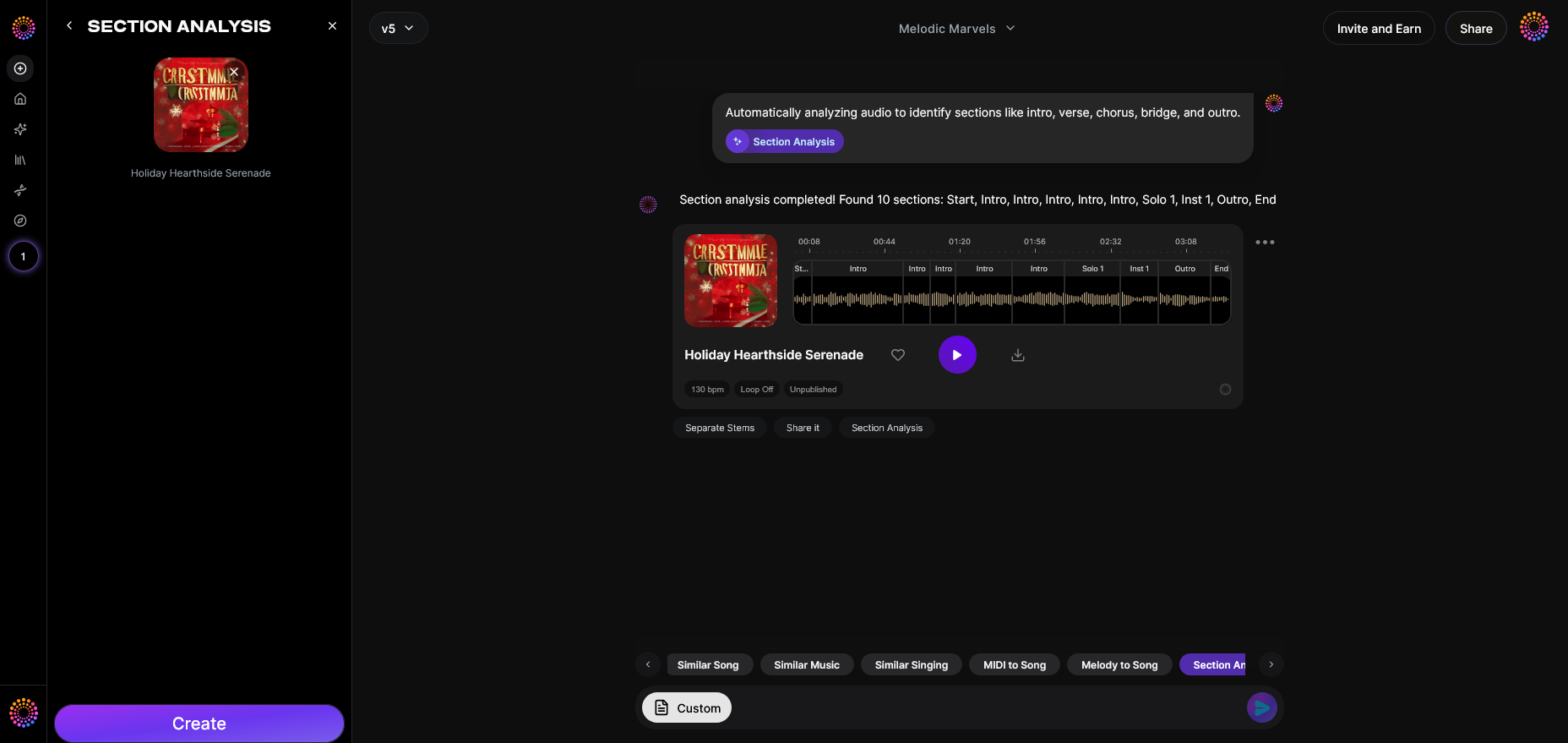
Soundverse offers a dedicated tool called Section Analysis, which automatically detects and labels song sections—including intro, verse, chorus, bridge, and outro—with precise timestamps. This provides musicians a clear visual roadmap for remixing, editing, or learning covers.
Core capabilities of Soundverse Section Analysis
- Automated structure detection: Upload your track, and Soundverse identifies each section by type and timing.
- Visual roadmap generation: View the structure layout and understand how verses alternate with choruses.
- Timestamp export: Export section markers for detailed editing or remix synchronization.
Primary use cases
- Learning song structure for covers – Perfect for performers analyzing the arrangement of their favorite songs.
- Remixing and DJ cue setting – DJs can instantly locate verse and chorus transitions.
- Sync licensing assessment – Producers reviewing song parts for commercial or film placement.
By leveraging Section Analysis, even beginner songwriters can grasp how a verse functions technically within a composition. It’s an invaluable educational step before using other Soundverse features like Stem Separation AI Magic Tool or learning about AI music industry trends. For advanced workflow examples, see Soundverse’s Explore Tab tutorial.
How does the verse build listener engagement?
The beauty of a verse lies in how it guides emotional buildup. Verses often start with subdued instrumentation and minimal vocals, gradually leading toward the chorus. The listener feels a narrative progression—the verse catches attention, and the chorus resolves anticipation.
Professional composers pay particular attention to verse length and phrasing. Too short, and the story feels rushed; too long, and the listener might lose focus. Using analytical tools like Soundverse Section Analysis ensures this balance is maintained across the track.
How Soundverse helps musicians master storytelling through verses
Soundverse’s AI ecosystem aims to make creative learning seamless for both beginners and professionals. Through its Section Analysis system, users gain an accurate breakdown of how verses interact with other parts of a song. Combined with writing features like the AI Lyrics Writer, Soundverse becomes a professional-grade assistant for studying composition, remixing, and structure alignment.
Artists exploring narrative-driven genres like hip-hop or folk can use Soundverse not only to craft lyrics but also to visualize how verses shape audience emotion. The timestamp export feature especially helps those preparing tracks for sync licensing or live performance arrangement.
For creators eager to dive deeper, explore related insights such as AI Music Generator and Human Composers – A Future Together or advanced composition guides like What is Soundverse Arrangement Studio and What Does It Do. These resources build an understanding of structure beyond mere theory, grounding it in 2026’s evolving technology-driven music landscape.
Start Creating Music with AI Today
Unlock your creative potential with Soundverse — generate full songs, verses, and melodies instantly using intelligent text-to-music technology. No musical experience required, just your imagination.
Related Articles
- How to Make Good Rap Lyrics — Learn the secrets behind writing strong rap verses and lyrics that captivate audiences using simple techniques and AI-powered inspiration.
- Generate AI Music with Soundverse Text-to-Music — Discover how Soundverse transforms your words into dynamic soundtracks, complete with structured verses and choruses that match your vision.
- The Benefits of Composing with AI Music Generator — Explore how AI tools simplify composition workflows and help artists focus more on creative storytelling through verses and melodies.
- AI Music Generator and Human Composers: A Future Together — See how collaboration between AI and human creators reshapes songwriting, from building verses to crafting complete musical productions.
Here's how to make AI Music with Soundverse
Video Guide

Here’s another long walkthrough of how to use Soundverse AI.
Text Guide
- To know more about AI Magic Tools, check here.
- To know more about Soundverse Assistant, check here.
- To know more about Arrangement Studio, check here.
Soundverse is an AI Assistant that allows content creators and music makers to create original content in a flash using Generative AI.
With the help of Soundverse Assistant and AI Magic Tools, our users get an unfair advantage over other creators to create audio and music content quickly, easily and cheaply.
Soundverse Assistant is your ultimate music companion. You simply speak to the assistant to get your stuff done. The more you speak to it, the more it starts understanding you and your goals.
AI Magic Tools help convert your creative dreams into tangible music and audio. Use AI Magic Tools such as text to music, stem separation, or lyrics generation to realise your content dreams faster.
Soundverse is here to take music production to the next level. We're not just a digital audio workstation (DAW) competing with Ableton or Logic, we're building a completely new paradigm of easy and conversational content creation.
TikTok: https://www.tiktok.com/@soundverse.ai
Twitter: https://twitter.com/soundverse_ai
Instagram: https://www.instagram.com/soundverse.ai
LinkedIn: https://www.linkedin.com/company/soundverseai
Youtube: https://www.youtube.com/@SoundverseAI
Facebook: https://www.facebook.com/profile.php?id=100095674445607
Join Soundverse for Free and make Viral AI Music

We are constantly building more product experiences. Keep checking our Blog to stay updated about them!