What Is a Looper in Music? Understanding Music Looping and Creative Techniques in 2026
Discover what a looper in music is, how it works, and how musicians use looping creatively in 2026.
What Is a Looper in Music?
In 2026, music creation has become an incredibly dynamic art form shaped by technology, performance innovation, and AI-driven creativity. One of the most fascinating tools in modern music production and live performance is the looper in music. Whether you’re a seasoned musician, live performer, or an emerging producer, understanding loopers, music looping, and looping techniques can unlock new ways to express creativity and craft immersive soundscapes.
What is a looper in music?
A looper in music is a device or software tool that records a segment of sound and plays it back repeatedly, creating a loop. Musicians use loopers to layer sounds, instruments, or vocals to build complex compositions live or in the studio. Essentially, it gives you the ability to perform as a one-person band.
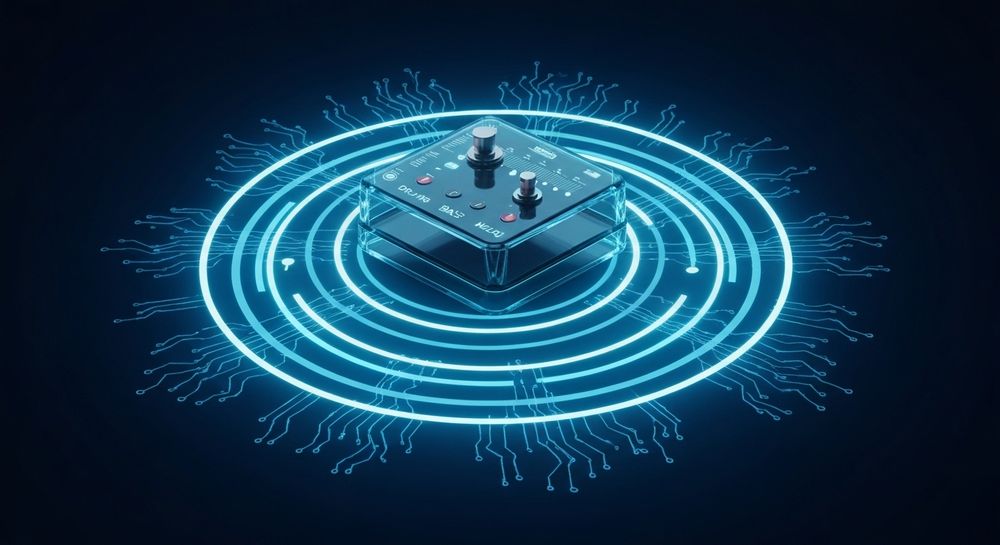
Looper pedals became popular among guitarists who wanted to create repeating riffs and textures during performance. Today, loopers are used by artists across all genres — from solo vocalists and instrumentalists to electronic producers — and appear in both hardware and digital form.
Looping gives artists total control over rhythm and layering, helping them experiment instantly with musical ideas. In 2026, loop technology has advanced so far that even AI-powered tools can seamlessly produce looped, genre-perfect soundscapes.
For background context, the concept of live looping — recording and playback of a piece of music in real-time — has expanded dramatically thanks to digital integration. Software like Loopy Pro and LiveLoop have become standards among professionals, offering limitless layering possibilities.
How do loopers work?
To understand how loopers work, think of them as real-time recording systems. When you play a passage or beat into the looper, it records your performance. Once the recording ends, the looper instantly plays the sound back on repeat — a continuous, seamless cycle.

Modern loopers allow artists to:
- Record multiple layers (often called overdubs)
- Control timing precision (start and stop synchronizations)
- Edit, delete, or replace loops easily
- Use effects, filters, and reverse looping options
Hardware loopers come as pedals that can be triggered with a foot tap, making them perfect for live musicians who need hands-free operation. On the other hand, software loopers integrated into DAWs or mobile apps allow precise editing and synchronization for studio production. Tools such as ACID Pro and Ableton Live pioneered this concept, turning traditional looping into flexible, real-time creativity systems.
For a deeper dive, watch our guide on creating Deep House music and how to make music with AI on the Soundverse Tutorial Series.
What are the different looping techniques musicians use?
Musicians develop diverse looping techniques to personalize their sound. Here are some popular ones used by professionals:
- Layered Looping: Creating multiple loops that stack different instruments (e.g., beat + bassline + melody). This technique builds evolving arrangements.
- Rhythmic Looping: Using percussive or rhythm-based loops, often made by tapping on the guitar body or stomping, to set a groove.
- Vocal Looping: Singers record phrases, harmonies, or beatbox sounds live, turning their voice into an instrument.
- Segment Looping: Dividing a song into multiple loops that can be triggered sequentially — for verses, choruses, and bridges.
- Ambient Looping: Looping long, reverb-heavy tones to design atmospheric, meditative soundscapes.
- Live Looping Performance: A performer builds an entire song live using a looper pedal, controlling all layers in real time.
Each of these methods shows how loopers have evolved beyond basic functionality — becoming instruments of composition and performance artistry in their own right.
Why is live looping popular in 2026?
Live looping has grown into a defining trend of music performance over the last few years. With audiences gravitating toward authentic creative experiences, seeing a musician build a full composition from scratch on stage is compelling.
In 2026, artists use advanced loopers that integrate with MIDI controllers, synthesizers, and software tools like Soundverse’s AI-assisted generation technology to enrich performances. The rise of hybrid music creation — combining human skill with AI music looping — allows musicians to explore larger orchestral or electronic textures without needing an entire band.
Technology and connectivity improvements make synchronizing loopers with digital systems easier. As a result, producers can mix live instruments with AI-generated looping tracks, creating immersive real-time compositions that sound fully arranged.
What makes looping essential in music production?
In studio production, music looping isn’t only about repeating phrases — it’s about creating rhythmic and harmonic consistency. Looping gives producers the ability to experiment with ideas without committing to complex arrangements every time. Producers often loop drums or chord patterns early in the creation process to lay a foundation.
Looping also simplifies collaboration between artists. When loops are shared, they provide consistent structural references that other musicians can build upon. Tools such as Audjust make it easier than ever to create seamless loops and tailor song lengths. Modern DAWs and AI music platforms even allow looping with precise beat alignment and genre-matched variations.
As digital creativity thrives in 2026, loops have become core elements in genres like lo-fi, ambient, EDM, and cinematic scoring.
How to make looping music with Soundverse AI Music Generator
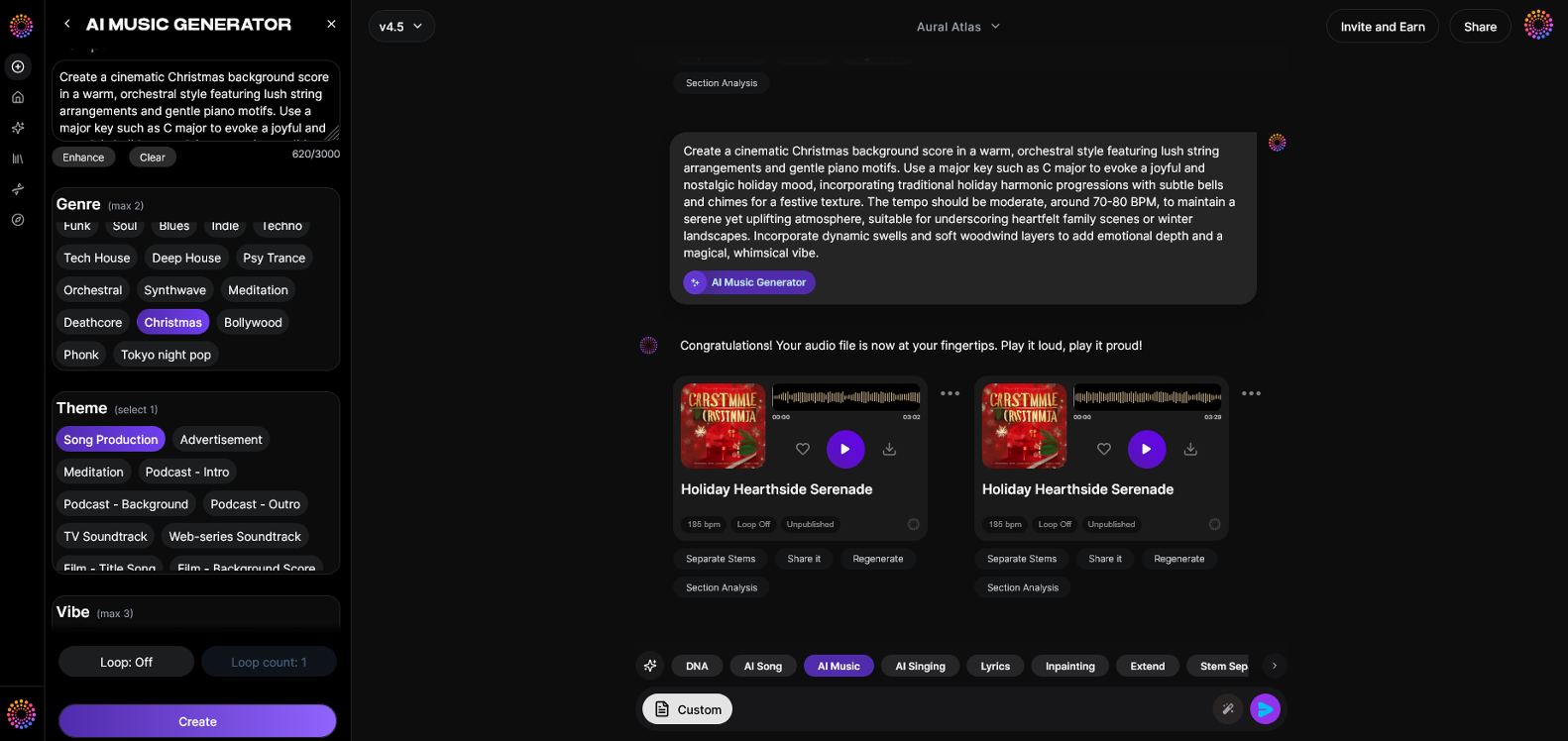
Soundverse’s AI Music Generator offers a revolutionary way to create music loops effortlessly. Rather than manually recording and repeating audio segments, Soundverse uses text-based prompts to generate instrumental compositions that can loop seamlessly.
The AI Music Generator creates fully produced instrumental music from text inputs — specializing in background tracks, beats, and soundscapes without vocals. With its Loop Mode, users can select seamless repetition functions for use in video, game, or meditative music environments.
Soundverse empowers creators with:
- Text-to-music conversion: Describe the vibe, genre, or instrument and let the AI generate matching music.
- Loop Mode: Option for infinite or precise looping with smooth transitions.
- Genre/mood control: Customize the direction of your music (ambient, acoustic, cinematic, etc.).
- V4 and V5 model options: Select AI models for detailed structure or emotional resonance.
Soundverse isn’t limited to standalone music generation — users can also extend tracks using Extend Music, or separate elements using Stem Separator, which divides a song into individual stems like drums, bass, guitar, and accompaniment.
For extended insights on Soundverse’s looping functionality, check out Explore Tab Tutorial on YouTube.
If your goal is consistent creativity, check out related articles like How to Create Country Music with Soundverse AI, Generate AI Music with Soundverse Text-To-Music, and Soundverse Introduces Stem Separation AI Magic Tool to explore how AI can transform the way you create sound loops.
The evolution of loopers and music looping trends
Looking at the bigger picture, the innovation surrounding music looping reflects broader shifts in sound design. Looper pedals and software have become more flexible, integrating time-stretch and smart quantization so loops stay rhythmically tight. Combined with AI capabilities, creators can now generate new musical material that matches an existing loop’s mood and tempo automatically.
In the last few years (2024–2025), artists used looping primarily for solo performances and acoustic layering. By 2026, technologies such as cloud-based loop syncing and AI-assisted ambient generation have opened massive creative potential. Musicians can now combine acoustic recordings with AI-generated loops, ensuring every performance feels fresh yet polished.
Why Soundverse sets the new standard for music looping
What separates Soundverse from traditional loopers is its intelligence and creative freedom. Instead of depending on manual recording, users can craft loop-ready audio from descriptive language: “Create a chill lo-fi beat with vinyl crackle and electric piano” or “Make a tribal drum loop for a desert-themed video.” The system then produces perfectly looped background tracks matching the text input.
While a traditional loop pedal requires recording and careful timing, Soundverse’s loop functionality operates within its Loop Mode algorithm — ensuring seamless playback without any pops or timing mismatches.
Pair this innovation with Extend Music for track continuation or Stem Separator for remix-ready components, and musicians have a complete creative ecosystem.
Start Creating Loops and Tracks with AI Today!
Experience how Soundverse helps you build layered soundscapes effortlessly. Generate loops, beats, and full compositions with AI tools designed to amplify your creativity.
Related Articles
- Generate AI Music with Soundverse Text to Music: Discover how to instantly turn your ideas into music using Soundverse’s advanced text-to-music generator.
- Soundverse Introduces Stem Separation AI Magic Tool: Learn how Soundverse’s AI Magic Tool allows creators to isolate and remix individual stems seamlessly.
- The Benefits of Composing with AI Music Generator: Explore how AI music generators simplify composition and inspire musicians to craft innovative sounds.
- Soundverse Assistant: Your AI Music Co-Producer: Uncover how Soundverse’s AI assistant can guide you in building dynamic, polished tracks effortlessly.
Here's how to make AI Music with Soundverse
Video Guide
Here’s another long walkthrough of how to use Soundverse AI.
Text Guide
- To know more about AI Magic Tools, check here.
- To know more about Soundverse Assistant, check here.
- To know more about Arrangement Studio, check here.
Soundverse is an AI Assistant that allows content creators and music makers to create original content in a flash using Generative AI.
With the help of Soundverse Assistant and AI Magic Tools, our users get an unfair advantage over other creators to create audio and music content quickly, easily and cheaply.
Soundverse Assistant is your ultimate music companion. You simply speak to the assistant to get your stuff done. The more you speak to it, the more it starts understanding you and your goals.
AI Magic Tools help convert your creative dreams into tangible music and audio. Use AI Magic Tools such as text to music, stem separation, or lyrics generation to realise your content dreams faster.
Soundverse is here to take music production to the next level. We're not just a digital audio workstation (DAW) competing with Ableton or Logic, we're building a completely new paradigm of easy and conversational content creation. TikTok: https://www.tiktok.com/@soundverse.ai Twitter: https://twitter.com/soundverse_ai Instagram: https://www.instagram.com/soundverse.ai LinkedIn: https://www.linkedin.com/company/soundverseai Youtube: https://www.youtube.com/@SoundverseAI Facebook: https://www.facebook.com/profile.php?id=100095674445607
Join Soundverse for Free and make Viral AI Music

We are constantly building more product experiences. Keep checking our Blog to stay updated about them!