What Is a Beat in Music? Understanding the Foundation of All Musical Rhythm
Learn the meaning of a beat in music and how tempo and rhythm shape every song.
What Is a Beat in Music?
In the world of sound creation and performance, understanding what a beat in music means is crucial for any beginner musician or someone hoping to deepen their grasp of music fundamentals. By 2026, digital tools like AI music generators have made it easier than ever to experiment with beats, rhythms, and tempos—all without needing years of musical training. But before you jump into generating music with technology, let’s break down the basic concept of a beat in music.
What is a Beat in Music?
A beat in music is the basic unit of time, the steady pulse that underlies a piece of music. When you tap your foot along to a song, you are keeping time with the beat. It provides structure and timing so performers can stay synchronized and listeners can feel the rhythm naturally. According to Wikipedia’s definition of beat, it is the pulse or regularly repeating event that forms the temporal foundation of music rhythm.
Every musical composition is built around beats. They organize sound into measurable time intervals, crucial for phrasing melodies, syncing instruments, and guiding dancers. Beats serve as the heartbeat of music rhythm, functioning as temporal anchors that make sense of musical timing and tempo. As explained by Musical U, music theorists describe it as a steady “pulse”—the heartbeat that underlies a piece of music.

How Do Beats Relate to Rhythm and Tempo?
Music rhythm is the pattern created by different beats combined with varying durations and accents. Rhythm gives character to music—it’s how notes and silences interact to form movement and groove. A beat serves as the underlying grid or reference point that determines when notes fall in time. As noted by Britannica, the beat should not be confused with rhythm itself, but it defines the basic rhythmic unit of a measure or bar.
Tempo in music, on the other hand, is the speed at which beats occur. It’s measured in beats per minute (BPM). For example, a gentle ballad might have a tempo of 70 BPM, while a fast dance track could exceed 130 BPM. Tempo sets the energy level, while the beat ensures uniformity and timing across instruments.
Both rhythm and tempo depend on accurately understanding beats. In musical notation, beats are represented by note values (like quarter notes and eighth notes) that correspond to time intervals within a measure.

Why Are Beats So Important in Music Creation?
Without beats, music would lack order. It’s the beat that lets listeners anticipate what’s coming next and musicians coordinate their play. Drum patterns, bass lines, and chord progressions all rely on beats to maintain structure.
For music students learning to count time signatures (like 4/4 or 3/4), the beat helps them determine how to count in measures. In 4/4 time, also known as common time, you count four beats per measure—1, 2, 3, 4—before starting a new phrase.
How Beats Are Expressed Across Different Genres
Every genre interprets beats differently. In pop and rock, beats are usually consistent, making them easy to follow. Hip-hop puts heavy emphasis on strong beats, which support lyrical flow and groove. Jazz often experiments with syncopated beats, creating complex rhythms that emphasize off-beat timing.
Similarly, genres like EDM or lo-fi rely on repetitive and looped beat patterns, essential for their hypnotic and steady feel. The evolution of beats has shaped how contemporary artists produce music today.
For instance, Soundverse’s AI Music Generator enables creators to experiment with rhythms and beats effortlessly by generating instrumental tracks based on text prompts. You can also learn more through our Soundverse Tutorial Series on how to make music.
How to Listen Actively and Identify Beats
Understanding beats helps musicians play tighter and producers craft better arrangements. Beginners can start by listening actively:
- Focus on the underlying pulse—try tapping along to the music.
- Count the beats in sets according to the song’s rhythm pattern.
- Notice tempo changes throughout the track.
- Identify strong and weak beats in a measure, which often signal phrasing.
Training your ear to detect beats enhances timing during instrument practice or digital composition.
Can AI Help You Understand and Create Beats?
By 2026, artificial intelligence has become deeply integrated into music education and creation. Tools like Soundverse simplify learning and producing beats. These platforms can analyze patterns, generate rhythmic structures, and produce fully instrumental music—a great learning resource for beginners exploring tempo and rhythm.
AI empowers users to visualize musical structure. When using a text-to-music feature, you can specify the mood and tempo, then hear how the beat complements other musical elements. This helps reinforce theoretical understanding through practical listening.
How to Make Music Featuring Strong Beats with Soundverse AI Music Generator
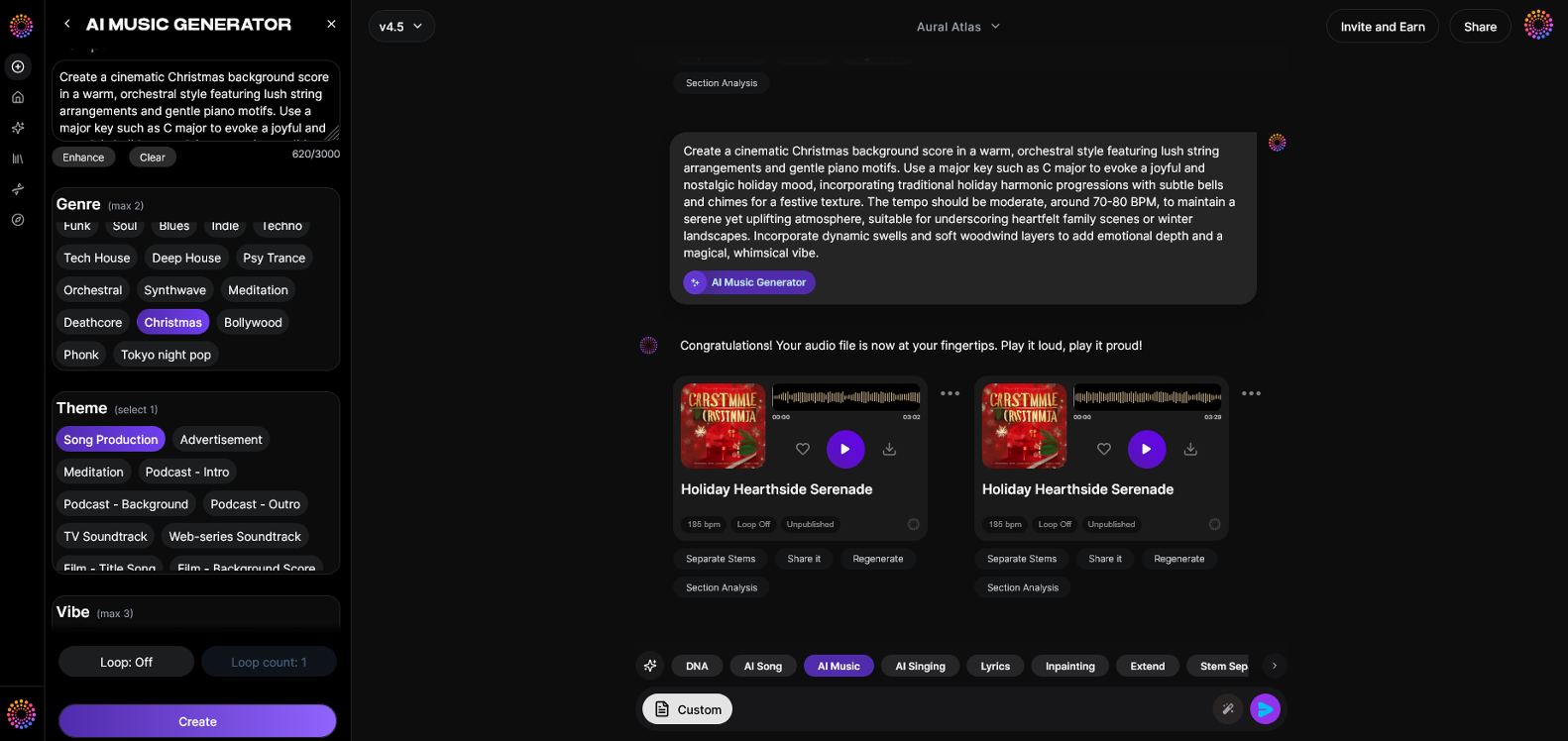
Soundverse offers a professional yet accessible way to create instrumental music that emphasizes rhythm, tempo, and beat patterns.
The AI Music Generator lets users create fully produced instrumental music from text prompts. It specializes in background tracks, beats, and soundscapes without vocals—with options for looping.
Core Capabilities
- Text-to-music composition powered by natural language prompts.
- Loop Mode for seamless repetition of rhythmic structures.
- Detailed controls for genre, mood, and instruments.
- V4 and V5 model options for varied sound quality and stylistic expression.
Primary Use Cases
- Video background music.
- Game soundtracks and loops.
- Meditation and wellness soundscapes.
- Advertising and commercial scoring.
Soundverse’s ability to interpret tempo and rhythm instructions means users can write prompts like “uplifting pop beat with jazzy drums at 120 BPM” and instantly generate suitable background music. As explained in this article on AI music creation, Soundverse bridges theory and application perfectly.
If you’re exploring beat structures or looking for creative inspiration, you can also experiment using related tools like Voice to Instrument, which converts humming or beatboxing into realistic instrument tracks, and Stem Separator, detailed in Soundverse's stem separation article, to isolate drum stems and study beat layers individually.
The Role of Beats in Modern Music Production
Music producers in 2026 rely on digital beat-making more than ever, blending acoustic and AI-generated elements. Systems such as Soundverse streamline beat construction while maintaining authentic groove.
Compared to older DAWs (Digital Audio Workstations) that required manual sequencing, AI now interprets natural language to structure rhythm automatically. Whether creating trap patterns or experimental ambient loops, understanding beats ensures consistency across compositions.
More resources on current innovations in rhythm-based production can be found in Soundverse’s overview of music industry trends. For further inspiration, watch our Deep House Music tutorial.
How Beats Connect Emotion and Movement
Beats influence more than timing—they drive emotional engagement and physical response. Faster tempos evoke excitement, while slower, steady beats induce calm or melancholy. In wellness-focused compositions like meditation music, steady low-tempo beats enhance relaxation, a concept also explored in creating healing meditation music with AI.
Musicians and producers use beats to build emotional narratives, ensuring each rhythm aligns with purpose. Understanding musical timing gives creators the confidence to direct mood precisely.
Create Your Own Beats Instantly with AI
Transform your musical ideas into full tracks using Soundverse’s AI Magic Tools. Generate, edit, and remix beats effortlessly—no production experience required.
Related Articles
- Generate AI Music with Soundverse Text-to-Music — Discover how to turn text prompts into full AI-generated compositions within seconds using Soundverse.
- How to Create Rap Music with AI — Learn how Soundverse AI helps you craft catchy rap beats and effortlessly produce custom tracks.
- How AI-Generated Music Is Transforming the Music Industry — Explore how artificial intelligence is revolutionizing the way musicians and creators produce and distribute music.
- The Benefits of Composing with AI Music Generator — Find out how AI tools like Soundverse can enhance creativity and simplify your music production workflow.
Here's how to make AI Music with Soundverse
Video Guide
Here’s another long walkthrough of how to use Soundverse AI.
Text Guide
- To know more about AI Magic Tools, check here.
- To know more about Soundverse Assistant, check here.
- To know more about Arrangement Studio, check here.
Soundverse is an AI Assistant that allows content creators and music makers to create original content in a flash using Generative AI.
With the help of Soundverse Assistant and AI Magic Tools, our users get an unfair advantage over other creators to create audio and music content quickly, easily and cheaply.
Soundverse Assistant is your ultimate music companion. You simply speak to the assistant to get your stuff done. The more you speak to it, the more it starts understanding you and your goals.
AI Magic Tools help convert your creative dreams into tangible music and audio. Use AI Magic Tools such as text to music, stem separation, or lyrics generation to realise your content dreams faster.
Soundverse is here to take music production to the next level. We're not just a digital audio workstation (DAW) competing with Ableton or Logic, we're building a completely new paradigm of easy and conversational content creation.
TikTok: https://www.tiktok.com/@soundverse.ai Twitter: https://twitter.com/soundverse_ai Instagram: https://www.instagram.com/soundverse.ai LinkedIn: https://www.linkedin.com/company/soundverseai Youtube: https://www.youtube.com/@SoundverseAI Facebook: https://www.facebook.com/profile.php?id=100095674445607
Join Soundverse for Free and make Viral AI Music

We are constantly building more product experiences. Keep checking our Blog to stay updated about them!